As Johnson and her agents traveled the globe, she always visited museums, always chatted with strangers and always asked questions.
Johnson understood and appreciated that the agents shared her interest.
"We'd be in a museum, and when she was ready to leave she would turn to us and ask if we were ready or if we wanted to look a little longer," Hardin said.
Friday, July 13, 2007
Lady Bird
Here is a lovely tribute to a great woman, based on the respect Lady Bird Johnson earned from her Secret Service agents. I was particularly touched by this comment by Jim Hardin, who was assigned to her for 22 years:
Wednesday, July 11, 2007
Oh, my gosh! Stephen Colbert as a religious figure

Check THIS out!!! I only wish in the photo above they'd shown a bear in the background and a baby eagle on his hand.
Tuesday, July 10, 2007
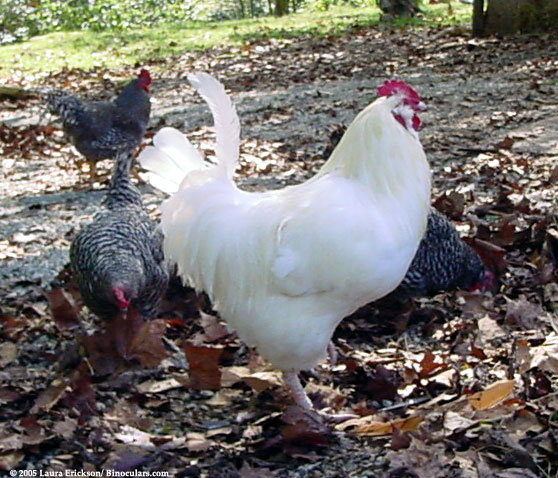
Birds prefer the newest songs
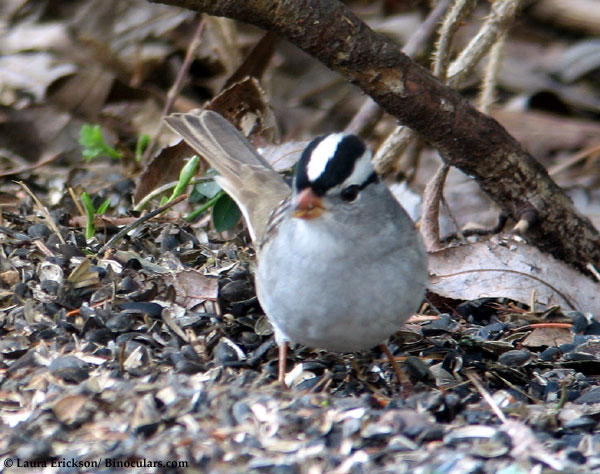
Here's an interesting study summarized in today's Live Science:
Songbirds Prefer the Latest Tunes
By Ker Than, LiveScience Staff Writer
posted: 10 July 2007 12:24 pm ET
For male sparrows looking for a mate or trying to defend their turf, it pays to keep up with the times and latest musical hits.
A new study finds that female white-crowned sparrows pay more attention to new bird songs than vintage tunes, and that other males find the oldies much less threatening.
Read the whole article here.
"Google's New Search Engine"
Here's a cool story about a policeman in Palo Alto and some wildlife rescues he's made.
Sunday, July 8, 2007
What to do about deer?

I love deer. They're beautiful animals, and when I see a fawn I can feel my pupils dilate. I would feel brokenhearted if I hit a deer with my car, and am bummed out for the day and never seem to forget the sight when I drive past a dead fawn. But that isn't to say that there aren't too many deer. It's just to say that I don't know what to do about it.
I'm not a hunter. When I was a little girl, I consistently scored better than my older brother when we'd shoot his BB gun at targets and tin cans, but he'd always win our tournaments because I refused to even aim at any target shaped like a person or animal, much less shoot at living birds or frogs or turtles. I do not disapprove of sport hunting (as opposed to taking down 70 or 80 pheasants and an undisclosed number of Mallards on a game farm, which I consider an unsporting massacre). I wrote my essay, "About Hunting," about my own struggles to reconcile my personal revulsion toward blood sports with my admiration for Peregrine Falcons and other hunting animals and my respect for many hunters.
No matter what our feelings about hunting, the reality is that there are way too many deer, leading to habitat degradations that are most certainly exacerbating population declines in many species. My guess is that deer play a role in the declines of American Woodcock and Ruffed Grouse both by damaging ground vegetation and by eating eggs and chicks. An essay by Patrick Durkin in the Green Bay Press-Gazette discusses careful research done in Wisconsin 50-60 years ago by John T. Curtis, a University of Wisconsin botanist, who documented the plant communities in 1,400 habitat sites across Wisconsin between 1947 and 1960. Researchers recently revisited 62 of those sites and followed Curtis's methodology, documenting a nearly 20 percent loss of native plants, a slow rise in non-native plants, and less overall variety in plant species. Durkin notes in the Green Bay Press-Gazette article,
Not surprisingly, the biggest impacts were caused by white-tailed deer. Whitetails aren't known to run about the forest, shovels in hoof, replacing native plants with exotics, but their diet preferences determine which plants thrive or suffer.
As deer eat away vegetation that pleases their palate, the plants that take over are typically "generalists" such as native ferns, sedges and grasses. Deer turn up their noses at those plants. In addition, invasive plants like hemp nettle, orange hawkweed and Kentucky bluegrass also take hold.
The most intact, diverse plant communities remaining from Curtis' era grow where white-tailed deer are kept in check. The best examples are on Chippewa and Menominee Indian reservations, where deer numbers are usually half of what roams surrounding lands.
The most ironic finding was that two of the three study sites suffering the largest hits to plant communities were inside state parks, where no deer hunting was allowed. Imagine that. We set aside large areas to reduce human disturbance, but allow almost all recreation except hunting, and let plant communities take a pounding by hungry deer.
Those who protest every time the DNR opens a state park to limited deer hunting should keep that in mind.
But before anyone talks too smugly, they should realize few — if any — people would have noticed those shifts in the forest's plant communities if Curtis and his colleagues hadn't documented what they found 50 to 60 years ago.
Why DO we speed?

I was just taking a look at the quietnorth blog which has an entry to a Talk of the Nation program about "Psychology Behind the Wheel: Why do we speed?" That's a topic near and dear to my heart since one of my 101 Ways to Help Birds is to "Drive at the slowest speed that is safe, courteous, and convenient." This week on Birdchat people have been discussing the disappearance of Common Nighthawks--there are many contributing factors, one of which is that the species is vulnerable to colliding with cars, both when roosting on gravel roads and when attracted to insects in headlight beams. Cars also kill a disproportionate number of owls, especially Short-eared and Barn, and Red-headed Woodpeckers. A constant new supply of roadkill is subsidizing a crow population that is already higher than natural. And driving fast squanders energy and contributes to pollution, including CO2 emissions that exacerbate climate change. I wish most cars showed at every step of the way gas mileage the way my Prius does--that screen serves as a constant reminder that our driving habits directly affect fuel consumption. The US EPA has a webpage about driving habits and fuel economy. It states,
While each vehicle reaches its optimal fuel economy at a different speed (or range of speeds), gas mileage usually decreases rapidly at speeds above 60 mph.Slowing down saves energy, saves wildlife, and saves lives.
Friday, July 6, 2007
Turkey Testicle Festival!!!??!!
Mark your calendars for Byron, Illinois' annual Turkey Testicle Festival!
The Turkey Testicle Festival originated in 1978 here at Union St. Station in Byron, IL., and we are the original, "Home of the Turkey Testicle Festival". This year will be the 28th Annual Turkey Testicle Festival so come on in and have a Ball.
The festival is always the 2nd Saturday in October, the first band starts around 11:00am. and the last band plays until 11:00pm.
The deep fried delights start being served around noon.
Sorry, No one under 21 will be admitted to the Festival.
Wednesday, July 4, 2007

Subscribe to:
Posts
(
Atom
)