Laura Erickson's For the Birds

Wednesday, November 7, 2007

Scary news on the Lesser Scaup front


Today's Duluth News-Tribune has scary news from Bemidji, near the headwaters of the Mississippi River:

Dan Markham and Noel Hill of Duluth were setting up to hunt ducks on Lake Winnibigoshish near Deer River on Saturday when they noticed a dead bluebill on shore. A quick walk along the shore turned up another three dozen dead bluebills...

Cordts and other DNR employees collected about 1,000 dead bluebills from a stretch of shoreline on Friday. In the time it took to collect about 900 of those birds, another 30 to 50 had died in the same stretch.

“This is potentially pretty bad because of this snail,” Cordts said. “The trematode is likely brand new to the system. It could be along the whole stretch of the Mississippi River and could get into other lakes and into other species. It’s way too early to speculate a lot.”

“We were just heartbroken,” Markham said. “It’s depressing.”

...

Read the whole story.
Happy news on the California Condor front!

I just noticed on the Cornell Lab of Ornithology's All About Birds website that

California Gov. Schwarzenegger recently signed bill AB 821, which supports the continued recovery of the California Condor by banning the use of lead ammunition from areas inhabited by the endangered species.

Condors frequently feed on animal carcasses left behind by hunters, and ingest dangerously high levels of lead from ammunition. This lead consumption has been a major health issue for the condor re-introduction efforts and has been responsible for the death and illness of several California Condors.

The new law requires the use of non-lead, centerfire ammunition within the California Department of Fish and Game’s deer hunting zones that lie within current and potential condor range in California. Lead-free ammunition is increasingly available and will have no effect on hunters’ enjoyment of their sport. To the extent funding is available, big game hunters in these hunting zones will get coupons for non-lead ammunition at no or reduced prices.


Read the whole article and jump for joy! I'll be in California next week for the Central Valley Birding Symposium. Tragically, I won't be anywhere near where the condors are. But I'll be breathing a sigh of relief that the worst scourge they still face will soon be part of their past, not their future. Thank you, Arnold Schwarzenegger!

Sad news in the pigeon world

This from today's New York Times:

November 7, 2007

Frank Viola, Leader in Sport of Racing Pigeons, Dies at 87
By MARGALIT FOX

Frank Viola, one of the grand old men of a grand old New York sport — pigeon racing — died on Oct. 3 at his home in the Bath Beach section of Brooklyn. He was 87.

...

Pigeon racing in the United States is at least a century old, but the sport really took hold in this country in the decades after World War II. Then, it was impossible to walk down the street in certain New York neighborhoods (among them Bensonhurst and Bath Beach) without one’s eyes being drawn upward by wheeling flocks of birds, which exploded into the air like fistfuls of thrown confetti.

These were no ordinary street birds, but racers — homing pigeons whose care, feeding and lively under-the-table handicapping were the consuming pastime of a generation of New York men.

Though racing pigeons are the same species as the common variety (both are rock doves), they are to New York’s street birds what Secretariat would be to a Central Park carriage horse. A true racing pigeon, which can fly up to 70 miles per hour, is a thoroughbred — all speed, muscle and pedigree. It can find its way back to its coop from nearly a thousand miles away. Prices for the best birds can run to thousands of dollars, even hundreds of thousands.

For almost nine decades, Mr. Viola raised flocks of the finest pigeons he could buy, trucking them hundreds of miles from the city for the enormous thrill (and the less enormous monetary reward) of seeing them race home again. Throughout the city, on tenement rooftops and in tiny urban backyards, other men — immigrants or, like Mr. Viola, sons of immigrants — were doing the same.

Mr. Viola, who kept as many as a hundred birds at a time, won his share of races. But he was best known for sponsoring what was considered one of the most prestigious races of the year, the Frank Viola Invitational, a 400-mile contest in which the birds are released in Ohio and fly back to New York.

Begun in the early 1990s, the invitational is one of the few truly lucrative pigeon races in the country, with a total purse, put up by Mr. Viola, of more than $200,000. (Mr. Viola, who earned his living as a construction supervisor, did well in the stock market, his nephew said.) With his death, the race will no longer be held.

Mr. Viola, whose gruff manner belied the tender care he lavished on his brood — he plied them with vitamins, electrolytes and specially prepared food — was considered an especially fine judge of birdflesh. He could spot one of his own pigeons in a whirling flock a block or two distant, his nephew said. Studying a prospective purchase, he examined its eyes with a jeweler’s loupe, looking for the telltale subtleties of color and form that are believed to indicate prowess.

“He paid thousands of dollars for birds, but he would never sell a bird,” Peter Viola said in a telephone interview on Monday. “If you wanted one, and you came to the house and he liked you, he would give you the bird, with two stipulations: that you don’t sell it and you don’t kill it.”

Frank Peter Viola was born in Brooklyn on Jan. 7, 1920, to a family that kept racing pigeons. (The family name is pronounced vee-OH-lah.) His mother died when he was an infant, and Frank left high school to work with his father, a plasterer from Calabria, Italy.

When the United States entered World War II, Frank Viola enlisted in the Army. He served in five European campaigns and was wounded on the beach at Normandy, his nephew said. Mr. Viola’s pigeons also served: when war was declared, he donated them all to the military, which often used the birds to carry messages across enemy lines.

...

Today, pigeon racing is mostly an old man’s game. In the postwar years, there were scores of racing clubs in the greater New York area; perhaps a dozen survive. But even now, on certain fine Saturdays and Sundays, one can see men tautly poised on the city’s rooftops, scanning the sky for a few distant specks winging home.

Make sure you read the original article--there's a charming photo of Mr. Viola and his birds.

Tuesday, November 6, 2007

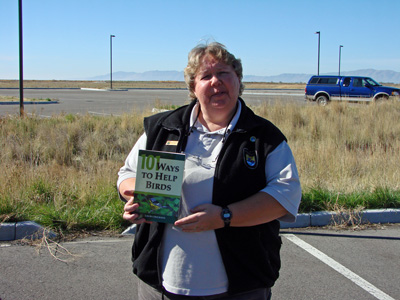
Another cool person holding my book!


Here's Betsy Beneke at the Bear River Migratory Bird Refuge, holding MY BOOK!!

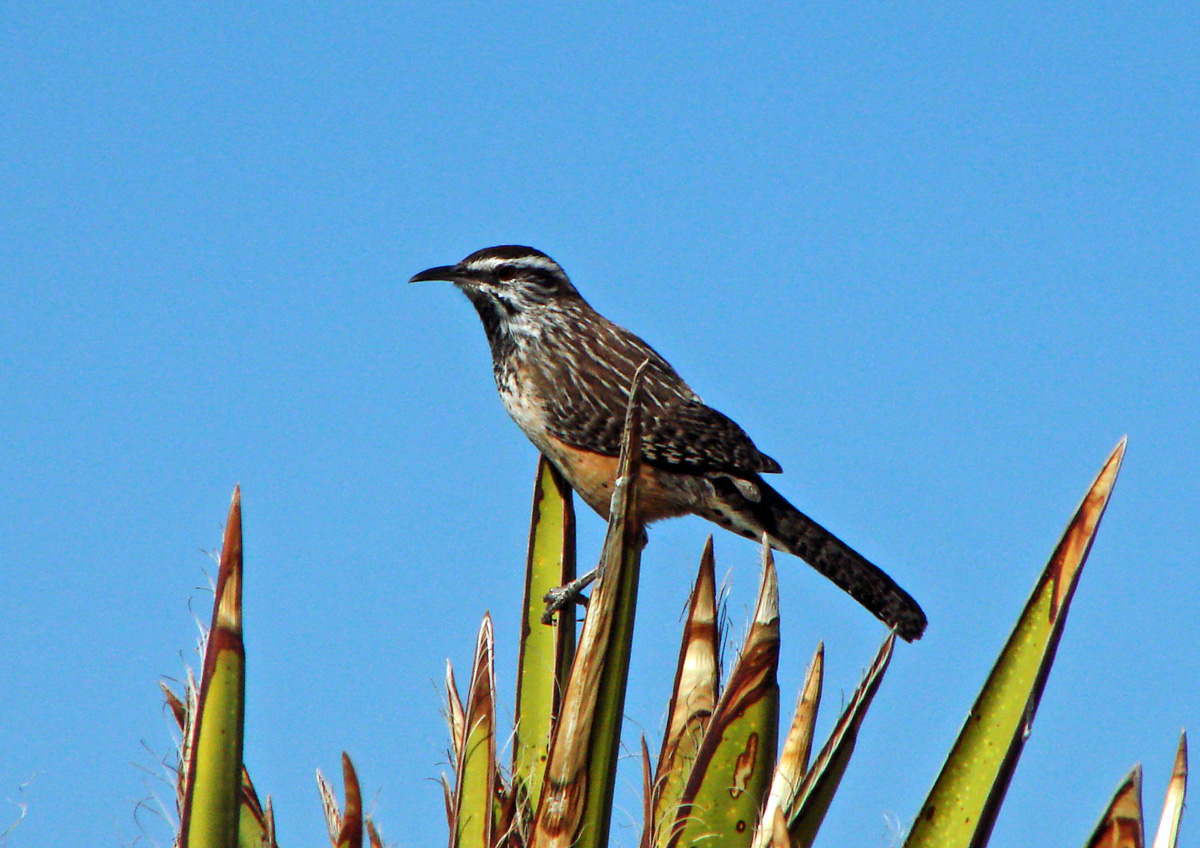
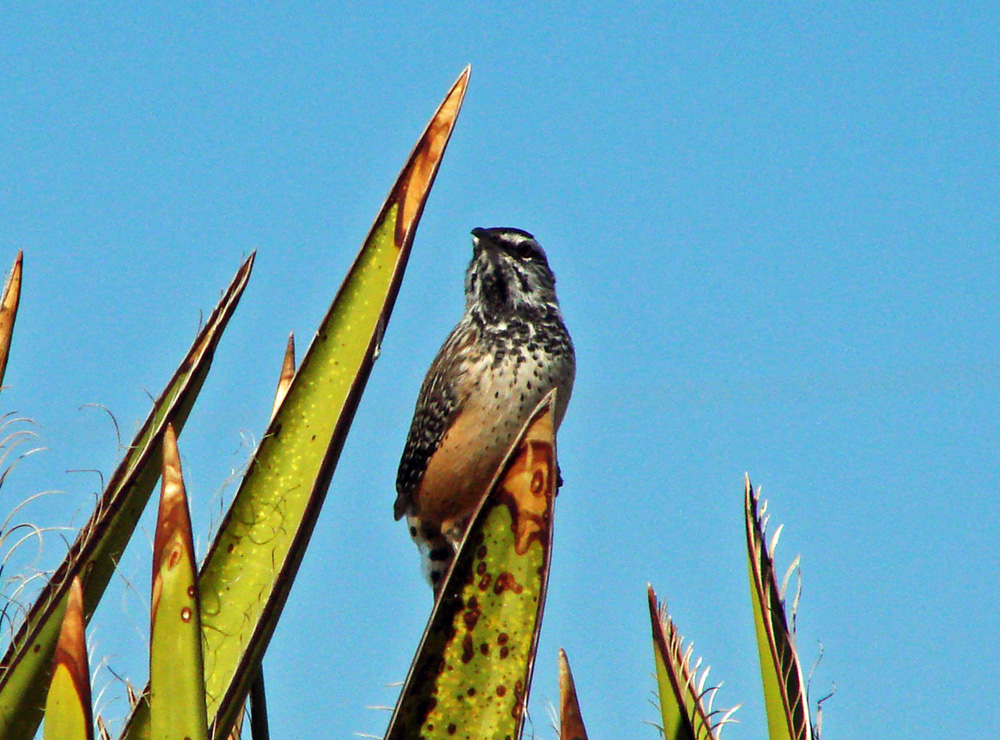
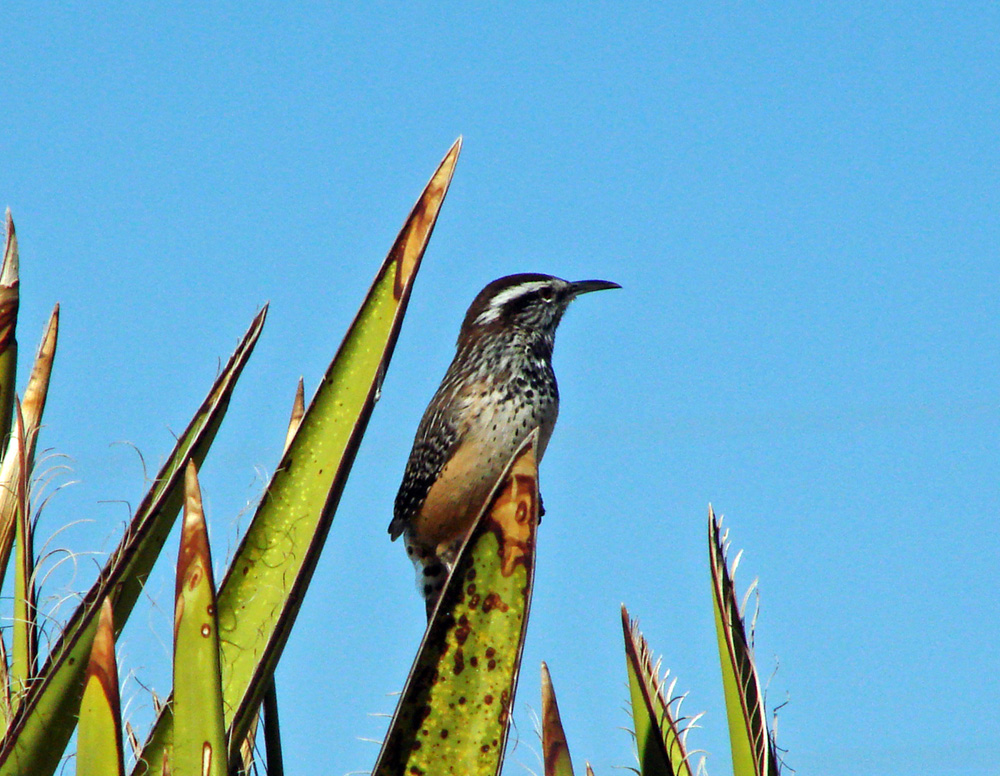
Cactus Wrens!


If Cactus Wrens were rare, people would travel long distances to see them. But they're pretty common in the Southwest, so we don't make much of a fuss over them. I found them at several rest stops, mostly hiding out in the shrubbery. But this one came out in the open for a little while. What a treat!

Monday, November 5, 2007

Back to Edwards or Gore I guess

Oh, dear. Stephen Colbert has given up his bid for the Presidency. According to the AP today:

Stephen Colbert Drops Presidential Bid

NEW YORK (AP) — Stephen Colbert has dropped his bid for the White House.

His announcement came after the South Carolina Democratic Executive Council voted last week to keep the host of "The Colbert Report" off the state's primary ballot. The vote was 13-3.

...

"Although I lost by the slimmest margin in presidential election history — only 10 votes — I have chosen not to put the country through another agonizing Supreme Court battle," Colbert said Monday in a statement. "It is time for this nation to heal."

...

"I want to say to my supporters, this is not over," Colbert said. "While I may accept the decision of the Council, the fight goes on! The dream endures! ... And I am going off the air until I can talk about this without weeping."

In reality, "The Colbert Report" was going off the air because of a strike by Hollywood writers that began Monday. Many talk shows were expected to be shown in repeats during the strike.

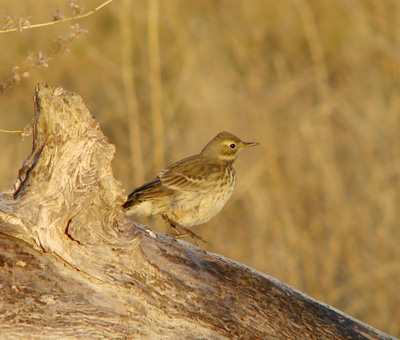
Pipits!

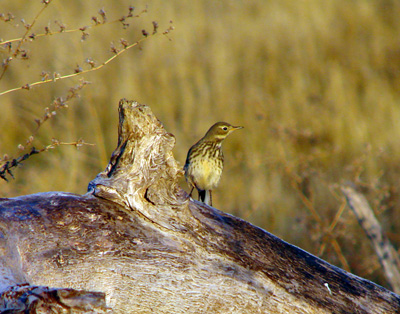
Perhaps the most common bird at the Bear River Migratory Bird Refuge while I was there last week was the American Pipit. They were everywhere! But harder than heck to get good photos of. They're like Melanie Hamilton, soft and subdued in color--not the least bit flashy--but lovely nonetheless.

Certified Wood and Bamboo

Wherever I look now, I see bamboo for sale--as houseplants, but also in all kinds of wood products and even clothing and other textile products. It's ostensibly "green," but there are some serious concerns, which are clearly and concisely discussed in a fairly good but short and simplified article in today's Salon Magazine. I hope that a certification program for bamboo takes off. But even more, I hope that people start actually paying attention to certification programs. It's a topic I covered in 101 Ways to Help Birds:

When you buy lumber or furniture, look for the Sustainable Forestry Initiative or Forest Stewardship Council logo or buy used.

The earth is losing forests at an alarming rate for many reasons, including cattle production, agricultural crop production, commercial logging for lumber and pulp, and development. Deforestation causes enormous and wide scale environmental problems that hurt us as well as birds and other wildlife. Choosing products that are grown and harvested using sustainable methods helps all of us.

Global problems caused by deforestation include increased carbon dioxide and other gases. When trees are cut and burned to establish cropland and pastures, the carbon that was stored in the tree trunks (wood is about 50% carbon) joins with oxygen and is released into the atmosphere as CO2. According to “Earth Observatory”:

The loss of forests has a profound effect on the global carbon cycle. From 1850 to 1990, deforestation worldwide (including the United States) released 122 billion metric tons of carbon into the atmosphere, with the current rate being approximately 1.6 billion metric tons per year. In comparison, fossil fuel burning (coal, oil, and gas) releases about 6 billion metric tons per year, so it is clear that deforestation makes a significant contribution to the increasing CO2 in the atmosphere. Releasing CO2 into the atmosphere enhances the greenhouse effect, and could contribute to an increase in global temperatures.


Deforestation can cause dramatic changes in local climates. In the Costa Rican cloud forest, reduced rainfall and increasing temperature quite likely contributed to the extinction of the Golden Toad. This beautiful amphibian lived in the highland forests near Monteverde, called “cloud forests” because of the frequent formation of clouds and mist as moisture-laden Caribbean winds rise up the eastern slopes of the mountains. The humidity in those breezes is enhanced by moisture expelled from the leaves of lowland forests. But by the early 1990s, only 18 percent of the Costa Rican lowland forests east of the peaks remained. Pastures don't humidify the winds as forests do, and the atmosphere above pastures is warmer than that over forests. So winds off these pastures rise farther and farther up the slopes before clouds condense. Golden toads depended on high humidity, and their sudden and dramatic disappearance gave intimations of more extinctions to come.

We think of deforestation as a Third World problem, yet here in the United States, in the Pacific Northwest, less than 15% of our original old growth forest ecosystems remains. And according to the Seattle Audubon Society, although the Northwest Forest Plan decreased logging by 80%, the Forest Service continues to use mature and old-growth forests for 90% of their timber volume. Through the 1800s, the white pine forest dominating the Great Lakes region was almost entirely logged. Now most of that region’s forests are dominated by aspen, a pioneer species which is usually clear cut for paper and wood products such as plywood and particle board long before the forest could mature. And chip mills in the southeastern United States contribute to the clear cutting of over a million acres of forest every year.

When buying furniture and wood products, remember that used products save trees. And when buying new, remember that furniture made of saw lumber come from forests that were allowed to grow to a mature stage, making it a better choice than particle board and plywood, which come from forests managed for short rotation and are manufactured with an array of toxic chemicals. As with food, it’s far better to buy wood that was grown locally. Not only does it minimize environmental problems associated with transporting lumber but also you'll generally get more accurate information about wood that is harvested nearby than about products that come from far away.

The Sustainable Forestry Initiative (SFI) and the Forest Stewardship Council (FSC) are organizations devoted to encouraging the responsible management of the world’s forests. They set standards that may ensure forestry is practiced in an environmentally responsible, socially beneficial, and economically viable way. Their certification programs are endorsed by hundreds of environmental organizations.

Friday, November 2, 2007

Pigeons in Combat


Back in 2000, when I was trying to produce an hour-long weekly call-in radio program about birds (I had on-air help from my good friend Tim Winker, but did all the production work alone), I interviewed Colonel Jerome Pratt, the commander of the last Pigeon Company in the Army Signal Corps. It was a really cool interview--I don't sound very practiced as an interviewer, but despite my lack of skills, boy was he interesting! It's a 16-minute interview that I excerpted on a later Veterans' Day program. Anyway, I dug out the original interview a couple of weeks ago because a New York film producer named Alessandro Croseri googled the shorter version and wants to use a bit of it in a film he's producing about the Army Signal Corps pigeons. And he kindly sent me a DVD of The Flight, a lovely unnarrated 8-minute film which he describes this way:
“The Flight” is an homage to the bravery of homing pigeons who saved thousands of lives in combat in the Great World Wars. Their achievements embodied the attributes of service, endurance, loyalty and supreme courage. Here, their memory is evoked by two present-day homing pigeons silently taking flight from the windows of a New York City apartment. The film dissolves to a forgotten past as we relive their ancestors’ selfless heroism.
I got to watch the splendid little film today--it was lovely! I can't wait to see the documentary he's been working on, but that won't be for a while. He did tell me that Jerome Pratt died recently. We're losing so many of our living connections to history as far as the two World Wars go. I'm glad that in a very tiny way I was able to preserve some of one man's memories about an important time.

Florida Everglades


One of my favorite places on the planet is the Florida Everglades. We took a family vacation there in 1988--ate tuna noodle casserole in our tent at one of the Everglades campgrounds on Thanksgiving, and took lots and lots of hikes. My boys had just turned 3 and 7, and Katie was about to turn 5. The highlight of the entire long trip (which included a few days at Disneyworld and several days in Washington, DC, visiting the zoo and lots of museums and seeing real dinosaur bones!) was the Everglades bathrooms. When we returned home, the first thing the kids told their grandparents about was that there were frogs in the bathroom. We came up with a song about them that we sang a lot on the way home. It had a bazillion verses but I can remember only two:
There are tree frogs in the sink, in the sink. There are tree frogs in the sink, in the sink. Some are purple, green and pink, And their big eyes sometimes wink. There are tree frogs in the sink, in the sink. There's a tree frog in the toilet, in the toilet. There's a tree frog in the toilet, in the toilet. Please don't flush or you could spoil it For the tree frog in the toilet. There's a tree frog in the toilet, in the toilet.
The Everglades is truly a national treasure. A few years ago I read news stories about the huge federal and state focus on protecting and restoring the Everglades. But out of sight, out of mind, apparently. Here's a disheartening story from today's New York Times.