(Transcript from today's For the Birds program)
This summer, on a drive between Chicago and Duluth, my daughter and I stopped by one of my favorite birding spots outside Madison, Wisconsin. Goose Pond is a tract of restored prairie surrounding a lovely pond that serves as a magnet for migrating waterfowl and nesting grounds for songbirds, ducks, and Sandhill Cranes. Madison Audubon, which manages the property, has worked tirelessly over the past four decades to both restore the land and to work with nearby farmers, both encouraging them to manage their land in sustainable ways and to help them deal with any problem caused by birds. I was active in Madison Audubon during the years I lived in Madison, and Goose Pond is near and dear to my heart. Every time I drive along the nearby stretch of I-94, my personal tradition is to stop at the Arlington Rocky Rococo’s to pick up a slice of pizza to eat on the roadside next to Goose Pond while I scan for birds.
Katie and I stopped there in August. I love that time of year, when lots of newly-independent young birds are learning the ropes. The day was cool but sunny, and a lot of birds were gathered on the country road, basking in sunshine and picking up bugs.
But on this occasion, for the first time in the 35 years that I’ve been visiting Goose Pond, we came upon dozens of dead birds littering the roadside along the eighth-of-a-mile stretch. Apparently one or more trucks or cars had passed by at high speed, smashing into Cedar Waxwings, Tree Swallows, and Red-winged Blackbirds. I’ve come upon sights like this before, when my heart starts pounding. Every year there are fewer and fewer places where habitat is managed specifically for wildlife, and even those places are not safe. Merritt Island National Wildlife Refuge, one of the few jewels of natural habitat left along Florida’s Atlantic coastline, sits between Titusville and the Kennedy Space Center. The road cutting through it has a 55-mile-per-hour speed limit, and cars go much faster as drivers race to work or to visit the space center or beach. I go there every time we visit our son in Florida, and I’ve never once driven that stretch without seeing dead wildlife—sometimes literally hundreds of dead birds, after a car or truck plows through a flock flying across the road. When I started birding in 1975, I very often saw dead Red-headed Woodpeckers along roadsides. This beautiful species used to be so common that it was featured on the Pennsylvania Game Commission’s exquisite poster of birds commonly seen in backyards. Now in most of the areas where they once were abundant, Red-headed Woodpeckers have become so rare that if one is seen, it makes birding hotlines. Automobiles are also a major factor in the decline of Barn Owls and Short-eared Owls.
Dozens or hundreds of birds are killed every year near many individual ornamental fruit trees, after berries or crabapples start fermenting. The birds grow intoxicated, and collide with trees, buildings, cars, and one another. Some state DNRs provide educational pamphlets about plantings for birds, and strongly advise people to plant these trees away from roadsides and large windows to prevent the worst kills, but few people are aware of this hazard. Intoxication is apparently what caused the recent bird kill in Italy.
In the 35 years since I started birding, after DDT was banned, national and even local news media have been pretty much ignoring all of these bird deaths. Few people remember the thousands and thousands of dead Swainson’s Hawks littering South American farm fields thanks to pesticides barely a decade ago. But suddenly these stories are in vogue. Unlike when thousands of dead robins were being picked up in the 1960s thanks to DDT, this time the spin has nothing to do with protecting birds. In unsettling times, people who know nothing about birdlife are looking for evidence of a divine retribution. One minister even made national news by claiming that these bird deaths are proof that God is punishing us for ending the Don’t Ask Don’t Tell policy. A world without birds is apocalyptic enough for me, but none of the news media seem the least bit concerned about either declining bird populations or the tragedy of individual bird deaths—they’re seizing on the most bizarre storylines without the slightest glimmer of realization that the world we’ve created where these large scale bird deaths are becoming ever more commonplace really is a world where our own long-term survival as a species and our own quality of life are becoming ever more tenuous.
Friday, January 14, 2011

Archimedes
(Transcript from Thursday's For the Birds program)
In April, 2000, I was keynote speaker at a birding festival in Ohio, talking about owls. After my talk, a woman plied me with questions about my experiences handling owls as a rehabber, and how my understanding of their wild behaviors affected how I managed their care. During the course of our conversation, I mentioned that I had permits to keep an education owl, but hadn’t yet found an unreleasable bird. And at that moment, her face lit up, because she had an Eastern Screech-Owl that she’d had for almost a full year. He’d been sick and almost died as a very young chick, and his care required so much handling that he’d become imprinted. All the educational facilities in the area had their limit of birds, so she was thrilled that I could take him. Of course, I needed my state and federal permits in order to fly home with him, so I called Russ and asked him to fax them to me. Unfortunately for him, I keep the files in my four huge file drawers organized in taxonomic order, not alphabetically, but he assured me it didn’t take him too long. I had to arrange with the airline to fly with a bird and had to pay an extra $75 for the one-way flight, though he was in a little cardboard box the size a pet store puts a guinea pig in.
Archimedes has been a wonderful companion for almost 11 years. Every winter he starts calling, and we get into fun back-and-forth conversations. But during this time, it never once occurred to me to record his voice. Then on January 11, for some reason I had a flash of inspiration and brought up a microphone to try. I started with the microphone that I use for recording this radio program, and he called several times, but the mic just wasn’t sensitive enough to pick up his voice, though he was pretty close to it. So then I tried my Sennheiser directional mic. What you’re hearing in the background of this program is the recording I made of his voice.
During the year that he was kept at the Ohio rehab center, Archimedes heard quite a few Eastern Screech-Owls. Duluth is north of their typical range. I heard a wild one once in my neighborhood, but that was exceptional. So for the past 11 years, Archimedes has heard his own species calling very rarely if at all. He calls most intensely in late fall and again in early spring—this year I’ll try to get recordings when he’s making the trill call, and when he’s making longer whinnies. Here he’s making just a soft, short whinny.
For the first 45 or so years of my life, I never imagined living with an owl. There is definitely a dark side to it—sometimes I get very sad defrosting mice every night. I order them from a place in Louisiana. It was tricky finding a good dealer. First I tried a place that sells mice raised for medical research, figuring they’d at least died for a good cause. But they smelled after being defrosted, because they’d already been dissected at room temperature, and I also started thinking about the pharmaceuticals they’d been exposed to for research, and decided it was just too chancy. Many of the mice from my second supplier bore scratches and wounds that meant they’d been overcrowded and must have led sad existences. Now the mice I get look fit and healthy except for being dead. They’re killed with carbon dioxide and sent frozen in dry ice. I always feel sad at dinner time, and suspect that I’ll never want to deal with them again when Archimedes is gone.
The other dark side to living with an owl is keeping his room clean. I won’t get into details, but suffice it to say it’s not pleasant. But Archimedes has been an exceptional companion. As his 12th birthday approaches, I’m hoping he’ll set new longevity records for screech owls. He’s a treasure, and I feel lucky beyond measure to have been able to spend so much time in his company.
Birds falling from sky
(Transcript of Wednesday's For the Birds program)
Ever since New Year’s Eve, stories have been making international news about birds falling dead from the skies. On January 6, Discovery News put it this way:
Large-scale bird deaths aren’t uncommon. People walking the streets of Chicago, New York, or other large cities sometimes pick up dozens to hundreds of birds on mornings after peak spring and fall migration events, because so many birds flying through the night sky collide with lighted sky scrapers and communications towers. Much larger events occur occasionally. In Baton Rouge LA, in July 1896, a shower of birds including ducks, catbirds, woodpeckers, and warblers, fell from a clear sky, literally cluttering the streets of the city. This kill was explained as an aftermath of a storm off Florida. Many thousands of birds were found under a single TV tower in Eau Claire, Wisconsin, after heavy migration during a foggy September night in 1957, and again in 1963.
On September 11, 1948, thousands of migrating birds were killed when they crashed into the Empire State Building in New York City and into the transmitting tower of Radio Station WBAL in Baltimore. On the night of October 7-8, 1954, 50,000 birds of 53 species dropped dead on the runways of Warner Robbins Air Force Base south of Macon, Georgia. A low cloud ceiling apparently drew the birds to the ceilometer lights.
On March 13, 1904, at least three quarters of a million migrating Lapland Longspurs were killed overnight in and near Worthington, Minnesota. The birds came from the Iowa prairies in a vast horde, and from 11 P.M. until morning, they were killed by crashing against buildings, electric light poles and wires, and by dashing themselves forcibly onto the frozen ground and ice. On January 22, 1998, up to 10,000 birds, mostly Lapland Longspurs, were killed at a communications tower during a West Kansas snowstorm.
So large numbers of dead birds falling from the sky is not new. The largest recent bird kill seems to have been the one in Arkansas, which was apparently caused when illegal, professional-grade fireworks were set off at midnight. In Arkansas, blackbirds, robins, and starlings roost together in huge flocks, many numbering in the millions. I’ve spent January in Arkansas, and seen the amazing density of blackbird flocks there. Unlike many songbirds, these species do not migrate by night. If tremendously loud fireworks in the middle of the night set these birds off in a panic, flying helter skelter, they’d be colliding at high speed with one another and with trees, poles, wires, buildings, and the ground. Necropsies done on many of them established that the cause of death was internal injuries from blunt force trauma.
Final reports haven’t been released about the causes of the other bird mortality events yet, but there are so many known ways for birds to die, from pesticides to collisions, that I’m sure each one has a straightforward cause. But sadly, now that our news is driven by Facebook and Twitter, items that would have made at most a 1-minute closing story on the local news are suddenly worldwide headlines, and each report feeds on and tries to top similar stories.
Some news accounts of the bird deaths have included the most recent Apocalyptic predictions. Although Matthew 24:36 makes it pretty clear that no one can know the day or hour, some of these predictions get pretty specific, like one that sets it for this coming May 21. That happens to fall right in the middle of spring migration, so I guess I’ll have to skip the Apocalypse this time around.

Ever since New Year’s Eve, stories have been making international news about birds falling dead from the skies. On January 6, Discovery News put it this way:
It has been a bad week for wild animals. Starting just before the turn of the New Year, 500 red-wing blackbirds died together in Louisiana. Some 100 jackdaws turned up dead on a street in Sweden. And in Arkansas, about 5,000 blackbirds were found dead after crashing into roofs, mailboxes and the ground.On January 5, a report from Faenza, a town in Italy, said that hundreds or thousands of turtle-doves were found scattered in streets and yards and hanging from trees. Some of the birds bore a mysterious blue stain in their beaks. Other reports of dead birds came from Sweden.
Large-scale bird deaths aren’t uncommon. People walking the streets of Chicago, New York, or other large cities sometimes pick up dozens to hundreds of birds on mornings after peak spring and fall migration events, because so many birds flying through the night sky collide with lighted sky scrapers and communications towers. Much larger events occur occasionally. In Baton Rouge LA, in July 1896, a shower of birds including ducks, catbirds, woodpeckers, and warblers, fell from a clear sky, literally cluttering the streets of the city. This kill was explained as an aftermath of a storm off Florida. Many thousands of birds were found under a single TV tower in Eau Claire, Wisconsin, after heavy migration during a foggy September night in 1957, and again in 1963.
On September 11, 1948, thousands of migrating birds were killed when they crashed into the Empire State Building in New York City and into the transmitting tower of Radio Station WBAL in Baltimore. On the night of October 7-8, 1954, 50,000 birds of 53 species dropped dead on the runways of Warner Robbins Air Force Base south of Macon, Georgia. A low cloud ceiling apparently drew the birds to the ceilometer lights.
On March 13, 1904, at least three quarters of a million migrating Lapland Longspurs were killed overnight in and near Worthington, Minnesota. The birds came from the Iowa prairies in a vast horde, and from 11 P.M. until morning, they were killed by crashing against buildings, electric light poles and wires, and by dashing themselves forcibly onto the frozen ground and ice. On January 22, 1998, up to 10,000 birds, mostly Lapland Longspurs, were killed at a communications tower during a West Kansas snowstorm.
So large numbers of dead birds falling from the sky is not new. The largest recent bird kill seems to have been the one in Arkansas, which was apparently caused when illegal, professional-grade fireworks were set off at midnight. In Arkansas, blackbirds, robins, and starlings roost together in huge flocks, many numbering in the millions. I’ve spent January in Arkansas, and seen the amazing density of blackbird flocks there. Unlike many songbirds, these species do not migrate by night. If tremendously loud fireworks in the middle of the night set these birds off in a panic, flying helter skelter, they’d be colliding at high speed with one another and with trees, poles, wires, buildings, and the ground. Necropsies done on many of them established that the cause of death was internal injuries from blunt force trauma.
Final reports haven’t been released about the causes of the other bird mortality events yet, but there are so many known ways for birds to die, from pesticides to collisions, that I’m sure each one has a straightforward cause. But sadly, now that our news is driven by Facebook and Twitter, items that would have made at most a 1-minute closing story on the local news are suddenly worldwide headlines, and each report feeds on and tries to top similar stories.
Some news accounts of the bird deaths have included the most recent Apocalyptic predictions. Although Matthew 24:36 makes it pretty clear that no one can know the day or hour, some of these predictions get pretty specific, like one that sets it for this coming May 21. That happens to fall right in the middle of spring migration, so I guess I’ll have to skip the Apocalypse this time around.
Sunday, January 9, 2011
The truth about Woodstock
Poor Woodstock. One dark and stormy night, she had to undergo a sex-change operation simply in order to finally be taken seriously by Snoopy and Charles Schulz.

Thursday, January 6, 2011
Up there with Bob Dylan!!!

Duluth's new DECC AMSOIL Arena was designed with quotes by Bob Dylan (born in Duluth), Sam Cook (Duluth's popular outdoors columnist), Dennis Anderson (Duluth's popular newsman), Erwin and Monnie Goldfine (prominent business owners), Jim Malosky (long time UMD Bulldog coach), Jeno and Lois Paulucci (prominent business owners), Mike Sertich (long time UMD Bulldog coach), and Al Amatuzio (founder of AMSOIL). And ME!! Oh, my! It's an honor, and pretty appropriate to have me up there over their environment display and the women's bathroom, since Sam Cook did just write about me keeping a list of birds that poop on me.
Monday, January 3, 2011
First bird of the New Year: What does it mean?
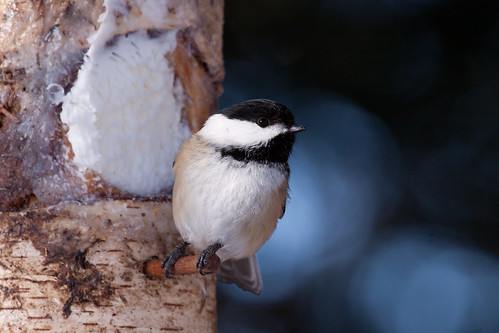 |
Every year on January first, the moment I wake up I head to the window to see what my first bird of the New Year will be. My hope is usually that it will be a chickadee or a Blue Jay. Both seem like excellent omens. Chickadees seem to promise a year marked with civility and good cheer. Blue Jays seem to promise a year marked with intelligence and good humor.
 |
 |
 |
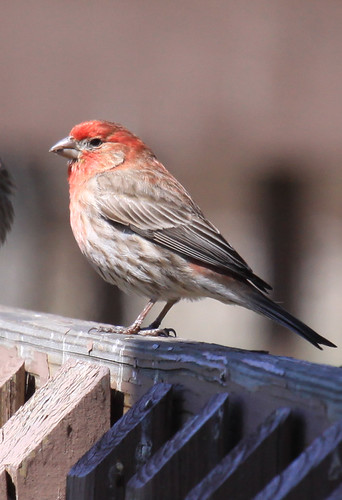
A crow predicts, in my system, a year marked by intelligence and clear communication.
 |
 |
 |
 |
A Pine Grosbeak may signify hardiness and a year of excellent camaraderie.
 |
 |
 |
 |
 |
 |
Seeing a Double-crested Cormorant as your first bird promises a year in which you'll explore your world more deeply than usual. Some people may not recognize your true character and attractiveness, but those who know you best all see how wonderful you really are. You'll have a good year working with your team.
 |
 |
 |
 |
 |
 |
Thursday, December 23, 2010
Bird Beer!
My daughter gave me both nine wonderful birthday presents (belated because she just got home from NYC for the holidays) and a game which I had to play in order to get each of them. Match each bird with the city where the brewery is.
Last night she and I drank the Moa. It was exceptional!!

Last night she and I drank the Moa. It was exceptional!!
Monday, December 20, 2010
Fences and Owls
 (Today's For the Birds transcript)
Last week I got a sad email from Mary-Ellen Holmes, who wrote from her farm south of Superior, Wisconsin, “This morning about 5:30, I went to check my horses. Unfortunately what I found was an owl attached to my electric fence. My fence is hot wire, cold wire, hot wire—all about a foot apart. It looks as if he was coming in for a mouse. His talons are outstretched and his wings are up and forward as if about to pounce. He made a direct hit with his feet on the bottom wire and grounded himself on the middle wire with his wings. It looks as if it was instantaneous as he appears to be in mid-flight. It was -21F at my house this morning so he is frozen solid…beautiful and perfect. This is such a freak accident. I have never seen anything even remotely like this. I feel terrible. But I have no idea how I could have foreseen this.” Mary-Ellen added, “I feel this death is a real loss. I try to live as closely and respectfully with the natural world as possible.”
Mary-Ellen’s fence was necessary, so this tragic loss couldn’t be helped. Fences kill millions of birds a year. The very most vulnerable species include owls and prairie grouse such as Sharp-tailed Grouse and Greater and Lesser Prairie-Chickens, because these birds fly low across open spaces. Owls have trouble seeing fences in the darkness. Prairie grouse probably do see but ignore fences. In their world, anything the width of grasses is soft and simply bends out of the way when they walk or fly through it, so they never suspect that anything so unyielding as wire exists until it’s too late.

In the early 90s, some Minnesota birders and I were headed to Arizona’s famous Madera Canyon for some early morning birding when we came upon a Barn Owl that was ensnared by a barbed wire fence. It had apparently been carrying a packrat to its nest when its dangling leg hit a barb, which ripped a three-inch tear in the skin and hooked firmly into it. The bird dangled upside down, both legs bloody and slashed up by the time we arrived on the scene. The temperature was already above 80, and the owl was starting to go into shock. Had we not discovered it until we were headed back for breakfast, it would almost certainly have been dead. Fortunately, I had enough experience as a rehabber to help it until the nearest veterinary clinic opened that morning. We left a message on their answering machine, and by the time we got there, a wildlife rehabber was on the scene. The bird needed quite a few stitches on both legs, and steroids and antibiotics. The rehabber kept it for four or five days, until it made a complete recovery. They released it exactly where we’d found it. In all likelihood, it immediately returned to its family.

This weekend, the Duluth News-Tribune reported that Kathy Paquette of West Duluth had found a Northern Saw-whet Owl ensnared in the mesh fence surrounding her garden. Fortunately, she found it while it was still doing well, so she untangled it and brought it to an area rehabber. This bird was held for observation overnight, and released at Paquette’s place the next day. The paper quoted her, “Oh, my god,” she said. “That was a dream come true for me. I love animals. I like to save animals… I was in tears, I was so happy I found him before he was dead.” I’m sure Mary-Ellen Holmes dearly wishes she could have saved the beautiful Great Horned Owl that had been electrocuted. Sad as its death was, at least this poor bird died instantly. Its body will be donated to a nature center for education, and Mary-Ellen said I could use photos of it in my own programs. There’s not much we can do about necessary fencing. But after fences have served their purpose and land use changes, old fencing should be removed. If photos of Mary-Ellen’s bird jolt even a few people take down unnecessary fences, the bird will not have died in vain.
Good fences do not make good neighbors, at least not for birds. Fortunately, good people do.
 (Fence wire is still partly attached to this poor Barn Owl. I took this photo on August 6 at the Wheeler National Wildlife Refuge in Alabama. The bird was en route to a rehab clinic.)
Friday, December 3, 2010
Tapeworm Makes the Big Time
(Today's For the Birds script)
Back when I was rehabbing injured birds, I specialized in the care of Common Nighthawks. They were far more abundant in the 1980s and early 90s than they are now, and frequently were struck by cars or collided with transmission lines and guy wires. Of the dozens of nighthawks I cared for, a few had tapeworms. These intestinal parasites didn’t seem to weaken the birds—successful parasites often cause no ill effects—but I was fascinated. The perfectly rectangular, pearly cestode fragments glistened in a bird’s droppings. And in 1994, when humor columnist Dave Barry mentioned a factoid about duck tapeworms in a blurb he wrote for my first book, I was so grateful that I sent him a tapeworm in a tiny vial of alcohol, inside a velvet jewelry box. He sent me a postcard saying “Thanks. It was delicious,” and signed, Dave “Nighthawk” Barry.
Months later, when I was working on the computer, my son tapped me on the shoulder. I took off my headphones and he said, “Mom, there’s a man on the phone and he says he’s Dave Barry.”
Sure enough, Dave Barry was on the phone, wanting to know more about this particular tapeworm and the bird it came from, for his 1994 Holiday Gift Guide. And the following November, there was a photograph of the little tapeworm in its vial in newspapers all over the world. Dave Barry wrote:
Bird Tapeworm
This is the perfect gift for the person--such as your immediate supervisor--to whom you would really like to give an intestinal parasite.
This is an actual tapeworm. It came from a bird, and it was sent in for reasons that we still do not totally comprehend by Laura Erickson, who wrote a book entitled For the Birds: An Uncommon Guide (published by Pfeifer-Hamilton). This book contains a lot of amazing information about birds, including the fact that they get tapeworms. In fact, according to Erickson's book, a single duck can contain as many as 1,600 tapeworms, which explains why ducks always seem so cranky.
Erickson told us that the tapeworm she sent us came from a nighthawk named Bullwinkle. She didn't tell us the tapeworm's name, so we've been calling it Roger. Roger is only about the size of a grain of rice, but he has a lot of personality considering that he's dead and floating around in some kind of chemical solution. We talk to him a lot about things that are on our mind.
"Roger," we say, "Can you believe some guy wants $100 million a year just to play basketball?"
Roger doesn't say much--he's not a big sports fan--but he's a good listener, which is more than you can say for a lot of people. Plus you can put Roger in your pocket and carry him anywhere, which means that not only do you always have company, but you also have protection against assault by violent criminals. ("Get back! I have a tapeworm!")
Unfortunately, nighthawk tapeworms are not available in stores. If you want one for yourself or that special someone on your holiday gift list, you'll have to use the technique that Erickson used to obtain Roger: "You sit around and wait for the nighthawk to go to the bathroom."
You will do this if you really care.”
Thursday, December 2, 2010
Another Dave Barry story, about tapeworms.
During my 25-week countdown to the 25th anniversary of For the Birds, I’m reminiscing. Last time I talked about writing to humor writer Dave Barry after a Barred Owl dropped down someone’s chimney and caused a lot of damage that was not covered by the people’s homeowner’s insurance policy. That happened sometime in the late 1980s, and the postcard I got back from Dave Barry was one of my most prized possessions.
Then, in 1993 my first book, “For the Birds,” came out. The publisher, Pfeifer-Hamilton, was extremely good at marketing, and though marketing is not part of my own skill set, I was pretty cooperative, and quite a few top ornithologists wrote really nice blurbs for it. But Pfeifer-Hamilton’s marketing department wanted someone famous outside the birding world, not Chandler Robbins, Frank Gill, or Joe Grzybowski. They kept pressing me, insisting that I must know someone famous, and finally I blurted out that I’d once gotten a postcard from Dave Barry. They seized on that, and were going to ask him for a blurb for my book as one of my quote “correspondents.” I already knew that he had a policy of not writing blurbs for books, much less bird books, so I told them I’d write to him myself. The whole thing felt awkward and weird, but I finally composed a letter explaining what had happened and how I knew he didn’t write blurbs and asked him to just donate the book to his son’s school library. I thought that would be the end of it.
But less than a week later, what should appear in my mailbox but a blurb about my book, from Dave Barry! He wrote, “This book is invaluable. For example, it states that as many as 1,600 tapeworms have been found in a single duck. This is the kind of information I use every day.—Dave Barry.”
My publishers were elated, and I was in heaven. I needed to think about some way to thank him—something more than just a simple letter seemed in order. I was rehabbing birds at the time, and just happened to have a nighthawk who had tapeworms, so I cleaned one off, put it in a tiny vial of alcohol, placed it in a velvet jewelry box, and sent it to him. He quickly sent me back another postcard saying, “Thanks. It was delicious. —Dave ‘Nighthawk’ Barry.”

I was thrilled beyond measure.
Not long after that, my publishers called and asked me to go to the ABA convention in Los Angeles. This was thrilling—I felt like a jet-setting author—and even after I discovered that for them, ABA did not stand for American Birding Association but, rather, the American Booksellers Association, it was still exciting. All the authors were expected to do book signings. Dave Barry was so popular that they gave out tickets for his, setting the limit at 500 people. The first thing I did the moment I registered was to get one of those tickets.
The line at my own book signing never had more than 10 people, but Dave Barry’s stretched down the hall almost to the doors of the convention center. It moved fast. He just signed a book and handed it to the next person in a robotic rhythm. My heart was beating fast when I got to the head of the line. I’d wanted to say something pithy when it was my turn, but he was too busy for that, so I just smiled at him. But as he handed me the book, he noticed my nametag and stood up saying, “You’re the lady who sent me the tapeworm!” Of course, the next moment he was back in his chair signing “Dave Barry” and handing the next person a book, but to have one moment of recognition by Dave Barry was one of the coolest things that had ever happened to me. And the best tapeworm story was yet to come.
Then, in 1993 my first book, “For the Birds,” came out. The publisher, Pfeifer-Hamilton, was extremely good at marketing, and though marketing is not part of my own skill set, I was pretty cooperative, and quite a few top ornithologists wrote really nice blurbs for it. But Pfeifer-Hamilton’s marketing department wanted someone famous outside the birding world, not Chandler Robbins, Frank Gill, or Joe Grzybowski. They kept pressing me, insisting that I must know someone famous, and finally I blurted out that I’d once gotten a postcard from Dave Barry. They seized on that, and were going to ask him for a blurb for my book as one of my quote “correspondents.” I already knew that he had a policy of not writing blurbs for books, much less bird books, so I told them I’d write to him myself. The whole thing felt awkward and weird, but I finally composed a letter explaining what had happened and how I knew he didn’t write blurbs and asked him to just donate the book to his son’s school library. I thought that would be the end of it.
But less than a week later, what should appear in my mailbox but a blurb about my book, from Dave Barry! He wrote, “This book is invaluable. For example, it states that as many as 1,600 tapeworms have been found in a single duck. This is the kind of information I use every day.—Dave Barry.”
My publishers were elated, and I was in heaven. I needed to think about some way to thank him—something more than just a simple letter seemed in order. I was rehabbing birds at the time, and just happened to have a nighthawk who had tapeworms, so I cleaned one off, put it in a tiny vial of alcohol, placed it in a velvet jewelry box, and sent it to him. He quickly sent me back another postcard saying, “Thanks. It was delicious. —Dave ‘Nighthawk’ Barry.”
I was thrilled beyond measure.
Not long after that, my publishers called and asked me to go to the ABA convention in Los Angeles. This was thrilling—I felt like a jet-setting author—and even after I discovered that for them, ABA did not stand for American Birding Association but, rather, the American Booksellers Association, it was still exciting. All the authors were expected to do book signings. Dave Barry was so popular that they gave out tickets for his, setting the limit at 500 people. The first thing I did the moment I registered was to get one of those tickets.
The line at my own book signing never had more than 10 people, but Dave Barry’s stretched down the hall almost to the doors of the convention center. It moved fast. He just signed a book and handed it to the next person in a robotic rhythm. My heart was beating fast when I got to the head of the line. I’d wanted to say something pithy when it was my turn, but he was too busy for that, so I just smiled at him. But as he handed me the book, he noticed my nametag and stood up saying, “You’re the lady who sent me the tapeworm!” Of course, the next moment he was back in his chair signing “Dave Barry” and handing the next person a book, but to have one moment of recognition by Dave Barry was one of the coolest things that had ever happened to me. And the best tapeworm story was yet to come.
Subscribe to:
Posts
(
Atom
)