Laura Erickson's For the Birds

Sunday, November 20, 2011

Birding Profile!


The current issue of Birding, the journal of the American Birding Association, includes a 3-page interview of me! What an honor!

I really love the ABA. They have produced some of the very finest guides to birding in various areas of the country, showing you where and when to find birds. These ABA guides are invaluable and indispensable not just for those of us who want to see rarities and very localized birds, but for anyone traveling to a new state or region who wants to know where the nicest natural areas are, along with the very best sewage settling ponds!

Although I keep lists and some of my lists are pretty long, I'm not competitive, so never submit any of my lists to ABA or the Wisconsin or Minnesota state bird organizations. But I love that you can count on ABA to keep track of and publish area and year lists for those who enjoy the sport of birding, and to publish the most useful books and checklists for birding at home and away. That's the cool thing about this organization—despite the occasional flare-ups between those focused mainly on conservation and those focused mainly on the more fun aspects of birding, it's the home organization for anyone who loves to focus binoculars on birds.

Tuesday, November 8, 2011

Turning comments off

Yellow-rumped Warbler

I've temporarily turned off comments on my blog because so many defenders of TNR programs have been spouting off regarding my posts about feral and other outdoor cats, using my blog as a forum for their misguided beliefs. They keep dismissing studies about the numbers of birds killed by cats, but have yet to present a single peer-reviewed scientific paper suggesting a more accurate number, reminding me of global-warming deniers who selectively rip apart scientific studies without being able to put together their own scientific research disproving it. The reason they don't present countering scientific information is because the facts are not on their side.

Meanwhile, they seem to think it's okay for cats to kill small mammals when this is equally inhumane. Also, studies suggest that cats compete with raptors and other small predators for this resource, to the detriment of kestrels and other species.

I'm illustrating this post with a photo of a Yellow-rumped Warbler. A single cat in my own neighborhood once killed at least 18 Yellow-rumped and Palm Warblers during an October migration fall-out in Duluth. I picked up the tiny victims, strewn on a sidewalk, and brought them to the cat's owner. No one was home, but I left the carcasses there, along with a note promising that I would bring the cat to the pound if I ever saw it outside again. That did the trick.

But imagine that. Eighteen beautiful birds killed in a single event—not for food but simply because cats love to play-hunt even when they're well fed. No one has ever shown that neutered feral cats stop killing birds when they are fed, either. TNR? Just say no.

Birds teaching birds to speak English


Transcript of next Monday's For the Birds

Every now and then there’s a breaking news story proving yet again that birds are smarter than people typically give them credit for being. A story in the November 6 issue of The Telegraph tells of wild parrots of various species in Sydney, Australia, saying human phrases such as “Who’s a pretty boy, then?” Apparently parrots who learned these phrases from people before escaping captivity used them often enough in the wild that parrots who had spent their entire lives in the wild have been starting to talk, too.

During the decade-long drought in the western regions of New South Wales, parrots who couldn’t handle the devastating conditions started to wander, searching out new areas where food and water were easier to find. Many settled in Sydney, where wild galahs, sulphur-crested cockatoos, and corellas are now regularly heard saying various human phrases. Martyn Robinson from the Australian Museum in Sydney, said “I just hope a pet bird that’s been taught dirty words doesn’t join a flock because we don’t want to hear that kind of thing going around the back gardens.”


People made a big thing about birds teaching one another human language, but we didn’t have to search halfway across the globe to find that out. Marge Gibson, executive director of the Raptor Education Group, one of the finest wildlife rehabilitation facilities in the world, has seen first hand how birds can pick up human language. She treated a female raven with a wing fracture for over a year, and the bird picked up some simple words such as “Hi,” “Hello,” “Hey, you!” and “How are you?” After Marge released the bird, which she called Lenore, the raven occasionally returned to the clinic grounds, and when she flew over visitors she’d call out her favorite phrases. This year Lenore raised chicks and occasionally brought her fledglings over. Marge heard them first babbling baby talk—she said “hello” came out as “hawoo, and “Hey” was “Haaaya,” and by summer’s end they were doing almost as good a job of speaking English as their mother.

This summer, Discover magazine ran a story about how scientists have long known that parrots are one of only three groups of animals, the others being dolphins and humans, who have individual names. In parrots, each bird has its own signature call that others use when addressing it and that the bird uses itself in avian “conversation.” This summer a study of wild parrots showed that even before a chick begins serious vocalizing, its parents provide it with a name which the chick will fine tune and then use throughout its life.

I wonder if research on corvids will eventually show that their social vocalizations are more complex than we suspect. When I had my Blue Jay Sneakers, she learned to say “Hi,” and “C’mon.” The first time she talked, I was on a trip. When Russ heard her saying those words in my voice, he thought it was me and was amazed when he finally realized it was Sneakers. She did most of her talking when I wasn’t around. I think she imitated me when she couldn’t see me to at least hear my voice. The last few years I had her, I was also caring for a jay named BJ who had a congenital deformity making it impossible for him to open his wings. He’d been raised in the wild, and was very scared of people. But he bonded instantly with Sneakers. When Sneakers died, suddenly BJ started saying “Hi,” and “C’mon,” exactly the way Sneakers had done. I can’t explain it except that this seemed to be his way of filling the void and hearing a sound he associated with Sneakers.

People once believed that the earth was at the center of the universe. At some point we’ll see that just as our planet is one of many similar bodies suspended in space, our species is one of many eking out an existence on this little planet. Being a member of a world of species doesn’t diminish human specialness any more than being a member of a family diminishes our individual specialness.

Conservation Big Year: Target List

Greater Prairie-Chicken
Transcript of Friday's For the Birds

Now that I’ve decided I want to spend 2013 doing a Conservation Big Year, wherein I spend the year trying to see all of North America’s endangered and threatened birds and also species of concern, my first task was to list the birds on my target list. I decided to use the American Bird Conservancy’s Watch List of declining and rare species on the North American continent north of Mexico. That list is pretty current, but I’ve added Northern Bobwhite and Evening Grosbeak, two species that are still considered common but have declined dramatically in the past decade. I can’t possibly afford the travel necessary to search for the 38 Hawaiian species on the watch list, though Hawaii is home to the most threatened and endangered species of any state and has one of the biggest concentrations of endangered birds in the world. I’ll have to save that for another year.

My target list for 2013 includes 174 species, though three—the Eskimo Curlew, Ivory-billed Woodpecker, and Bachman’s Warbler, are almost certainly extinct and so I won’t be looking for them. If I were to get all of the remaining species, it would include 34 lifers—birds I’ve never seen anywhere—along with 4 subspecies I’ve never seen and 2 birds I’ve seen in the tropics on their wintering grounds but never in North America. Searching for most of these birds will also allow me to see lots of other birds.

Le Conte's Sparrow

A few will be pretty easy to get right around home. Le Conte’s Sparrows nest in the pasture adjacent to my mother-in-law’s driveway in Port Wing, Wisconsin. I’ve seen a few other species in my own backyard—Red-headed Woodpecker, Olive-sided Flycatcher, Varied Thrush, Bay-breasted Warbler, Canada Warbler, and Rusty Blackbird—though none in recent years. Some will require serious work to get to. The Colima Warbler is found only in the Chisos Mountains in Texas, and one good access to their breeding grounds is via a hiking trail loop about 14 miles long. But Russ and I have wanted to go to Big Bend since high school, so this trip would be especially cool in many ways. McKay’s Bunting, a beautiful relative of the Snow Bunting, can be found in summer on islands off Alaska—I don’t know how I’ll get there yet, but I’ll need to figure out a way to see that one and some other northern specialties, like Steller’s and Spectacled Eider, Emperor Goose, and Ross’s and Ivory Gulls. I want to find out how climate change is affecting these spectacular birds and what their long-term prospects are.

Just about all of the birds on the list, especially the endangered and threatened species, are found most easily on public lands, so I’ll be planning lots of trips to national wildlife refuges and state and national parks. The Nature Conservancy also does a lot of splendid work maintaining habitat for declining species. Just plotting out my itinerary promises to be fascinating, figuring out when and where these birds are most likely to be. I’ll also be studying why each one is declining and what’s being done to help it.

Florida Scrub-Jay

As I plot out my Conservation Big Year, I’ll be posting a lot of information on a new blog. I’ve linked to it on my regular blog and my webpage. You’ll be able to find all this work in progress at www.conservationbigyear.blogspot.com.

Planning for 11/11/11


Transcript of For the Birds for Thursday

When I was a fifth grader, my mind had a tendency to wander to a weirdly numerical fantasyland. I somehow discovered entirely on my own that the digits of every number divisible by three added up to a number that was also divisible by three, and the same with the digits of every number divisible by nine. I worked out that every month that starts on a Sunday has a Friday the thirteenth. Naturally a little girl so taken with numbers would enjoy having a birthday on 11/11, and I even figured out that on 11/11/11, I would turn 60—that is, if I could possibly live that long. That seemed cosmic, because all those ones added up to 6, the same as the sum of the digits in 60.

So I’ve been looking forward to 11/11/11 for a very long time. And somehow the coolness of that unique date deserves to be honored with a lifetime experience. So by the time this program airs, Russ and I will be headed to the Grand Canyon, where I’m hoping against hope to see a California Condor on the grand date.

I’ve never seen a condor, and the very possibility thrills me. The very last truly wild California Condor was taken into captivity on Easter Sunday, 1987, a year after I started producing “For the Birds.” Taking every single bird out of the wild was controversial, but it turns out it was absolutely necessary if the species wasn’t to be consigned to oblivion. Every one of the 22 remaining birds had very high levels of lead in its blood. They were given chelation therapy and as they recovered, were bred at the San Diego Wild Animal Park and the Los Angeles Zoo. Success of the captive program was enough that a handful of condors were released back into the wild starting in 1991.

Trying to restore this species has been the most expensive species conservation project ever undertaken in the United States. It’s still going very slowly. As of April 2011, there were 394 California Condors known to be living, including 181 in the wild. In comparison, the wild Whooping Crane flock that migrates between Canada’s Wood Buffalo National Park and Texas’s Aransas National Wildlife Refuge, which numbered only 15 birds in 1941, numbered 279 in the wild as of August 2011. Thanks to captive breeding programs, there are also 97 birds in the reintroduced migratory flock that moves between Wisconsin and Florida. Along with young birds being released this year, that means there is a total of 414 Whooping Cranes in the wild and 162 in captivity. Of course, work on cranes started sooner than that on condors, and cranes aren’t still being poisoned by lead in bullets and shot. Arnold Schwartzenegger signed into law the Ridley-Tree Condor Preservation Act, a bill that went into effect July 1, 2008 that requires that hunters use non-lead bullets when hunting in a large part of the condor's California range. This law was intensely opposed by the NRA and many hunters. Unfortunately, the condor populations that have been established in the Grand Canyon and Zion National Park still suffer from high lead levels. These scavengers pick up gut piles from large game animals, which can have shot or remnants of bullets in them, and also the remains of animals that got away or were simply shot as vermin, whose carcasses are left out there, riddled with lead shot.

I won’t be looking for carcasses and with luck won’t be confronted with cases of lead poisoned birds while I’m in the Grand Canyon. I just want to spend 11/11/11 gazing upon one or more California Condors floating aloft. Just one glimpse would make this the most perfect of birthdays. And even if I don’t get to see one, spending time in an area where these birds live will be a soul-satisfying experience. Oh—and I hear the Grand Canyon is rather pretty in its own right.

Sunday, November 6, 2011

Reporting Owls: The Controversy

Northern Saw-whet Owl
(Transcripts of Monday and Tuesday's For the Birds)

Last week, the listserv of the Minnesota Ornithologists Union had a heated exchange about whether or not people should post precise locations of northern owls. It’s a complicated issue. There are known cases of birds whose nests failed or who themselves died from the constant stress of hordes of birders gawking at them. In Chicago, an extremely rare Burrowing Owl turned up on Montrose Beach. So many birders turned up, each one in turn searching for the owl in the low vegetation and making it flush, that a Cooper’s Hawk flew in and grabbed it for an easy meal.

One of my favorite people, Bob Russell with the US Fish and Wildlife Service, cited some cases of what excessive pressure on birds can do. He wrote to the listserv:

Concentrations of Long-eared Owls usually require dense cover and adjacent foraging fields. Disturbing these birds from favored roosts could force a wintering owl into much less optimum habitat or lead to poorer cover where they could be preyed upon by Great Horned Owls and eagles, or harassed by crows and insensitive photographers.

Raven attacking Northern Hawk Owl

Most owls sleep during the daytime and when the noise of birders and photographers approaching too close and harassing the owl to open its eyes for a better photo, the bird obviously suffers from not being able to stay as warm as it would when it's all fluffed up and asleep. Since starvation is a factor in the death of many wintering Great Gray and Boreal owls and perhaps other owl species, even one afternoon of disturbed rest or no rest could be the difference between an owl making it or not making it through the next day. Stomping down a path through the snow to get to such roosts is not much different than beating down grass to get to a bird nest in a bush in summer. It provides an easy pathway for a 4-legged predator to approach the roost site.

Sleeping Saw-whet Owl

In my own experience, when birders flocked to the Sax-Zim Bog during the owl invasion in 2004-5, quite a few owls were killed by cars. And many birders, particularly photographers, were seen tossing out white mice and gerbils to owls, often next to roads. This is a standard practice for getting owls to fly in close for photographs, and is also used for banding certain owls, though not the ones caught in banding stations such as at Hawk Ridge, where the birds simply fly into mist nets as they migrate. I personally find baiting with live rodents to be unacceptably cruel to the little animals.

Mother and babies

People may not find rodents endearing, but they do suffer, going from a warm pet shop to being tossed out in the icy snow before being ripped apart. I sort of accept this as a necessary evil for research, because owl banding provides valuable information that helps us understand and track population trends, and has provided critical information needed to develop conservation plans. Owl banders also may provide first aid or food as they band owls, increasing their longevity. But in my mind baiting with mice is unjustifiable cruelty when it’s just for the personal pleasure or profit of getting a photo. It’s also risky. Minnesota children have contracted salmonella poisoning from pet store mice, and those children weren’t actually eating the mice. It is almost definitely more dangerous for owls.

Even worse, some photographers cast out fake mice on fishing lines to control the owl’s movements. Because of the way owls cast pellets, to conserve fluids they empty the contents of their glandular stomach before spitting up the pellet. This means that before digesting anything new, they must get those fluids back into their stomach from their bloodstream and interstitial tissues before their next meal. This process begins when they’re in pursuit of prey, and can throw an owl’s electrolytes out of kilter when it chases something it thinks is prey but comes up empty. This is particularly dangerous for owls who haven’t eaten in a while. When I rehabbed birds, I always administered fluids to emaciated owls before feeding them.

That is why I’m reluctant to post some of my own sightings of owls and other birds. But tomorrow I’ll talk about the other side of the debate.

Boreal Owl


Reporting Owls Part II

Last time I talked about a debate about whether birders should report rare owls on listservs. Because of the risks to owls, some people refuse to post exact locations of owls, and naturally some photographers and birders take umbrage. Beginning birders are especially offended that more experienced birders would keep such information secret. I can understand that viewpoint, remembering my own frustrations when I was starting out not knowing where the best places were. And to add to the frustration of novice birders nowadays, professional birding guides often know where the best birds are but may share that information only with their paying customers. This can build resentment. And knowing that experienced birders are keeping this information close to the vest also contributes to a feeling that birders are a closed community when we should be welcoming newcomers with open arms.

Northern Hawk Owl

But even as I was frustrated when starting out and not knowing where to look for birds, I got a lot of valuable field experience that made me a much better birder by searching out my own birds. I’m about to turn 60, and like any geezer have a certain nostalgia for the “good-old days” when we birders took pride in finding our own birds rather than following directions to precise locations. Even more like an old geezer, I can’t help but think that people today want too much instant gratification, expecting their life list to grow by leaps and bounds from the start. In my first year of birding, I saw just one owl—a Snowy Owl that flew right over Russ’s and my heads as we walked on Lake Shore Drive along the Chicago lakefront. My US Fish and Wildlife Service friend Bob Russell wrote:

Whatever happened to the joy of discovering your own birds? Long-eared, Northern-saw-whet, and Short-eared owls likely occur seasonally in almost any Minnesota county and I recall at least one article in the Loon in how to find your own Long-eared Owls. Check out the pine and spruce plantations and stands where you live for these owls or grape vines and dense crabtrees or young pines.

I may have been stuck finding most of my lifers when I was starting out, but then again, in my second year of birding, I got my lifer Short-eared Owls thanks to people sharing the location where the birds were hunting every evening just outside East Lansing. It took time for the word to get out back then, so staked-out birds like this could only be seen by a lot of birders when the birds stuck around for weeks rather than days or hours. We were warned to stay on the road, and back then photographers weren’t stalking these birds so intensively as they are today.

Whenever people get to see a really cool and charismatic bird, such as an owl, in the wild, it gets them excited about birds and birding. The more birders we have, the more pressure there can be to protect species that need help. And really, most of the time revealing locations for owls doesn’t harm the owls.

Northern Hawk Owl

So it’s a quandary. Flaring tempers on the listserv are like so many of today’s highly charged debates, wherein each side wants to score points rather than work to find the wisest solution for everyone. I know where I stand on the issue of baiting owls with real or fake mice—I would never consider doing it myself, and I’d never buy a photo of an owl if there was a chance the photographer had baited it. I never share information with birders I suspect of doing this, and never post on a listserv when a bird seems the least bit vulnerable. But I wish we could all state our opinions and justifications and leave people to draw their own personal conclusions, rather than ridiculing people on the other side for being selfish, either for keeping information from others or for putting birds at risk. This does nothing more than raise the temperature of an already heated debate that will never be resolved.

Great Gray Owl

Thursday, November 3, 2011

Top Ten Reasons to Look Forward to Turning Sixty!

Laura Erickson
Note: because my birthday is on 11/11/11, this list actually has 11 reasons!

11. Senior rates at the theater!

10. Babe Ruth hit 60 home runs in 1927.

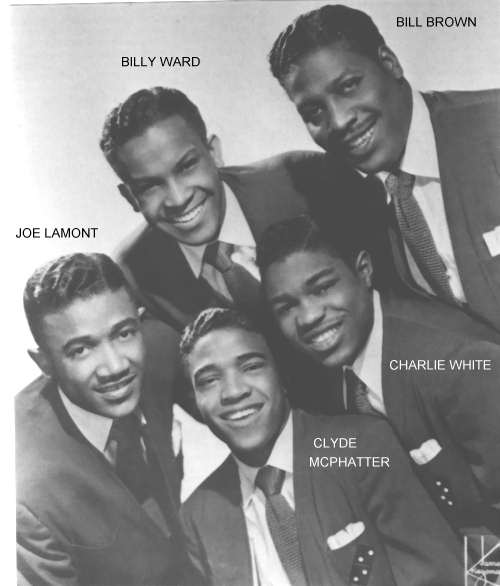
9. I like the song 60-Minute Man by Billy Ward and the Dominoes. And since the song was released in 1951, the song is 60 years old, too!

8. 60 is a Harshad number—that is, a number divisible by the sum of its digits in base 10 (6+0).

7. The Babylonian number system had a base of sixty, inherited from the Sumerian and Akkadian civilizations, and possibly motivated by the large number of divisors which 60 has. Our culture has inherited our clock and some geometrical artifacts from this system, which is why one hour has 60 minutes and one minute has 60 seconds.

6. Each angle of an equilateral triangle is 60 degrees.

5. 60 is the sum of twin primes (29+31) and the sum of four consecutive primes (11+13+17+19). It’s sandwiched between two primes (59 and 61). It’s the smallest number which is the sum of two odd primes in 6 ways.

4. The icosidodecahedron has 60 edges, all equivalent. Buckminsterfullerene C60 has 60 carbon atoms in each molecule, arranged in a truncated icosahedron.

3. 60 is a composite number and a highly composite number, with divisors 1, 2, 3, 4, 5, 6, 10, 12, 15, 20, 30, and 60. It’s also one of only 3 unitary perfect numbers within a human lifespan in years. (The first few unitary perfect numbers are 6, 60, 90, 87360, 146361946186458562560000.) It is also an excessive number with an abundance of 48. Being ten times a perfect number, 60 is a semiperfect number.

2. #60 on my lifelist was the Scarlet Tanager! (First seen on June 23, 1975, near Kalamazoo, Michigan.)

Scarlet Tanager

1. The sum of the digits in 11/11/11 equals the sum of the digits in 60!


Addendum: I just remembered another cool thing about the number 60—the coldest temperature ever recorded in Minnesota was -60 degrees F, on February 2, 1996, in Tower. It was much warmer in Duluth that night. Our thermometer only got down to -41.

Wednesday, November 2, 2011

Compassion for All Animals


-->
Black-capped Chickadee
(Transcript of Friday's For the Birds)
Compassion and empathy are two qualities that human beings extend selectively. Just about everyone lavishes the most compassion and empathy on their immediate family members, a little less on their friends, less on their neighbors, and even less on members of their wider community. Compassion gets pretty watered down when we get to people of different countries, especially those who do not share the same religion or culture.  

And then we get to other species. As usual, we lavish more compassion on animals that we can relate to than other animals, and because we’re mammals, that means we feel more compassion for our fellow mammals than we do for birds. By the time we get down to frogs, even though they also are vertebrates, we don’t have much left, and there’s virtually nothing left for invertebrates such as octopuses, even though every researcher who has ever worked with them knows how aware and intelligent they are.  

The selectiveness of our compassion for different animals extends to our criminal justice system. When two young men shot a Whooping Crane in Indiana in 2009, they weren’t held in jail and after the trial received only a year of probation and a fine of one dollar plus court costs. Yes—one dollar. The Whooping Crane restoration project that this bird was part of has put millions of dollars toward trying to reintroduce a migratory population of this critically endangered species, and the individual crane killed happened to be the ONLY female who had successfully brought off a chick in Wisconsin so far, but the judge didn’t take any of that into consideration.  

Whooping Crane
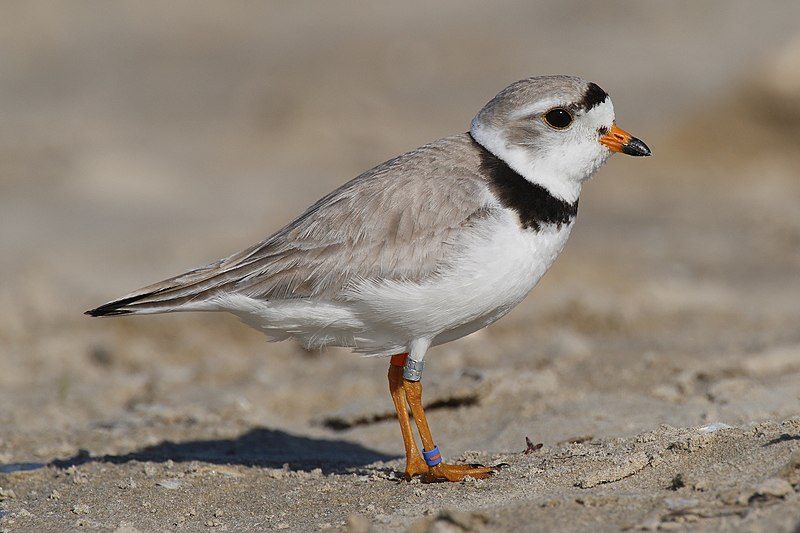
Yet in 2007 when a man in Texas shot a feral cat that was stalking endangered Piping Plovers, he was instantly jailed. [At trial, the jury couldn't reach an agreement] And a woman in Washington, DC was just convicted of attempting to poison feral cats, and faces up to a $1000 fine and 6 months in jail.  

(Photo by MDF on Wikimedia Commons) 

We humans are an odd species—the very people who hunt birds and mammals for sport as well as food include some individuals who have spent their lives working on conservation of these same species, and trying to educate other hunters about what animals NOT to shoot. But even many of the most avid conservationists see birds as natural resources and not as intelligent individuals capable of suffering. Some people have done research proving intelligence, individuality, and the capacity for emotion in birds. On October 16, Psychology Today’s blog included an article, “Why the Caged Bird Does Not Sing: Captivity and Complex PTSD in parrots and people.” But most people simply do not accept that birds are on a par with mammals in these areas.  

Monk Parakeet

The Humane Society of the United States website currently has a graphic showing St. Francis of Assisi linked to a story, “Eye on the Sparrow: faith in action for animals.” The same page says, “We’re the nation’s largest and most effective animal protection organization,” and on the “About Us” link says, “We work to reduce suffering and improve the lives of all animals.” Their logo tells a different story: of the 19 species depicted, only two are birds—a pigeon and a goose or swan, both too large for most domestic cats to be able to bring down, and despite the fact that the number of bird species in the US is significantly larger than the number of mammal species. And the Humane Society not only gives feral cats preferential treatment over birds but also over small mammals. The feral domesticated cats they foist on the natural environment kill literally billions of wild mammals and birds every year. As long as the Humane Society closes their eyes to these suffering and dying creatures, they do not deserve to be called humane.  

White-breasted Nuthatch fatally wounded by cat

What to do about feral cats: More questions than answers

Clarence
(Transcripts of today's and tomorrow's For the Birds)
Three weeks ago, when Russ and I were in Port Wing, Wisconsin, visiting his mom, we found an emaciated cat lurking around where her juncos, doves, and migratory sparrows hide out. She was a blue-eyed beauty, a Himalayan, looking like a longhaired Siamese but lacking the squashed-in face that some people breed Himalayans to have. She had a husky, cool meow that reminded me of Jean Arthur in Mr. Smith Goes to Washington, so I decided to call her Clarissa. Russ’s mom’s nearest neighbor is over a quarter mile away, but I drove over there to see if they’d lost a cat, and put up a notice in The Store, leaving my phone number so people could contact me, and then we drove home with her.

I contacted the Bayfield County sheriff’s office and several veterinarians and humane societies, to see if anyone had reported a lost cat. I had to keep her quarantined from my own cats and Photon, and first thing the next morning, I called my vet and asked if they could squeeze us in so she could have the once over. The first thing they discovered was that she was a neutered male, so suddenly Clarissa turned into Clarence. He had both roundworms and tapeworms. They ran several tests, and learned that he was FIV positive. This disease, akin to HIV in humans, suppresses the immune system. It’s only communicable to cats, passing through the saliva, so can be given to cats who share dishes or who bite or lick one another. Our family is at our limit in the number of pets we can properly deal with anyway, and now it was definite that there was no way we could keep Clarence. But what could we do? I posted on facebook and my blog, and called various humane organizations, but most places euthanize cats with FIV because there’s no cure and they don’t want the disease to spread to other cats.

Clarence


Two and a half weeks went by, I was getting very nervous about finding him a home, and it wasn’t easy dealing with him at home—when I was around, I could have him up in my home office, but even though he didn’t seem the least bit interested in Archimedes, the poor little owl was petrified of him, so when I wasn’t in the room, I had to keep Clarence in our basement garage.

Clarence

It was all very stressful, but at last a miracle happened. One of my birding friends on facebook lives in Tucson, and friends of hers south of Madison, Wisconsin, had recently lost a cat. One thing led to another, and this past weekend I drove Clarence to his new home.

Rescuing this cat, which also saved all the birds he otherwise would have eaten, cost about $300 in vet bills, plus the gas for driving 700 miles back and forth. It would have been far cheaper to have him euthanized right off the bat, and maybe more sensible after I found out he was FIV+. I of course also had the option of just leaving him in Port Wing, ignoring his suffering and all the lost birds, but that runs against something deep in my soul. I don’t know what the wisest way to deal with stray and feral cats is, but leaving them outdoors to spread parasites and diseases and kill wildlife is not the solution. People down the road from my mother-in-law allow their cats outside, and Clarence got into a few fights with them. They may have given him FIV, or he may have transmitted it to them. In addition to the danger feral and stray cats cause to people by spreading toxoplasmosis in their droppings, and the risks of spreading disease and parasites to other cats, current estimates put the number of birds killed by cats in the US at more than a billion each year.

I don’t know what the best solution is, but tomorrow I’ll talk about one misguided attempt to deal with feral cats in Washington, DC that may land a wildlife biologist in prison.

Clarence

*****
Feral and stray cats, and pet cats allowed to spend time outdoors, kill an estimated billion birds a year in the US. People supporting Trap-Neuter-Release programs for feral cats close their eyes to the unimaginable suffering of the small mammals and birds toyed with and killed by these cats. They feel a misguided sense of virtuousness supporting feral colonies, reminding me of the people who used to bring me birds injured by their cats when I was a rehabber. I spent thousands of dollars of my own money and thousands of heartbreaking hours taking care of these birds, and only one of them survived in my decades of rehabbing. A single cat bite crushes bones and punctures skin and muscle, leading to complex and devastating internal injuries and infections. People bringing me these birds drove away feeling virtuous, not thinking at all about the suffering the bird was still undergoing, nor about the suffering of me and my children struggling to keep these birds alive and watching them die. Out of sight, out of mind.

White-breasted Nuthatch fatally wounded by cat

The truth is that there is no such thing as a properly managed feral cat colony. People who think of themselves as humane leave cats out there to kill huge numbers of birds and small mammals and to spread diseases and parasites to other cats before they themselves succumb to disease, frostbite, injuries, or predation. When these cats have access to garden beds or children’s sandboxes, they spread toxoplasmosis to humans. Euthanizing them is far more humane to far more creatures than supporting them in this feral condition.

Shrew #1 killed by cat

Unfortunately, in cities like Washington, DC with active trap-neuter-release programs to support feral cat colonies, there is little people can do to protect birds from them, and these cat populations can be far, far larger than any natural predator population can be. When people feed them, they simply keep them alive longer, yet subsidizing them with food has never been shown to reduce the number of birds they kill.

Cat

A wildlife biologist with the Smithsonian Migratory Bird Program was at her wits end dealing with the many feral cats fed at an apartment complex next to a park where birds were concentrated during migration. She was videotaped putting poison into feeding dishes at nighttime, and convicted on November 1 of attempted animal cruelty. The maximum penalty is 180 days in jail and a $1000 fine.

As much as I decry feral cat colonies, I know it would be impossible for me to poison cats—not only would they suffer, but any scavengers that ate them would also sicken or die. But I’m sympathetic to the desperation of this biologist, who documented and understood first-hand the damage that cats do to migratory birds. I was also sympathetic to the man in Texas who was convicted of shooting feral cats that had been feeding on endangered plovers. Really, what can we do when so-called "humane" societies foist these subsidized, domesticated killers on wildlife rather than take responsibility for finding a truly humane solution for them?

Feral cats in subsidized colony, Sacramento, CA

Sites on the internet promoting feral cat colonies use photos of piles of dead cats that have been euthanized to elicit sympathy to their cause. But where are the photos of the carnage feral cats cause? Why is a quick and humane death for one cat more tragic than the suffering and death of the hundreds of birds that that cat would have killed, along with the diseases and parasites it would have carried to other pets and human beings? The Humane Society of the United States claims to “work to reduce suffering and improve the lives of all animals.” Subsidized feral cat colonies pit one domesticated species against billions of individual animals of hundreds of species. Cats have led to literal extinctions on some islands, have decimated local populations of many vulnerable species, and kill hundreds of thousands or even a billion birds a year in the US. Poisoning or shooting these animals in frustration may not be the best response, but the Humane Society has an obligation to keep feral cats separated entirely from wild birds, or they’re not being humane at all.

Feral cat stalking birds on Miami Beach.

Tuesday, November 1, 2011

Hunters: Eagles Need Your Deer and Turkey Hearts

Transcript of today's For the Birds

Every year in October and November, the number of eagles taken to rehab centers in Minnesota and Wisconsin rises dramatically. A great many of these birds have lead poisoning, from eating carcasses of deer that got away after being shot, or eating gut piles, when the hunter used lead bullets or buckshot. Last week Marge Gibson at the Raptor Education Group, Inc, or REGI, took in several lead poisoned eagles. Lead is highly toxic to birds and mammals, and remains in the bloodstream until it binds with substances called chelates. Chelation therapy, in which the chelate is infused into the blood to bind to the toxic metal, is the only way to, quite literally, get the lead out. After the lead binds to the chelate, the kidneys can filter it out of the bloodstream.

But chelates themselves are toxic, and it’s hard for the kidneys to filter out too much at a time, so chelates must be given to the eagles in reasonably small, regular doses until the birds’ systems have been cleared of toxins. It’s important for these vulnerable birds to get excellent nutrition as they recover. This year, Marge Gibson has sent out a request for any hunters who could to bring the hearts of deer, bear, turkeys, ducks, or other game to help feed her eagles. REGI is located in Antigo, Wisconsin, so if hunters who live in or spend time near there could freeze the hearts and get them to Marge, it would be enormously helpful. My friend Sandy Gillum, a loon biologist in Eagle River, can also take them to Antigo. If you’re a hunter who can donate the heart from your game, please email me for more information.

In other hunting news, the winner of this year’s Duck Stamp art contest was just announced. Joseph Hautman’s exquisite male Wood Duck, painted in vivid acrylics. This was the fourth time Hautman has won this prestigious award, and the tenth time that he or one of his two brothers won. The art work will be used on the 2012 Duck Stamp, which will be on sale starting in July. Hautman won’t receive any money or other award. Fully 98 cents of every dollar people spend on duck stamps goes directly toward land conservation in the National Wildlife Refuge system, and this is possible because the artists who win the contest donate use of the image for the stamp—their only compensation is a pane of stamps carrying their design. But they may sell prints of their designs, which are sought after by hunters, conservationists, and art collectors.

All waterfowl hunters are required to have that year’s Duck Stamp, which they must sign in ink. Birders should also purchase Duck Stamps—the National Wildlife Refuge System is essential for a great many non-game birds, providing essential breeding habitat for Black-capped Vireos, wintering habitat for Whooping Cranes, and migration stopover habitat for virtually all Neotropical migrants, including warblers, tanagers, orioles, and hummingbirds. This year, your $15 will not just be your contribution to critical habitat and great birding sites—it will also get you a beautiful little portrait of a Wood Duck. The 2012 stamp won’t be out in time for Christmas, but the 2011 Stamp, with Hautman’s brother James’s painting of a regal pair of White-fronted Geese, would make a great stocking stuffer for conservationists.