Laura Erickson's For the Birds

Friday, January 11, 2019

Barred Owl in the News

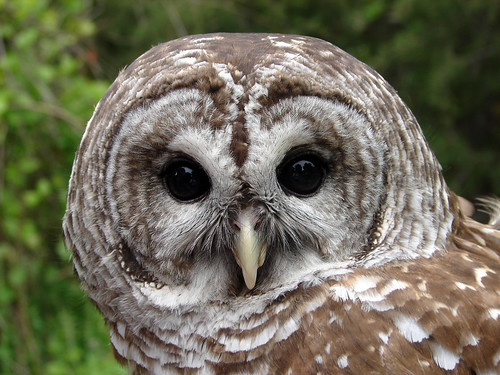
Barred Owl

This week I got an email from one of my friends, David Figura, a journalist in Syracuse, New York, wanting information about owls after seeing a surprising video on social media. His article on Syracuse.com read:
A Rensselaer County man got up close and personal recently with a wayward barred owl that flew into his truck while he was driving.
“The thing just flew into my window. It hit me in the face. I’m cut up,” said Jeremy Dodge on a video of the Jan. 2 incident he posted on his Facebook page.
Dodge, of Averill Park, said was driving down Route 66 to get some Chinese food that evening. The bird settled on his front passenger seat.  
Before posting his news article, Dave wrote to me to verify the bird’s identification, and also to ask if I had any thoughts on how it happened. He asked, “Was it possibly hanging around the roadway looking for, or feasting on roadkill, or just an oddity in the outdoors?” He quoted my response verbatim:
Many owls hunt along roadsides. People carelessly tossing food into ditches are unfortunately subsidizing rodents that in turn attract predators. And owls tend to fly exactly at windshield or car window height.  
When Jeremy Dodge posted his video, it instantly started a ruckus on social media, quickly amassing tens of thousands of views.


A lot of viewers posted comments. Most everyone thought it was amazing and/or hilarious. Some of the responses were pretty hilarious, but few people really knew anything about owls.

Several people commented on the way Jeremy Dodge had reached over and stroked the owl on the forehead between the eyes. Owls resemble cats, and so that’s a natural human response to an owl. A couple of people insisted that the fact that the owl leaned into this meant that the owl was somehow a domesticated bird, responding like a pet cat. I pointed out that this is how owls responded when I stroked wild owls to calm them when I was a wildlife rehabilitator. Siblings, parents, and mated owls naturally allopreen, using their beaks to preen one another’s facial feathers above and between the eyes, and the bird being allopreened responds exactly in the way Jeremy Dodge’s Barred Owl did. My education owl Archimedes leaned in like that from the very first night I had him in my possession.

Hardly anyone mentioned the old superstition about owls portending a death despite the fact that in this case, the guy could have had a heart attack or crashed his car in the first few seconds—the bird had hit him on the side of his face before inertia and its flapping wings carried it beyond the driver to the other half of the front seat.

Much more often when an owl’s path crosses ours, it goes far worse for the owl than for the human. Wildlife rehabilitators still treat a distressing number of hawks and owls each year for firearm injuries. Had the weather been more seasonable, Jeremy Dodge would not have been driving with his window open, and even then it was improbable that the bird would hit the open window. As I told David Figura for his article,
This was a case of the bird winging across at exactly the wrong time. It could have gone worse, at least for the owl—it could have been a split second earlier and been struck hitting the windshield, or it could have been a split second later and hit the closed back window.  
Dodge pulled his car over for some of the brief video, then got out and opened the passenger door. He said goodbye to the owl, which he repeatedly called “dude,” and the bird flew off into the night. It very well may have had a head injury—his cellphone flashlight reflected differently off one eye than the other, which may have been an artifact of angle but also suggested possible head or eye trauma—but the bird did appear to fly well and may well be recovering just fine on its own. 

With luck, it’ll not just recover but learn to avoid roads. But then, how likely is it that people are learning from this video to stop throwing apple cores and other rodent food out their car windows, ensuring a continued rodent population along roadsides? And how many people will start driving slower to avoid most of these collisions in the first place?

Surviving traumatic events is often a matter of luck. Learning from them? Humans and owls reportedly both belong to intelligent species, but how well either of us learn from our mistakes, or even realize when something bad happens that we made a mistake, is a question for the ages.

Friday, January 4, 2019

Guest on Science Friday!

On today's Science Friday, I was honored to be one of Ira Flatow's guests! You can hear that segment, about the Christmas Bird Count and other birdy things, on the Science Friday website. Especially thrilling for me is that the Science Friday website actually has a Laura Erickson page, where you can hear both today's birding segment and one I did in the studio with Ira Flatow last year, that one also featuring my good friend J. Drew Lanham.

Proof! I was on Science Friday with Ira Flatow!
This photo was from December 22, 2017, when I was in NYC visiting my daughter so got to
be in the studio with Ira Flatow!!
Pip and her Uncle Drew
J. Drew Lanham and Pip the Birding Dog! Drew was on the
Science Friday birding program last year. 

Laura’s Best Bird EVER! ™ Big Year Mexican Chickadee

April 7, 1982, Joey and me in the Chiricahuas
Hiking in the Chiricahuas
In 1982, Russ and I took our 6-month-old baby Joey to Arizona. One of the highlights for me was a long hike in the Chiricahua Mountains, where I saw my lifer Mexican Chickadee.

Photo courtesy of Bettina Arrigoni via Wikipedia.
This species isn’t particularly rare within its range, but only reaches the United States in a few places. The most accessible area, where most birders add it to their lifelist, is along the trails near the Rustler Park campground; sure enough, that’s exactly where we saw it. The hike was so fun that the day remains one of my favorite memories—that was the day we even came upon a Gila Monster. I can’t remember the exact moment I saw my lifer Mexican Chickadee—it was just one of many lovely experiences that day. So as thrilled as I was to have finally seen the last of all the chickadees that breed in the Lower-48, I’m afraid it didn't qualify as a “Best Bird EVER!”  

Then, in 2013 I did a Lower-48 Big Year, and one of my goals was to see every chickadee in that one year. That meant I had to head back to the Chiricahuas to see the Mexican Chickadee again.

Unfortunately, my Big Year plans had to be abbreviated, in terms of both time and money, and I didn’t get to the Chiricahuas until November 23. I’d made arrangements to stay for two nights at the legendary Cave Creek Ranch so I’d have a whole day to enjoy the high elevations where the chickadee would be. I reached the entrance to the ranch at mid-afternoon, when we were getting a few snow flurries. The dirt road in had a warning sign, “SERIOUS BUMP,” but with due diligence, I got my low-carriage Prius through it just fine.

Serious Bump sign

While planning my trip to the extreme south, close to the Mexican border, it never occurred to me that I might need winter boots, a shovel, and sand or kitty litter, much less snow tires on my car. I had plenty of warm clothes but had not thought to prepare for winter driving, which was especially shortsighted because I'd be driving all the way home to northern Minnesota as Thanksgiving approached, when snow is just about always expected. There were a few small bits of snow here and there in the vegetation as I drove to Cave Creek Ranch, and a more thorough dusting covering the ground at the ranch, but I figured that was the most I’d see down there. I didn’t have enough time to get up into the mountains that day, and so I spent the rest of the afternoon reveling in and photographing feeder birds and javelinas, also called collared peccaries, at the ranch.

Javelina

When it got dark, I had a wonderful dinner and went to bed early. I had an exciting full day of birding ahead.

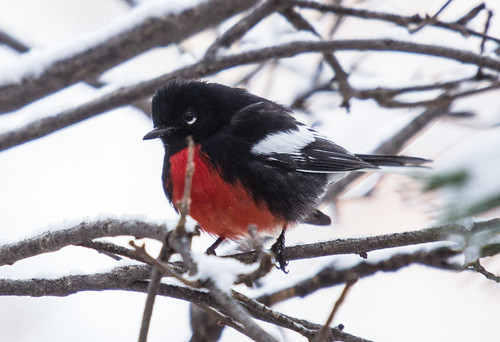
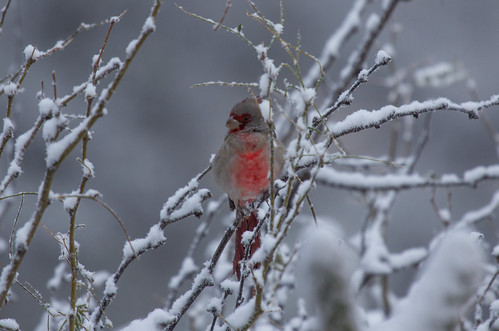
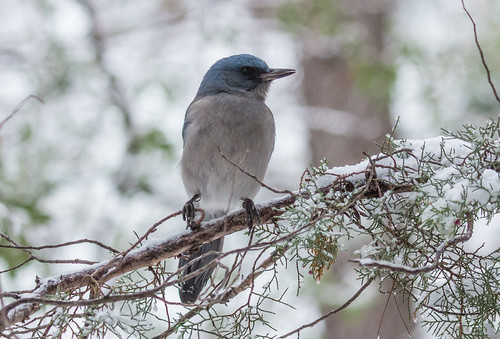
I woke at first light to two or three inches of snow on the ground, as beautiful as it was disconcerting. My car could easily handle that even without snow tires if I took it slow and easy, but I knew that the snow depth would increase as I went up the mountain, and I needed to be at a much higher elevation to see the chickadee. To be on the safe side, I waited a couple hours before I set out, in hopes that the road up the mountain would get plowed out. Meanwhile, I looked at an assortment of birds I’d always associated with hot, dry Arizona—it was unsettling to see them in snow, but of course it snows in winter, at least sometimes, even down in Arizona and Mexico.

Painted Redstart
Painted Redstart
Pyrrhuloxia
Pyrrhuloxia
Mexican Jay
Mexican Jay
Blue-throated Hummingbird
When I finally set out, the roads hadn’t been touched by plows or other vehicles. It was easy to stay on the road, but sure enough, the snow got deeper and deeper as I climbed. I’ve done plenty of driving in snow over the years, and for a few miles worked my way slow but steadily up the road. I passed the Southwestern Research Station—closed to visitors for the season—and made it a total of about seven miles. I didn't get quite to Paradise Road, and still was a full six or seven miles short of where Russ and I had seen Mexican Chickadees before, up in Rustler Park. I'd crept along as the snow got deeper and deeper, until at last it was up to my front bumper and my car couldn’t go any farther.

It was time to give up. I had to leave the Chiricahuas the next morning, so I was giving up on my one and only shot at Mexican Chickadee for the year.

I didn’t have leisure to feel sorry for myself—I still had to figure out how to turn my car around in the deep snow to head back down the mountain. All I could do without a shovel was to kick away a path through the snow in front of all four tires, wearing my hiking boots, and then get back in the car and try to inch it around in a U-turn. I managed to move the car a couple of feet before I got mired again. I got out, again kicked away snow to make another short path, and again worked the car a couple of feet further. The morning was silent, the thick snow beautiful even if it was creating a worst-case scenario for birding. There was no wind and it wasn’t all that cold—probably low- to mid-20s—but there were also no birds calling. I was just as glad about that because I was focused on kicking away snow. I wasn’t all that upset—when I’m alone, with no one else depending on me, I can be surprisingly Zen-like in dealing with setbacks.

It took three or four more kicking-snow-and-inching-my-car-forward episodes to get my car perpendicular to the road. I had to kick out the snow from in front of my tires and inch the car forward another five or six times before it was finally facing the right direction, down the mountain instead of up. I’d spent more than 45 minutes at it, and despite my warm coat, hat, and gloves, I was chilled to the bone, my feet frozen. I cleared out enough snow ahead of my tires to get a three or four-foot start in hopes that I could stay in motion going straight down—at least now I could drive in the tracks I'd made going up.

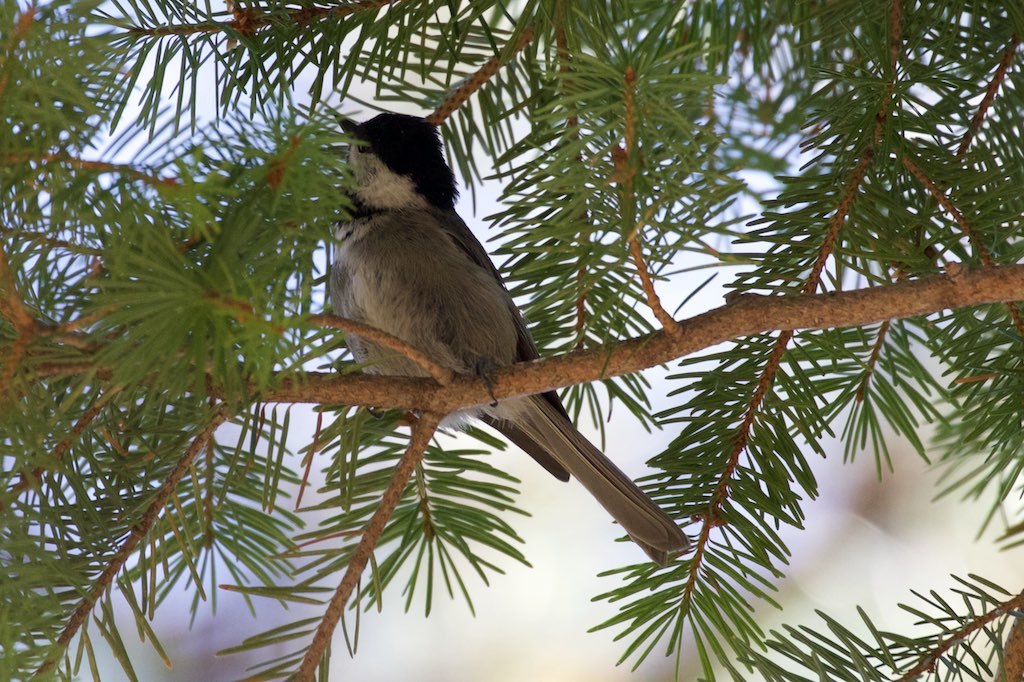
I had just opened the car door to get in for the last time when suddenly I heard the rapid chickadee calls of a Mexican Chickadee! I thought it was my imagination—how could it not be? But no, there in a conifer next to the road was a chickadee staring at me. I’d kept my binoculars on while driving and then while shoveling, so I got a clear look at the extensive black bib and distinctive gray wash on the sides. A Mexican Chickadee!

Like other chickadees, Mexican Chickadees tend to move about in winter flocks, but as hard as I looked and listened, I could not find another chickadee, or any other bird for that matter. I'd been pretty quiet with my kicking and inching my car, a hybrid without any engine start-up noise, but birds have keen hearing. Perhaps this little guy heard an odd sound and flew down the mountain to check it out, or perhaps it took pity on a poor, wayfaring stranger a’traveling through that world of woe. I’ll never know what impulse brought it to me or made it call at quite literally the last possible second before I started down the road. It flew away before I could even think to get my camera out of the car. But for one brief, shining moment, which was all I really needed, there it was. That Mexican Chickadee was surely my best bird EVER.

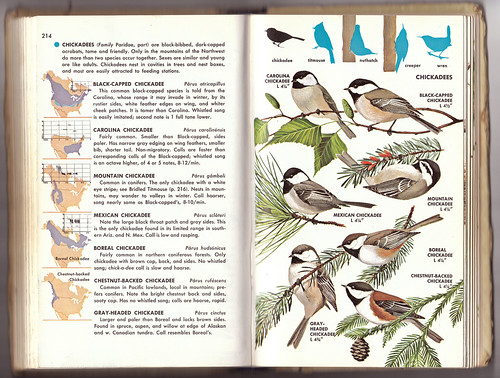
GoldenGuideChickadee.jpg

Snowman

Wednesday, January 2, 2019

First Bird of 2019

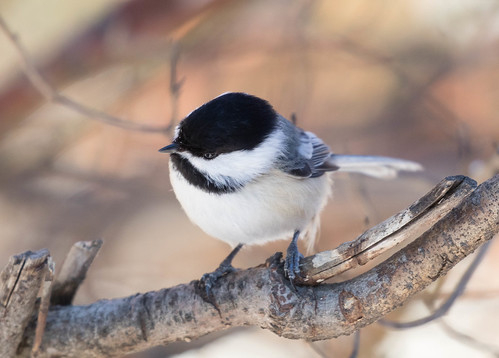
Black-capped Chickadee

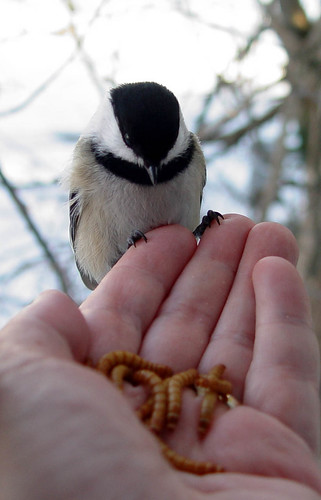
On January first, I just happened to be looking out at a spectacular sunrise when there came a rapping, came a tapping at my chamber door. Well, not exactly--the sound was simply coming from another window. And there was my first bird of the day, insisting that I hold out my hand in the sub-zero temperatures to give it live mealworms for its New Years breakfast. Of course I obliged, so my first bird of 2019 was not only seen and heard but literally felt, its cold little toes clutching my fingers confidingly as it grabbed two mealworms. It feasted in a nearby spruce and was back in less than a minute with a beseeching “Please, sir, I want some more” look. This time it flew off with three.

Handfeeding mealworms to a Black-capped Chickadee

If I’ve had one constant wish over the years as far as my first bird of the year goes, it’s hoping for it to be a Black-capped Chickadee. And if I have one constant pleasure with chickadees, it’s the lovely way some of them come to trust me and take food from my hands. So 2019 started out making me feel rich and satisfied.

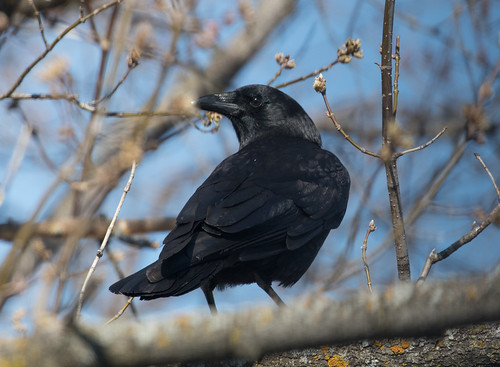
A time-honored tradition among birders is reporting our first bird of the New Year, and I like to come up with scenarios for the coming year based on that first bird. For example, a chickadee could signify a year filled with good cheer and equanimity in facing any hardships; a crow could portend a year marked by intelligence and warm family ties.

American Crow

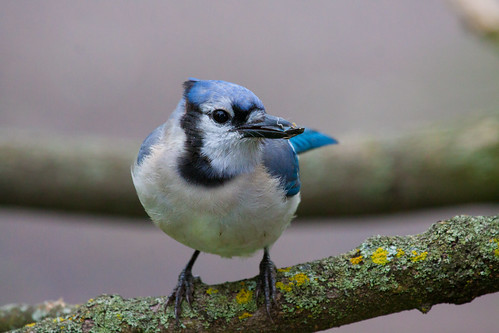
Seeing a Blue Jay first might mean you’re going to use both intelligence and a spunky attitude to face the coming days.

Blue Jay

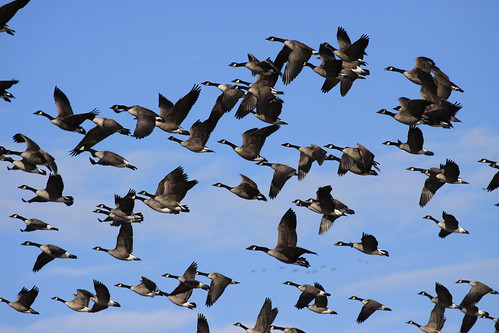
Canada Geese are all about travel and convivial gatherings with friends and relatives.

Canada Goose

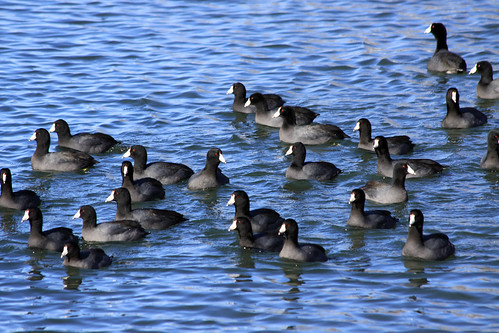
American Coots might predict a year filled with friends and delicious vegetarian meals—of course, geese are pretty much vegetarians, too.

American Coots

These kinds of predictions have every bit as much scientific validity as any other form of fantasy, but what my prognostications lack in reality they make up for in tradition. Our word augury comes from a term specifically referring to the ancient practice of divination by means of birds. Birds were among the sacrificial creatures whose entrails were laid out for augurs to interpret. An auspex referred to a person who watched living birds to predict the future. That’s where the word auspicious comes from.

Few cultures in today’s world hold a firm belief in augury, yet even educated people in modern societies take comfort in thinking that birds somehow communicate with the dead or that someone who died is somehow taking wing with the birds. At my mother-in-law’s memorial service last week, the minister said she’d seen a Bald Eagle that morning and asked if anyone else had seen an eagle that day—several people in the congregation raised their hands, including me.

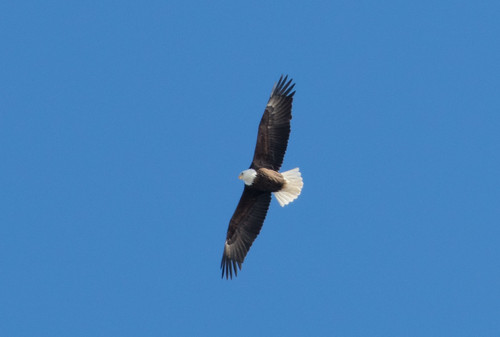
Bald Eagle

The eagle I’d observed was flying over the highway toward the lake, maybe traveling between a dead deer along a county road and fish entrails along the shore. From sunrise to sunset, a Bald Eagle’s day is focused on eagle matters—finding and consuming food, resting, maybe checking out how the nest it’ll be using come spring is faring after a winter storm, and activities we mere humans don’t understand. When our path intersects that of an eagle, we like to think it holds some meaning for us personally, but cannot even fathom whether the eagle takes notice of us or makes predictions about its own future based on what species of mammal it saw first on whatever day an eagle might think begins its annual cycle.

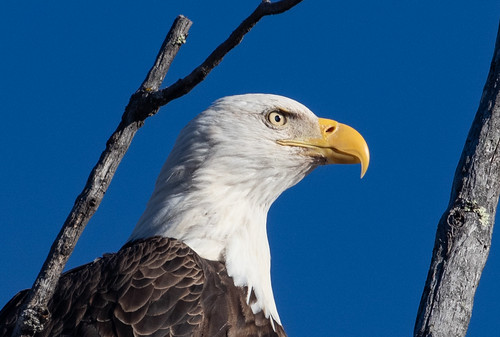
I know the Bald Eagle I saw in Port Wing on December 26th wasn’t in the least bit thinking about my mother-in-law, much less carrying her spirit aloft, but it’s lovely to imagine her finally taking wing after her awful final months, just like it’s lovely to think that my new year will be filled with a chickadee’s good cheer and convivial ways. Imagining a happy future and the souls of our loved ones flying free is no more or less reasonable or fact-based than most pessimistic predictions, and no less likely to be fulfilled than, say, our new year’s resolutions, at least based on my past experience. As long as we understand the difference between reality and fantasy, indulging in predictions based on birds is a time-honored human tradition that really can lift our spirit. After all, we’re only human.

Bald Eagle

Tuesday, January 1, 2019

Federal Workers Are FOR the Birds

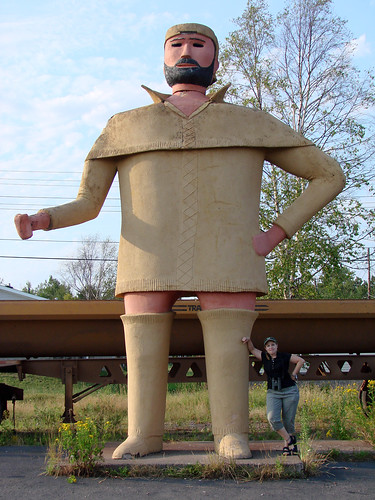
Sharon and Paul
Sharon may be tiny, but her passion and knowledge dwarf even Paul Bunyan.
(This is the text of today's podcast.)

Yesterday, the Washington Post published an excellent commentary by my good friend Sharon Stiteler, a ranger with the National Park Service, about what it feels like to get furloughed. Sharon is funny and insightful, and an excellent writer. She articulated the frustration I see in other federal workers.

Back in the 70s, Russ and I were in the Fisheries and Wildlife Department at Michigan State University. As we reached the end of our college years, back when lots of corporations were recruiting people with Russ's background, the ones who took their jobs with the EPA, the US Fish and Wildlife Service, the National Forest Service, or National Parks were committed to public service—trying to clean up the air and water we all needed, to protect endangered species and the critical habitat wildlife and we depend on, and to give visitors on federal land the most wonderful experiences in nature possible. Everyone I know who took one of these jobs was thrilled, even those who had alternatives that would have paid much better.

I was focused on teaching. I’d taken lots of classes, both as an undergrad and graduate student, in Shakespeare and the various zoology disciplines— entomology, herpetology, mammalogy, and especially ornithology—to equip me to be a great elementary school teacher, helping my students kids learn about the world they lived in and have a rich enjoyment of the arts as well. I was trying to give them the tools to lead happy and fulfilling lives.

As someone who came out of a Catholic elementary school, the concept of vocation was strong in me. The vast majority of my own teachers had been nuns who had taken a vow of poverty and worked for no pay whatsoever; our few lay teachers were paid pretty much at the poverty level, too. It’s easy to ridicule Catholic and public schools from back then for all sorts of things, but considering that Russ and I lived in a blue-collar suburb of Chicago and that virtually none of the kids we knew had parents who had gone to college, we ended up with darned good educations that prepared us well for college.

Russ went to public elementary school and we both went to a public high school where teachers were paid better than Catholic schoolteachers, but not nearly as much as they’d have made doing jobs in the private sector. Again, they took their job as a vocation. Our high school teachers did go on strike once in 1968 or 1969—they needed reasonable benefits and were willing to fight for them, but they were happy to work for “enough.” I grew up knowing that reaching for the stars had to do with trying to achieve things that brightened people’s lives or improved the environment we all need. Russ and I knew we’d always need to earn enough money to pay our bills and be able to afford a few lovely experiences in life. But part of wisdom is knowing when you have enough.

Sharon Stiteler articulated that in her Washington Post piece.
None of us took our jobs to get rich. We are public servants, who love what we do. We are incredibly frustrated that we can’t do a fair day’s work for a fair day’s pay. 
I should have known better than to read the comments on her piece. Most readers were warm and supportive, but a few told her to find a real job, and some even took her words about her job being a vocation to imply that she must be some sort of “trust fund baby,” which she most assuredly is not.

Where have we descended, as a society, when acquiring money is the top goal of so many people? I grew up with the story of Jonas Salk, who developed his polio vaccine at public expense, and gave the patent to the American people. He was a scientist by vocation, and he knew what it meant to have enough. Now scientists working for pharmaceuticals, and CEOs and shareholders, gouge people for critical, life saving drugs, most of which were developed via grants paid for by the very taxpayers they are now so egregiously overcharging.

I’ve heard from people who’ve been at park events led by Sharon Stiteler—she’s knowledgeable and fun, exuding the kind of energy and passion we see in people focused on doing their best in a true vocation. I’ve also watched my husband, a scientist who has dedicated his career at the EPA doing the best science to form the foundation of fair and reasonable regulations to protect our safe, drinkable water supply. When we dismiss federal workers as unnecessary and claim that if they don’t like being political pawns, they should go get a real job, we’re essentially telling the college students of today that money is the only value, and that only a fool or lazy person would take a job with the federal government.

I liked being able to trust that the birds and other wildlife I love—birds that belong to every one of us—and that the food we eat, the air we breathe, and the water we drink are safe, now and into the future. I want the children of today and tomorrow to have the same kinds of wonderful experiences in our national parks that my own children had.

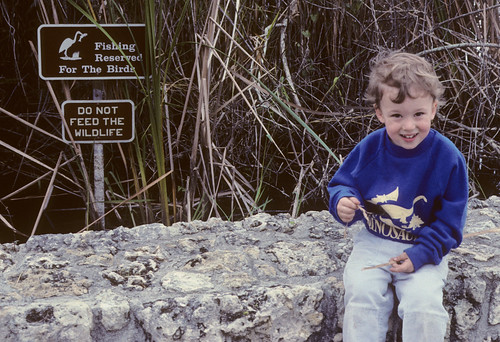
Tommy in the Everglades
My son Tommy, when he was three, at Everglades National Park. My kids thrived
on visits to national parks. Will the children of today and tomorrow be as lucky?
As our population grows and people crave more time with nature, our national parks should be expanding apace, not shrinking and becoming more commercial. Our food, air, water, natural habitats, and wildlife ever more urgently need to be protected, not politicized. Government is supposed to protect these things for everyone. Every one of us, whether we acknowledge it or not, depends on the excellence of government workers. It’s time to recognize this.

Wednesday, December 19, 2018

Tufted Duck in Duluth!

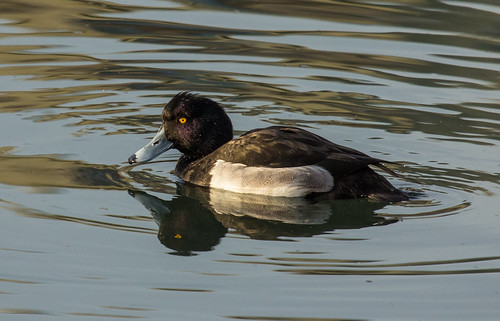
Tufted Duck

A week ago, on December 11, Kim Eckert saw a weird duck in Canal Park in Duluth. The improbability of what it looked like made him tentative about his own identification, but he sent word out immediately at 11:09 am:
POSSIBLE FEMALE OR JUV TUFTED DUCK NOW IN CANAL PARK SHIPPING CHANNEL. With goldeneye flock. Looks like female scaup with inch-long horizontal tuft at hind crown. Have no scope or camera with me.
The duck disappeared when a ship came into the canal under the lift bridge, but Don Kienholz posted at 12:18 that it was back. When I saw the posts, at 1:15, I immediately headed out with my dog Pip, but I had an appointment at 2:30 so needed luck if I was going to find it quickly enough.

The only time I’ve seen a Tufted Duck in Minnesota—a hotline bird chased by lots of birders throughout the state—it was hanging out in a sewage pond somewhere near the Twin Cities. The Minnesota Ornithologists’ Union Records Committee rejected that sighting.

Tufted Ducks are a Eurasian species—I’ve seen them when I was in Austria and Hungary. Theoretically it’s possible that that one had escaped captivity, and so the Minnesota Ornithologists’ Union decided it was possible it wasn’t truly wild.

I first saw a Tufted Duck for my life list in 2013—a wild one had been turning up at Merritt Lake, a small park right within downtown Oakland, California, for several winters running.

Tufted Duck

Tufted Duck

There are also acceptable state records in many states. Seeing one here in Duluth, genuinely wild or not, was worth a trip to Canal Park.

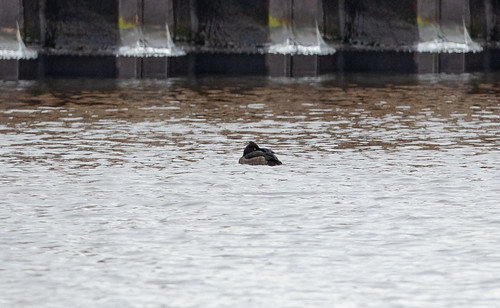
I ran into Larry and Jan Kramer at Canal Park, and they showed me the duck in their spotting scope. It kept its head tucked and the sky was very overcast, but at least I got an identifiable photo.

The bird was seen on Wednesday and Thursday as well. The Christmas Bird Count for Duluth was held on Saturday, so everyone was anxious about whether it would stick around for the big event. If not, it would at least be on our official “Count Week” list, but it’s of course always nicest when it’s on the Christmas Bird Count itself. Worryingly, as much as people searched, it was nowhere to be found on Friday.

Fortunately, it was back at Canal Park on Saturday, boosting our species count total to 59 based on what each group attending the compilation dinner reported. A few people who counted weren’t there, so it’s possible we’ll add one or two more species.

It’s also possible that our total will drop one after the MOU Records Committee votes on whether this bird is countable. People got excellent looks at the legs and feet—it was clearly not banded nor missing a hallux (its hind toe), vastly reducing the possibility that it had been a captive bird.

The other question is whether it is a true Tufted Duck or a hybrid of a Tufted Duck with a scaup or Ring-necked Duck. John Richardson, a wonderful birding guide who is from the UK and has lots of experience with wild Tufted Ducks said it looked perfectly normal to him. Some people speculated that the tuft on the back of the head wasn’t quite long enough for a true Tufted Duck, but internet photographs and field guide illustrations show some variability, and the tuft was pretty darned prominent even when the bird had her head tucked. To me, the possibility of a hybrid is so very speculative, especially when nothing about this bird makes it look like anything but a true Tufted Duck, that people would be grasping at straws to call this bird a hybrid rather than the much more likely possibility that it’s truly a wild Tufted Duck.

I’ll only be keeping it on my Minnesota list if the Records Committee accepts it. But my dog Pip is much less fussy—it’s staying on her list either way, a Christmas lifer. And Pip can do whatever she wants—she’s a dog.

Pip!


Wednesday, December 12, 2018

Rats!

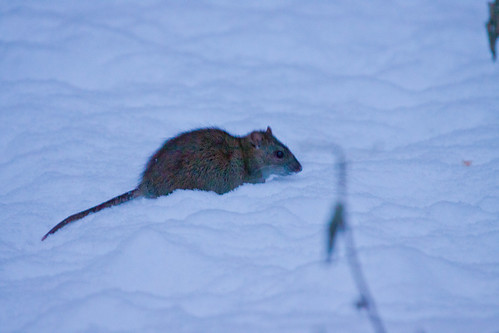
Christmas Bird Count Rat

I love rodents. I take lots of squirrel and chipmunk photos and have rescued several deer mice from houses and cottages. As a child and even as a young adult, I’ve had my share of rodent pets—white mice, hamsters, gerbils, and even one thirteen-lined ground squirrel named Sammy. My kids had gerbils, guinea pigs, a white-footed deer mouse, and one lovely white rat that we all loved. 
Of all the rodents in the world, rats are the only one that I have a visceral dislike of—a rat is the main villain in the movie Lady and the Tramp, which originally came out in theaters in 1955, before I was old enough to go to the movies, but was re-released in 1962 when I was an impressionable 10 year old. My father was a Chicago firefighter who often told us gruesome stories about rats attacking people and eating dead bodies. When my son Joey came home with that white rat in fifth grade, the little thing’s intelligent eyes and sweet disposition instantly quelled my antipathy. When I visit my daughter in New York City, we compete to see who can spot the most rats skulking around the subway tracks and in Katie’s neighborhood—that counts as wildlife watching in the Big Apple. But still...

Rats have been associated with people for so long, and are intelligent enough to thrive even where we have spent billions trying to eradicate them, that it’s hard to imagine a large city without them. In natural habitat, particularly on islands, non-native rats and mice exact a huge toll on endangered species. Eradicating them can be done where people maintain sanitation standards and aren’t constantly augmenting their numbers via transporting grains and other foods, but virtually every rat control project involves collateral damage to humans, pets, and other wildlife, and despite our best efforts, in big cities, it’s impossible to entirely eliminate them. Katie has a dog, so we have to be extra vigilant to spot rat poison set along our walking routes before Muxy does. 

Widespread as rats are, Russ and I have not had to deal with them often during our lives. Neither of us ever saw them in our blue-collar Chicago suburb as children, nor did we see them in our college towns of Urbana, Illinois; East Lansing, Michigan; or Madison, Wisconsin. I spotted one, once, in our own backyard in Duluth in the 1980s, but that was a fluke. We set out a live trap, but just caught chipmunks and never saw another rat in our neighborhood for decades. Duluth is far enough north that our cold winters have historically kept rats in check except where they can be well protected from sub-zero temperatures. Downtown Duluth has had longstanding rat problems that I learned about when I was working there back in 2005—apparently rats have a huge subterranean population living in the tunnels beneath the streets and buildings, where they can stay plenty warm. I never saw a rat downtown, but did occasionally find droppings, once even on my desk.

With climate change and an increase in composting, Duluth’s rats seem to be more able to survive outside of their sheltered downtown environment, and are spreading. A few years ago I spotted one at a friend’s feeder further east in my neighborhood. There had been a large construction project just a couple of blocks from her place, so I was hoping that was a temporary problem. 

But this year, Congdon Park School, just a couple of miles west of my neighborhood, was so badly infested with rats that they had to close down the building and grounds for the entire summer. And suddenly rats started appearing right in my own neighborhood—my neighbors started seeing them fairly frequently on the other side of Peabody Street. I didn’t see any myself until just last month, when a large rat and a smaller one appeared in the back of my yard where I feed my juncos and native sparrows on the ground. The two rats scurried off to a tunnel under our neighbor’s shed. When I told my neighbors about it, they mentioned that they’d seen rats during the summer and had already trapped a couple.
I’ve always felt so lucky to live in a ratless area where I never had to worry about spreading seed on the ground during migration—that is now officially a thing of the past. And now Russ and I can’t compost until we have a chance to entirely cage in our compost bins to exclude all rodents. 

With rats on the scene, I can only feed birds from elevated bird feeders, and am going to have to buy or create seed catchers too high for rats to jump into on all the poles that support my feeders, to entirely eliminate spillage.

One of my friends brought Russ and me some live traps. So far we haven’t caught a rat, which is a good thing because I’m not at all sure how we’d deal with it if we caught one. My visceral antipathy for them would be offset the moment I made eye contact. The fact that we haven’t seen or trapped any so far shows that the measures we’ve taken have at least helped. But a rat infestation on Peabody Street marks the end of my personal Age of Innocence. Too many people and a warming climate are wreaking havoc on this little planet, and attention must be paid.

Monday, December 10, 2018

Helen Erickson

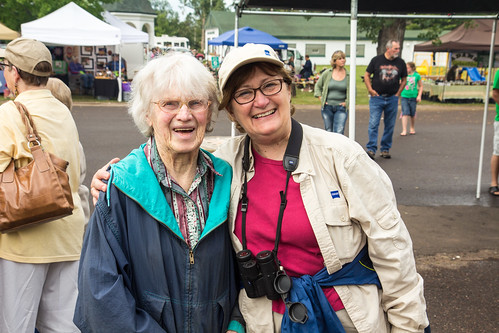
My mother-in-law and me
Helen and me at the Port Wing Fall Festival in 2014, when she was 95.
Helen Erickson, my mother-in-law, who I’ve known since I was 16 years old and who gave me my very first pair of binoculars and field guide, died in the early morning on Saturday, December 8. She was 99.

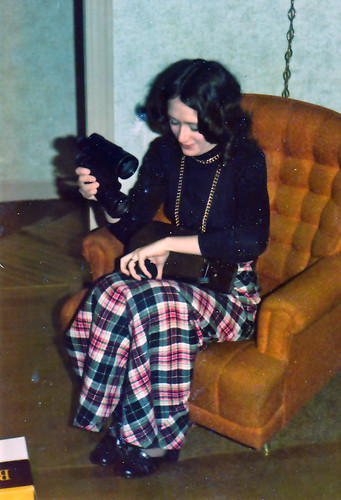
I’ve long talked about how I got my start in birding when Russ and I were in college and he told his mom to give me my original birding equipment for Christmas. She had a small bird feeder in her suburban Chicago backyard, where I saw my very first junco and grew more familiar with some other common birds as I was starting birding. 

Laura's new binoculars!

On college breaks when Russ and I would visit Chicago, she often took me to various birding spots like the Morton Arboretum and the Little Red Schoolhouse Nature Center. One time when her car got stuck in a slurry of snow and ice on a wet, muddy road, she calmly turned the engine off, jumped out of the car, opened the trunk and took out first a small shovel, digging out some of the snow in front of the stuck tires, then took out some rag rugs and wedged them into position in front of the stuck tires, started the car again, and voila! Without saying a word, she was modeling how independent, self-sufficient women are prepared to deal with emergencies as they come, without losing their cool.

Thanks to that field guide and binoculars, I quickly became obsessed with birding. My skills and experience eventually surpassed hers in that one area, though neither of us felt any kind of competitiveness. Indeed, she took a great deal of pride in my birding and then in my radio program. One time when I was visiting her in Port Wing, she was helping a neighbor prepare for a luncheon. When we went to her house to bring over what Helen had prepared, she had me carry in the cookies while she carried another armload. Her friend exclaimed when she saw the cookies, “Oh, these look wonderful! Did you bake them, Laura?” Before I could even begin a response, Helen jumped in with, “Laura doesn’t have time to sit around baking cookies! She has much more important things to do with her life.” She must have talked about my birding to her many friends, because they would send her clippings from all over of news stories related to birds, writing on them, “For Laura.”

She took enormous pride in “For the Birds,” and was my most loyal radio listener—if KUMD was even a minute late airing it, she’d call the station asking “Where’s Laura today?”

In January 2009, we held a 90th birthday party for Helen in Port Wing. The whole town was there, and we heard lovely stories about her. She was still going along on local nature hikes, easily keeping up with people half a century younger, noticing and identifying all kinds of things that would otherwise have gone unobserved. It was lovely to hear all the stories.

But she was growing more forgetful, our first intimation that dementia was setting in. She was also getting a bit frailer. She was still quite independent and capable of living on her own, more than half a mile from her nearest neighbor in rural Port Wing, until 2012, when she was 93 and developed a crippling case of bursitis. I spent much of that year living 24/7 with her.

That’s when I was writing the National Geographic Pocket Guide to Birds of North America, and she got a huge kick out of it whenever Jonathan Alderfer, who edited all of National Geographic's bird books for decades, called so we could hammer out various issues, from selecting the species to be covered to choosing the artwork. The sad thing was that every time I took one of these calls, Helen had forgotten that I was working on a National Geographic book—but each time she found out, it made her excited and happy all over again.

While I was staying with her that year in May, Ryan Brady, Dick Verch, and I did a Big Day, starting out at Ryan's place in Washburn. I headed there the night before after Helen and I had dinner, so we could start birding around 3 am. I’d arranged with some of Helen’s friends to come by with Helen’s mail and to check on her—I didn’t get back until 10 pm. I thought she’d be getting ready for bed, but she had waited up for me, and immediately started to fix me dinner while asking me all about the day’s birding.

She was still so competent in so many ways, and the bursitis cleared up, but her dementia was making driving dangerous and her general confusion was leading to other serious problems, so by December 2012, we were all growing to realize that she couldn’t manage on her own anymore. It was also becoming increasingly difficult for Russ and me to go back and forth so often, so we finally decided that the best thing would be for her to move in with us.

That changed our home routine quite a bit, but was easy to adapt to, and it was lovely having her with us. She was always self-sufficient, and kept herself busy by day, but I started spending my evenings watching movies or TV shows with her. She was receiving eldercare at our health care provider, and they gave us a set of exercises that would help maintain her strength and preserve her ability to balance for as long as possible. I did those with her every afternoon.

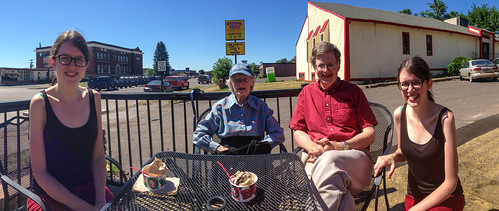
Katherine, Mom, Russ, and Katie
I took this photo in 2013, using my iPhone's panorama function. Helen got a huge kick out of how it turned out--Katie had jumped up after the camera passed her on one side and ran behind me to get back in by the time the camera panned to the end. 
For the first three and a half years, I drove her to and from Port Wing every two weeks for card club, one of her most treasured routines. It was win-win for me—not only was I being a dutiful daughter-in-law, but I got to spend a couple of hours every two weeks birding in my beloved Port Wing. For the first couple of years, we had lovely chats on our drive—I’d point out birds, we’d both spot deer and an occasional raccoon or even bear along the road, and we’d reminisce or chat about random things. I made up a playlist of songs I knew she liked for our drives, and every now and then one would trigger a memory for her; the stories she told made this shared time even more precious for me.

But as her dementia progressed, she was also growing increasingly detached from friends, family, and everything else, and was also having more trouble keeping track of the cards and scoring. And the long drive had been becoming more uncomfortable for her, too. So finally her visits to Port Wing came to an end. The last time we brought her to the Port Wing Fall Festival was in 2015, when she was 96.

Russ, Mom, and Pip at the Port Wing Fall Festival
Helen, Russ, and Pip at the Port Wing Fall Festival in 2015.
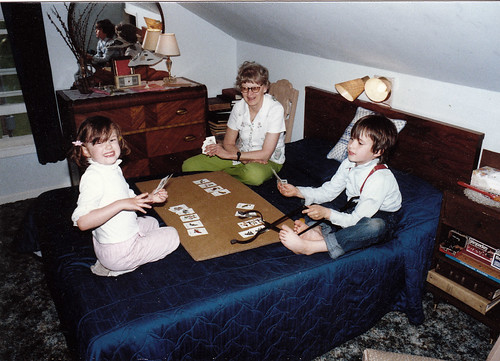
When Joey or Katie were in town, we’d pull out our Uno cards and all play, and Helen was still winning as often as anyone else.

1989-Mom, Joey, and Katie play cards
Helen playing cards with Joey and Katie long, long ago, when Tommy was still too little. 
She and I were still enjoying movies and TV shows in the evening, too. But little by little, she was losing pleasure in the things she’d once loved. When she was standing in the kitchen or near the dining room window and I pointed out a Pileated Woodpecker at the feeder, now she wouldn’t even look up.

Helen collapsed while standing in the kitchen this past May, and broke her leg at the hip. Surgery went well, but she developed edema, and the pain in her leg didn’t go away. Russ patiently did exercises with her every day trying to rebuild strength in her legs, because the hallways and doors in our very old house are just too narrow to accommodate anything wider than a narrow walker—the nice wheeled walker we’d gotten for her couldn’t negotiate turns here, and no way would a wheelchair work here. So when Medicare rules cut her off from rehab when she didn’t improve quick enough, she had to stay in the nursing home.

A couple of months ago, I could tell she no longer recognized me most of the time, but she’d still brighten up when I brought my little dog Pip in. I got Pip groomed last Monday, and she was at her most adorable, wearing a Christmas neckerchief and bow—the kind of adornments Helen always loved.

Pip!

But when I brought her to the nursing home, Helen didn’t smile or seem the least bit interested. Little by little she’d been slipping the surly bonds of earth. On Friday, my sister-in-law Jean came in from Chicago.

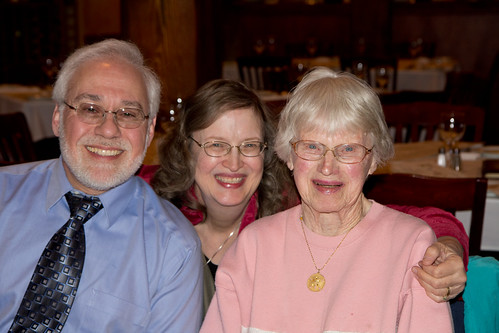
Dinner at Bellisio's
Helen, her daughter Jeanie, and her son-in-law Mike
Helen did recognize her, and was still recognizing Russ, her two children. They kissed her goodnight and left at Helen’s regular bedtime. And after such a very long farewell to all of us who loved her, and after making her final goodnight to her beloved children, Helen went to sleep for good.

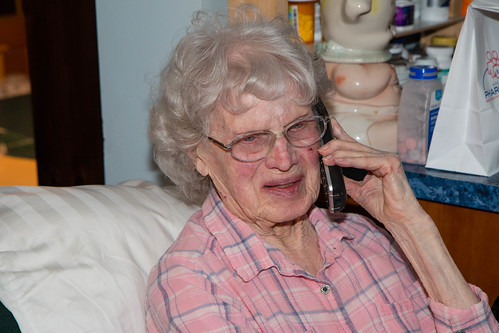
Helen turns 99
Helen receiving birthday greetings on her 99th birthday this January 24.

Tuesday, December 4, 2018

The Value of One Individual

My female Pileated Woodpecker

Last Wednesday, I witnessed a Sharp-shinned Hawk repeatedly attacking the female Pileated Woodpecker who hangs out in my neighborhood. The hawk attacked her over and over as the two of them worked their way west, finally out of sight and earshot, a case of “Exit, pursued by a Sharp-shinned Hawk.”

Exit, pursued by a Sharp-shinned Hawk

I didn’t see my female Pileated Woodpecker for the rest of the day. She usually doesn’t come around as often as her mate—he visits my trees and feeders at least three or four times most days, while I sometimes don’t see her for a few days running. Thursday I kept watch and she didn’t show up, but I tried not to worry.

Soon after the birds flew away on Wednesday, I posted about it on Facebook with one of the photos I’d taken of the attack. Most of the comments were sympathetic to both birds, but because I post so many photos of my two Pileateds, people were more worried about the woodpecker than the hungry hawk, just as I was.

Many comments were like this one, “ I hope she’s ok and that the sharpie has decided she’s too much work.” Only one person articulated a hope that the Pileated had pecked the Sharpie to death, and only a couple of people took a completely detached “nature red in tooth and claw” view. Somehow when you personally recognize one of the actors on either side of the predator-prey seesaw, this kind of story takes on a larger, more personal meaning, for better and for worse. Predation is natural and important, and it’s important not to trivialize it or to develop a hatred for hawks after this kind of encounter, but it’s hard to dismiss the fundamental value of a Pileated Woodpecker, too.

I wrote a blog post and produced a “For the Birds” program/podcast about the whole episode on Thursday, and linked to the blog on Facebook, getting even more comments.

That's when people started emailing and private messaging me to ask if I’d seen the female Pileated Woodpecker in my yard since the encounter. The male came in several times on Thursday, and each time I’d check out his mustache and forehead hoping they’d be black rather than red, but no such luck. And no sign of the female on Friday. That’s the day the program aired on KUMD, which triggered even more people asking if I’d seen her again yet. I was starting to get really worried, myself.

The male showed up first thing on Saturday morning—he sometimes sleeps in the box elder right by my window, and when he does, he appears at the feeder while it’s still fairly dark before dawn. Then right around 9, suddenly there she was.

One female Pileated Woodpecker looks pretty much exactly like any other, but she went to the suet feeders she usually frequents and went to the back box elder where the two birds have been working on what may end up being a nest cavity. So I’m as certain as possible that this was MY female. I posted on Facebook at 9:20, “SHE'S BACK!!! In all her favorite spots! I am sooooooooo relieved!”

143 people “liked” that, and a great many people commented. Most of the people posted happy dancing Snoopys or other cute gifs, or said how relieved they were, and several people said this was the best news of the morning, or the week. One of my Duluth friends said, “It's wonderful news! I'll now have John Sebastian's 'Welcome Back' in my head for the rest of the day: 'What could ever lead ya, back here where we need ya?!'” That got a few people commenting about John Sebastian, too.

When I had my babies, I discovered firsthand that loving a whole new person made my capacity for love grow. Rather than dividing a finite pie of love, my heart was baking more pies. And I can see that specifically loving particular individual chickadees, Pileated Woodpeckers, Yellow-rumped Warblers—all the individual birds I come to recognize and start feeling personally attached to—expands my capacity for loving nature.

We humans have a tendency to see nature as separate from our human world. Nevertheless, our lives are intertwined with the natural world—as Robinson Jeffers said, we’re “Not man apart.” The life of one single woodpecker may be pretty insignificant in the overall scheme of the cosmos, yet it does seem significant that so many people could be so very interested and concerned about one particular woodpecker whose life suddenly became enmeshed with ours. As we grow in compassion for one individual creature, our capacity for love enlarges. And what we love, we protect.

Our planet is at a turning point with regard to climate change. The loss of forests exacerbates the carbon load in the atmosphere even more than every form of fossil-fuel-burning transportation. We have to start making serious changes to save our world. Desperation is one great motivator. Maybe we could and should be cultivating another powerful motivator as well—love.

Female Pileated Woodpecker

Saturday, December 1, 2018

She's Back!!

The last time I saw my female Pileated Woodpecker was on Wednesday, when she was attacked repeatedly by a Sharp-shinned Hawk. The hawk pursued her until they were out of sight. (You can read the blog post and see the photos here.) I've been a nervous wreck ever since, though really, she doesn't normally come every single day as the male does. Finally, this morning, she came in to visit my feeders and trees.
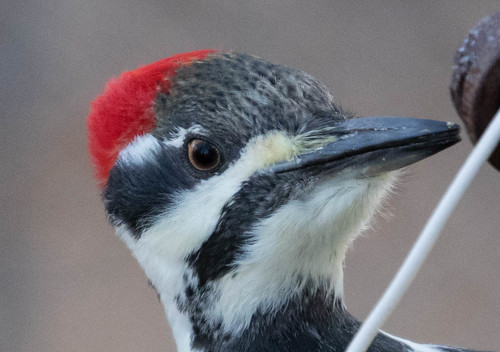
My female Pileated Woodpecker