Laura Erickson's For the Birds

Saturday, September 17, 2022

Hummingbirds in September—and Later!

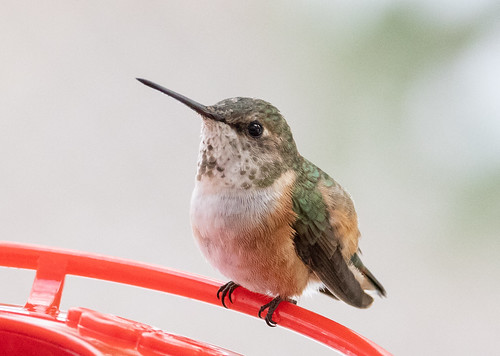
Rufous Hummingbird

Back when I started feeding hummingbirds when we moved to Duluth in 1981, my mother-in-law told me her ironclad rule—always take in hummingbird feeders by Labor Day. 

That made no sense. Many birds, including hummingbirds, migrate exactly when food is most abundant. Hummers fuel their journey every step of the way on the abundant food flowers provide in terms of nectar and insects. Stragglers are juveniles who hatched later than most that year or adults who took a little longer than most to get into migratory condition after breeding. 
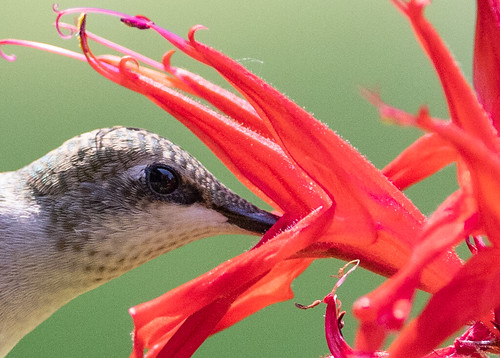
Ruby-throated Hummingbird feeding in bee balm

Fall migration is rather leisurely without spring hormones pressing birds forward, but as a species reaches the end of its normal migratory timetable, other factors play into how fast individuals move. Eastern birds depend on the foods that eastern plants provide, so the Ruby-throats that started migration on the later side usually seem to be in more of a hurry than the early birds. On the rare occasions that I've seen a Ruby-throated Hummingbird in late September or October, it took its fill of sugar water and immediately moved on. 

Hummingbirds don’t have a transporter room to magically beam themselves to their wintering grounds from their breeding territories. Each individual travels hundreds or thousands of miles. Hummingbirds have excellent memories, not only for their nesting territories but also for good gardens and feeding stations they encounter along their travels, and so many of the birds passing through recognize us as much as the ones breeding in our neighborhoods do. It's virtually impossible to distinguish what we think of as our own hummingbirds from the migrants. 

Anna's Hummingbird

A combination of tropical deforestation, climate change, people planting so many flowering shrubs and trees in American towns and cities, bird feeding, and other factors have changed many bird movements and ranges, including hummingbirds. Anna's Hummingbird is a case in point. In the first half of the 20th century, this species bred only as far north as Baja California and southern California. But as more and more people moved to the West Coast and planted flowering trees and shrubs, Anna's Hummingbirds slowly spread to places where they could find food year-round until they reached Oregon, then Washington, and now British Columbia and even southeastern Alaska. 

It can be disconcerting to see hummingbirds in the snow, and many people believe it was bird feeders that enticed them to "stay too long" without seeing how deforestation, habitat, and climate change altered the old patterns. Feeders do help hummingbirds, but even in cold weather, they search for and find insects. The two times Rufous Hummingbirds have visited my feeders in November and early December, I watched them darting for insects at the tips of my spruce branches and in stands of tall weeds even when the temperature was below freezing. 

Rufous Hummingbird

Most of the hummingbirds that turn up in Minnesota, Wisconsin, and other Eastern states in late autumn and early winter are Western species wandering far from what we think of as their normal range. Intriguingly, Rufous Hummingbirds used to winter almost exclusively in Mexico, but are expanding their winter range into more and more places in the East. Here is the Cornell Lab of Ornithology’s range map for the Rufous Hummingbird:
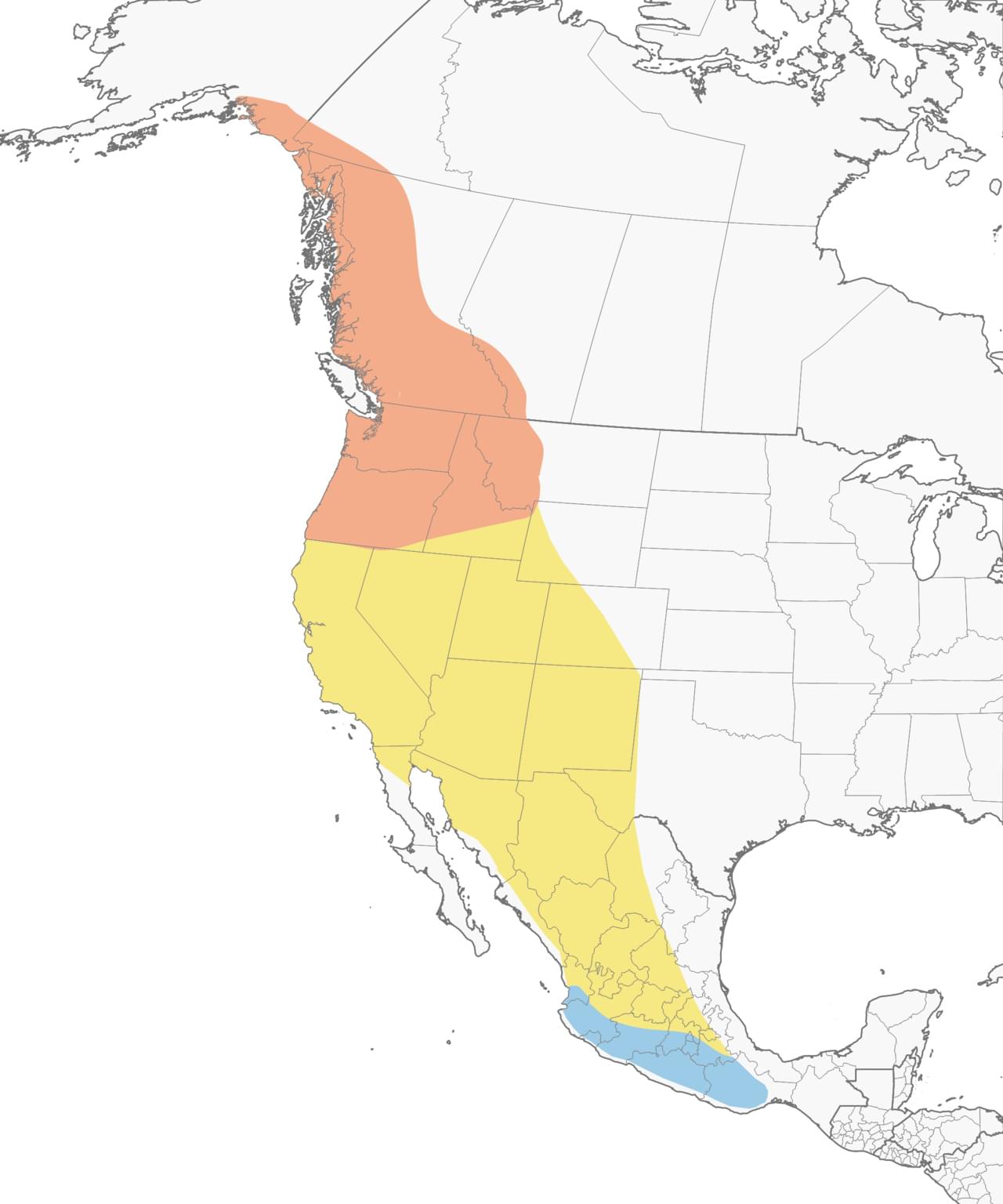
But here is Cornell’s eBird map for confirmed Rufous Hummingbird reports made ONLY in November 2021. Apparently Rufous Hummingbirds are expanding their late fall/winter range.

I brought in the hummingbird feeder on my front porch last week—I don't pay much attention to that one—but I’m still maintaining a feeder in my backyard and one on my home office window. I glance at them occasionally, but don't keep watch consistently throughout the day, so I'm sure I miss more than I see.

The last time I saw an adult male Ruby-throat was September 1. After September 4, I didn’t see any hummingbirds at all until September 11. On the 14th, I had at least 2 and possibly 3. I had one again today, the 18th.

Thanks to the Rufous Hummer I had last year, I’m keeping up these two feeders until the end of November; I'll change the sugar water once or twice a week. When the sugar water starts freezing overnight, I'll put out one or two heated hummingbird feeders, too. It’s extra work with a very low probability of my seeing any hummingbirds after September anyway, but hope is the thing with feathers. If any stray hummingbirds do pass through, I cannot bear for them to leave my neighborhood hungry.
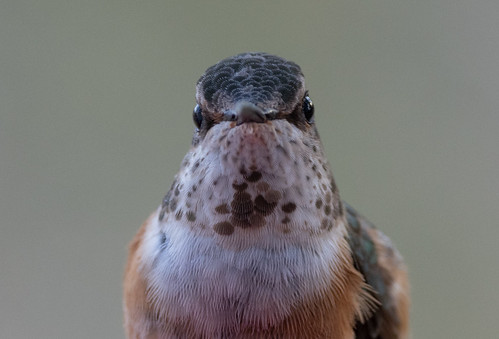
Rufous Hummingbird


Monday, September 5, 2022

Moosey and Puffy

A boy and his puffin

   Our Alaska tour in June was the first trip Russ and I took since our grandson Walter was big enough to notice we were missing, so we of course had to bring him back some sort of souvenir. But what do you give a two-year-old that you can be certain he’ll love while also giving him a sense of traveling to an exciting new place?

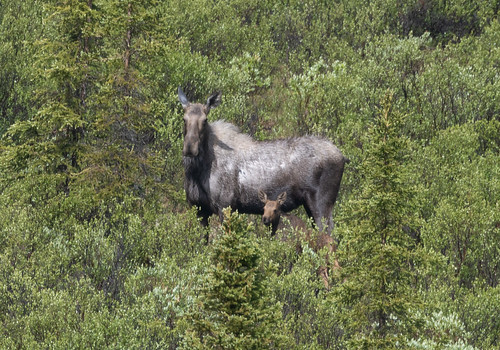
Moose cow and calf

We came up with the answer on our very first day in Nome while looking at a cow moose and her calf. Russ and I both love moose and this was the first time I’d ever photographed any. Moose are hardly restricted to Alaska—indeed, Walter has seen pictures of them in one of his books,  Good Night, Minnesota. But they're still characteristic of Alaska. Indeed, as climate change melts the permafrost, changes in vegetation that are decimating caribou are increasing moose populations up there, even as changes due to climate change are threatening moose here. 
Anyway, moose were a big feature of our trip as we continued to see them in Nome  and then in Anchorage, Denali, and Seward. 

Moose and twin calves

Moose cow and twin calves

Bull moose

Moose

I got lots of photos of several more cows, each accompanying not just one calf but two, and also some reasonably good photos of bull moose, their antlers still fairly small and in velvet. So we decided to search out a plush moose for Walter.  

Of course, Walter identifies his grandma much more with birds than mammals, so I also wanted to get him some sort of avian souvenir. That choice also seemed obvious. That first day in Nome, we saw very distant, flying Horned Puffins, another species I’d never photographed. I didn’t want to give him a souvenir of something we’d seen only from a distance, so I hoped that at some point we’d see puffins at much closer range. 

This was a serious birding trip. Except for some  restaurants, we didn’t spend time around touristy places and didn’t get to any gift stores in Nome. There was a big gift shop where we stayed in Denali where we found and bought the perfect plush moose. Mission Half Accomplished.   

_G7A1827.jpg

But overall, there were too many birds about for me to waste birding time checking out gift shops. Seward was our last birding destination, with very few days left before heading home, so finding a puffin souvenir was suddenly urgent.   

We had a couple of free hours the afternoon we arrived in Seward and another hour or two the next day, after our boat ride before the group would meet for dinner. 

But oddly enough, especially considering the huge mural of Horned and Tufted Puffins on a building overlooking the harbor, we could not find a single plush Horned Puffin at the town’s biggest gift shop, the one in our hotel, or the one in the National Park Visitor Center. If that surprised me, I was even more shocked that no one was selling Tufted Puffin souvenirs—this is a seriously funky looking bird who you’d think would make a very popular plush toy. 

Tufted Puffin

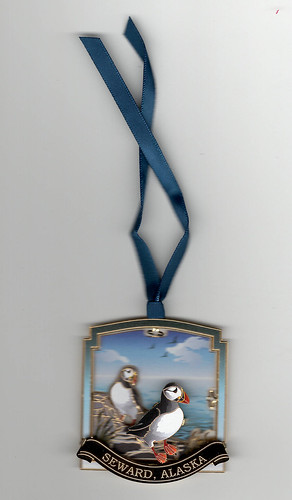
There were plenty of puffin souvenirs—carvings, keychains, Christmas ornaments, and yes, plush toys—but not a single one depicting either of Alaska’s two native puffins. Every puffin souvenir I saw in Seward, Alaska, including at the National Park, depicted an Atlantic Puffin. 

Atlantic Puffin on souvenir from Alaska!
We bought this at a Seward gift shop, and it will serve as our 2022 Christmas ornament despite the fact that the birds depicted, Atlantic Puffins, live thousands of miles from Alaska.

I was puzzled but not too bummed out. We hadn't yet had great looks at either puffin. Advertising for the Kenai Fjords boat tours said they sold souvenirs on the boats, so I figured if I got good looks at Horned Puffins on the boat trip, that would be the coolest place to buy a souvenir anyway. 

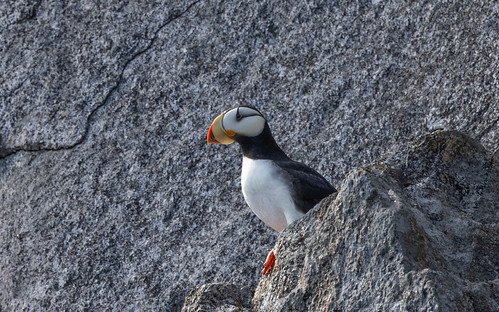
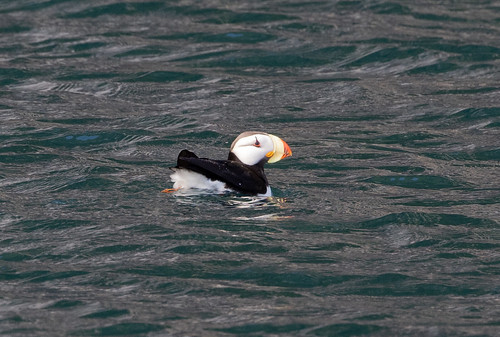
On the boat, I got lovely looks and a few decent photos of Horned Puffins. 

Horned Puffin

Horned Puffin

During a lull in birding activity when the crew was making margaritas, I asked the naturalist whether they were selling plush puffins. He said he’d forgotten to stock them for this trip, but I should try the gift shop associated with the boat tours when we got back. Sure enough, they did have lovely plush puffin toys, but again, every single one of them was an Atlantic Puffin! 

So what does an anal-retentive stickler for ornithological accuracy do when she wants to bring her little grandson a puffin toy from Alaska? I bought the softest, nicest Atlantic Puffin I could find, and named it Puffy the Magic Puffin—because really, a magic puffin could find its way from the Atlantic to the Pacific, right?  

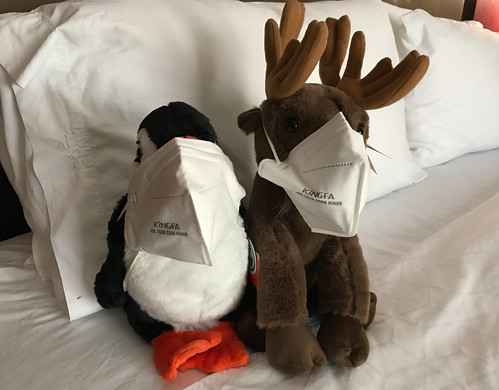
Even stuffed animals know better than to go around in public spaces indoors unmasked.

I took photos of Moosey and Puffy wearing masks in our hotel room, but then I unthinkingly packed them in our checked luggage. We could have taken a great series of photos of them sitting, seatbelts strapped,  in the plane, interacting with the flight attendants, eating Delta's wonderful airplane cookies—what a wasted opportunity! Regardless, Walter was delighted with both of his new friends. 

When we take walks in his neighborhood, he always chooses one of his stuffed animals to come along. His absolute favorite is Bear, but Moosey and Puffy have both made the cut several times, and they’ve also become an integral part of our nap-time ritual. 

So all’s well that ends well, but I’m still mystified why we couldn’t find a single souvenir in Alaska depicting a native Alaskan puffin. Attention must be paid. 


Thursday, September 1, 2022

It's "Anything Can Happen" time again!

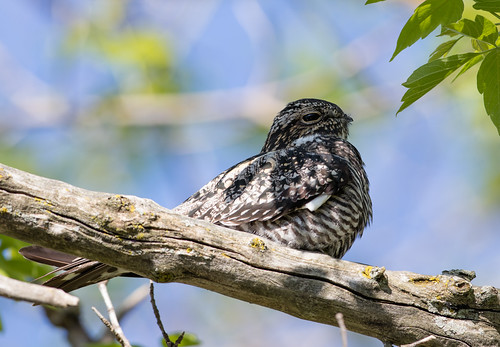
Common Nighthawk

The weeks immediately before and after Labor Day weekend are what I think of as the “Anything Can Happen” time of year. I can’t be outside long in my own yard or any wooded places without hearing chickadees and Red-breasted Nuthatches—that’s a constant. Cedar Waxwings eating berries, fly-catching from dead branches, and flying over in swirling flocks are another. 

Cedar Waxwing
Immature Cedar Waxwing

And this is peak dragonfly time, as wonderful and exciting as it is bittersweet. 

_G7A8096.jpg

Dragonfly numbers have decreased enormously since I moved to Duluth. They’re still easy to see this time of year, but the numbers are nowhere near what they were. They're pigging out on other flying insects, as are nighthawks. Dozens and even hundreds of Common Nighthawks have been seen darting about over some fields in recent afternoons, and a couple of directed flights of over 2,000 have been observed. 

Common Nighthawk

In recent years, Steve Kolbe has been conducting a regular, standardized count at an excellent vantage point near the shore in Lester Park. Annual totals have spanned between 15,000 and 45,000. This is impressive and important work, but again just a fraction of what we used to be able to see. In the 80s and early 90s, I spent evenings counting thousands from my yard and when I walked my boys to late-afternoon/early-evening scout meetings half a mile away, though I was doing it for fun and not recording my numbers.  

Local birders didn’t have the will or wherewithal to start doing standardized nighthawk counts back then, but on August 26, 1990, Mike Hendrickson, perched at the Lakewood Pumping Station, counted 43,690 nighthawks in 2 ½ hours, and the migration that day was heavy both before and after his tally. The huge nighthawk flights weren’t limited to one or two nights a year—unless it was raining, we were pretty much guaranteed to spot at least a dozen, and often hundreds or thousands, just about every night from mid-August through the first week of September. 

Common Nighthawk

Of course, even a single nighthawk is cause for celebration—this is one of my favorite birds of all for good reasons—so whenever I see even one, I’m as elated as cognizant of how much we’ve lost—the horrifying result of decades of pesticide use, development and damage to wetlands, and allowing craven oil corporations and people ignorant about science to prevent any proactive work to reduce our impact on climate change.  

Evening Grosbeak
An adult male Evening Grosbeak sandwiched between two begging young.

Evening Grosbeaks were another abundant constant this time of year. I started writing about their noticeable decline back in the early 90s, voicing my concerns in my first book, For the Birds: An Uncommon Guide, published in 1994. A few readers and listeners chided me for being alarmist because they were still seeing plenty in their rural yards. I’d so love to have been proven wrong. But since this IS that “Anything Can Happen” time of year, delightfully unexpected things still do happen. In August 2011, the morning after I brought Russ home after cancer surgery, we woke to the ethereal calls of Evening Grosbeaks.  A flock of 16 birds, including at least 2 families, stuck around our yard for several weeks, right when we needed them most. Anything Can Happen. 

Evening Grosbeak

On August 20, this year, for the first time on record, a Swallow-tailed Kite appeared at Hawk Ridge. It kited about snatching insects out of the sky for at least a half hour around 2 pm. 

Swallow-tailed Kite
I didn't see the Swallow-tailed Kite in Duluth on August 20 (I took this photo in Florida), but did see one in Faribault, MN, in May 1999. 

I got a text alert about it while it was still there, and spent 45 minutes scanning the sky between my yard and the ridge, but never caught a glimpse. (The bird was eventually spotted from the Lake Aire Bottle Shop parking lot flying over the lake, and again in Wisconsin near the grain elevators, headed south where it belongs.) But while I was scanning, a flock of 6 American White Pelicans passed over. Yep—anything can happen.   

Two days later, a Mississippi Kite flew over Hawk Ridge and was later seen over Mike Hendrickson’s yard in Smithville. 

Mississippi Kite
I've seen Mississippi Kites at Hawk Ridge a few times, but have never photographed them here. This photo is from a spring in Oklahoma. 

Mississippi Kites don't appear every year, but several times they have appeared at Hawk Ridge, always during the two weeks before or after Labor Day. 

Red Knot

This week, we had some surprising shorebird visitors on Park Point. Two very cooperative Red Knots—a dangerously declining species—spent at least three days on the little bayside beach at the entrance of the Sky Harbor Airport, along with a Stilt Sandpiper, two Baird’s Sandpipers, and a Semipalmated Plover. 

Red Knot

Stilt Sandpiper

Baird's Sandpiper

Semipalmated Plover

The birds somehow decided that birders don’t pose much of a threat. I sat there for over an hour on both Tuesday and Wednesday. The birds looked my way when I got there, but almost immediately resumed whatever they were doing. As other birders arrived, the shorebirds didn’t seem fazed at all. At one point when I was all alone, the Stilt Sandpiper and Red Knot started snoozing about 30 feet from me. 

Snoozing Stilt Sandpiper

Red Knot

A few minutes later, the whole little flock started moseying down the beach directly toward me, and then right in front of me, just 6 or 7 feet away, giving me lots of satisfying full-frame photos in perfect light, as well as one of the most magical moments of my birding life.   

Stilt Sandpiper

There have been sightings of other rarities, such as Buff-breasted Sandpipers and a Smith's Longspur, in town in the past week. Plenty of migrants, including rarities here and there, will be passing through for the next month. A lot of people wait to look for them until what is considered the "best" time to go to Hawk Ridge, the second or third week of September. But that’s too late to see the best of the early migrants. Labor Day Weekend is the peak of my "Anything Can Happen" time. Get out there and enjoy some unexpected delights!

Red Knot

Monday, August 29, 2022

If you build it, will they come? Using audio playback to bring birds to restored habitat

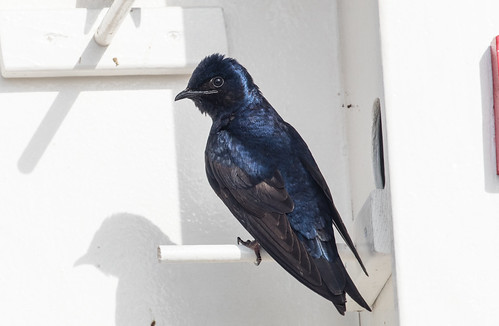
Purple Martin

In June 1975 when I was taking my first ornithology class, at Michigan State’s Kellogg Biological Station near Kalamazoo, there were a couple of very active Purple Martin houses right outside our classroom. Martin music drifted through the open windows hour after hour. That friendly, gentle vocalizing imprinted itself deep into the auditory regions of my brain until it’s virtually impossible for me to hear Purple Martins without smiling.  

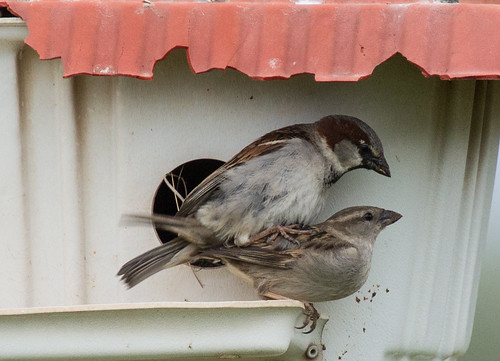
But in 1975, before I'd even seen my first Purple Martins, they were already declining. When Russ and I moved to Duluth in 1981, they still nested in several places along Park Point, but people were already noticing that there weren’t as many as there once were, and within a decade or two, they’d vanished from every nest box in town. Now we’re lucky to see one or two flying over during migration. People everywhere were noticing and decrying their widespread loss, which was probably due to many factors, but especially the scary decline of so many moths and emergent aquatic insects such as mayflies, and competition for nest cavities from House Sparrows and European Starlings.  

House Sparrows

When I was Science Editor at the Cornell Lab of Ornithology in Ithaca, New York, Cornell researchers set up new Purple Martin boxes where the birds had once nested. To raise the chances that these sociable, colonial birds would discover them, they tried some targeted advertising by playing recordings of Purple Martins, reasoning that martins flying over during migration were more likely to notice the boxes in the first place, and to get the idea that those boxes would be a good place to nest if they heard what sounded like other martins using them. When I’d eat my lunch near the pond at Sapsucker Woods, I loved hearing that comforting martin music. Sadly, though, I never heard the actual birds—just the recordings, which never lured any martins to the houses. “If you build it, they will come” may work for baseball fans and even the ghosts of baseball players, but we can’t lure birds into even the finest "field of dreams" if they aren’t there in the first place.   

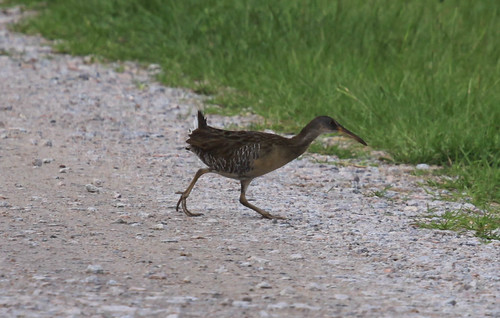
Virginia Rail
Virginia Rail

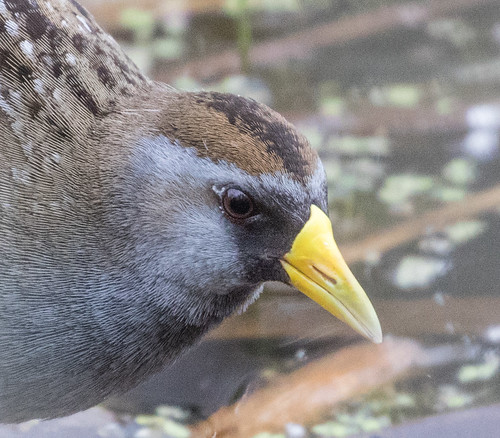
I thought about this when I heard about a similar effort in Michigan, not to attract Purple Martins but to restore rail populations to Michigan wetlands. Populations of Soras, Virginia Rails, and King Rails have been declining in the Upper Midwest due to habitat degradation and loss on their wintering and breeding grounds and stopover sites along their migration routes, with added pressure from hurricanes, droughts, flooding, rising ocean levels with increased salinity in coastal marshes, and other climate-related problems. When people do muster the will and wherewithal to restore a damaged wetland, it can take decades for some species to return, especially declining species which tend to concentrate in the quality habitat they already know about.   

Sora
Sora

Young birds who haven’t become bonded to a territory yet may be quick to notice new territory opportunities, but there must be successful breeding somewhere else to produce these young birds in the first place. Adult birds who have successfully bred in a particular marsh probably ignore suitable habitat en route to their established home base except when they need a brief stop to feed and rest. But when adults return to where their beloved marsh is supposed to be only to find storm damage, unsuitable water levels, or, worst case scenario, a new parking lot or apartment complex, they must seek out a new home base. That’s when some may discover restored wetlands.  

It’s a big world out there, and rails migrate by night so can’t see details of the landscape they’re flying over. Fortunately, many marsh creatures, including other rails, bitterns, and frogs, spend spring nights belching and trilling and calling away, producing a soundscape that helps birds passing overhead to recognize wetland habitat by sound rather than sight. Hearing familiar marsh sounds, especially their own species’ vocalizations, gives a clear indication of suitable habitat. But until rails discover a restored wetland, could audio recordings lure in the first ones?  

A couple of weeks ago, I heard from Daniel Wanschura, a reporter at Interlochen Public Radio in northern Michigan, about a story he’d just produced. Dustin Brewer, a Ph.D. candidate at Central Michigan University, is looking for answers to that very question at the Shiawassee River State Game Area, which just happens to be a place where I took several field trips when I was taking my second ornithology class at Michigan State in 1976. Along with U.S. Fish and Wildlife Service biologists, Brewer played rail recordings at several potential nesting areas this past spring migration hoping to attract migrating rails to restored wetland habitat at Shiawassee, and then conducted weekly surveys to see whether his playback experiment had worked.   

King Rail
The best I could do with a King Rail photo—they're few and far between

Brewer brought Daniel Wanschura to his study area in April, during migration, and in May as birds were settling in for nesting. While Wanschura was there, one King Rail—a dangerously declining species listed as endangered in Michigan—was calling near one of Brewer’s playback sites, suggesting that it’s quite likely that if you build it—or at least restore quality habitat—and provide some audio advertising, some birds actually may come.   

Daniel Wanschura’s story about Dustin Brewer’s fascinating research project aired on August 19 on "Points North," Interlochen Public Radio’s podcast. You can read the transcript or listen to the program here. 

Wednesday, August 17, 2022

Puffins! Seeing the three species

Horned Puffin

The natural world is rich beyond our wildest imaginings—so much so that the greatest, most well-traveled naturalists in the world could never experience more than a fraction of the different species of plants and animals that live on this planet. Schools are woefully inadequate at teaching children about even the most abundant plants and animals living right in their own state or town. So I’m happy when someone knows what puffins are without confusing them with completely unrelated penguins.  

New York City Subway Art: Central Park Zoo stop

Puffins and penguins are polar opposites, geographically speaking, though penguins range much further from the Antarctic Circle than puffins do from the Arctic Circle—indeed, the Galápagos Penguin nests north of the Equator, while the furthest south any puffin ranged historically was the Tufted Puffin nesting on the Channel Islands at about 34º latitude. Sadly, the last confirmed report from the Channel Islands was in 1997. 

Like penguins, puffins spend every moment of their lives at sea except during their nesting season. Two countries on earth get to enjoy all three puffin species—Canada and the United States. No country is home to all 17 or so species of penguins. 

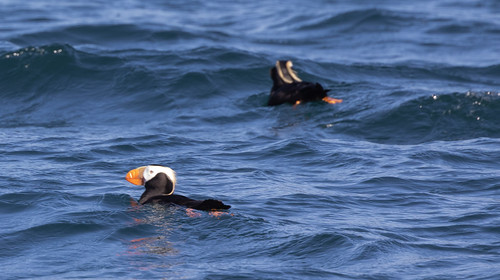
Tufted Puffin

The Tufted Puffin is the largest of the three and the one most closely resembling penguins, at least crested penguins such as rockhoppers. Tufted Puffins are pretty easy to see swimming in coastal waters in late summer. On this side of the Pacific, they breed on offshore islands and rocky shoreline cliffs from Alaska through central California. I saw my lifer from a fishing boat off the coast of Newport, Oregon in August 1979; Russ and I saw plenty on our Inside Passage cruise in August 2001; and I saw them on two Shearwater Adventures pelagic trips in California in September 2013 and 2019. But my best viewing ever was on the 8 1/2 hour boat trip from Seward, Alaska, into the Kenai Fjords this year. 

Horned Puffin

Horned Puffins, which nest only in the far north and spend most of their lives pretty far offshore, were much harder to come by. I saw my lifers, the only two Horned Puffin I ever saw until this year’s Alaska trip, near the end of our Inside Passage cruise after spending hours every day scrutinizing every bird I could see swimming, flying, or sitting on cliffs offshore. I saw them this year in Nome, but aways at a distance, flying. My best views were from the boat out of Seward to Kenai Fjords. 

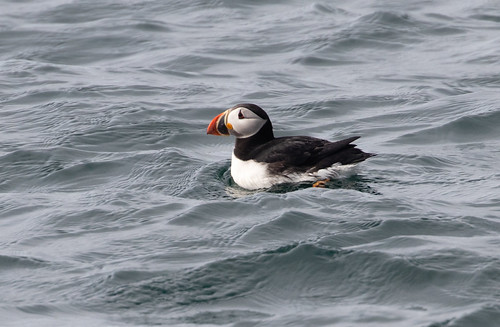
Atlantic Puffin

I saw my lifer Atlantic Puffin in 1993 when Russ and I brought our children to Machias Seal Island in Maine. That splendidly remote island, where puffins, Razorbills, and Common Murres nest in big numbers, is the site of a Canadian Coast Guard station, even though the United States claims the island belongs to us. Since no people live on it and no oil or precious metals have, at least so far, been found on it, the United States and Canada have not come to blows over ownership. 

All of us (except Russ, taking the photo) with the captains, Barna and John Norton, after our trip to Machias Seal Island

Piggy and Tommy looking out the blind at the puffins and razorbills on Machias Seal Island

Nowadays, a boat from the Bold Coast Charter Company, bearing a U.S. flag, travels from Cutler Harbor in Maine to Machias Seal Island once a day from the very end of May through early August, during the brief time of year that puffins are nesting. 

Our boat, with the captain about to bring the last group of birders to the island.

The boat takes 45 minutes to an hour to travel to the island. When sea conditions allow a safe landing, passengers get to go onto the island, staying in very restricted areas and narrow walkways to observation blinds to see these stunning birds up close and personal. The number of participants and the walking routes and blinds are tightly regulated to protect the birds. The rest of the year, the puffins are all out at sea. 

I’ve got a bazillion photos of Atlantic Puffins, some from slides we took in 1993 and some from boat trips when I was an instructor on Audubon’s Hog Island in Maine, but the best are from my Big Year when I took that Bold Coast boat trip to Machias Seal Island. Conditions were perfect that day. I doubt I’ll ever have such amazing conditions for photographing the two western puffins, and only got a few good photos of both of them on this year’s trip, but that was plenty good enough for me.

Horned Puffin

Tufted Puffin

Atlantic Puffin