Laura Erickson's For the Birds

Sunday, October 16, 2022

Joy in the Morning

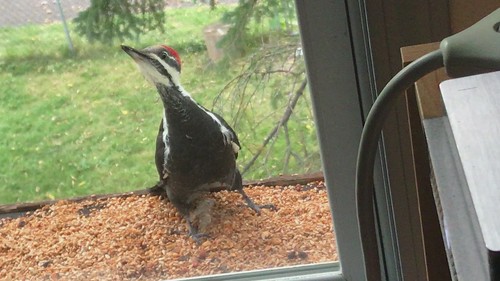
Pileated Woodpecker at my window feeder 

I’m a morning person, usually waking without an alarm clock. Except close to the summer solstice, I’m usually up before first light.   

I always need both time and coffee before I can handle noise or bright light in the morning. Scientists call the transition between sleeping and alert states sleep inertia, the time it takes to become fully functional. It can last up to four hours for some people. My own sleep inertia doesn’t last anywhere near the maximum, but it does last a good 45 minutes most days. When I need to be somewhere early and must set an alarm, I always set it 45 minutes earlier than what I’d need to get ready.    

I keep the lights low while I make my coffee, and I need quiet. Once or twice a week in the afternoon, I grind a few days’ worth of coffee beans into a small, airtight container. In the early morning quiet, after pouring just shy of two cups of water into the electric kettle, set at 205ยบ, I press a moistened  paper filter into my ceramic pour-over funnel, set that into my good old Cornell Lab coffee cup, measure two rounded scoops of coffee into the filter, and take my dog Pip out while the water heats. In spring when birds are singing, this is when I set out my sound recorder to capture the dawn chorus. My kettle holds the temperature, so it doesn’t matter if Pip or I are a little poky.   

I pour the hot water over the coffee grounds slowly, in counterclockwise circles. It’s debatable whether the direction really matters, even with the spiraling grooves in the funnel, but the routine matters to me. I love watching hot water transform into coffee, savoring the aroma as the coffee grounds swell and darken when the water first touches them, and then seem to slowly exhale as the last of the water seeps through.     

I carry my cup to my desk, still keeping the lights too low to accomplish much of anything. If it’s starting to get light outside, I roll my chair to the window and gaze at the yard. Last year when a Rufous Hummingbird visited me from early November through December 4, this quiet routine made it easy for me to notice what time she first arrived each day. Being addicted to coffee probably indicates a flaw in my character, but making and drinking it is, for me, a soul-satisfying way to begin my day.   

Rufous Hummingbird

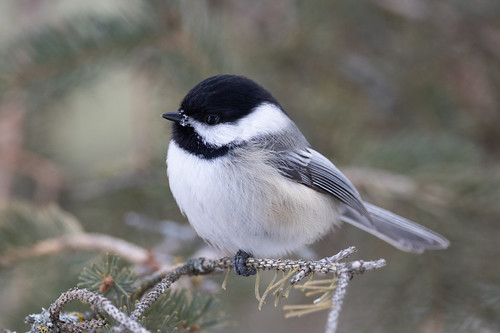
This Saturday morning, it was already light outside when I carried my coffee to my office, so I filled the window feeder and sat there, savoring coffee and birds as I thought about how extraordinarily lucky I am. I often feel a suffusion of well-being and contentedness during my sleep inertia state, and Saturday it was heightened watching birds coming and going. No matter what the season, I can count on chickadees, who always have the power to make me smile. 

Black-capped Chickadee

So do Blue Jays, and two of them are sticking around this fall quite reliably. These two didn’t stay last winter but are old friends, both flying in for peanuts as soon as I whistle in the backyard. I don’t whistle when I fill my office window feeder, but if they’re nearby and notice, they fly in for the spicy peanuts in the Fiery Feast blend I use. When I’m right there at the window, their eyes meet mine occasionally, a friendly acknowledgment. At least, I like to imagine that we’re friends. I’d guess the relationship is more transactional in their minds, but it seems condescending and arrogant to presume to know a Blue Jay’s thought processes. Whatever they think of me, I’m happy that my presence at least doesn’t scare them away.  

Blue Jay

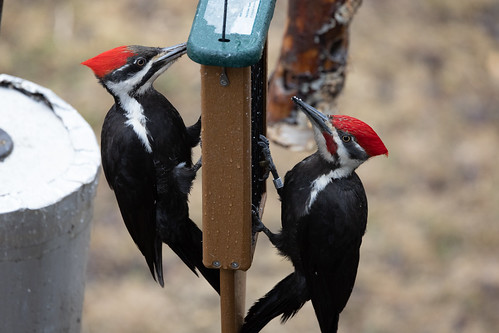
The jays disappeared  when a much larger bird flew to the feeder—a female Pileated Woodpecker, barely two feet from me. Like the jays, her eyes met mine. She pointed her bill to the sky and bobbed her head from side to side a few times, and then started feeding. Whenever she looked at me again, she repeated that bobbing movement. Looking at the underside of her head, my sleepy brain pieced together how woodpecker eye placement gives them  a wide, clear view of what’s below as well as above.  

Pileated Woodpecker at my window feeder

I’d never seen Pileateds do that head bobbing so closely until two weeks ago, when this same bird was at this same feeder while I was drinking coffee from this same cup. I’d made a video of it to show my grandson Walter. “Woodpecker” is one of his words, and we had a delightful time mimicking her, looking up and bobbing our own heads from side to side.  

Pileated Woodpecker at my window feeder

On Saturday morning, my suffusion of gratitude during sleep inertia swelled to high intensity. I’d made a list last year of my all-time favorite birds. Black-capped Chickadees hold the Number One spot, and Blue Jays and Pileated Woodpeckers are tied in second place. Imagine all three of my favorite birds in the universe visiting my  feeder when I’m inches away! The Pileated doesn’t always come to this feeder, but she and BB, the banded male I’m so fond of, have both been visiting my suet feeders every day.   

I savored the last dregs of coffee and rolled my chair away from the window, ready to start the day. Even as I gathered laundry and started the washing machine, worked on an article about my Alaska trip, put the wet clothes in the dryer, and went back to writing, a glow of happiness clung to me. If I’m not the luckiest person in the world, I’m certainly in a tie for first place.  

Pileated Woodpecker at my window feeder

Friday, October 14, 2022

Numbers!

I love numbers. Back in the olden days when I was an occasional counter at Hawk Ridge, any time little children asked what I was doing, I mustered my best Jerry Nelson voice to say, “They call me the Count. I am called the Count because I love to count birds.”  

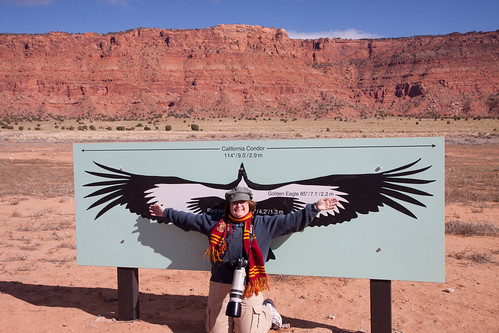
I’ve always played with numbers and made a big thing about special numbers. Way back in fifth grade, on the day I turned 10, I worked out that I would turn 60 on 11/11/11. That seemed cosmic because the sum of the digits of that birthday equaled the sum of the digits of that age. That’s why I had to do something cosmically special on 11/11/11, so Russ and I went to the Grand Canyon for me to see California Condors for the first time.   

California Condor

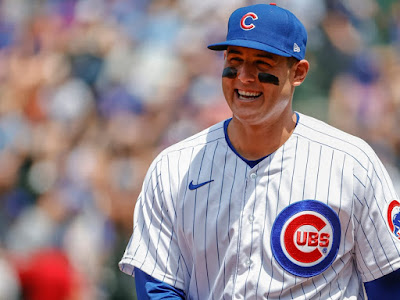
Numbers and silly statistics are part of the appeal of baseball for me. My favorite baseball player, Anthony Rizzo, got hit by a pitch for the 200th time on October 1, making him one of only four players in baseball history who got hit by a pitch at least 200 times and also had more than 200 home runs.  

My favorite baseball player with my favorite bird

Two-hundred hit-by-pitches made a nice round number, but there were two other round numbers I was looking for this month: 100 wins for the Yankees this season—they missed that by 1—and 60,000 for the Blue Jays, which is where my round numbers for October diverge from baseball. Some of the Blue Jays we see in Duluth may have spent a bit of time in Toronto at one time or another, but none are baseball players. I’m talking about the Blue Jays migrating over Duluth. Last year they broke their all-time high with 59,601 counted at Hawk Ridge Bird Observatory. The counters broke that record on October 5, and the very next day they broke 60,000. And as of the end of Thursday, October 13, the Blue Jay count at Hawk Ridge for 2022 is 60,485.  

Blue Jay

There may have been fall seasons, even since 2000, when more than 60,000 Blue Jays passed over the Ridge; it’s only been since 2007 that counters made a serious effort to count every bird flying over, not just every raptor. So breaking the record isn’t that significant, but somehow the number 60,000 seems really cool.  

The Finch Research Network publishes an annual Winter Finch Forecast, predicting where irregular or irruptive winter songbird species will appear each year based on analyzing, over the continent, cone production for various conifers; seed production for various deciduous trees; and berry production for fruit-bearing trees and shrubs. For example, this year the forecast for the upper Midwest predicts higher than usual numbers of Pine and Evening Grosbeaks. 

The forecast includes three irruptive songbirds that aren't finches, all of which they predict will be seen in good numbers in the upper Midwest this winter. I’m already seeing plenty of Red-breasted Nuthatches; Bohemian Waxwings usually appear later in fall or early winter. And the Finch Research Network writes this about Blue Jays:

This will be a good to strong flight year. Beechnut and hazelnut crops are poor. The acorn crop is generally poor but with pockets of good crops scattered from Manitoba eastward through southern Canada and northeastern states southward to Pennsylvania.  

Blue Jays at feeder 

After all the jays I was seeing in September, I’m now down to just a couple, which appear to be birds that have been on Peabody Street a lot in recent years—they fly in the moment I whistle and set out a small handful of peanuts. But it's too early to know if they’ll settle in here for winter or not. Blue Jays depend on natural food far, far more than feeders. Even during the peak of migration when my feeders are covered with them, bazillions more are in the neighborhood consuming seeds, berries, and insects. Even hungry migratory individuals spend a lot more time away from my feeders than in them, based on the fact that in 2020 and 2021, when I spent long hours keeping track of them, the outliers I could pick out by plumage abnormalities such as unusual paleness appeared only a few times over a full day, and when they did come to the feeders, remained for only a few minutes before heading back into the trees. Feeders provide variety in Blue Jay diets, but are never their primary food source.  

Blue Jays are hardly fair-weather friends—unlike the Toronto Blue Jays, who disappeared for the year this October 8, some feathered Blue Jays will be seen throughout their range this entire winter.  A handful of Blue Jays stuck around Peabody Street all last winter, though “my” Blue Jays—the ones who respond specifically to my whistle, disappeared, returning right about the time the 2022 baseball season was gearing up. 

All the baseball teams named for birds, as well as my beloved Cubs, are out of the running this season. But at least for the next three days, even as I keep whistling for my Blue Jays, I’ll be watching my favorite Cub, Anthony Rizzo, and the team the Cubs traded him to. Then at some point this month or next, I’ll forget all about baseball for the duration. But even in the dead of winter, a few Blue Jays will be here squawking and staring at me with their jaunty little crests, making certain I never forget them. 

Blue Jay


Friday, October 7, 2022

Saw-whet Owls

Northern Saw-whet Owl 

On Tuesday morning, I was late leaving to babysit my grandson. My little dog Pip was not ready to come inside, so I rushed out to get her, no time to spare, when a barrage of curse words hit my ears—at least a dozen chickadees and both kinds of nuthatches were swearing away in the back of my yard. I didn’t have time to search out what had set them off, but this being the first week of October, I had a pretty good idea.  

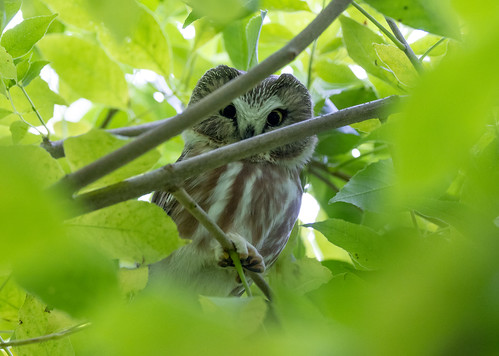
At mid-morning, I arrived home to even more swearing. And just as I expected, hidden in the tall, dense vegetation behind my yard perched an adorable little Northern Saw-whet Owl, beleaguered by the cloud of even littler birds yelling at him from every direction. The owl was apparently more concerned about me and my camera—I could tell because he didn’t look at the chickadees at all, just me, so after I took a few photos, I went back in the house. 

Northern Saw-whet Owl

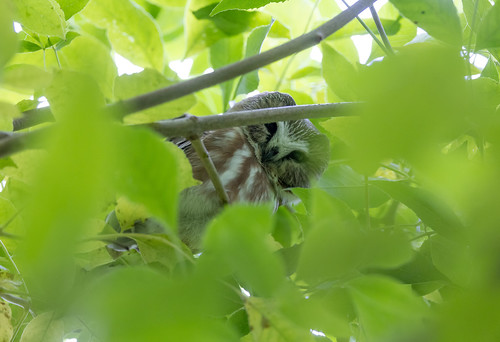
When I spotted my neighbor Jeanne, I brought her over so she could see it too, and as long as I was there anyway, I grabbed a few more photos. I also put out a text alert to some birding friends in case any of them wanted to see it. When my husband came home for lunch, I of course brought him to the owl, and this time I got a short cellphone recording of a few nuthatches and a Ruby-crowned Kinglet swearing at it, but again, we quickly left the little bird in peace.   

Northern Saw-whet Owl

About 2:15 or so, one of my friends who’d received my text message came, so I showed her where the owl had been, but no little birds were cussing, a grackle was now moving about in that branch, and the saw-whet was nowhere to be found. Well, actually it was still very close. A few hours later, a couple of neighbors strolled past with their dog after I’d mentioned that the owl had been there. They scrutinized all the trees as they walked down the path. Even without any chickadees to alert them, they got a great look at the little guy, now at eye level rather than overhead, just a short distance beyond where I’d seen it. They got phone photos and videos, which they showed me the next day.  

What made the little guy move? Had it become exasperated with the scolding chickadees? I had been working at my computer by the window for over two hours but hadn’t noticed people about, so I don’t think a person scared it off. The grackle may have sent it packing. Grackles and saw-whets both weigh from 2 ½ to 5 ounces, but even a single grackle on the smaller end of the weight spectrum, with its sturdy, pointed bill, would make a more dangerous adversary than the half-dozen or dozen chickadees that balance a saw-whet weight-wise.  

Saw-whets migrate through Duluth in huge numbers, though most pass through without people noticing them. Every autumn, banders at Hawk Ridge capture from 600–1,500 owls, the vast majority of them saw-whets, mostly in October. Just about every block in Duluth probably hosts at least one or two saw-whets for at least a day or two every October, but the tiny predators do their darnedest to keep from being noticed.   

How can you luck into seeing one? I’ve been birding so long that I’ve trained myself, without even realizing it, to key in on bird sounds even when I’m busy with other things. It takes a kind of mindfulness to notice angry-sounding birds, especially chickadees, which vocalize a lot whether an owl is there or not. Paying attention to their everyday sounds helps us hear the difference when chickadees start making angry dee-dee-dee calls—the more dee notes, the higher the threat level. Paying attention to those notes has led my eyes to both saw-whet and Boreal Owls.  

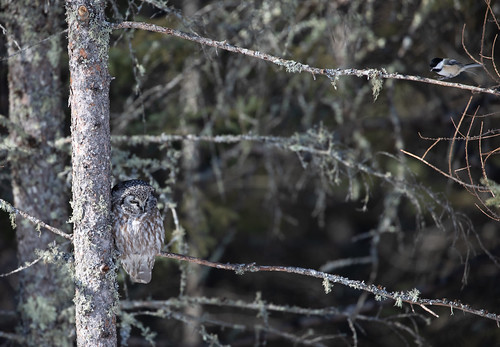
Black-capped Chickadee saying naughty words to a Boreal Owl
I photographed this Boreal Owl in the Sax-ZIm Bog in February 2020. Notice the chickadee scolding it. Chickadees and other birds virtually never perch below a predator. They're much safer scolding from above.

Crows, jays, or robins making angry calls indicates that a larger owl or other predator may be nearby. Here in Duluth over the years, what is called a murder of crows has led me to Barred, Great Horned, Great Gray, and Long-eared Owls right in my own backyard.  

Barred Owl

Great Horned Owl being mobbed by crows
This Great Horned Owl is fairly hidden next to the trunk. Remembering that smart birds stay above the level of an owl may help you find it.

Superstitious people have long associated owls with death. My favorite explanation comes from the 1894 Zoological Recreations by W.J. Broderip: "[Owls’] retired habits, the desolate places that are their favorite haunts, their hollow hootings, fearful shriekings, serpent-like hissings, and coffin-maker snappings, have helped to give them a bad eminence."   

I’ve seen a lot of owls in my life and not one was associated with any human’s death—owls don’t have time for such nonsense. They usually manage to go about their daily, and nightly, lives no one the wiser. When we luck into finding one in our own backyard, that’s reason for joy and delight. Well, unless we happen to be a mouse or a chickadee.  

Northern Saw-whet Owl holding dead mouse
I photographed this little saw-whet while leading a bird walk at the Western Waterfront Trail in spring 2016. The predator is holding a white-footed mouse, but we can see only its feet beneath the owl.

Saturday, October 1, 2022

October!

Blue Jay

I’m starting to write this barely a half hour after sunrise on October 1, 2022, with a bazillion Blue Jays filling my trees yelling their heads off. I live below Hawk Ridge, where last year’s Blue Jay count was a record-breaking 59,601. In 2020, when I was home everyday, we had a great Blue Jay migration, too, with the count at 50,646. That's when I got photos of my big tray feeder overflowing with jays.  

At least 19 Blue Jays plus one on the squirrel baffle

This year I haven’t been able to set out that big feeder because of bears and rats in the neighborhood. I’ve even had to stop filling a small tray feeder in the backyard thanks to the rats, so the only feeder the jays can visit is the small tray feeder in my second-story home office window. The most jays I've seen in that one was 11, and the most I could capture in a photo today was 7.

Blue Jays at my window feeder

Losing my big feeder reduces the number of jays I can see in any given moment but doesn’t seem to have affected how many are on this corner of Peabody Street, based on how many I'm hearing. Blue Jay numbers peak in mid-September, so it’s possible they won’t reach last year’s record high at Hawk Ridge, but as of 5 pm today the count is up to 58,810. Considering that 852 of them were counted today, there's a good chance they'll break last year's record in the coming days.   

Sharp-shinned Hawk watching the Blue Jays in my feeder
Sharp-shinned Hawk eyeing my Blue Jays in 2020

Here below Hawk Ridge, some of those jays are clearly in jeopardy. I’ve found clumps of Blue Jay feathers in my yard twice this week, and I freak out every time I hear the distinctive Blue Jay danger yell, but it’s the jays themselves dealing with this ever-present danger, not me, and they seem to shrug it off with equanimity except during actual or threatened attacks, and then for a little while afterwards. After yelling their heads off complaining, they go back to their usual jolly ways.  

Blue Jay

Blue Jays are exactly the right size to make a satisfying meal for a Merlin or Sharp-shinned Hawk, with enough calories to hold the predator for a full day. A Blue Jay weighs more than four times as much as a White-throated Sparrow, more than seven times more than a Yellow-rumped Warbler, and almost eight times more than a chickadee. I hate witnessing predation firsthand, especially on my favorite birds, but raptors have to eat, too. I’ve watched Blue Jays pull robin nestlings out of the nest, and even the sweetest chickadees rip apart innocent caterpillars—it’s a bird-eat-someone world out there. 

Young Black-capped Chickadee devouring a caterpillar

Predation is hard on both ends of the talons. On Thursday, I looked out my window exactly at the moment a Merlin knocked a Ruffed Grouse out of the air. I’ve seen a Ruffed Grouse on my corner only once before in the 41 years I’ve lived here. This one, mortally injured, struggled on the ground, but the Merlin couldn’t pick it up—even the heaviest female Merlins weigh less than half what a grouse weighs, and bazillions of screaming jays and a murder of crows were clearly not going to let the Merlin eat it right there in the open, so it flew off, still hungry. The grouse died a few minutes later and I retrieved the carcass, too sad to take any photos. I gave it to Clinton Dexter-Nienhaus, who has a salvage permit and will have it prepared for display at the Sax-Zim Bog.  

BB, the banded Pileated Woodpecker, at my feeder
BB at my feeder October 1

Knowing that any day can be the last for any wild bird makes my encounters with special individuals even more precious. Last fall, a banded male Pileated Woodpecker who I nicknamed “BB” for Banded Boy started showing up. I photographed him whenever I could. I could usually capture just two or three numbers on the band, but little by little I managed to tease out the entire string of nine digits: #115423658.

   Pileated Woodpecker

BB came just about daily all fall and winter through late April. On April 23, I even got a photo of him and a female in my feeder at the same time—I'm pretty sure she was his mate and that they nested somewhere in the neighborhood, but not near my corner. Soon after that, he stopped coming entirely, and I didn’t see him, or indeed any Pileateds, in my yard through the summer.   

BB the banded male Pileated Woodpecker
A scruffy-looking BB on September 2

In September, I started seeing BB once or twice a week, at first looking very scruffy after apparently raising young. Now he’s coming daily again. He comes to the suet feeder but also to our very old box elders, the power poles behind the yard, and a stump I often sit on near our raspberry patch. This morning he showed up at the suet feeder and then a female—unbanded so I have no way of knowing if she’s his mate—came to my window feeder right as I started writing this very sentence. She stayed in the feeder for at least four minutes as I got photos and video of her with my old cell phone. 

Pileated Woodpecker and Black-capped Chickadee at my window feeder

Pileated Woodpecker at my window feeder

A couple of chickadees alighted on the feeder while she was in it, but the Blue Jays kept their distance until she’d flown off.  A little while later, after I had my good camera, she or another female Pileated returned to that window feeder, and then a second female chased her off. A female appeared at that feeder at least 7 times through 4:30 pm, and BB made a second appearance in the suet feeder, as did at least one of the females.  

Pileated Woodpecker at my window feeder

My yard hasn’t had many rarities lately—the poor Ruffed Grouse is the only one I’ve noticed—but considering that chickadees, Blue Jays, and Pileated Woodpeckers are my top three favorite birds of all time, I’d say October is shaping up to be a splendid month. 

Pileated Woodpecker at my window feeder

Addendum: As of 1 pm on Sunday, October 2, the Hawk Ridge Blue Jay total for the season is 59,027, just 574 from the all-time record. We may break it today!


Tuesday, September 27, 2022

Rizzo makes the top ten of all time in hits-by-pitches!

Grandpa and me

From my very earliest memories I’ve loved birds. This is connected with my grandmother, whose name was also Laura. She died when I was very little but I remember her, and family lore has it that she loved birds. When my Grandpa gave me The Little Golden Activity Book: Bird Stamps, he told me it was because my Grandma had loved birds just like me.  

Little Golden Activity Book: Bird Stamps

My Grandpa always kept two canaries in his dining room, but I don't associate him with birds the way I do my Grandma. No, the love he inspired in me was for the Chicago Cubs. He never missed listening to or watching a game on TV unless he was at Wrigley Field seeing it live. When we watched games on Channel 9, he’d tell me about the game itself, but also about the players. He particularly liked Ernie Banks, so of course I did, too. Ernie Banks, the Chicago Cubs, and my Grandpa are inextricably intertwined in my brain and heart. Banks started playing for the Cubs in 1953 while I was still one year old and stayed with the team for the rest of my childhood and my Grandpa’s life. My Grandpa died in 1970, and Ernie Banks retired in 1971, every one of his 19 seasons in the Major Leagues with the Cubs. For a few memorable years, Ernie Banks was my friend on Facebook. Russ gave me a baseball autographed by him for my 70th birthday last year. 

My baseball autographed by Ernie Banks

Somehow it was always easy to love Ernie Banks and the Cubs even though I never particularly followed a baseball season from start to finish until 2016. I had no idea how well the Cubs were doing—the reason I picked 2016 was simply that January 11 marked my Grandpa’s 120th birthday, so I decided that in his honor, and in honor of Ernie Banks, who had died the year before, I’d get a baseball app and pay attention to every single Cubs game for the entire season. The only week I couldn’t pay attention was in October when I was birding in Cuba, where news from the US was blocked. 

I really was planning to follow the Cubs just that one season, but over the course of it, I grew to care about the players. And in the same way that my enjoyment of the games of my childhood centered around first baseman Ernie Banks, I focused in 2016 on first baseman Anthony Rizzo. That year I had a couple of other favorites, too, but the one I’ve followed diligently every year since then, becoming increasingly fond of, is Rizzo. When he comes up to bat, I find myself singing in Maria’s voice, from West Side Story, “Tony, Tony, Tony.” The night the Cubs won the World Series, with an infield grounder fielded by Bryant to Rizzo to make that final out, I was so thrilled that I couldn’t settle down until 1 am. When I took my little dog Pip out before finally heading to bed, a Boreal Owl was calling in my backyard! Clearly, I wasn’t the only one celebrating.  

Some of my 2016 Cubs/Rizzo memorabilia

In 2008, while he was still in the minor leagues, Anthony Rizzo had Hodgkin’s lymphoma, the horrible disease that killed one of my cousins back in the 1970s. Fortunately, treatment has improved enormously since then, and Rizzo made a complete recovery. He and his foundation have been tireless advocates for families dealing with cancer and for cancer research. Rizzo grew up in Parkland, Florida, and attended Marjorie Stoneman Douglas High School. After the horrifying school shooting in 2018, he attended vigils for the victims and helped raise large amounts of money for victims, their families, and the school. Rizzo is well known to be an excellent role model for rookies and an essential glue binding his team together. And I loved how in most of his Cubs games, he used eye black, which helps reduce glare in the exact same way that many birds have dark markings below their eyes to reduce reflections in bright light. 

Laughing Falcon
A Laughing Falcon with nature's own eye black

Anthony Rizzo with eye black

But perhaps the most compelling reason I singled in on Rizzo from the start is that he looks a bit like my son Joe, who lives in Florida where Rizzo came from.

Ernie Banks was always a Cub, from the start of his career in the Major Leagues until the end, so I never had to work out which was more important to me—the team itself or my favorite individual player. Last year I had to figure that out the hard way, when the Cubs traded Rizzo to the New York Yankees. Suddenly, I find myself following every single Yankees game as well as every Cubs game. 

Rizzo, a left-handed slugger, has always hugged the plate, a time-honored strategy for hitting that put him on the All-Star team three times and made him an MVP almost 50 times so far during his career. He’s hit 32 home runs this year, placing him in 12th place in the major leagues this season, at least as of today. But his strategy for hitting also places him in jeopardy for getting hit by pitches. He’s not crazy—he stays in the batter’s box, never crossing into the strike zone where the pitchers are ostensibly aiming. He’s not trying to get hit, but he is fearless, knowing he has a better chance of making a solid connection where he stands than a little further from the plate. So his slugging record comes at the expense of getting hit by pitches more than most players. Indeed, in three of the seasons he’s played, he’s led the major leagues in the number of times he’s been hit by a pitch.

On Thursday night, while I was at Hawk Ridge Bird Observatory's 50th anniversary banquet, I had to track the Yankees-Red Sox game on my friend Erik Bruhnke’s phone because I’d forgotten mine. And that night, Rizzo got hit by a pitch for the 19th time this season. (Well, actually, the 20th. On August 15, he got hit hard on his thigh but umpire DJ Reyburn claimed he’d leaned into it. I was listening to the game and watched replays, and the pitch was behind Rizzo, way, way out of the strike zone—where was Rizzo supposed to go?! But the umpire'a ridiculous claim was a non-reviewable call.) The hit-by-pitch Thursday was the 197th official one in Rizzo’s career—the one I’d been looking forward to for a long time, because it placed Rizzo in 10th place in the all-time Major League Baseball standings for hits-by-pitches, tying with Minnie Minoso (if you count the times Minoso was hit by pitches in the Negro leagues, which of course belong in the stats). Then, on Monday the 26th, he got hit again, so with 198 hit-by-pitches, Anthony Rizzo is now tied with Frank Robinson for 9th place. 

Being hit by any pitch is dangerous as well as painful. In 1920, Ray Chapman, playing for Cleveland, was hit in the head by a ball thrown by Yankee pitcher Carl Mays. Blood gushed out of his ear and he died 12 hours later. That led to a rule change that pitchers could no longer throw spitballs or coat baseballs with dirt, licorice, tobacco, tar, or other substances that made the ball go more erratically and also made it harder for the batter to see. You’d think it would also have led to a rule requiring batters to wear protective helmets at the plate, but that didn’t come about until more than 30 years, and a lot more injuries, later.

In 1936, while playing for the Negro leagues, Willie Wells got hit by a pitch that knocked him unconscious. He insisted on playing the next day, this time wearing a helmet lined with cork. The next year, Mickey Cochrane’s career with the Detroit Tigers ended when he suffered a near-fatal skull fracture on a pitch by Yankees' Bump Hadley. Finally there was a strong call for batter helmets, but players and most teams resisted. Batters said they couldn’t see the ball as well wearing a helmet, and the issue wasn’t settled through the 30s or 40s. In 1954, Joe Adcock, a first baseman for the Milwaukee Braves, was struck by a pitch on his head while wearing a helmet. Taken off the field on a stretcher, he was uninjured; his helmet was visibly dented. (This reminds me of when a car in the right lane made a left turn right into my son Joe on his motorcycle. Joe's arm was broken in seven places and the rest of his body battered, but his head was fine. His helmet? Not so much.)

Joey's Helmet

First the National and then the American Leagues started recommending helmets and making them sort of mandatory, but it wasn’t until December 1970 that MLB set a strictly enforced helmet mandate. Even then, older players who didn’t want to wear one were allowed to play without it. The last Major League player to bat helmetless was the Red Sox’s Bob Montgomery in 1979, a time well within my memory but before any active players of today had been born.

Hit-by-pitch injuries on two of my other favorite Cubs—Ron Santo getting his cheek fractured in 1966 and Jason Heyward getting a broken jaw in 2013—explain why protective ear flaps and then the C-flap were developed, to protect more of the head and face. Rizzo of course wears protection when batting. Indeed, the Rizzo bobblehead on my desk near my signed Ernie Banks baseball depicts Rizzo wearing his Yankees batter’s helmet.  

My Anthony Rizzo bobblehead

Batters are not the only ones who can be hit by a pitch. Among human beings, catchers and umpires are also in the line of fire. But oddly enough, non-humans are also at risk. On March 24, 2001, during a spring training game, Diamondback pitcher Randy Johnson threw a 100-103 mph ball that made it about ¾ of the way to the plate when suddenly the ball disappeared in an explosion of feathers—somehow a hapless bird had flown by at precisely the wrong moment. The umpire, catcher, and batter were stunned. When they figured out what happened, it was ruled a no pitch because there is no official rule that covers that bizarre scenario.
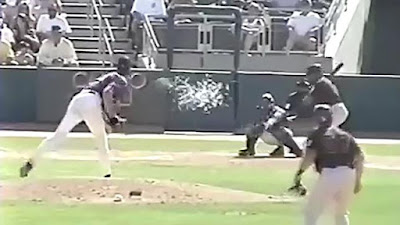
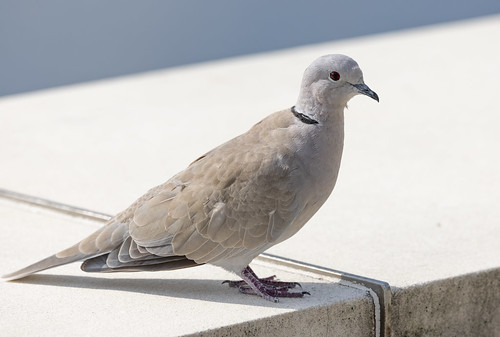
Ornithologists interviewed by Newsweek at the time said the bird was most likely a Mourning Dove, but I am at least somewhat skeptical because I can’t find evidence that the carcass was retrieved to be accurately identified. One of the articles about it uses a photo of a Eurasian Collared-Dove to illustrate the Mourning Dove, which tells you how important ornithological accuracy is in the sporting world. 
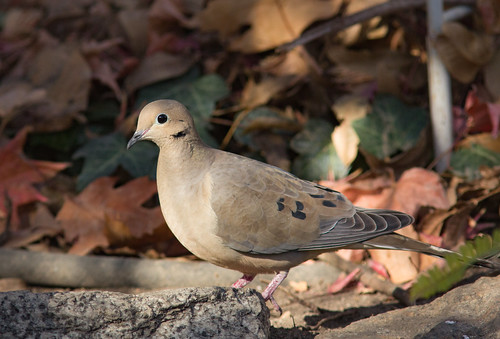
Mourning Dove
Mourning Dove
Eurasian Collared-Dove
Eurasian Collared-Dove. There is a difference!

That same year, Johnson was named co-MVP of the World Series when the Diamondbacks beat the Yankees, but to this day, he says that people ask him more about hitting the dove than they do about his critical role in Arizona’s first World Series win ever or anything else in his storied career. 

After retiring from baseball, be started a photography business. The exquisite wildlife photos on Randy Johnson's website provide solid proof that he cares about wildlife conservation. His photos run heavily to mammals, with stunning pictures of elephants, lions, leopards, and gorillas. There’s one gorgeous shot of a Blue-footed Booby, but the only other bird currently depicted on his website is within his logo: a songbird lying flat on its back with feathers flying. The astronomical improbability of hitting a flying bird with a pitch juxtaposes genuine tragedy with slapstick humor. 

It was obvious at the time that Johnson felt bad about it, but his webpage makes it clear that he’s mustered a sense of humor about how that single unforeseen and freakish moment has overshadowed his long Hall of Fame career. 

The only other time in baseball history that a pitcher hit a bird, as far as I can find, is from 2014, in a Class A minor league game when John Maciel hit a bird that wasn’t identified. Someone calculated that in the Major Leagues, almost 6.5 million pitches were thrown just between 2008 and 2016, and during that time frame, zero of them, and zero pitches in the millions thrown since, has hit a bird. 

Those two bizarre incidents were accidents. But in 1983, Yankees outfielder Dave Winfield killed a gull—I’d guess a Ring-bill—in Toronto with a warmup throw. It sounds like the bird was sitting, not flying, and the throw appears to have been intentional. The Ontario police charged him with animal cruelty, although that was later dropped.

All in all, I’m very glad that Anthony Rizzo is sturdier than a bird. 

Rizzo must have noticed birds during his childhood, and one would hope that his education at the high school named for one of the most important environmental writers in Florida’s history included information about some of Florida’s bird life. I don’t know if he ever noticed a Peregrine Falcon flying over Wrigley Field as I once did, or if he ever walked past the Picasso at Chicago’s Civic Center when clouds of pigeons took off, or if he’s ever taken a stroll through Green Wood Cemetery in Brooklyn and noticed the Monk Parakeets. I know if I were a baseball player, I’d spend at least part of my down time on road trips checking out the local bird life, but I doubt that real professional baseball players have much time to notice birds except in the event of a freak accident. 

So far, I don’t think any baseball announcers or news reporters have noticed that Rizzo just made it to the all-time Top Ten in MLB history for being hit by pitches, and I've never heard anyone ask him about the birds in his life. But it sure would be fun to know what my favorite baseball player’s favorite bird is.

My favorite baseball player with my favorite bird
My favorite ball player with my favorite bird

Addendum: On Tuesday, September 27 (the day this was published), Rizzo got hit by yet another pitch! Now he holds 9th place alone, with 199 career hit-by-pitches. 

Addendum: On Wednesday, September 28, Rizzo was the Yankees' acting manager when Aaron Judge hit his 61st home run of the season. I love that! 

Addendum: On Saturday, October 1, Rizzo got hit by a pitch yet again. #200!!!!! Four to go and he'll tie Chase Utley for 8th place. Plus, as Suzyn Waldman (my favorite baseball announcer of all time) pointed on out WFAN Saturday, he's one of only FOUR players ever to have at least 200 homers and 200 hit-by-pitches in their career!!!
Friday, September 23, 2022

Dee Dee Nana

Walter and Chuckie Chickadee

Before my children were school aged, I didn’t feed squirrels in the backyard so they wouldn't approach the kids expecting treats before the kids had learned how to recognize which squirrels were steady and reliable, how to choose long peanuts, and how to hold them very steadily at one tip so the squirrel’s mouth would be as far as possible from fingers. Meanwhile, I did feed squirrels on the front porch. My kids could watch through the living room window as I whistled and squirrels scurried right up to me for treats.  

Blue Jays love peanuts just as much as squirrels do and quickly caught on to what my whistling meant. When they heard me at first, they’d fly to the maple tree and watch. Sometimes the squirrels ran to a tree and ate the peanut right away, but they buried most of them in the front yard. Then the moment a squirrel turned its back, a Blue Jay would drop to the ground, dig up the peanut, and fly off to eat it right away or to bury it somewhere else.   

A pair of Blue Jays soon figured out how to skip the middleman. One was braver than the other and started taking peanuts right out of my hand. The other was more skittish, so I’d line up peanuts on our flat porch railing. When I stepped back a safe distance, that one flew in to grab its own treat.   

Laura and Katie at Grandma's house, summer 1984

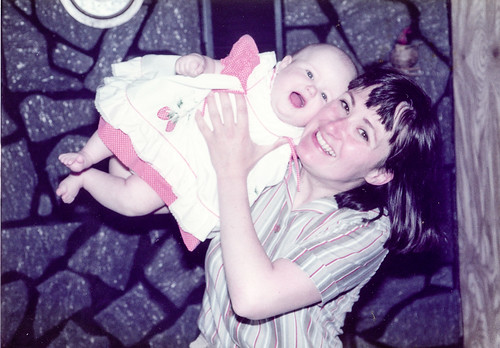
Our daughter Katie loved watching these big, colorful birds. When she was a year old and still crawling, she learned to pull herself up to stand at the front window to watch them. When I asked her if she wanted to go to the window to see the Blue Jays, she’d say, “Boo Jay!” Yep—Boo Jay was her second word, after Mama. That was cosmically gratifying.   

My little grandson Walter has had several words for a few months now. “Dee Dee” means chickadee, and he uses it when he sees chickadee photos, his own plush chickadee that makes a whistled “Hey, sweetie!” song when he squeezes it, and real-life chickadees that come to the bird feeder. When we take our walks, he points when he hears their song or call and says “Dee Dee!” This spring one chickadee perched on a street sign singing the entire time we walked past it on the sidewalk. He still points to that sign every time we go by and announces, “Dee Dee on Hign.”  

His very first toy from me was a Blue Jay Beanie Baby that we named “Doctor Blue Jay,” which he calls "Docto." He also has a plush Blue Jay that makes the Blue Jay call when he squeezes it. But he doesn’t say anything close to Boo Jay—he refers to every Blue Jay we see as “Docto!”   

Chickadee at the feeder and Dr. Blue Jay in his hand.

“Dada” and “Mama” were among Walter’s first words, but he hardly ever said “grandma”, and when he did, it came it out as gaggy, gaagaa, or something pretty close to “dada.” But a few weeks ago, Katie and Michael brought him to New York where they spent three weeks with Michael’s parents, right when he was picking up words like crazy, and his other grandparents became solidly “Nana” and “Pop.” 

They came home this past weekend, and on Tuesday when Walter and I were looking at a photo of that grandmother and he was pointing and saying “Nana,” suddenly a thought hit him like a thunderbolt. He’s been obsessed with the number 2 since even before his birthday, and now he exclaimed, “TWO Nanas!” He pointed at the picture and said, “Nana!” He pointed at me, laughed, and said, “Dee Dee Nana!” And ever since, he has been calling me "Dee Dee Nana."   

I often feel surges of gratitude that I have been given so very many wonderful days and years, so many wonderful experiences, and so many people I love. But being my dear grandson’s “Dee Dee Nana,” his chickadee grandma, is so unexpectedly and crazily wonderful. That little guy fills me with joy beyond anything.  

Wawa, Dee Dee Nana, and Bear