Laura Erickson's For the Birds

Thursday, August 30, 2018

Fiftieth Anniversary

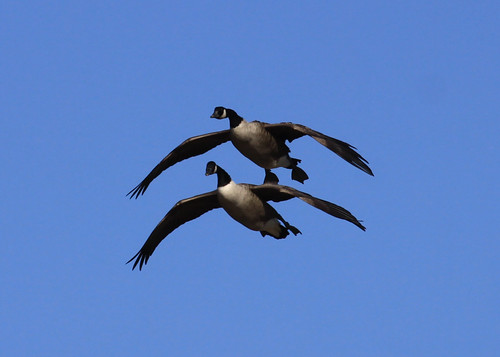
Canada Goose

Today is the 50th anniversary of Russ’s and my first date. Our courtship was rather Canada Goose-like, in that we were still dependent young in high school when we started dating. Every fall, Canada Goose families join other families in large flocks of related and unrelated birds, and rather like high school, the young start noticing one another and little by little pair off, sometimes hanging out for a bit before breaking that relationship off and starting a new one. When they do finally make a permanent selection, they stick together through thick and thin, year-round. Goose marriages virtually always last as long as both birds survive, though considering that the oldest Canada Goose known to science lived only 33 years and 3 months, the chance of two birds selecting each other when young and each one living over half a century to make it to their golden anniversary is pretty remote. 
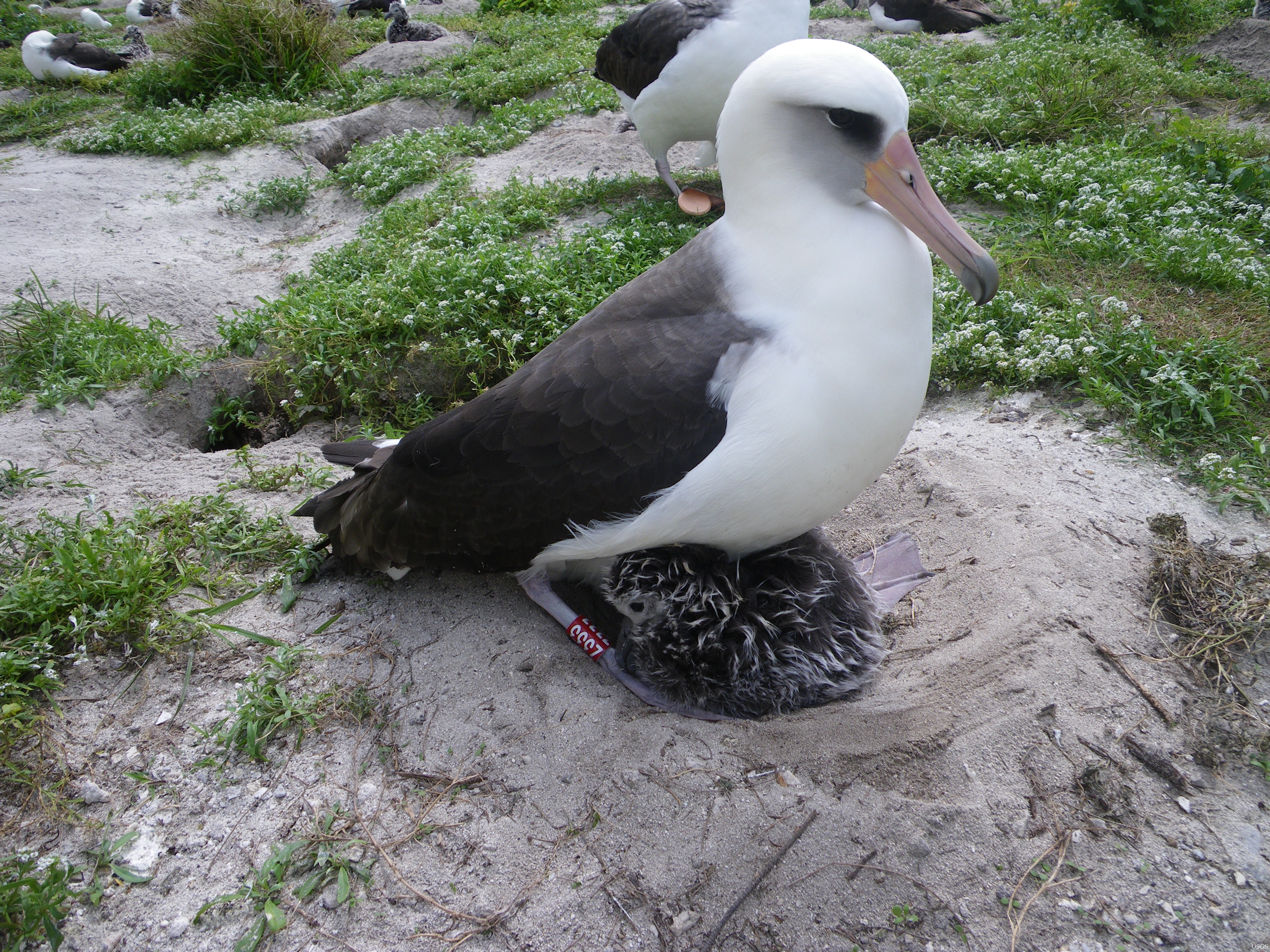


The one wild bird known to be even older than me, Wisdom the Laysan Albatross, has had at least two different mates just since 2011 or so, when a curious Chandler Robbins started going back through the non-computerized banding data, painstakingly tracing back the band numbers to her original banding in 1956. Her mate wasn’t banded in 1956, nor at any other point until she got so much international attention as the world’s oldest known wild bird, so we can’t know whether any of her relationships have lasted as long as Russ’s and mine. 

I wasn’t a birder in 1968 when Russ and I first went out. I didn’t become one until almost three years after we got married—Russ told his mom to give me binoculars and a field guide for Christmas in 1974. We went up to Port Wing, Wisconsin, for a few days before classes started in 1975—my first time ever birding up here—and I added lots of lifers and spent lots of time studying fall warblers for the first time. So I always associate the end of August and Labor Day weekend with big warbler migrations. And yesterday was one of those days. I was busy and had to spend most of the day indoors, but when I did get out for a few minutes with my new camera lens, I had a field day. The warblers were so thick, and so close, that I actually had to step back several times to be able to focus and to get a whole bird in the frame. 

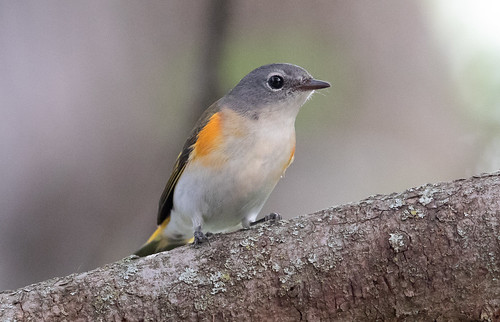
The most abundant species was the American Redstart.
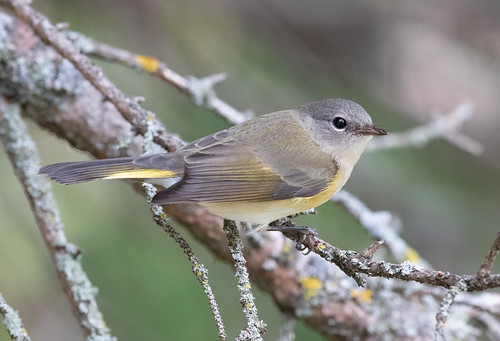
American Redstart

American Redstart

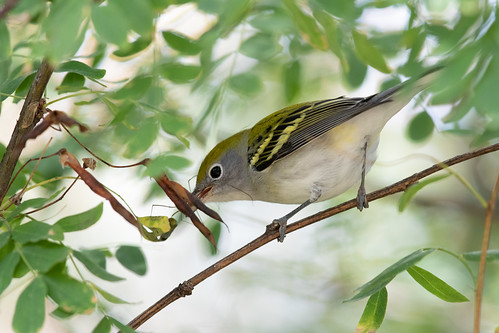
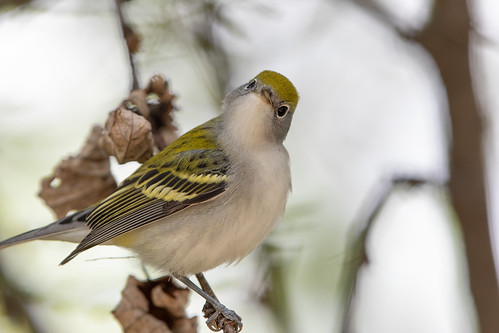
The most cooperative for photos was the Chestnut-sided Warbler.
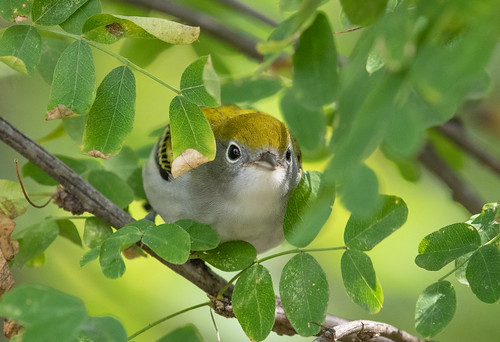
Chestnut-sided Warbler

Chestnut-sided Warbler

Chestnut-sided Warbler

One Magnolia Warbler spent an inordinate amount of time in my neighbor’s tamarack tree, peeking out for several photos.
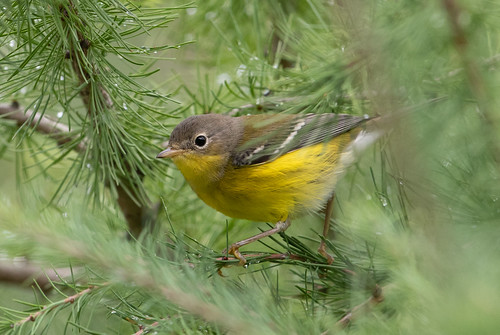
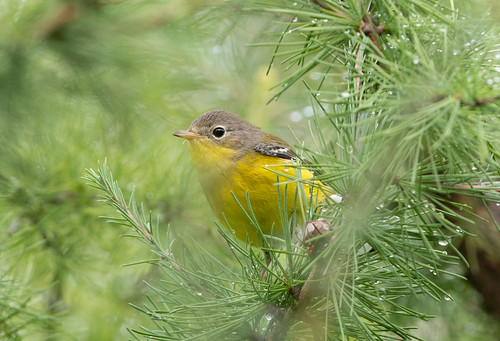
Magnolia Warbler

Magnolia Warbler

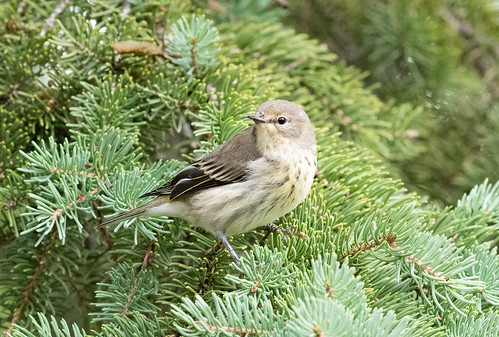
And a Cape May Warbler in my own front yard spruce tree gave me lots of photos from my porch—that one was probably a young female, very beautiful in a subtle, quiet way, missing all the gaudy field marks that so distinguish spring males. 
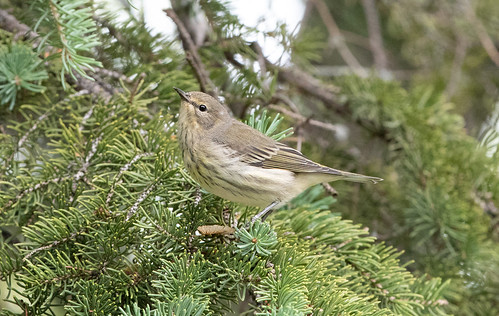
Cape May Warbler

Cape May Warbler

Cape May Warbler

Today, to celebrate our anniversary, Russ and I will be driving up the shore for a few hikes. I’ll be more focused on him than on migration, but I’ll certainly have my binoculars and probably my camera, just in case. I don’t know if the warblers will be as thick as yesterday—migration is like a box of chocolates: you never know what you’re going to get, but it’s certain to be sweet, just like two high school kids sharing their very first good-night kiss. 
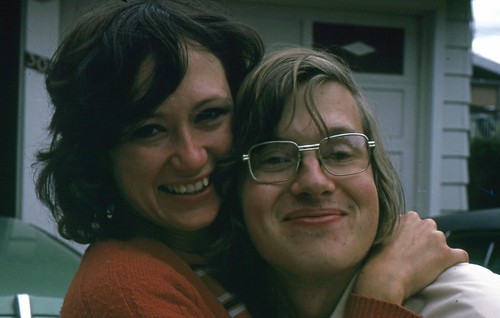
Laura and Russ, 1974

Monday, August 27, 2018

Book Review: The Feather Thief


Back on November 30 last year, I received an email from the publicity department at Viking Books, asking if I might be interested in reviewing an upcoming book. The book sounded amazing: titled The Feather Thief, by Kirk Wallace Johnson. I quickly said yes—the book was about a horrible theft of rare specimens from one of the largest, most important bird collections in the world, the British Museum of Natural History’s Tring Museum. I expected the book to be fascinating to me, mainly because I love natural history museums. I am not a museum collector except in having sent window-killed birds and one poor mangled Ivory Gull to museums, but I have often found myself fretting and fuming about the careless way people without a background in collections dismiss the importance and priceless value of the specimens. So the book sounded right up my alley, but I figured it would be of rather narrow interest to people not so enamored of museums and study skins. 

I devoured the book, which I loved, and even almost snagged an interview with the author, but the people at Viking wanted to hold off until closer to the April release date. By then, I was swamped with my spring speaking gigs, my mother-in-law broke her hip, and I got busy with my daughter's wedding, and I completely dropped the ball. Meanwhile, I was scooped by lots of other news media, because the book is truly remarkable. Indeed, This American Life did not just a segment but an entire program about it, which is how I suddenly remembered I was supposed to review it. I bought a published copy and read the book again. And it was even better than I remembered.

But the moment I had opened that advance copy last year, I realized I was in the hands of a master. And Kirk Wallace Johnson is, indeed, a master—a master writer, a master reporter, and a master human being. His previous book, To Be a Friend Is Fatal: The Fight to Save the Iraqis America Left Behind, was about his desperate work trying to save the lives of Iraqis who’d provided the US with translating and other services during our invasion. Johnson had been a coordinator of the reconstruction of the Iraqi city of Fallujah for the US Agency for International Development. He was almost killed in a horrifying PTSD nightmare when he sleepwalked out of a window; after his recovery he became the founder of the List Project to Resettle Iraqi Allies. That was heartbreaking, grueling work, seldom getting anywhere. When Johnson needed respite, he took up fly-fishing. And that is how in 2011 he learned about the break-in at the Tring Museum. His fishing guide mentioned the story of Edwin Rist, a 20-year-old American flautist and music student at London’s Royal Academy of Music who had recently been convicted of breaking into the Tring Museum and stealing 299 of the world’s rarest bird specimens for tying flies for salmon. Johnson was transfixed by the story, and became obsessed with finding out what happened to the unrecovered plunder. 

What makes The Feather Thief remarkable isn’t simply the author’s quest to learn more about Rist’s theft. He also probes in dramatic and well-researched detail just why a suitcase full of dead birds was so valuable, both in terms of the fly fishing black market and, in a more important though less tangible way, because of the great lengths collectors went to gather the birds from around the world and protect their stuffed remains, and the extraordinary scientific value of those dead birds. Indeed, the birds at the Tring Museum had been moved there in the first place from the British Museum of Natural History’s main London building, at great risk to the curators’ very lives, during World War II to protect them from Hitler’s bombings. Johnson is not a birder, but he developed the same visceral sense of the value of the birds from his research that I feel. 

But perhaps the main thing that makes this book remarkable and uniquely wonderful is how Johnson goes above and beyond reporting about a theft and how the police found the thief to becoming an actual crime investigator himself, because he so wanted to see some form of justice done to the perpetrator and the fly-fishermen who made the theft so lucrative. He became particularly obsessed after learning that a great many of the stolen birds had disappeared, and no one else was looking for them. It was Johnson himself who shamed some fly-fishermen into returning stolen goods to the Tring, and also Johnson who tracked down some of the stolen specimens years after the case was closed. Normally I don’t like an author to inject himself into a news story except in very small doses at most, but Johnson is an essential part of this story, and he’s such an engaging writer that the book held me riveted from start to finish. In ranking The Feather Thief on a scale of one to ten, I’m cranking this one up to eleven.

P.S. Back on December 15, I mentioned to the publicity department that the book had a tiny error—an anachronism that the author, about the age of my own kids, wouldn't have picked up on but a 66-year-old woman was exactly the kind who would notice. I wrote: 
If there's time to make corrections, on page 53 he makes reference to "'parrot sausages,' in which live birds had their beaks taped shut before being stuffed into women's pantyhose..."  
The time being referenced in the paragraphs around this are the 1920s and 30s, well before pantyhose made their debut. He'd be wiser to reference "women's hosiery."
When I read the published version, they'd made that change!

P.P.S. I'm not supposed to get political on the version of my podcast that is aired on radio stations, especially if it's not specific to birds. But Johnson's memoir about his experiences in Iraq and then trying to help those refugees who were targeted in their own country specifically for helping our country is essential reading for anyone who wants an accurate look at this shameful and on-going chapter of our nation's recent and current history.

Thursday, August 16, 2018

Bird Photography

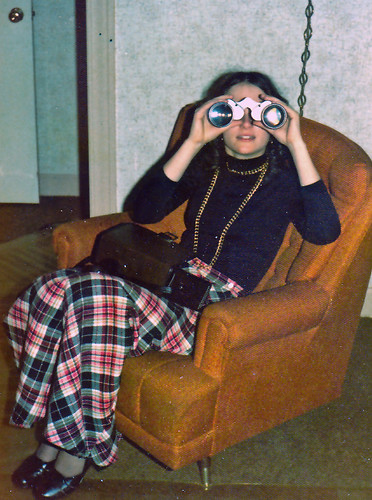
Laura's new binoculars!

When I started birding in 1975, my only optical equipment was a pair of Bushnell 7x50 binoculars. The next year, I got a Bushnell Spacemaster spotting scope. Russ and I were college students and there was no way we could afford film and developing, much less a long lens, for me to photograph birds. I was entirely satisfied watching birds without capturing them on film.

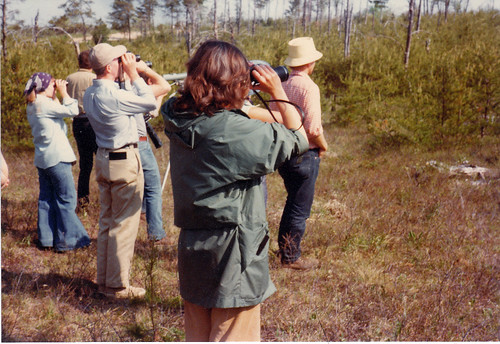
Me looking at my lifer Kirtland's Warbler
Here I am in 1976, looking at my lifer Kirtland's Warbler, perfectly happy to not get a photo of the bird. Russ took this photo of me--our camera had too short of a lens to get a picture of the bird itself. 
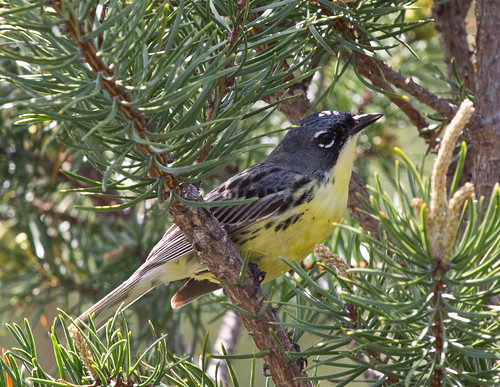
Kirtland's Warbler
Here is a Kirtland's Warbler I photographed in 2011. By this time I was more likely to be carrying a camera than binoculars!

I got my first digital camera in 2000. It had two or three megapixels and a bit of a zoom. I took a few photos of close birds in Costa Rica and when visiting my aunt in Florida, but used the camera mainly for people and scenery, and more often than not, left it home when I was birding.

Katie
I took this photo in Costa Rica in 2001. Very few photos of birds, but quite a few of my daughter Katie!
In 2005, when I first started writing a blog, I figured out how to take photos with a small digital camera through a good spotting scope. That is called digiscoping, and suddenly I was getting some pretty good photos of some of my favorite birds.

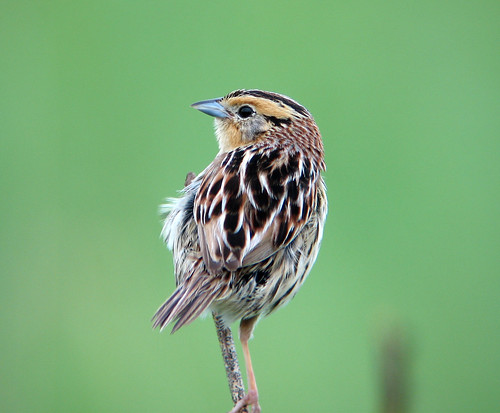
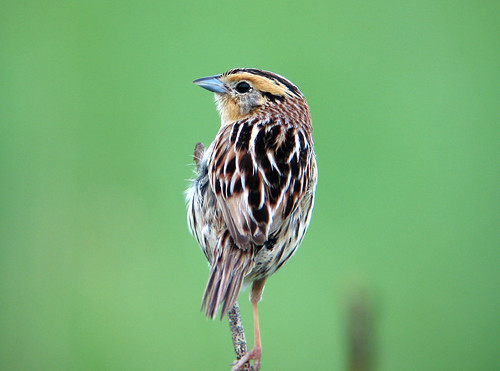
Le Conte's Sparrow
I digiscoped this Le Conte's Sparrow in June 2005, using a Canon PowerShot SD 500 and my Zeiss spotting scope. It's still one of my favorite photos ever. 
As the cameras in smart phones improved and point-and-shoot digital cameras got better, suddenly a whole generation of birders was learning to identify the birds in their photos rather than scrutinizing them in the field. Soon even us old-school birders were documenting rare sightings with photos, and with Facebook, Twitter, and especially eBird, other birders started hearing about rare sightings while the person who discovered the bird was still right there, watching it. Now documentation almost always requires a photo and sometimes a sound recording rather than painstakingly written descriptions.

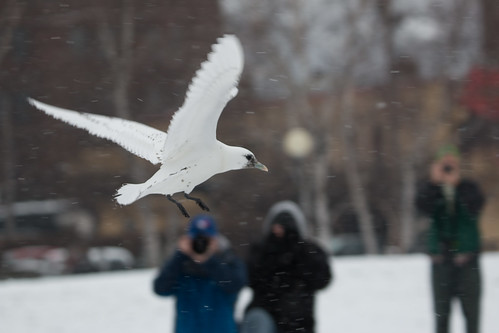
Ivory Gull
Birders looking at this Ivory Gull in Duluth in 2016 spent more time photographing it than looking at it with binoculars. 

I’ve adapted with the times. In January 2009, when I was working at the Cornell Lab, I bought a good DSLR camera and a 100-400 mm lens. Now if I have to leave some of my optical equipment at home, it’s more often my binoculars than my camera, which I take everywhere.

I consider myself a birdwatcher who takes pictures rather than a nature photographer. It’s not that I don’t take myself seriously enough because I’m a woman, though I do think most people, male and female alike, take ourselves way too seriously. In this case, though, it’s that I invest my time and effort into learning more about birds rather than the principles of photography. Many of my photos have been published in magazines, and National Geographic even included one in my Pocket Guide to the Birds of North America.

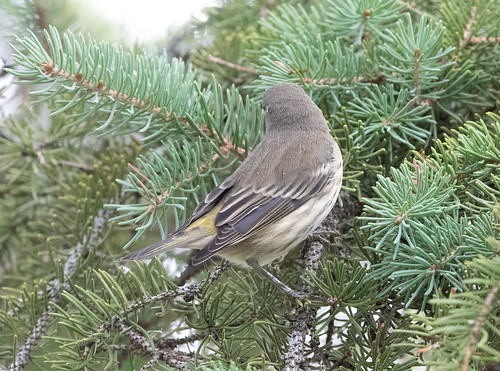
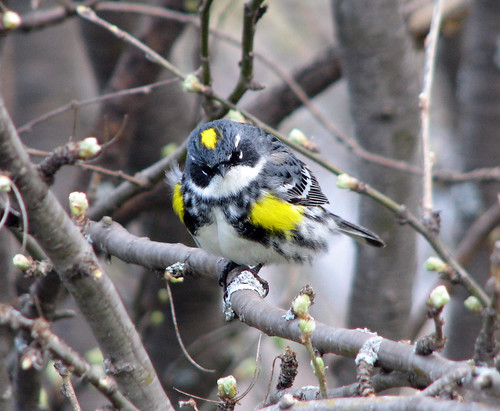
Yellow-rumped Warbler
I photographed this Yellow-rumped Warbler with a small Canon point-and-shoot camera in 2006. This is the photo National Geographic used in my Pocket Guide to the Birds of North America.
My friends who consider themselves “real” photographers publish so many more images of such enormously high quality, and are so much more consistently skilled than I, that I leave the real photographic expertise to them, and take my own identity from my own area of expertise.

Ironically, sometimes people ask me to teach photography workshops, though I honestly have only one piece of advice for people who want to take bird photos: No matter how cheap or expensive your equipment may be, get out there and take as many bird photos as you can. Little by little, you’ll improve, and from the very start will get a few splendid photos.

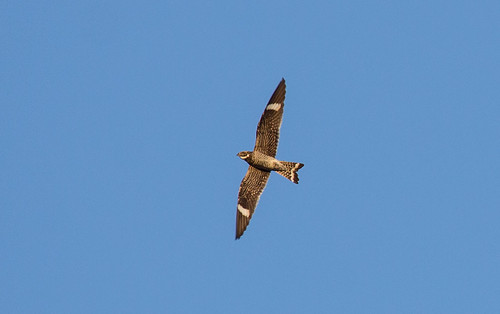
I pretty quickly figured out that when a bird is backlit, it’s important to overexpose it.

Common Nighthawk
I over-exposed this flying nighthawk by 1 1/3 stops.

It took way longer for me to figure out that when a bird is lurking in dark shadows, it’s important to underexpose it.

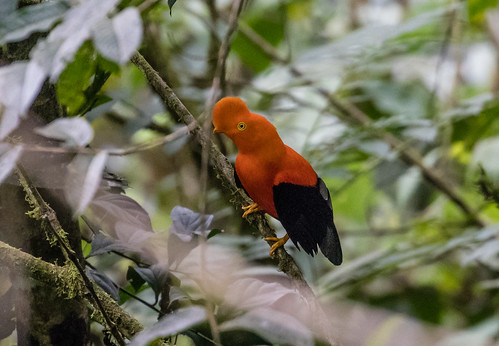
Andean Cock-of the-rock
This Andean Cock-of-the-Rock was deep in a dark ravine. I underexposed the photo by 2/3 stop. 

After years of using Photoshop and Lightroom, I’ve also grown better at tweaking my photos without over-tweaking them. But I’ve never learned photography systematically, so wouldn’t have a clue how to teach it the way I do it, by trial and error and just taking a whole lot of photos so I’ll have a little wheat here and there in the chaff.

Over the years, I’m finding that my percentage of good photos is improving, but I have the right kind of personality for my lackadaisical approach, in that I don’t get frustrated or upset when my photos turn out awful. People who put in the time and effort to learn how to take consistently good photos are the “real” photographers. I’m still just a birder who takes pictures. Real photographers get frustrated when their pictures don’t turn out, and when they take what looks like a genuinely perfect shot, they pay closest attention to what they could have done even better. Me—when I take even a marginally good shot, I’m overwhelmed with delight.

I’ll never be able to make a living as a photographer, but I probably derive at least as much fun and joy from my photos as most professional photographers do. My approach to bird photography is clearly not better on any objective scale, but it’s exactly the right way for me.

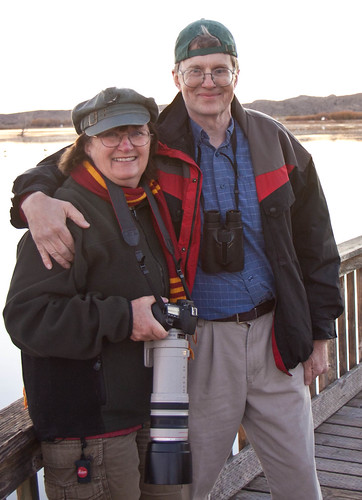
Russ and Laura
Russ doesn't consider himself a birder, but he's the one with the binoculars!

Monday, August 13, 2018

Of Weddings and Walk-Off Grand Slam Home Runs

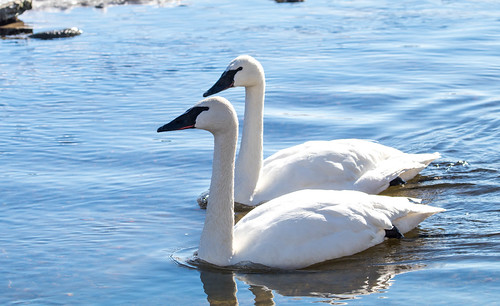
Trumpeter Swan

On August 4, my daughter Katie, who put together my website and the amazing database that powers it, married Michael Geraci, who drew the two Black-capped Chickadees at the very top of almost every page (except the blog). Playing the role of “mother of the bride” for the first and last time in my life, I was pretty busy in the weeks leading up to the wedding, which meant that I didn’t have time to write new blog posts and podcasts for over a month.

No one is looking out for predators here!
Taking a full month off of day-to-day responsibilities is a luxury unknown in the natural world, and in the natural world, weddings are unfathomable. Swans, geese, cranes, and Florida Scrub-Jays, which all form more solid, permanent pair bonds than we mere humans do, or at least have far lower divorce rates, don’t need any kind of public affirmation or ceremony to cement their commitment to one another and the family they will be creating. And what birds could possibly take weeks or even just days out of their own busy lives to help their offspring forge a pair bond commitment, when they themselves have to renew their own vows and produce new offspring? Imagine Wisdom, the 67-year old (or even older!) Laysan Albatross who raised another chick just this year, had she been required to take time out of this year’s breeding responsibilities to just attend—much less actually help in—the planning and execution of commitment ceremonies for the dozens of young she’s raised in her many years. And if parents can’t take time out of their lives for this, how could a bird’s friends or more distant relatives?

When courting is the order of the day, no sensible bird wants his or her parents, siblings, or anyone else interfering, and birds hardly need a marriage license to ensure their fidelity. It’s not like geese, swans, and cranes don’t maintain ties with their relatives and friends, either—migrating flocks of all three often include “kissing cousins” and others with proven ties to one another. Migratory birds with strong family ties seem to relish these get-togethers during spring and fall, when mixing it up with friends and family is the order of the day.

But even when engaged in these boisterous reunions during migration, birds can’t afford to stop doing what daily life demands for even a moment, much less a month. Hawks can afford to miss more birds than they hit—like major league baseball hitters, a 300-batting average is plenty good enough, and even slugging below 100 can be enough if, like a MLB pitcher, they have other strengths. But the birds those hawks are after can’t afford to be hit even once—any bird not batting 1000 against the hawks is dead meat literally. As the Washington Nationals learned the hard way just last night, even when you seemingly can't lose—say you’re up 3-0 in the bottom of the ninth with two outs and the rookie Cubs batter at the plate has two strikes—one single pitch can end it for you.

Even as we humans invented baseball and so ostensibly realize how quickly things can turn against us, we’ve constructed our lives to prevent sudden, unexpected losses. Our cars have seat belts, shoulder harnesses, and airbags, we expect the Food and Drug Administration to enforce food and pharmaceutical safety and OSHA to ensure our safety at work, and worker protection laws for generations have allowed us to compartmentalize our work so the vast majority of us have the luxury of going to bed each night with a pretty solid certainty that we will wake up alive in the morning. It’s not that birds brood about the dangers of everyday life—worrying itself would take their focus from actively engaging in each present moment. But if they’re not spending their time worrying, birds are also not spending it on frivolities like baseball and weddings. We may use cooing doves and lovebirds as symbols of human couples, but you’ll never see a real dove or lovebird wedding.

So of all the species on the planet, only we humans take time off now and again to plan and attend weddings of our children, relatives, and friends, or to watch that rookie Cub David Bote hit a stunning walk-off grand slam home run. But after the festivities are over, even we mothers-of-the-bride and Cubs fans have to come down to earth and engage in real life again.

Wednesday, July 11, 2018

Anhinga Trail Then and Now

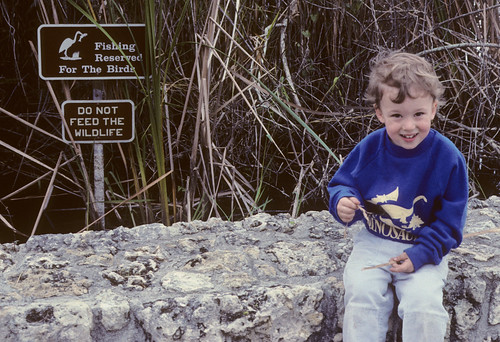
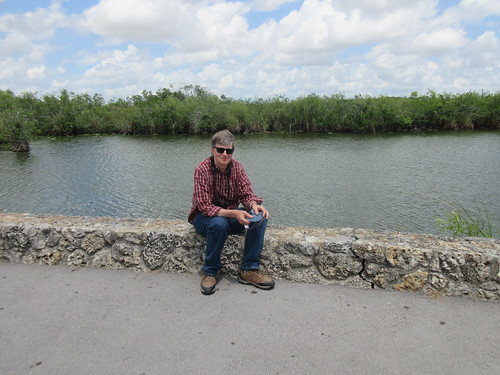
I don't know where exactly we took the photo of Tommy in 1988—the signs are gone now. But I made Russ sit pretty much where I thought our little boy had been sitting. Tragically, Russ doesn't have a single dinosaur shirt. 

1988 Tommy

Tommy in the Everglades

2018 Russ

Russ on the Anhinga Trail

Tuesday, July 10, 2018

Laura’s Best Bird EVER! ™: Le Conte’s Sparrow—Tiny Ahab

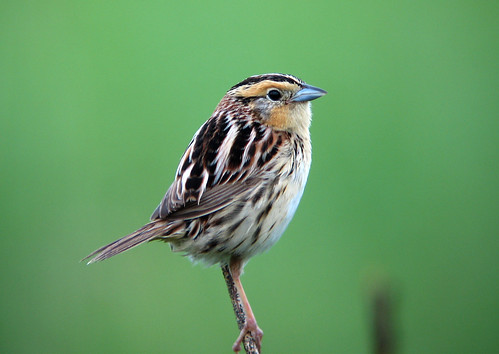
Le Conte's Sparrow
NOT my first Le Conte's Sparrow--that was before I was taking photos. 

On April 30, 1976, Russ and I left for a Michigan Audubon field trip to northern Michigan. He and I camped in a state forest close to the Michigan State Prairie Chicken Management Area in Osceola County so we could meet the other field trip participants well before first light on May 1. We got little sleep because the spring peepers were calling up a storm that whole night, and we had to get up while it was still quite dark to meet the group where the blind was to observe the state’s last remnant population of prairie chickens dancing. The entire flock was about to disappear within the next few years, though our group was still hopeful that these mating birds could somehow defy the odds. We gazed at them for a couple of hours. After they dispersed, we headed north, making a quick stop at Hartwick Pines State Park, where I saw my first Evening Grosbeaks and Pine Warblers, and then we headed on to Whitefish Point. By the time we arrived after what had already been a full day,  everyone was more than ready for lunch.

I’d already added eight lifers that morning and was very hungry myself, so you’d think I’d be happy to sit down with our group for at least a bit of a lunch break. But I’d never before been to Whitefish Point, and so after a quick bathroom break I grabbed my bag lunch and headed back outside for some more birding. And right in the gravel-and-grass parking area, I came upon another new bird—a tiny, gorgeous sparrow. I rifled through the pages of my field guide as the bird obligingly stayed nearby, sometimes on the ground, sometimes in one or another small shrub. That kind of cooperativeness meant the little guy almost certainly had had a long night migrating and still needed rest and food. After looking through every sparrow in the book, I settled on Le Conte’s Sparrow.

Le Conte's Sparrow

After I felt satisfied with my identification and had drunk in its lovely features, I ran inside to tell everyone. And instantly the on-site bird bander told me that was impossible—he’d never seen or heard of a Le Conte’s Sparrow on Whitefish Point before. I was still very much a beginner, and didn't have the cockiness or confidence to argue the point, but I said the bird was probably still there and I could show it to him. He skeptically followed me to the parking lot, most of the field trip participants in tow, and sure enough, there was the bird, and sure enough, it was indeed a Le Conte’s Sparrow. He let out a triumphant whoop as if he’d found it himself and ran to his truck get a mist net. I’d never before seen one of those—it looked like an extremely fragile volleyball net. He set it up at the edge of the parking lot maybe 30 feet from the bird. Then he had us all line up on the other side of the bird and slowly walk forward, driving the bird toward the net. When the tiny thing was snagged, he quickly extricated it, transforming a bird in the bush into one in the hand.

This was the first time I’d ever seen a bird get banded, and it made a deep impression. The bander was a big guy, with huge hands. The size difference between him and the tiny bird was impressive enough, but what triggered my imagination was how the bird didn’t meekly submit to being manhandled—he threw his head back and opened his mouth, glaring at the enormous man with fury and defiance, reminding me of Ahab confronting the Great White Whale.


Unlike Melville’s Ahab, this little Le Conte’s Sparrow survived his first battle with his nemesis without getting his leg bitten off—rather than a wooden leg, my Ahab would forever carry a tiny aluminum band around his leg as a remembrance. And unlike Moby Dick, the bander didn’t get any deep wounds from harpoons and knives, though the little bird did bite his hand hard enough to draw a bit of blood. I, the Ishmael in this scenario, alone am escaped to tell thee.

When I got home, I headed to the university library to look up some numbers. The average Le Conte’s Sparrow weighs about 14 grams—that’s half an ounce. I don’t think Melville reported Ahab’s weight, but I found an old movie magazine on microfiche that had the next best thing—Gregory Peck’s weight, which was about 174 pounds. And I found in a book or encyclopedia article the maximum weight of a Sperm Whale, 63 tons. I worked out the ratios to discover that the Le Conte’s Sparrow was tinier, relative to Ahab, than Ahab was to the Great White Whale—and not just by a little. The biggest sperm whales weigh 721 times as much as Gregory Peck did; meanwhile, he weighed fully 5,643 times what a Le Conte’s Sparrow weighs. That’s an order of magnitude difference!

So my tiny little Ahab, fearless in the face of the Great White Bander, stood his ground and lived, escaping the dire fate that took Melville’s poor Ahab down into the depths. There’s no evidence that my avian Ahab spent the rest of his life obsessively seeking revenge—indeed, not one Le Conte’s Sparrow banded during the 1970s has ever been re-captured, so unlike Melville’s character, my little Ahab managed to move on from his ordeal without developing a monomaniacal obsession for revenge, leading an entire ship's crew to their deaths in the process. I don’t think Herman Melville ever had a chance to see a Le Conte’s Sparrow, much less observe one being banded, or his greatest work of fiction might have turned out a bit differently.

To this very day, whenever I have to stand up to something fearful, I see that Le Conte’s Sparrow in my mind’s eye—that unobtrusive, tiny guy holding firm in resistance as long as the danger remained. That tiny little Ahab was my best bird EVER!

Across the Universe

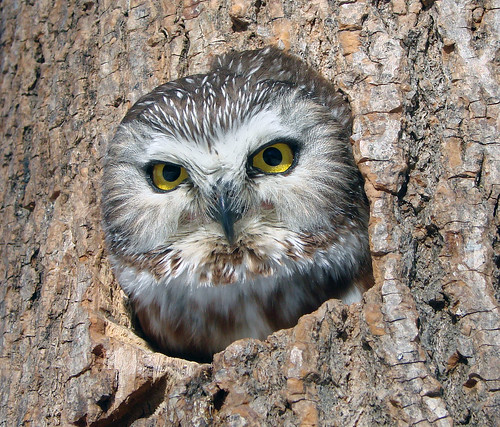
Northern Saw-whet Owl

This weekend, I listened to This American Life during a long car ride. The episode was a rerun, but I’d not heard it the first time around. Producer David Kestenbaum, who has a Ph.D. in particle physics, first explained The Fermi Paradox, which asks the question: if there really is life out there somewhere else in the universe, why haven’t we heard from it yet? Thinking about the low probability that there are other civilizations out there made Kestenbaum feel very sad and lonely.

The Drake Equation is physicists' best attempt to calculate how many other civilizations are out there—it’s n equals r star times f sub p, with n being the number of advanced civilizations there are in the galaxy. To solve, a physicist would have to estimate the fraction of stars that have planets, the odds of life evolving on any of them, and the average length of survival of any civilization. Depending on your assumptions, you can get a number as high as 156 million civilizations out there in the universe, or 9.1 times 10 to the minus 11th, which is basically zero. Kestenbaum’s mentor, Melissa Franklin, said that means that right now, we’re in the sweet spot. We haven’t been killed by any alien civilizations, but there’s still hope that there could be one or more out there. 

This whole discussion left me weary and sad. When I got home, I tried to find out how much money our civilization has spent seeking out other “intelligent life” out there in the universe, but I couldn’t find dollar amounts, though it surely measures in the millions of dollars. Even today, people and government agencies here in the US and in other countries are still trying to find out what intelligent life is “out there.”
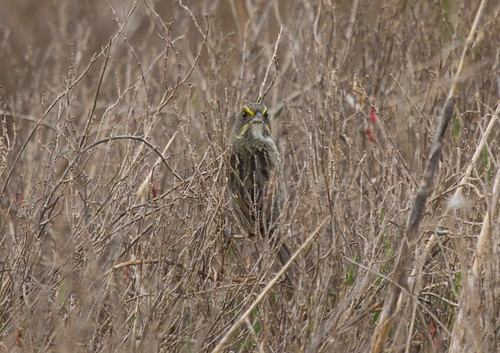
I don’t think much about intelligent life on other planets. As Robert Frost wrote, “Earth’s the right place for love: I don’t know where it’s likely to go better.” And just this very morning, before I even got out of bed, I was the recipient of several messages from intelligent, non-human life forms. I’ve received messages like this since I was a small child, usually transmitted at a frequency between about 1,000 and 10,000 Hz. Like us, these transmitting lifeforms are carbon-based and actually share a full 65 percent of their DNA with us. They aren’t sending us messages from outside our planet—indeed, the transmissions I was picking up this morning came from my very own backyard.

These messages were made by birds, who live in the exact same habitats on the exact same planet as the one species whining because it can’t find intelligent life “out there,” the one species who feels alone in the universe when it wouldn’t recognize another intelligent life form if it bit him on the hand and pooped on his head.

What exactly is it that birds are trying to communicate? We know that some of their transmissions are territorial declarations, some are directed to a mate or hoped-for mate, and some are warnings about potential dangers. In other words, a great deal of what birds communicate is exactly like a great deal of what humans communicate. Yet we deny avian intelligence and ignore bird voices even as we spend millions of dollars trying to communicate with non-existent beings from other solar systems and galaxies. Our definition of intelligence seems a bit shaky.

I don’t mind people looking up at the stars and wondering what, and who, might be “out there.” But when you’re looking up at that night sky and dreaming of E.T., it might be wise to open your ears to the owls, mockingbirds, and other voices of the night calling to you right here on our home planet. Our species is nowhere near as alone as David Kestenbaum thinks. And I suspect our civilization would have a much greater probability of long-term survival if we paid more attention to the life forms right here on planet Earth rather than gazing into the cold, vast emptiness of the night sky and feeling sad and alone.

Wednesday, July 4, 2018

What Makes America Great

These birds breed in the wild nowhere else on the planet except the United States of America—most of them spend their entire lives without passing out of this nation's borders. And I left out all but one of the birds endemic to Hawaii. This land was made for you and me, and for them:

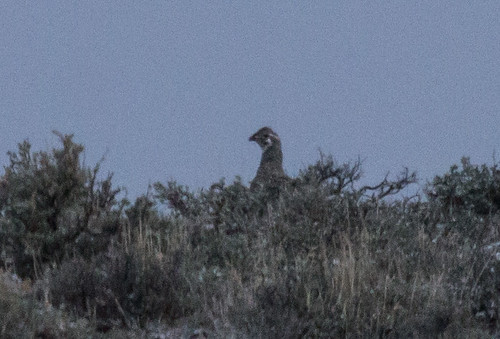
Gunnison Sage-Grouse
My crappy photo of a Gunnison Sage-Grouse

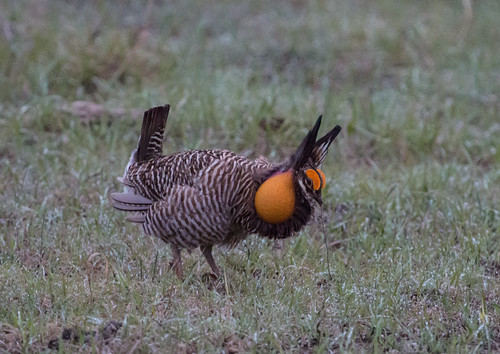
Greater Prairie-Chicken
Greater Prairie-Chickens were once found in Canada, too, but were extirpated. 

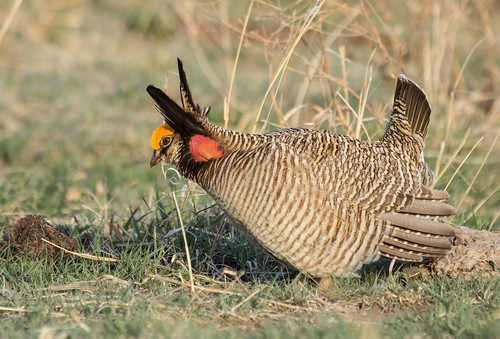
Lesser Prairie-Chicken

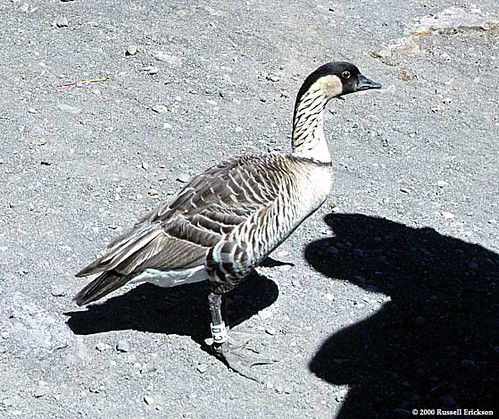
Hawaiian Goose
Nene or Hawaiian Goose. 

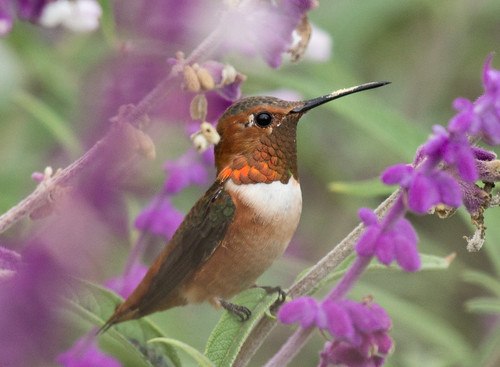
Allen's Hummingbird
Allen's Hummingbird breeds only in the US.
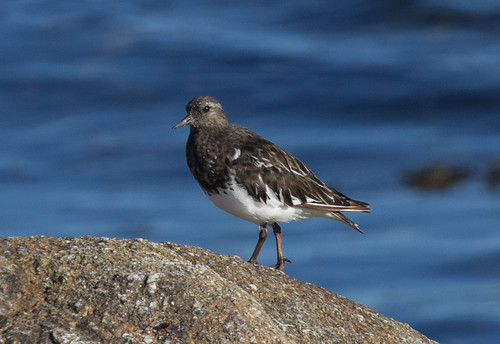
Black Turnstone
Black Turnstones breed only in the U.S.

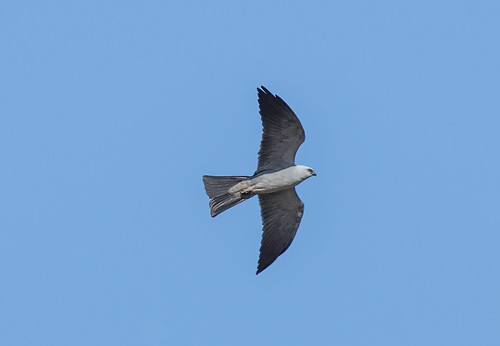
Mississippi Kite
Mississippi Kites breed only the the U.S.

Red-cockaded Woodpecker

Extinct Carolina Parakeet

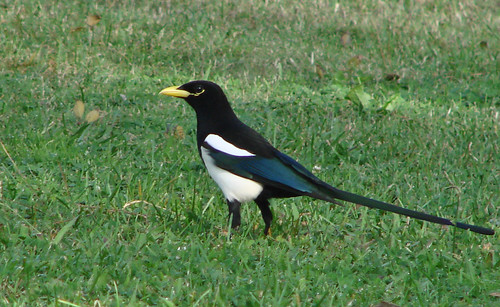
Yellow-billed Magpie

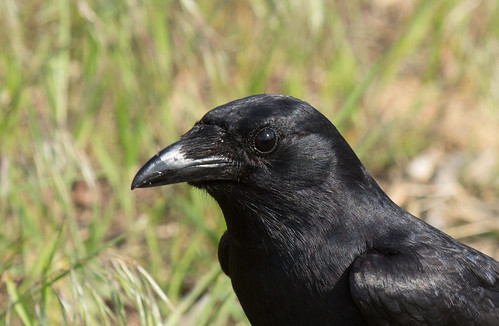
Fish Crow
Fish Crow
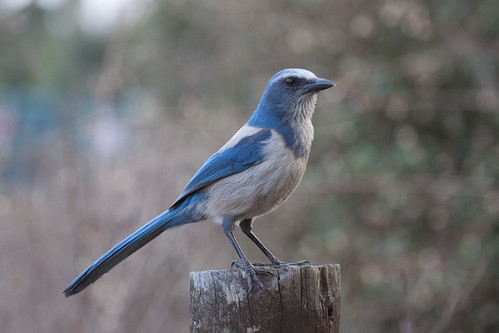
Florida Scrub-Jay
Florida Scrub-Jay
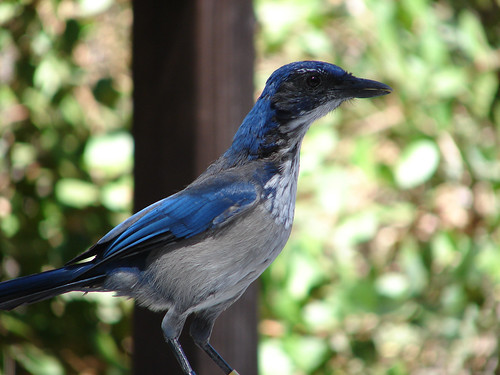
Island Scrub-Jay
Island Scrub-Jay
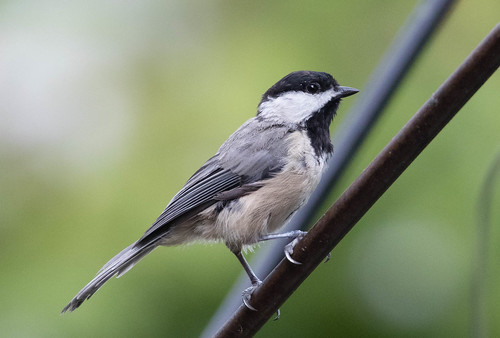
Carolina Chickadee
Carolina Chickadee

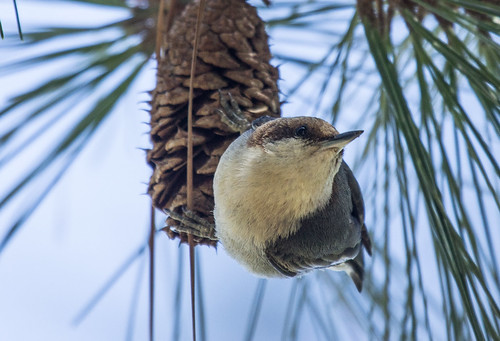
Brown-headed Nuthatch

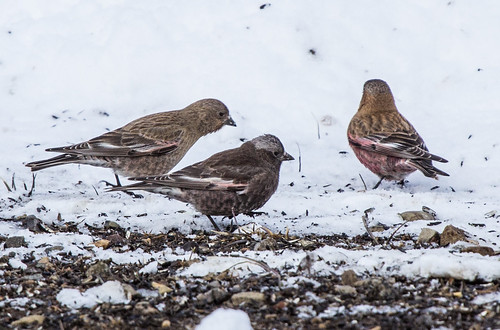
Black Rosy-Finch (center) and Brown-capped Rosy-Finch
Brown-headed and Black Rosy-Finches

I don't have my own photo of Bachman's Sparrow

Seaside Sparrow
Seaside Sparrow 

Wolfgang Wander's photo of a Saltmarsh Sparrow

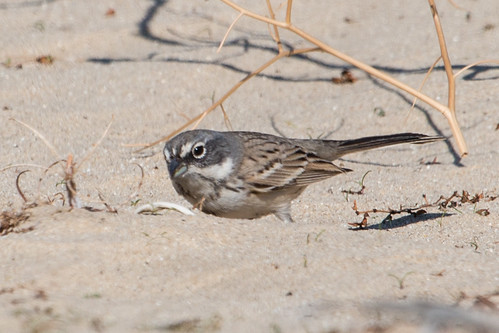
Sagebrush Sparrow
Sagebrush Sparrow breeds only in the U.S.

Boat-tailed Grackle
Boat-tailed Grackle

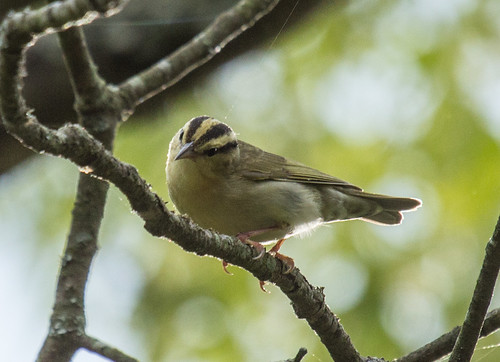
Worm-eating Warbler
Worm-eating Warblers breed only in the U.S.

Extinct Bachman's Warblers bred only in the U.S.

Swainson's Warbler
Swainson's Warblers breed only in the U.S.

Virginia's Warbler
Virginia's Warblers breed only in the U.S.

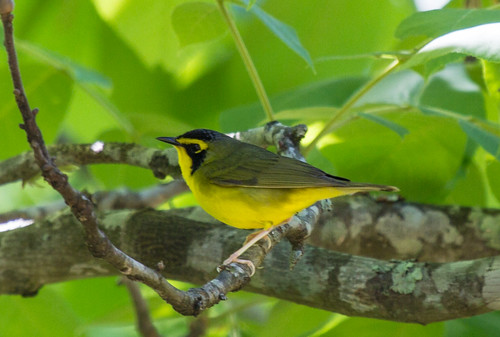
Kentucky Warbler
Kentucky Warblers breed only in the U.S.

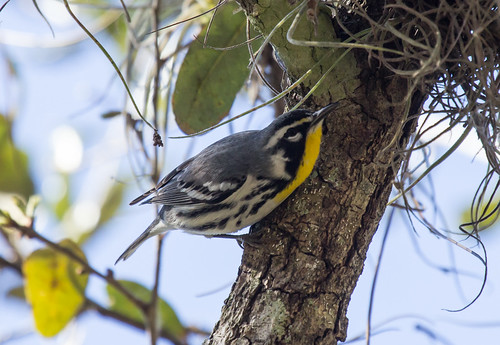
Yellow-throated Warbler
Yellow-throated Warblers breed only in the U.S.

Hermit Warbler
Hermit Warblers breed only in the U.S.

Golden-cheeked Warbler
Golden-cheeked Warblers breed only in the U.S.
*This list of endemics came from here, a source not all that reliable because they think Bachman's Sparrow is extinct, and did not mark Bachman's Warbler as extinct, which it is.