Laura Erickson's For the Birds

Thursday, February 6, 2020

Superb Owl Sunday, 2020

Barred Owl

Sometime in the late 1980s or early 1990s, I noticed that the term “super bowl” could be given an entirely different meaning simply by shifting the letter B to the left, making it “superb owl.” Ever since then, I’ve tried to make it an annual tradition on that Sunday to see a superb owl or two.  

My most successful Superb Owl Sundays have all included my husband Russ, whether we were in New York City looking at stunning Snowy Owls...

Snowy Owl in the Big Apple

... Two Harbors enjoying unbelievable looks at a Boreal Owl ... 
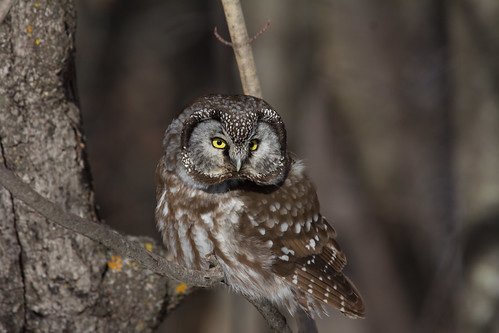
Boreal Owl

or the Sax-Zim Bog, where last year we had four species of owls and got incredible photos of Barred and Great Gray Owls.  

Barred Owl roosting

Great Gray Owl

This year Russ and I headed back to the bog at mid-morning on Sunday. This has been an exceptionally bad year for seeing winter finches—except for a handful of goldfinches at the Sax-Zim Bog Welcome Center, we didn’t see a single one. Most of the birders who came there that day saw Northern Hawk Owls, and several had a Snowy Owl, but we got skunked on both. No one had reported a Great Gray Owl in the bog in four days, and I didn’t talk to anyone who saw one on Sunday, us included.  

We spent most of our time visiting the feeding station on Admiral Road—a hotspot marked on the bog map available at the Welcome Center.  


That feeder is usually the best place anywhere to spot Boreal Chickadees—they have a strange but consistent preference for peanut butter, and so volunteers make sure to keep peanut butter available at that feeding station. I’ve been to the Bog three times this winter now, but have yet to see a Boreal Chickadee anywhere. The first time I went, a shrike was sticking so close to the feeders that not a single small songbird appeared, and even though I didn’t see it on my second visit or this one, it was still being reported by others, which almost certainly has kept the little birds wary.  

Northern Shrike

The shrike hasn’t seemed to worry the Canada Jays—I’ve counted as many as seven at a time at the Admiral Road feeders and have been seeing more here and there in the bog than I’ve seen in years. That is a very hopeful thing.  

The reason we were spending so much time on Admiral Road this time is that all week, a Boreal Owl was coming to the feeders. Not to eat peanut butter or suet of course, but in hopes of snapping up one or two songbirds or little rodents. Birders share their sightings, and Boreal Owls are the hardest of all our northern owls to see, so on Saturday night, someone counted 49 cars parked along Admiral Road when the owl showed up about 4 pm. All week it had been showing up for at least an hour or so in the afternoon, and so we of course had high hopes. Unfortunately, the biting wind that so chilled us apparently kept the owl in a sheltered spot away from the feeders.  

In between visits to the feeding station, we headed to the little Wintergreen Bog spot where a Barred Owl was supposed to be. THAT turned out to be one heck of a superb owl. When we got there, it was perched in the open above the Wintergreen Bog sign and feeders, scrutinizing all the feeder birds.  

Barred Owl

Barred Owls eat anything they can catch, so you’d think songbirds would be wary of one sitting right above the feeders, but those little songbirds are quicker and more maneuverable, and were as aware of the owl as it was of them—had it opened its wings, they’d have vanished. What the owl really wanted was a slow-witted squirrel or a mouse or vole to turn up, but none did while we watched.

I took hundreds of photos of it. There were at least a dozen other birders watching and photographing it while we were there. The owl seemed to be ignoring us—no one stepped off the well-worn path in the snow, and as long as people stay predictable, a lot of birds can adapt to us. Last year a Barred Owl, perhaps the same one, gave me some of my best photos that whole day.

We drove to several other spots, carefully checking out where others had seen hawk owls and a Snowy Owl, but no luck on that front. At about 2:45, we went back to Admiral Road to make one last try for the Boreal Owl. Our plan was to stay there till three and then go buy some food, but then we decided to wait till 3:15, then 3:30, then—well, why not?—we’d give it till 4 pm. After all, that’s when it had showed up the day before. We hadn’t had any lunch and were very hungry, but hopefulness overpowered hunger, at least for a while.

While we were standing there in the bitter wind, Russ and I both started thinking about the movie Airplane! It begins with Robert Hays’s character, a cab driver named Ted Striker, arriving at the airport. Before he can jump out of his car, a customer runs up and climbs in. Striker tells him he’ll be right back and starts the meter.


Then the movie unfolds, with Striker getting on the plane, the crew and most passengers getting sick, and Julie Hagerty’s character, Otto the autopilot, and Striker ultimately safely landing the plane. As he and Julie Hagerty embrace in the sunset, the credits roll. When they’re finally over, we return to the cab where the man is still waiting. He looks at his watch and says, “Well, I’ll give him another 20 minutes. But that’s it.”

Russ and I were not quite as tenacious as that guy. We gave up at 4:05, chilled to the bone, and headed to the Wilbert Café. When we were almost done eating, another birder arrived at the café after waiting for the owl until dark. I felt bad that he missed it too, but glad that we hadn’t given the bird another 20 minutes. Like that guy in the cab, we might still be there. 


Monday, February 3, 2020

Tragic News

Great Gray Owl

Last Wednesday I talked about a Great Gray Owl right in Duluth. The bird stuck around for four or five days, giving hundreds of people an amazing experience and stunning photos as well. Owls are such hardy, resilient creatures that we don’t usually worry about the ones we encounter, but this particular one was not just in town, but staying in a very narrow strip between Interstate 35 and Water Street. I’ve seen foxes right in that spot, but I can’t imagine there are many voles there—the primary staple of a Great Gray Owl’s diet. The bird made plenty of passes between a small stand of spruce trees and a highway sign, giving me and others wonderful flight shots, but I never found anyone who witnessed it successfully catching anything. 

I went to see it just once, watching it for a half hour or so. One of my friends alerted me, but word had gotten out via Twitter and several Facebook groups, so a huge host of people already knew it was there—the Duluth News-Tribune even put a photo of it on the front page. When I arrived in early afternoon on Tuesday, two photographers had been there for quite a long time already—one was about to leave and the other left after we’d talked a bit. Before I left, another birder or photographer was arriving.

It was already being checked out by so many people that I figured, or at least hoped, that my mentioning it on the air wouldn’t add to the pressure on it.  And the human pressure seemed benign. I walked along Water Street a ways looking for evidence that people had left the roadside to get closer looks, but didn’t see any footprints going into the snow more than just two or three feet from the roadside—the bird was staying so close to the road that no one needed to get closer even for stupendous photos. The owl was flying strongly, and based on its appearance to my eyes there in the field watching it and then at home via my photos, it seemed healthy. I hoped against hope that people would stay on the roadside and not behave unethically in the presence of this magnificent creature.

It was dicey, of course, and now lots of people are telling me how predictable it was that the bird would end up dead, even though most of those same people went to look at and photograph it.

We’ve had other charismatic owls show up in town and stay quite viewable for a week or longer who then just quietly moved on. Some out-of-town birders who couldn’t get here for a few days wanted everyone to leave this one alone simply so they could get their chance to see it, but most of the people who thought it would be wisest to leave the owl to its own devices weren’t acting out of selfishness. The strip of land between the freeway and Water Street is narrow, so catching it safely to assess its condition and either relocate it or bring it to the Raptor Center had serious risks even for experienced banders.

Most people who are drawn to wild birds are ethical, good people. But I’ve come to accept that people do bad things—sometimes out of egregious selfishness, and sometimes out of ignorance. I found out yesterday that the owl had died en route to the Raptor Center, and also learned that a person or people had apparently fed it pet store mice. Some unethical photographers do this to get magnificent flight shots. Despite how much information is out there explaining why this is bad, they manage to get big sales for their photos, so some keep doing it. That unethical behavior is egregiously selfish. And ignorance abounds in a nation where even the head of state congratulates the “great state of Kansas” when the Kansas City Chiefs, based of course in Kansas City, Missouri, win the Super Bowl.

Way more Americans learn about major cities of the United States than about owl digestion. That ignorance distresses me—indeed, I’ve spent my entire adult life trying to correct my own ignorance about the natural world and to educate others about what I’ve learned. Yet even right here in Duluth most people simply do not know why and how owls spit out pellets, how their digestion is affected by that pellet system, and why swallowing a mouse when they’re already in a compromised state can kill them. 

When I first started rehabbing, I learned from a few rehabilitators that the very first thing one must do when confronted with a starving owl is NOT to feed it, but to give it fluids. My vet provided me with lactated Ringer’s solution, and when I couldn’t get to him, I had unflavored Pedialyte on hand to get injured or starving owls well hydrated before feeding them. And I was taught how to administer fluids without the bird aspirating them.

Why are fluids so essential? As any owl digests the spoils from a night of hunting, its stomach secretions dissolve its prey’s tissues which, as they liquify, are squeezed down from the muscular stomach, or gizzard, into the intestines. Owl stomach secretions are far less acidic than those of hawks. Bones, teeth, fur, and feathers don’t break down at all in an owl’s stomach—they stay in the gizzard, being squeezed over and over. After the gizzard has squeezed all the digestible soft matter, and also all the stomach fluids, into the intestines, everything left in the gizzard works its way backward, through the now empty glandular part of the stomach, up the esophagus, and out the mouth, in a densely packed, fairly dry pellet. 

Any time an owl sees or hears prey, its body has to start siphoning fluids back into the stomach. But if it has reached a dangerous state of starvation, without ingesting either foods or fluids into its system for a critical time, it won’t have enough fluids available. If it swallows prey at this point, it will go into shock. Bird banders who understand this may use a mouse to lure an owl into a trap, but as they handle the bird, they will, or should, recognize the signs that it urgently needs fluids. Photographers and owl-watchers in general have no way of recognizing that an owl’s body is compromised. Feeding one a mouse can be the final straw for a starving owl.

If an owl does digest a pet shop mouse, it becomes vulnerable to another danger—salmonella. Because its stomach secretions are less acidic than those of hawks, it simply can’t break down dangerous pathogens as well as hawks do. Children in Minnesota have succumbed to salmonella simply by kissing their pet mice; swallowing a whole mouse is clearly even more dangerous. By the time the Duluth Great Gray Owl keeled over and people tried to rescue it, it also had an injured eye—an injury that happens almost strictly due to a collision. The owl may have collided with a car on its own, or it may have been lured in with a mouse or a person squeaking. Either way involved humans. 

We are, most of us, by nature, gawkers. Some people gawk at football games, or the stars and northern lights, or reality TV, or the birds at our feeders, or pages of a book, but gawking—studying the world around us—is a deeply-embedded human characteristic. Gawking isn’t bad until it endangers others, like slowing down to gawk as we pass a highway accident.

It’s not the gawking at an owl that endangers it, as long as we limit ourselves to gawking from a safe distance. It’s when we intervene, changing the behavior of the owl by approaching too closely, or making sounds or playing recordings, or, worst of all, putting out a mouse so we can get a better look or photo angle or just to get the owl to look directly at the camera, that gawking becomes unethical. It doesn’t matter one bit whether our motives are arrogant selfishness or innocent ignorance when the owl ends up dead. 

The Duluth owl died on its way to the Raptor Center. And just in case the people who caused its death were alerted to its presence by my radio program, I’m never going to mention where any owl is ever again, until it's safely moved on.

Wednesday, January 29, 2020

My Gratitude Folder

Laura and Katie at Grandma's house, summer 1984

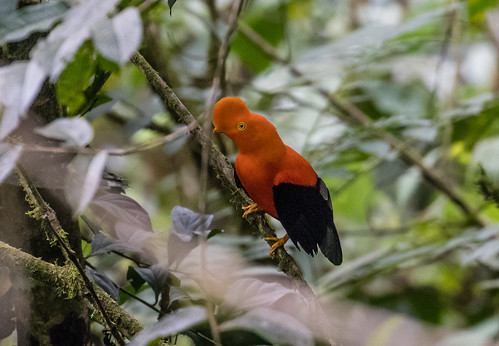
I have a folder in the Dropbox directory on my computer titled “Best Photos.” Every now and then I run through the pictures I’ve added on Flickr and add my all-time favorites to that folder. Because I keep the folder in Dropbox, my main computer and my laptop both select from those photos at random as my screen saver when I step away for more than a couple of minutes. Often when I return, I wait a minute or more just to savor those pictures. They change every five seconds or so, and I never know which one will pop up next—maybe a Cock-of-the-Rock from Peru,

Andean Cock-of the-rock

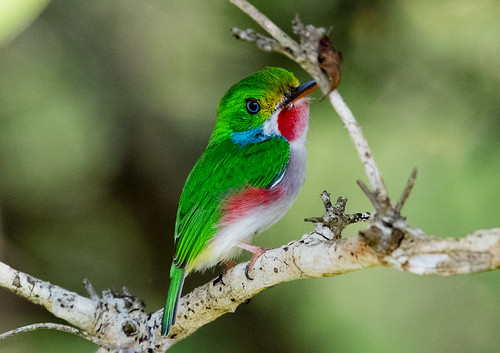
or a Cuban Tody,

Cuban Tody!!

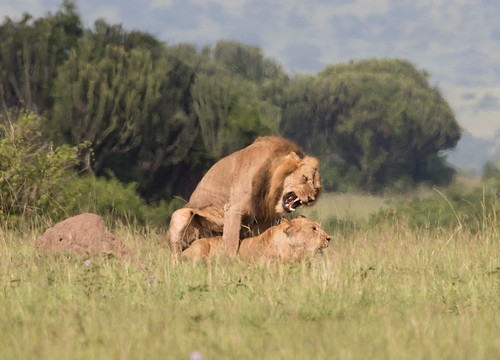
or African Lions mating,

African Lion

or a soaking wet Harpy Eagle from Panama,

Harpy Eagle

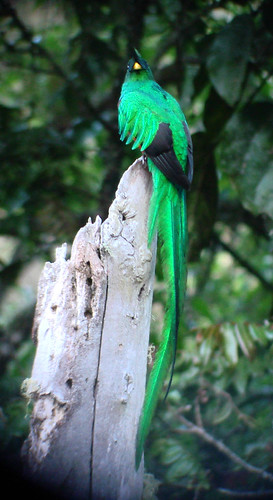
or a Resplendent Quetzal from Costa Rica.

Resplendent Quetzal

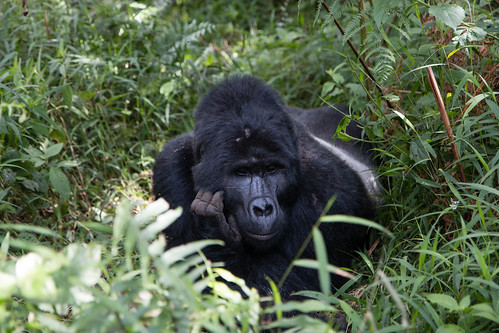
The pictures recall trips and other cool experiences in both a general way and a very moment-specific way. A Mountain Gorilla photo brings me back to my one and only African trip, to Uganda, in 2016. But it also brings back that specific day, my 65th birthday, and the joy of hiking through the Impenetrable Forest in search of gorillas barely a week after the Cubs won the World Series, the song “Go, Cubs, Go!” running on an endless loop through my head that whole day. And the photo brings back the specific moment when I first saw that particular mountain gorilla—how shockingly peaceful and accepting of our presence the family group was, accustomed as they’d become to specific guides leading bunches of people, never more than once a day, to gawk at them. Any time a gorilla photo comes up, a host of happy memories floods my brain and heart.

Mountain Gorilla

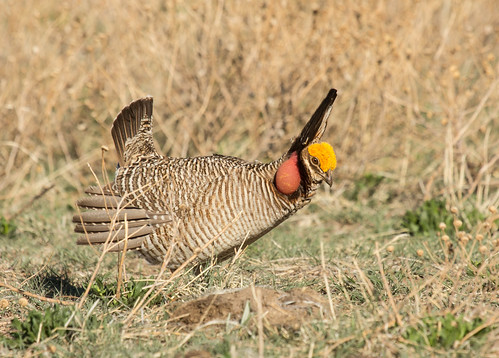
In 2014, I spent a glorious morning in a photo blind photographing Lesser Prairie-Chickens. I got some spectacular photos, both through my own camera lens and also through an extraordinary 800mm f/5.6 lens. The man sharing the blind with me had rented that supersized lens, and when he wanted to use a different lens with his camera body, he let me hook up my camera to the big one. The birds were spectacular—I love recalling their amazing displays—but I also relish that encounter with a truly sweet and generous-spirited photographer.

Lesser Prairie-Chicken

My closeup photos of puffins and razorbills fill me with joy and happy memories of my 2013 trip to Machias Seal Island.

Atlantic Puffin

Razorbill

My Black-capped Vireo shots conjure the Wichita Mountains in Oklahoma, camping and hiking with my dog Photon, spending time with one of my favorite ornithologists on the planet, Joe Grzybowski, and so many thrilling moments there, like when two nice men helped me and Photon evacuate in the middle of the night when tornadoes threatened.

Black-capped Vireo

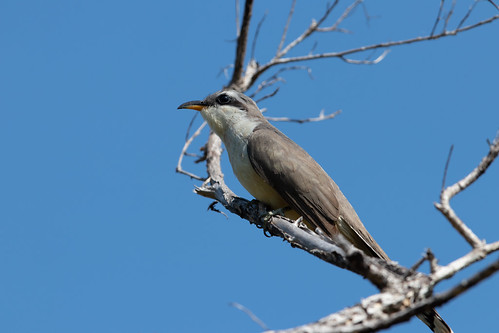
My Mangrove Cuckoo shots bring back Russ’s and my wonderful trip to Saddlebunch Key last April.

Mangrove Cuckoo

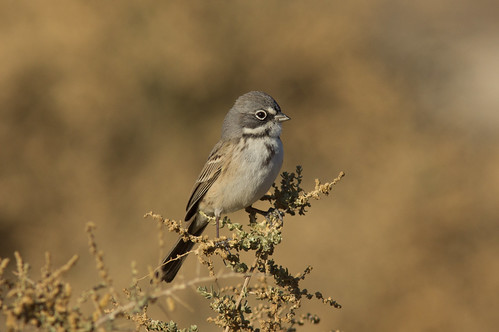
Bell’s Sparrow photos remind me of the great time I had in California with my treasured friend Ali Sheehey.

Bell's Sparrow

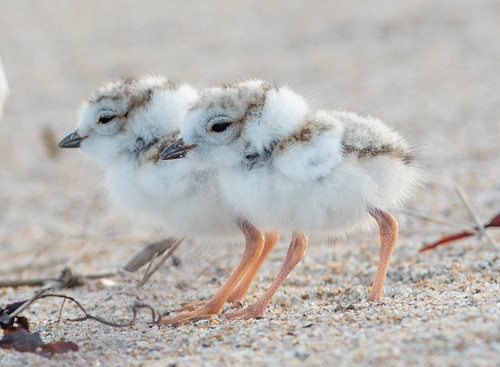
Baby Piping Plover shots bring me right back to the Maine coast and day my dear friend Laurie Gilman brought me to see these adorable puff balls.

Piping Plover chicks

A series of Boreal Owl photos remind me of the magical morning in 2013 when Russ and I came upon it, with my friend Jim Lind, in Two Harbors.

Boreal Owl

Some Evening Grosbeak pix remind me of the 16 that spent over 2 weeks in our yard beginning the morning after Russ returned from the hospital after surgery, right when we needed out spirits lightened.

Evening Grosbeak

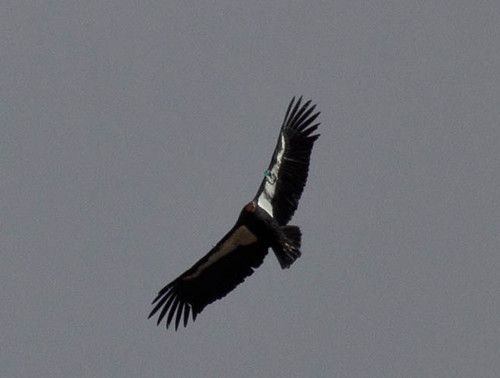
My first California Condor photos are of the ones I saw with Russ in the Grand Canyon as our celebration of my 60th birthday.

California Condor

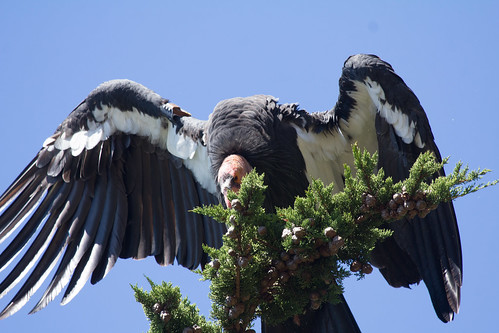
The first closeups I got, in California in 2013, do not just help me recall those birds but also my dear friend Eric Bowman who took me all around California that September.

California Condor

The ones from this past fall were of a very close bird—the first one Russ ever saw from close range.

California Condor

Over the past 15 years, I’ve gone on hundreds of trips. A single photo can bring an experience back into sharp clarity, at least until the next photo brings back another wondrous experience. A good half of my photos were taken in Port Wing, Wisconsin, mostly at my mother-in-law’s place, or right here in Duluth, many in my own backyard. Le Conte’s Sparrows, a host of warblers, Cedar and Bohemian Waxwings, Red-eyed Vireos, Pileated Woodpeckers—so many photos of so many wonderful birds I’m so very fond of.

Le Conte's Sparrow 

Bohemian Waxwing

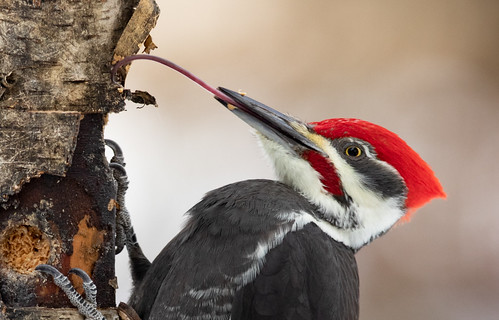
Pileated Woodpecker tongue!


And there are a bazillion photos of chickadees in there, too. Some were cooperative strangers I ran into at the bog or other places, but many are backyard chickadees I can still recognize as individuals.

Black-capped Chickadee--fledging day!

And of course there are pictures of Russ and the kids—constant sources of joy.

Russ and Laura

April 6, 1982, Joey and me at the Tucson Desert Museum

Katie and Orange-crowned Warbler

Tommy and baby robin

Some of my bird photos go all the way back to 2005, but they run through the entire 15 years since then, too. I had a heart attack just 3 ½ weeks ago, but already since then I’ve added several new photos to this treasured folder. The poor Barn Owl I saw in the bog didn’t survive long after I photographed it, but I’ve yearned to see one up here for so very long, and will always feel grateful to that lovely soul because its path intersected mine for one brief and shining moment a week after my heart attack.

Barn Owl

I’ve also already had shockingly cool encounters with a Ruffed Grouse, Canada Jays, and a Great Gray Owl.

Ruffed Grouse

Gray Jay

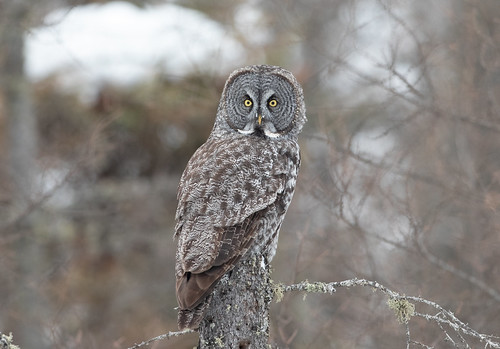
Great Gray Owl

This folder on my computer is really my “gratitude folder,” reminding me over and over of so many wondrous moments that, just to see them for a few seconds at random intervals, each and every one, fills me with gratitude all over again. Right now there are 2,182 photos in there—I've barely scratched the surface when there are so very many birds and people that have so enriched my life, their photos reminding me that, despite two heart attacks, breast cancer, and other tricky stuff I've negotiated over the years, I'm living an extraordinarily lucky and happy life. Every time my Gratitude Folder pops up, it strikes me all over again just how happy I am to be here.

Great Gray Owl

Great Gray Owl

Lots of birders have been spending time in the Sax-Zim Bog this winter, and many of them have had good luck finding owls. I’ve seen lots of people talking about “their” Great Gray, Barred, and Northern Hawk Owls. A few have seen a Short-eared or Great Horned Owl in the bog, and some people have even managed to see a Boreal Owl there.  For one brief, shining moment, quite a few of us managed to see a Barn Owl—that poor thing was so far out of range that it almost certainly didn’t have a chance of surviving the winter even if it hadn’t been attacked by ravens. It was captured in a terribly emaciated state and didn’t survive being transported to the Raptor Center. They’ll do a necropsy to confirm exactly how the tragic wanderer died. 

The fact that so many birders gravitate to the bog improves everyone’s chances of finding any owls that are around. Basic birder etiquette requires anyone going to a heavily birded place to share our birds. When we see someone looking at or photographing a bird, we pull over behind them and carefully, quietly approach, holding back at least a bit and keeping cars between us and the bird until the other person gives us a signal that it’s okay to come on over—we stay quiet and stop if the bird shows any sign of spooking.

Great Gray Owl
Russ and I came upon this Great Gray Owl in the Bog last year. Lots of other birders joined us when they saw what we were looking at. 
Capitalizing on seeing the birds other people have found obligates us to share the ones we find, too. The vast majority of birders know how this works. This past weekend, when I was at the bog with my friend Pam, we got good looks at a few birds by stopping where others were stopped, and other birders stopped to check out what we were seeing here and there, too. But when we pulled over behind one car on Highway 7, to scan the field, a woman charged out of her car, asked if we were following her, and when we said we thought she might have found an owl, she told us to find our own birds. As far as we could tell, she wasn’t looking at anything, and we did find our own Northern Hawk Owl not far from there—we just don’t expect to meet rude birders.

Great Gray Owl

Yesterday, I had a completely opposite experience—someone actually going out of his way to make sure I got a good bird. My good birding friend Greg Garmer called me about 11:30 to tell me he could see a Great Gray Owl from his apartment below the freeway at 21st Avenue East—right in the city, just a few miles from my house. The bird has been there for a couple of days now, hunting in a narrow strip of open field between the freeway and Water Street, perching in some spruces and on a sign. Bazillions of birders have come there—it’s easy to park off Water Street and the bird quickly figured out that the birders are staying out of the field itself, staying on the roadside watching quietly enough that they’re not interfering with the owl’s hunting. Great Gray Owls feed primarily on meadow voles, which they detect by ear—the voles live in grassy tunnels that are right now buried under deep snow. The owls can focus their big facial disks so well that they can pick up mousey sounds even with highway traffic zipping by constantly. 

Great Gray Owl  

Great Gray Owl

I spent 45 minutes or an hour with the bird—I’d just bought a new camera body I wanted to test out, and got not just good photos when the owl was perched but also good flight shots.

Great Gray Owl

Great Gray Owl

Great Gray Owl

The light was fairly poor—I’ve pretty much forgotten what a sunny day looks like, it’s been so overcast lately—but I was thrilled, by my photos, of course, but especially by this magnificent bird who somehow is gracing Duluth’s waterfront for a few days.

Great Gray Owl

It’s very scary seeing such a stunning but fragile creature as cars roared past, knowing there are a lot of dangers between this urban spot and anywhere genuinely wild. 

Some people are talking about capturing and relocating it for its safety. The trick is that capturing a wild owl right next to a highway would not only be stressful for the bird but risk scaring the poor thing right into the path of those cars, and any place we relocated it would have its own dangers—some of the Great Gray Owls that have found good hunting areas in the open areas way out near Isabella or in the bog have ended up being killed by cars. We humans seem to think that we know more than wild birds do, and that a place we chose to put an owl in would of course be better than the one it found on its own. I’m sure we do understand the dangers of that place better than the owl does, but we may not understand the dangers of other places as well as the owl does, and we almost certainly don’t understand how stressful capture is under the best of circumstances. Relocating it is not a straightforward issue. 

Meanwhile, this magnificent bird has managed to survive here for at least two days, making lots of us very nervous even as we’re thrilled to have seen it. We’re all hoping that one morning it simply won’t be there, nor will its body be found near the roadside. It’s such a joy to see such a thing anywhere, much less right in town, and when a living being brings so much pleasure to so many people, we can’t help but wish it well, hoping against hope that it lives long and prospers.

Great Gray Owl