Laura Erickson's For the Birds

Monday, April 2, 2018

Hiking vs. Sauntering vs. Moseying

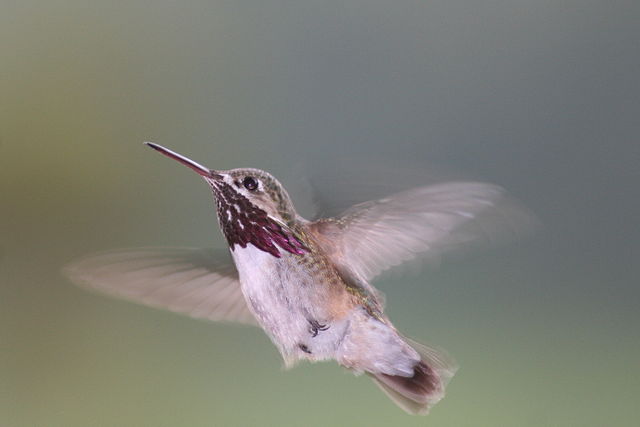
Calliope Hummingbird by Kati Fleming for Wikimedia
In his book *The Mountain Trail and Its Message,* Albert W. Palmer remembers John Muir talking about the word hiking. Muir said:  
I don't like either the word or the thing. People ought to saunter in the mountains - not hike! Do you know the origin of that word 'saunter?' It's a beautiful word. Away back in the Middle Ages people used to go on pilgrimages to the Holy Land, and when people in the villages through which they passed asked where they were going, they would reply, 'A la sainte terre,' 'To the Holy Land.' And so they became known as sainte-terre-ers or saunterers. Now these mountains are our Holy Land, and we ought to saunter through them reverently, not 'hike' through them.  
I love that sense of the word saunter, but I do not consider myself a saunterer: that seems far more focused on a destination, even if it is a Holy Land, than I like to be. When I head to my favorite birding spots, I focus on whatever I encounter as I wander aimlessly. Even when I go to a spot after hearing about a particularly interesting bird that might be there, I’m not goal oriented—I enjoy whatever it is I encounter. I wouldn’t call myself a casual birder—I’m more lackadaisical, in the sense of being the opposite of ambitious or enterprising, not in the sense of being enervated, vacuous, languid, or spiritless. 

I like being aimless and unambitious, which is why I’ve always considered myself a moseyer. But I just looked up mosey in Merriam Webster and discovered that the word’s first known use, in 1829, meant "to hurry away," as synonymous with scram, vamoose, and skedaddle, all very much the opposite of what I do. My moseying style conforms more to Merriam-Webster’s second definition, “to move in a leisurely, shuffling, or aimless manner,” with amble as a synonym, or especially “to move slowly while observing or inspecting,” which is pretty much exactly my birding style. 

All this of course led me to look up amble, a word that does indeed conjure my poky style of walking. The first definition given is: “to walk or move in an easygoing or leisurely manner.” The synonyms given do not include mosey, but rather hike, perambulate, ramble, saunter, stroll, tramp, and tromp. To me, perambulate is a waste of two syllables when amble works just as well, stroll sounds more elegant and old-fashioned than what I do, as if I’d need a parasol, and tramp and tromp sound more heavy-footed, like I’d need to wear heavy-duty boots. 

English has a great many good words for important things like walking, but I like choosing my words with some precision. Mosey may historically involve more hurrying than I like to do, but mosey and now amble are the words that describe my walking and birding style best. 

When Russ and I went on vacations with the kids, we often took family hikes. Well, Russ and the kids did—I remember when we were at Yellowstone once, they were at least a thousand feet ahead of me on a trail that ran alongside a lovely mountain stream. Suddenly I came upon a Calliope Hummingbird doing his amazing sky-dance, a U-shaped flight display just above the sparkling water. It was one of the most spectacular sights I’ve ever seen, but Russ and the kids were too far ahead of me to hear me calling to them. They thoroughly enjoyed their brisk hike, and saw plenty of wildlife and interesting sights, too; our experiences that morning were different, but provided equal pleasure. When you think about it, even when we’re walking side by side with someone at exactly the same speed, we take in the world in our own unique ways. 

The one thing I know for certain is that a walk in the woods in early spring, whether one is hiking, sauntering, moseying, ambling, tramping, or anything else, is a walk worth taking.
Sunday, April 1, 2018

Listeners' Favorite Birds: Paula's Timberdoodle

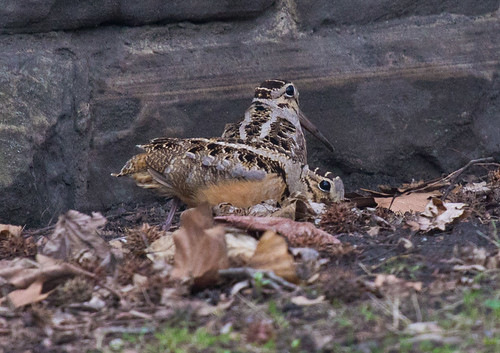
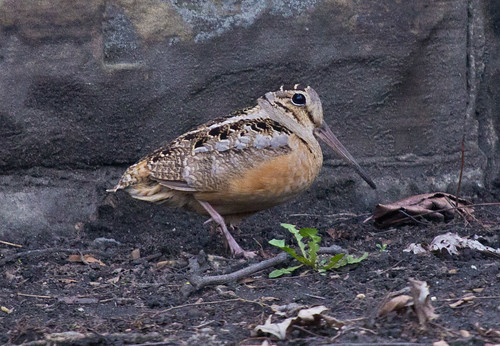
American Woodcock

The month of April virtually always comes in with an April Fools snowstorm. It hardly ever lasts, but reminds us that Mother Nature still holds the cards.

Much as I get tired of cold and wind and snow, April also means woodcocks, nicknamed timberdoodles. In years when we have an early spring and no serious bad spells, the birds leading the pack will get a jump on passing their genes on to the next generation. In late springs or when bad weather punishes early arrivals, the later migrants win the genetic pool contest.
I’m not the only one who loves woodcocks. Paula sent me this voicemail:
Hi, Laura. This is Paula in Lakewood, Ohio. My favorite early spring bird is the timberdoodle. I love everything about it--how it looks and sounds and especially the way it moves. It always makes me smile. It's spring when I see my first timberdoodle. 
Paula happens to be a friend of mine.

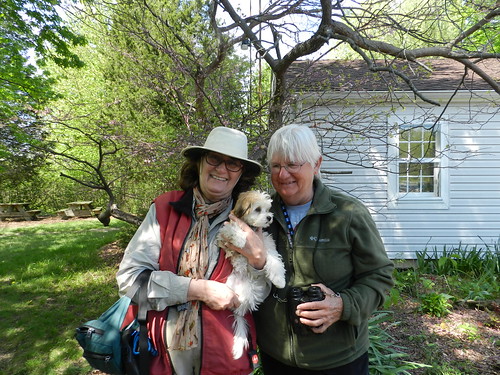
Laura, Pip, and Paula
Left to right: Me, Pip, and Paula
In 2011, she brought me to one of my favorite woodcock viewing spots ever. We weren’t there at dusk to see them dancing—it was midday. And we didn’t go to some secluded spot in wilderness, or even in suburbia—no, we were in downtown Cleveland, within visual and auditory range of the Cleveland baseball team’s ballpark.

Like many major cities, Cleveland is on a waterfront, meaning a lot of birds end up in the city during migration, and woodcocks are especially vulnerable to urban life—they’re killed in disproportionate numbers in collisions with towers and glass. But savvy woodcocks passing through the Cleveland area have found a refuge—the lovely Erie Street Cemetery.


This old cemetery was established in 1827. Its gothic gateway stands right across East 9th Street from Jacobs Field, and it’s surrounded by a 19th century iron fence. For some reason, woodcocks gather in the cemetery, especially where it’s easy to plunge their long bills into the soil for worms. We saw at least five or six when Paula brought me there on April 17, 2011. Their plumage is exquisitely designed as camouflage, and they spend April days resting and quietly feeding, so I’m sure we missed at least a few more.

American Woodcock

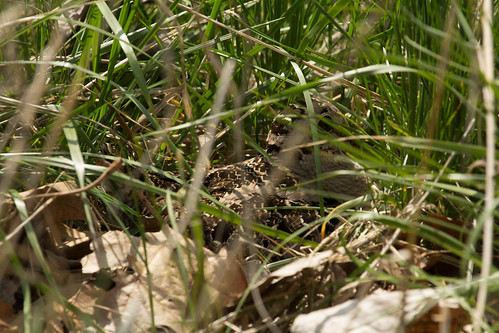
During early May, there’s a birding festival further west in Ohio called the Biggest Week in American Birding which I’ve attended on several occasions. Early May is precisely when female woodcocks are on eggs, and often one sharp-eyed birder or another will find one near the boardwalk at the Magee Marsh. Organizers rope off the area so birders can safely observe her without disrupting nesting. I don’t like walking off trails, especially in spring and summer—I’m petrified of the thought of stepping on a ground nest without even realizing it. So those opportunities at Magee Marsh have been the only times I’ve seen woodcocks on eggs.

Nesting American Woodcock

As thrilling as it is to see woodcocks in daytime like this, my greatest thrills come from hearing them perform their sky-dance at dusk. I’ve had fine opportunities to record their wonderful little beeps—when I’ve been close enough, I’ve even managed to capture some of the little hiccups that accompany beeps. But it’s hard to track the birds with a shotgun microphone when they take off and spiral up into the evening sky. Their wings make a lovely chittering sound, and at the top they start making chirpy kissing sounds as they drop like a falling leaf to the ground. Ryan Brady was already witnessing this in Washburn, Wisconsin, last week, so we should be seeing and hearing one of the finest rituals of spring in northern Minnesota anytime now.

However you see a connection between nature and God, sky-dancing woodcocks are definitely a gift from above. They deserve to be treasured.

Copyrighted Drawing by J. Zickefoose for the Macaulay Library and the Birds of North America Online

If you have a favorite bird you'd like to share, email a sound file to me at favoritebird@lauraerickson.com, or call and leave a voicemail message on Lisa Johnson's KUMD number's any day after 2 pm Central Time: 218-726-6755. Give your first name, and say what your favorite bird is and why. Recordings should run 15-30 seconds or so.

Saturday, March 31, 2018

One Time Donation Request

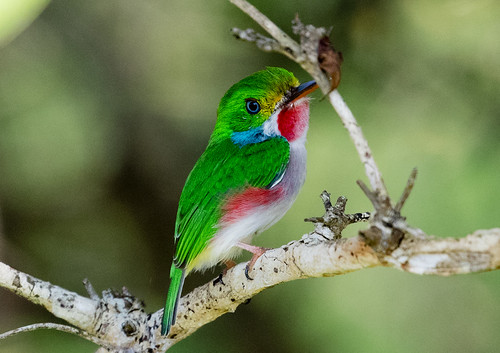
Cuban Tody!!


I've been writing and producing "For the Birds" since May 12, 1986, almost entirely as a volunteer, and started writing this blog in May 2007. I'm not good at asking for money to support my projects—there are too many important causes that I really don't like to divert attention and money away from. So this is a one time request.

I'm trying to save up enough money for two major purchases--a new iMac that will work faster with sound and photo files than my current laptop (plus I want to make sure my laptop lasts as long as possible--it's the computer I bring when I'm making presentations), and a really good light-gathering camera lens.

So this week I created a Go Fund Me campaign. I will end it on April 30, and promise never again to pester you for money. Please only donate if you like my work AND have money to spare.

Thursday, March 29, 2018

Blue Jays Are Here to Stay

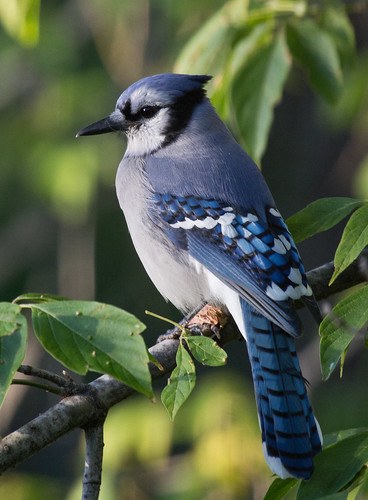
Blue Jay

At 7:37 Central Time on Saturday morning, March 31, the moon will be full. As the second full moon in the month of March, it qualifies as a blue moon. And once in a blue moon, I am personally committed to honoring Blue Jays with National Blue Jay Awareness Month.

Why Blue Jays? These birds have a vivaciousness, intelligence, curiosity, and beauty unmatched in the bird world. Of course, every bird species’ qualities are unmatched in the bird world, because every bird species is unique. Blue Jays happen to have been Mark Twain’s favorite bird, or at least the only species about which he wrote a short story, “Baker’s Blue Jay Yarn.” And for myself, I cannot hear a Blue Jay squawk without being pulled out of whatever mundane task I’m embroiled in, giving me a moment of emotional and mental escape into the natural world.

It’s very easy to forget the many ways our own species is enmeshed in the natural world. If you have any doors, window trimmings, or furniture made of oak, you can thank Blue Jays, who as the last glaciers retreated planted acorns. These heavy seeds would simply drop to the ground beneath oak trees if not for squirrels carrying and burying them a bit farther, and for jays, which can cache them miles from the parent oak tree. That is why oaks started growing along the glacial melt lines years before wind-blown seeds had a chance.

Many of your backyard songbirds depend on Blue Jays, the powerhouses running avian neighborhood watch programs and serving as the noisiest alarm system when a snake, cat, fox, or other predator appears on the scene.

Blue Jays impact the natural world in ways that we can’t begin to understand and appreciate—we haven’t even figured out their basic migration system yet! This everyday bird, large and vivid and noisy enough to make even non-birders take notice, is just one of over 10,000 species of birds on this planet that each have a critical role in nature’s web.

Once in a Blue Moon, I like to remind people just how beholden to Blue Jays we are. I’d love to call that kind of specific attention to Le Conte’s Sparrows, Bobolinks, Blackburnian Warblers, Upland Sandpipers, Sharp-tailed Grouse, and every other species we take for granted, whether or not we’re even aware of its existence.

At a time of such unique political divisiveness and strife, when our clean air, water, and soil are under siege and people are warring about everything from guns to immigration to science to climate change, it’s good to remember that long after we’ve either used our brains to solve our problems or our weapons to end them for good, the earth will keep on keeping on. Whatever happens to those of us who are only human, Blue Jays are here to stay.
The more I read the paper, the less I comprehend
The world and all its problems, and how it all will end.
Nothing seems to be lasting. But that needn’t be so hard.
We’ve got something permanent right here in our own backyard.   
It’s very clear—Blue Jays are here to stay.
Not for a year, but ever and a day.
Those Russian hackers, and NRA spokesmen, and social media that we know
May just be passing fancies, and in time may go.   
But oh, my dear, Blue Jays are here to stay.
Together we’re going a long, long way.
In time the Donald will tumble.
Trump Tower will crumble.
They’re only made of clay.
But Blue Jays are here to stay.   
(you can hear the California Ravens singing the song here)

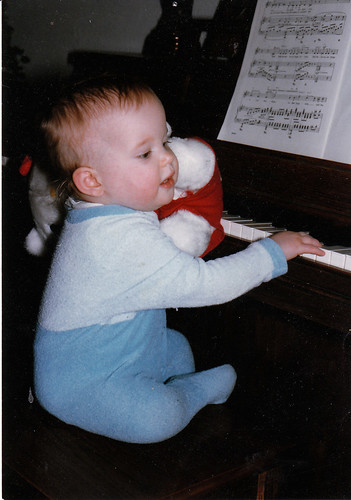
Portrait of the Pianist as a Young Toddler

Wednesday, March 28, 2018

Of Architects and Windows

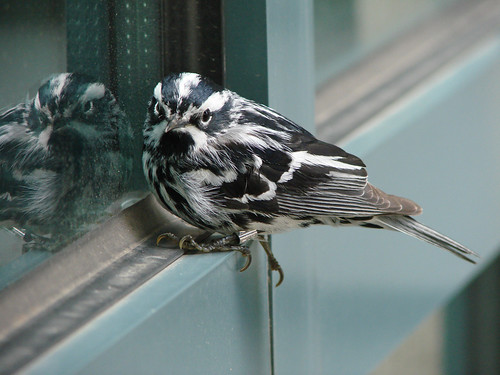
Black-and-white Warbler

On August 1, 1986, I produced a For the Birds program stating that one of the most dangerous hazards for backyard birds was window collisions. Ever since then, I’ve been talking and writing consistently about the danger of glass. “Make your windows safe for birds” was one of the 101 Ways to Help Birds in my 2006 book, as was “Know what to do when a bird hits your window.”

In 1986, no conservation organizations were focused on window collisions. One scientist, Daniel Klem, had started researching the issue in the 70s, but he had a horrible time getting ornithological journals to publish his work because the editors said the topic of  window collisions wasn’t “suitable.” Protecting habitat is obviously a very important issue, but some scientists decided that habitat was the only issue. Nevertheless, Dr. Klem persisted, and fortunately, the Journal of Field Ornithology and The Wilson Bulletin recognized the importance of his work. He came up with an estimate in the 1990s that on the order of a hundred million to a billion birds are killed by windows each year. A lot of ornithologists pooh-poohed that figure until they worked out their own studies, which confirmed it and even suggested that Dr. Klem’s estimate was conservative.

Klem also learned that 50 percent of all birds that collide with windows die, immediately or later, from head injuries.

Now some cities and states, including Minnesota, have adopted standards requiring bird-safe glass on all structures built with public funds. (US Bank Stadium got grandfathered in with its bird-killing glass.) But apparently architects still have no clue about how dangerous glass is, and continue to use enormous amounts of glass in privately funded buildings, like houses. When they think about aesthetics, architects don’t factor in the sound of thuds and the sight of dead birds beneath a window.

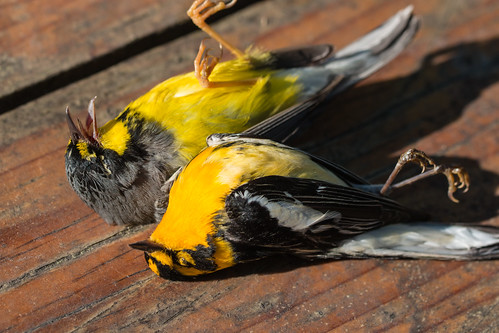
Dead Canada and Blackburnian Warblers

One of my close friends recently wrote to a Minnesota architect to share her own experience of having birds collide with glass in her home, because she noticed this architect's houses had similar design with lots of glass. To share awareness, she mentioned upcoming information presentations that Minneapolis Audubon and other organizations are putting together about the magnitude of the glass collision problem. This architect responded:

"... only when birds migrate in the spring [have] we … had any problems and only for a day or two. Usually they get knocked out and recover… some die but not many. 
We did an all glass facing... building. Bird prevention was the first concern. We did some very simple things to horizontally slat the top third of the windows and we had a sidewalk along the floor to ceiling windows which … reflected into the windows. 
We have had no bird kills to our knowledge in 5 years and I think those two factors stand out as reasons. I'm sure we would have heard from the [owner] if there was a problem. 
On houses we often place an owl or hawk impression on the inside of the window and this works well."
I know of no one in the building referred to who is systematically checking for bird carcasses, so in this case, ignorance seems to be bliss. And everyone’s research on this subject indicates that nothing we place on the inside of glass deters collisions—stickers and other objects need to be placed on the outside of the glass for birds to notice them. It’s also frustrating to realize how poor even double and triple paned glass insulate a room compared to other building materials. You’d think that even if architects didn’t care about birds, more of them would care about squandering energy and contributing to climate change.

Based on this architect’s response to the question, it’s clear that architects are not getting the message about the kinds of head injuries birds get at windows, and about how very many collide with glass. 

Last week, Dan Klem spoke about the issue at Springbrook Nature Center—a stunning new building built using bird-safe glass. I recorded his address, which is linked to here. There are so many serious problems Americans are facing right now. You’d think solving this one would be simple and straightforward—the solution is as clear as glass. 

Saturday, March 24, 2018

Dan Klem's speech at Springbrook Nature Center

Laura and Dan Klem

Dan Klem kindly let me put a lavalier microphone on his lapel so I could capture his talk at the Springbrook Nature Center. His talk was the first in a series of talks about window collisions in hopes that we can find a way of making the glass on the U.S. Bank Stadium bird safe. You can hear Dan's entire 74-minute presentation here. I'll post the Q & A session tomorrow or Monday.

Friday, March 23, 2018

Listeners' Favorite Birds: Erik's Gyrfalcon

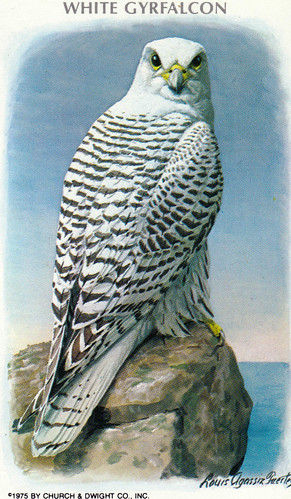
Arm and Hammer Bird Card: Gyrfalcon

In recent weeks, I’ve been asking listeners and blog readers to call or send a sound recording telling us what their favorite bird is and why. A birder named Erik sent me a voice memo from his phone:
Hi. This is Erik, and my favorite bird is the Gyrfalcon, because they are a stunning bird of prey with beautiful field marks, they are powerful, and they enjoy the cold conditions outside. 
In the winters when a Gyrfalcon appears in the Duluth-Superior Harbor area, birders flock here from all around. Word gets out, but that can occasionally be problematic, because the Gyrfalcon’s desirability extends beyond the birding community into the world of falconry. 

This largest, most powerful of all falcons—well, not counting the Millennium Falcon—is also one of the most sought-after birds by wealthy falconers throughout the world. It’s not particularly rare, on a global scale, but ranges the furthest north of all daytime raptors—the northernmost parts of Hudson Bay are as far south as Gyrfalcons breed. The Snowy Owl is the only avian predator that breeds even further north.

Northern Wisconsin and Minnesota fall within the Gyrfalcon’s regularly occurring winter range, but only a very few of them wander this far south—most of the North American population stays in Alaska and northern Canada year-round. The Gyrfalcon not only endures but also thrives in the harshest conditions the frozen north can mete out. The most likely place we see them in either Minnesota or Wisconsin is in the Duluth-Superior Harbor. I don’t know of any sightings this winter, but in several recent years one has spent the entire season in the harbor.

The Gyrfalcon’s name causes a lot of confusion. Because the species is circumpolar, it had an English name long before most American birds—the word gyrfalcon’s first known English use, according to Merriam-Webster, was in the 14th century, and according to Cade’s Falcons of the World, it was well known in northern Europe at least a century earlier. Cade wrote that this was the falcon which:
Emperor Frederick II of Hohenstaufen, in his thirteenth century treatise on falconry (De Arte Venandi cum Avibus), extolled above all others as a hunter of cranes and similar large quarry. The Emperor wrote that the Gyrfalcon "holds pride of place over even the Peregrine in strength, speed, courage, and indifference to stormy weather."
 The gyr of the name is not related to the gyr in such words as gyrate and gyroscope, which come from Latin for circular or rounded. The gyr in Gyrfalcon comes from Old Norse via Old French for geirr, referring to a spear. I’ve heard birders refer to the bird as a GIRE falcon and JYRE falcon, but unlike PIE-leated and PILL-leated, Gyrfalcon has only one correct pronunciation.

Thirty-eight years ago today, on March 23, 1980, I saw my lifer Gyrfalcon in Columbia County, Wisconsin—the only lifer I’ve ever seen that left me feeling embarrassed and unsettled rather than joyful. I was birding with my good friend Frank Freese, and we pulled over in the prairie-farm-field area near Madison Audubon's Goose Pond to look at Lapland Longspurs, Snow Buntings, and Horned Larks. 

Being in my 20s, and so at my most spry and acquisitive, I’d jumped out of the car with my scope before Frank even had his hat on, and suddenly there it was—a stunningly gorgeous, huge white falcon cruising by at close range, and at high speed. All I could say was “FrankFrankFrankFrank!” but by the time he made it out of the car, the bird had vanished into the horizon. One of the cardinal rules of birding is that we must try to get everyone on every good bird. I felt horrible that I’d seen something so amazing and rare while Frank missed it. It wouldn’t have been a lifer for him—he’d even birded on Attu as well as other far northern places—but he’d never seen one in Wisconsin, and never seen a white one.

Gyrfalcons come in three colors, white, gray, and dark gray-brown, with the white form being the rarest. That 1980 bird was the only white Gyrfalcon I’ve ever seen to this day. I never reported it to eBird—it still makes me feel uneasy, as if I’d somehow cheated to see it when the only person with me missed it. Several times since I’ve lived in Duluth, one or even two different gray Gyrfalcons have spent weeks or even months in the harbor area, so I have what feel like more legitimate sightings for both states now, but still feel troubled about that first one.

Madison Audubon Christmas Bird Count 1979
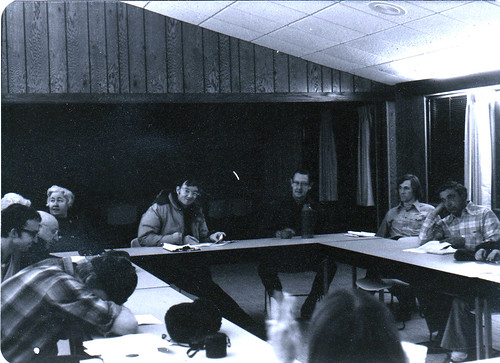
This photo of the Madison Christmas Bird Count compilation was taken just 3 months before
I saw the Gyrfalcon with Frank Freese. He and Ken Wood (looking right at me) are sitting at the head table.

Please share YOUR favorite bird with us. We want your first name, the bird, and why you like it so much. Email a 15-30 second recording to favoritebird@lauraerickson.com, or record your message on Lisa Johnson’s work voicemail after 2 pm—that number is 218-726-6755. This information is also at the top of the sidebar on my blog, at www.lauraerickson.com. My blog provides transcripts, links, photos, and sometimes more information than I can squeeze into a 5 minute program/podcast. Check it out!

Tuesday, March 20, 2018

Laura’s Best Bird EVER! Chapter 5 : Katie and the Boo Jays

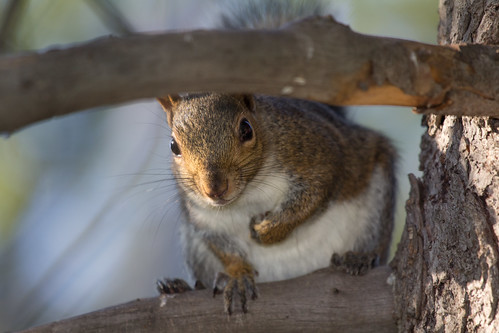
Gray Squirrel

When we moved into our house in 1981, one of the first things I did was to make friends with the neighborhood squirrels. We kept a supply of peanuts on hand, and within a few weeks, a few squirrels were already taking peanuts out of my hand.

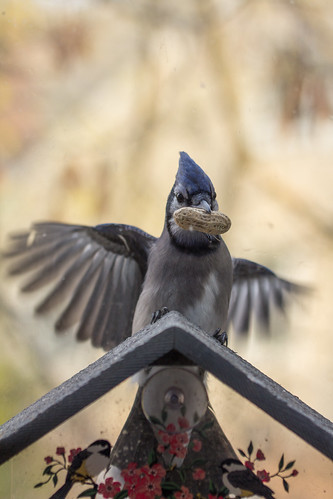
Blue Jay

The local Blue Jays quickly figured out what was happening, and started showing up at squirrel-feeding time. A squirrel would take a peanut and run off to hide it, one of the jays quietly following. The moment the squirrel buried it and ran off, the jay would drop down, dig up the peanut, and fly off with it.

The summer and fall before my daughter Katie’s first birthday in 1984, a pair of Blue Jays figured out how to skip the middleman. When I stepped onto the porch with peanuts, the two would fly in and alight on the nearest tree. I’d whistle, and the bolder one would fly right in, alight on my hand, grab the peanut, and fly off. The other knew better than to trust people that much. I’d put a peanut on the flat porch railing, step back as far as I could, and only then would that jay fly in to grab the peanut. If I moved my hands at all as it approached, it instantly turned tail, so I had to be very careful.

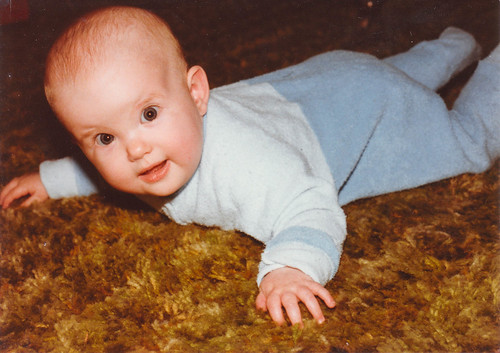
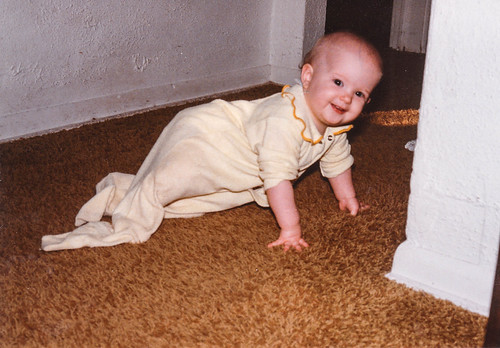
Katie 1984

My working out this new routine with the jays coincided exactly with Katie learning to pull herself up to stand at our living room picture window—the one overlooking the front porch. She was utterly taken with those big, vivid, relatively slow-moving birds flying in at close range. I’d say, “Katie, do you want to see the Blue Jays?” She’d just mastered her first word, “mama,” and this inspired her second.  She’d crow, “boo jay!” with delight as she crawled up to the window.

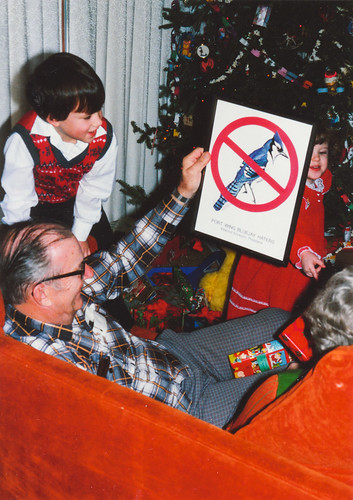
I always loved Blue Jays, so my father-in-law would tease me by complaining every time they came to his feeders. He was the inspiration for my frequent mentions of the Port Wing Blue Jay Haters back in the 80s and early 90s.

Port Wing Blue Jay Haters

Katie made his Blue Jay jokes a little harder for him, because she’d look out his window and giggle with joy when she spotted them, calling out “Boo jay!” with delight—how could he act cranky about them with his adorable tiny granddaughter being so thrilled with them?

Katie, December 1984

But the jays she could count on were the ones that came to our own front porch. If it popped into her mind when she had been in the playroom, she’d look up at me and say, “Boo Jay?” and I’d head for the living room, her crawling behind, saying “Boo Jay!” By the time she was standing at the window, I’d be out on the porch whistling, and soon Katie’s Blue Jays would fly in. Her eyes glowed and she clapped her hands to see them. Katie loved those Blue Jays—her Boo Jays.

At the language acquisition stage, words start coming rapidly. Within days she’d added Dunty for our dog Bunter and then Dadda to her vocabulary. But I’ll never forget that her first two words were Mama and Boo Jay.

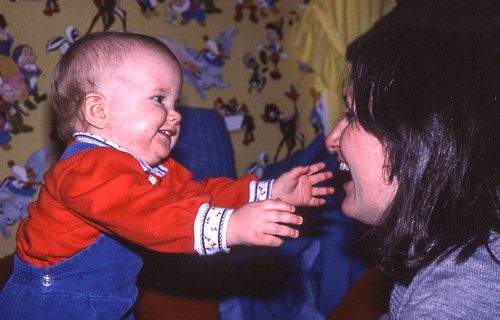
Katie and me

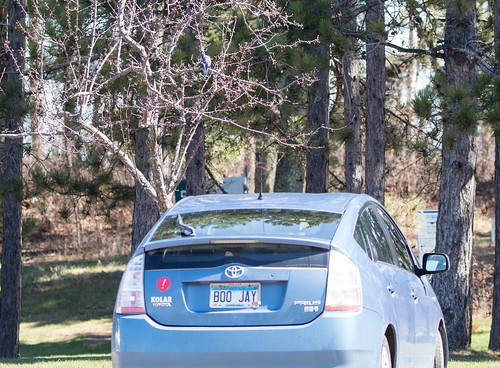
By 1994, I was spending more time afield doing occasional speaking engagements, and for the first time in our 22-year marriage, Russ and I decided we needed a second car. And I decided to spring for vanity plates. It cost $100, which was a big chunk of our family’s discretionary income back then, but it was a one-time fee, so there’s never been a charge added when we’ve renewed the plates. From the moment I thought it would be fun to have clearly identifiable plates, I knew exactly what they would say—the one term that combines my love for Blue Jays and my daughter. My license plates commemorate the birds that so charmed my little Katie—they say BOO JAY, for my Best Birds EVER!!

Blue Jay above BOO JAY

Laura and Katie at Grandma's house, summer 1984

Monday, March 19, 2018

Question from Meg about the timing of geese molting

Listening carefully
Can I ask you a question, Mommy?
When the internet started making it easier to track down information without running to the library, I started spending more and more time on the Cornell Lab of Ornithology’s information-rich website. I doubt if a week goes by now that I don’t consult their Birds of North America Online site at least once or twice.

I’d paid well over a thousand dollars for that amazing series when it was originally published in a paper version in the 1990s—each one of the more than 600 magazine-sized entries covers one species, and I have them all filed away in taxonomic order in my file cabinets. The Online series provides a lot more information. Except in the world of Harry Potter, we can’t consult paper copies of anything to see videos or hear recordings, and as new information is added, paper copies can’t be magically updated. As a member of the American Ornithological Society, which published the original Birds of North America series, I get to use the online BNA for free, but if I couldn’t, it’s something I’d definitely pay for—anyone who depends on accurate information about birds and uses primary sources can’t do without it. The BNA Online normally costs $42 for a year’s subscription, but you can get a single-month subscription for $5, and subscribing for two or three years at a time gives you significant savings.

If you don’t need that level of information, Cornell’s All About Birds provides a lot of info plus sound and video, and it’s absolutely free. When I worked at the Lab, I helped write some of the All About Birds species accounts, and also answered many email and phone questions, as well as fielding such media inquiries as when a New York Times reporter needed to know how likely is it that a person could get pooped on by a goose.


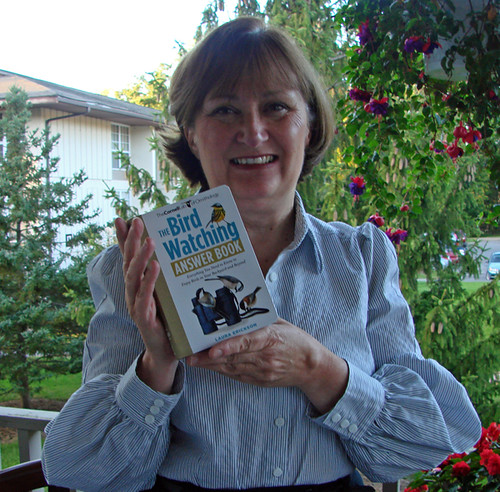
Another of my major assignments at Cornell was to write The Bird Watching Answer Book, which has been, by far, the best-selling of all twelve or so books I have written. That book compiled my answers to hundreds of questions I’ve fielded over the years.

The Bird Watching Answer Book

After I left Cornell, I helped them by serving as a moderator for the chat room they set up for their Great Blue Heron nest cam—again, my job was primarily to answer questions.

So the truth is, I love to answer questions. One of the dear friends I made back during those heron nest cam days, Meg, asked me a question about geese last week.
Hi, Laura - silly question, but I want to be sure I'm correct before I respond to a statement: a female goose loses her flight feathers while she is on the nest so she can better protect the nest. I've never heard anything so silly but want an expert to say so.
First off, there is no such thing as a silly question. Over the years, people in all sincerity have asked me such questions as:
  • Wouldn't it be healthier to use Nutrasweet or other artificial sweeteners than sugar in hummingbird nectar? (Answer: absolutely not!)
  • Do hummingbirds really hitchhike on the backs of migrating geese? (Again, absolutely not!)
  • Should I set out dryer lint for nesting birds? (Absolutely not!)
  • Should I use food coloring in hummingbird sugar water (Again, absolutely not—and please don’t buy commercial hummingbird food that is red—it’s very unhealthy for them). 
If I don’t consider those straightforward questions silly or stupid, I certainly don’t consider a question about the timing of molt to be silly.

Most birds can afford to lose a few flight feathers at a time during molt without compromising their ability to fly.

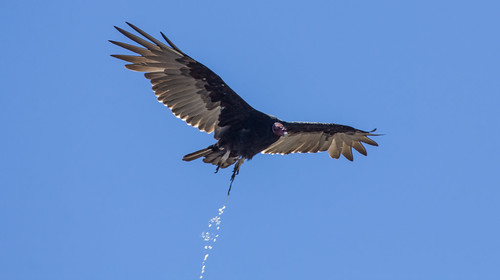
Turkey Vulture pooping!
If you can ignore the fact that this Turkey Vulture is pooping, you can see where
a missing primaryis being replaced by a new one. Most birds can fly, and even soar,
while missing a few feathers. 
Hawks, eagles, vultures, owls, songbirds, hummingbirds, woodpeckers, kingfishers, and a great many other species simply could not get food and water, elude predators, or do much else, if they ever underwent a flightless period after they leave the nest as fledglings. These birds have a large enough wingspan to support their body weight even without several flight feathers. 

But water birds need a heavier, more robust body to be able to submerge long enough to get food under the surface. Geese feed a lot on land and virtually never dive underwater, but their heavy body weight is important because they do a lot of grazing; getting nourishment from grass requires a long, heavy digestive system.

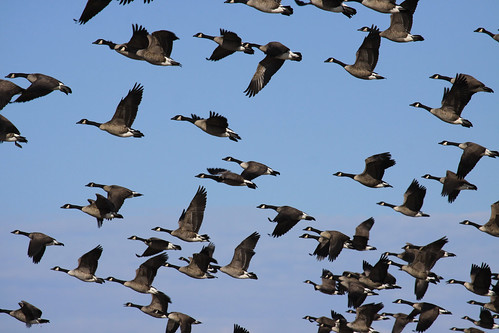
Canada Goose
Canada Geese never stop flapping except when coming in for a landing, and
need all theirflight feathers to support their heavy bodies.
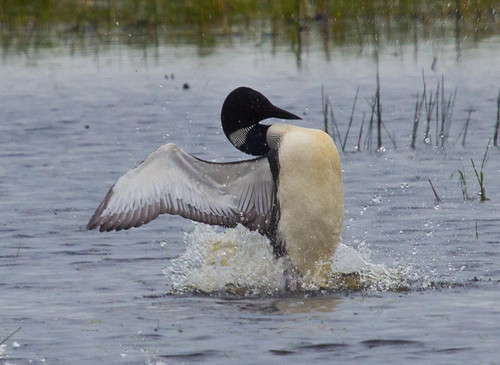
To be able to dive underwater to chase fish, loons can’t be buoyant or they’ll pop up like corks before they get close to the fish they pursue.

Common Loon
Loon wings are narrow with a relatively small surface area, just big enough to support
their heavy bodies.Their wings can be too small to support their weight if they're missing
any flight feathers. 
So in both cases, though for slightly different reasons, these water birds have small wings relative to their body weight, and would both have trouble staying aloft if missing one or two flight feathers; if three were missing during a molt, they might not be able to fly at all.

Loons and geese solve the problem by molting all their flight feathers pretty much simultaneously; if they can’t fly at all during wing feather molt, they might as well minimize their flightless period by getting the molt over with as fast as possible. The trick is timing this molt for when they don’t need to fly.

Loons molt during winter, while they’re out in the great big ocean or Gulf of Mexico. They can dive to elude aerial predators, swim underwater fast to elude swimming predators. When food in one area is scarce, they can swim to new fishing areas.

Geese, on the other hand, have an urgent need to fly during spring and fall, to migrate, but also during the dead of winter, when they feed on fields as well as in water during hunting season.

Meg was right to question whether geese could go through the nesting period without flight—at that point, a predator discovering the nest would force the goose to find a whole new place to start anew, so flying would still be important. It’s after the eggs hatch that geese start molting. They don’t dare fly away from their dependent young, and at this point they won’t be re-nesting if they do face a disaster.

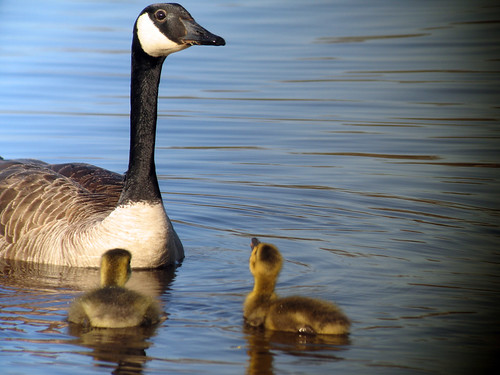
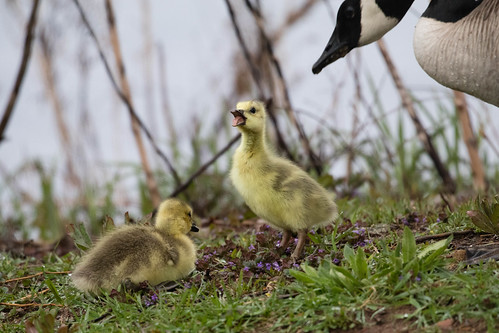
Baby Canada Goose

Geese choose a nest site that is close to feeding areas, both on land and in the water, and for a few weeks, the entire family gets about by walking or swimming. The goslings will be ready to take wing as their parents finish up their own molt. The family will stay together through fall migration and winter.

One of the things I love about birds is how each species has its own strategies for survival. Some seem simple and straightforward. But even very simple processes, like keeping plumage fresh by molting feathers, can have some surprising complexities.

Sunday, March 18, 2018

Letter from Listener: Becca’s Great Gray Owl

Photo copyright 2018 by Becca Mulenburg
Spring officially begins on March 20, at least as far as astronomers are concerned—they must not stand outside very often. Paying closer attention to actual weather conditions and snow depth, some winter owls will be sticking around for at least a bit longer. Great Gray Owls do nest in northern Minnesota, though not right in Duluth. Right now, as winter slowly eases into spring, it’s “anything can happen time.” And to prove it, on March 16, I got a delightful email from Becca Mulenburg that read:  
I just wanted to share a photo of my first sighting of a great gray owl. It happened this morning at my home here in Duluth, and because I listen to your radio show often, I remember you saying that crows often harass owls. So, when a murder of crows cawwed like mad in the trees above my house around 7:10, I looked out of our west window for an owl. Nothing. But I took note of how one of the crows that was very close to this window did not fly away, when normally it would have.  As you can imagine, my curiosity was really peaked. Then, I looked out of the south window, and voilà! There it was, perched just feet away from our house, so big and majestic. 
I'm a big fan of yours, and just wanted to share. Attached is one of the photos I took of it. After it flew across the street and landed in a tree on the south side of Page St., the crows dispersed and left it alone.  
I am so happy today for this sighting, it is very thrilling for me.
Becca added in a follow-up:
And yes, the crows were going insane! My husband commented, "There must be 50 crows up there!" He hadn't gone to work yet, so he was able to see his first great gray owl, too. I'm pretty sure there weren't 50 crows, but there were a lot! And I kept watching as more and more reinforcements kept flying in, so I was pretty relieved when the crows decided to leave it alone.
I’m thrilled that my talking about how crows mob owls gave Becca the information she needed to recognize what was happening, but it was Becca who was observant enough in the first place to notice.

When crows go ballistic, it usually does involve a large owl. The owl that represents the biggest danger to crows is the Great Horned Owl. Great Gray Owls eat very small rodents called voles almost exclusively, and simply don’t eat crow, but crows don’t discriminate—any and every owl they notice gets the same treatment.

On February 23, I myself had heard owls yelling so loudly that I ran outside—they were a few blocks away, yet the blood-curdling calls not just covered that distance but seeped in through our closed windows. Like Becca, what I found was a Great Gray Owl hunkering down. If it can sit tight long enough, the crows will eventually lose interest—if they succeed in chasing it off, at least a few of them may track it, and the whole cacawphony will start all over again, so the owl tries to sit tight with hopes that the crows will get distracted sooner rather than later.

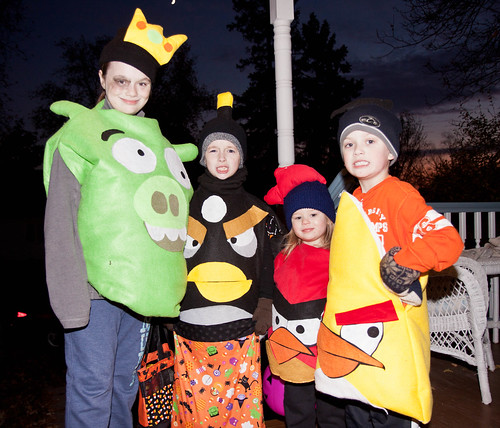
This time of year, crows are calling a lot during courtship and early nesting, but when you pay attention, you learn to distinguish those everyday calls from the angry caws they make when they see an owl. Black-capped Chickadees also call with what sounds like an angry edge to their chickadee-dee-dee calls when they spy a Boreal or Saw-whet Owl. You can’t hear chickadees nearly as far as you can hear crows, but paying attention to any angry bird in nature can be even more rewarding than the video game variety.

Angry Birds