In another program recounting 25 years of "For the Birds," I talked about my first encounter with humor writer Dave Barry today on For the Birds. Here's the script:
In the late 1980s, I got a call from friends of mine who lived north of Duluth in a big house in the woods. The biggest room was built as a sort of dormitory for a logging crew, and was prohibitively expensive to heat, so they’d close it off for most of the winter. That winter they started noticing that their two dogs were spending a lot of time at the door of the closed off room, so they finally went into it to investigate, and what to their wondering eyes should appear but a Barred Owl who had dropped down the chimney and been trapped in the room for apparently several days, pooping all over their walls, furniture, and rugs. The bird had perched atop several of their expensive art prints, leaving long streaks of slimy, acidic whitewash along the frames and glass, ruining the finish on the frames and in a couple of cases seeping between the frame and glass, wicking up onto the matting and actual prints. The bird had knocked expensive bric-a-brac off their fireplace mantel and shelves, messed all over their sofa and chairs, and even slashed through some of the upholstery with its talons. All in all, it had done an impressive amount of damage for a bird that weighs barely 2 pounds.
My friends, being civilized people not bent on revenge, captured the bird and safely released it outdoors, and then attended to the mess. They got estimates from professional cleaners for things they didn’t know how to begin to deal with, searched out their receipts for items damaged beyond repair, and brought all the documentation of their losses to their insurance agent. That’s when they got an even more distressing surprise—he told them that their homeowner’s policy doesn’t cover wildlife damage.
I looked at our own policy and, sure enough, wildlife damage is indeed excluded. So I called a few insurance salesmen asking about this, and they confirmed that standard homeowner’s policies do indeed exclude wildlife damage. I asked about the cases, particularly common in the 1800s before good building codes, when House Sparrows often picked up smoldering cigarette and cigar butts to incorporate into their nests, setting houses afire. The agents assured me that fire damage is always covered. Then I asked about a situation that happens fairly frequently up here, when Ruffed Grouse collide with a window, breaking the glass and sometimes causing damage indoors. Nope, that’s not covered by standard policies unless glass breakage is specifically added. I asked what happens when a kid throws a rock into a window, causing almost identical damage. That is covered, as vandalism. So what would happen, I asked, if a kid threw a Ruffed Grouse through the window? Every one of the agents laughed at the question, but none knew the answer, so they referred me to a couple of insurance adjustors. I asked them the same series of questions, and neither of them laughed—they both instantly asked, “Why do you want to know?”
So I wrote to Dave Barry, the Pulitzer Prize-winning humor writer, asking him to investigate the situation. He sent me back a postcard saying that his question was, “Is it covered if you shoot an insurance adjustor and he bleeds on your furniture?”
That postcard started a fairly long and always funny correspondence with Dave Barry; even now the National Outdoor Book Award website calls me “Dave Barry’s tapeworm advisor.” Next time I’ll share more stories about how that came about.
Wednesday, December 1, 2010

Sunday, November 21, 2010
What if they gave an airport screening and nobody came?
One of my friends recently set off the metal detector alarm at an airport, subjecting her to TSA’s new pat down procedures. The TSA agent handled my friend’s breasts, buttocks, and genitals through her clothing, and put her fingers into my friend’s trousers. This new regime does not involve a hand-held metal detector, so after the pat down, the agent sent her on without looking for or finding the metal that triggered the alarm in the first place—her artificial knees.
The hands of TSA screeners do not belong on parts of our bodies that would be off-limits to anyone but a doctor or someone with whom we’d at least enjoyed dinner and a movie. We empower our children to say no to “bad touches.” What lesson do we give them when we make exceptions for TSA employees so unprofessional and immature that they've been known to ridicule one another’s body scans?
New full-body x-ray scanners probe us with radiation to produce detailed photos of our naked bodies. I’ve lost too many family members to cancer to submit myself to unnecessary radiation. Yes, flying itself subjects us to radiation, and when I assent to medical or dental x-rays I’m also subjected to radiation. But radiation’s effects are cumulative, like buying lottery tickets. I will accept the risk when it provides offsetting health benefits or a lovely trip in the sky. Flying is no longer a lovely experience, and I will not submit to either pat down assaults or “porno scans” for nothing more than security theater. I’m done with air travel.
We Americans are subjecting ourselves to governmental invasions of personal privacy and freedom comparable to what Soviet citizens endured in the 1950s. Totalitarianism by any other name still stinks.
Friday, November 19, 2010
Harry Potter and the Deathly Hallows
Hooray! The one plot element I hated in the book was MUCH improved in the movie. Do not go to this link unless you don't mind a major movie spoiler. But they fixed this part much the way I suggested here. I feel SO vindicated!!!
Thursday, November 18, 2010
For the Birds Retrospective Part I
Today I start a 25-week countdown until May 12, 2012, the 25th anniversary of the first “For the Birds” program. Over the past quarter century, For the Birds has had quite a few brushes with great people. In 1986, Garry Trudeau killed off Doonesbury’s one bird-watching character, Richard Davenport, husband of Lacey Davenport. Dick was in Yosemite when he saw a Bachman’s Warbler—a bird so rare that most ornithologists believe it’s been extinct since the 1960s or so. The Doonesbury character was photographing his thrilling sighting when he suffered a heart attack and died on the spot. His last word as he clicked the camera shutter was “immortality.”
I wrote to Garry Trudeau a few weeks later to ask when Lacey was going to take the film out of his camera and get it developed—even a cartoon photo of a possibly extinct bird would be a cool thing. I also asked him for an interview. I got a nice letter back, but Mr. Trudeau didn’t have time for an interview. None of his cartoon strip characters ever did get that film developed, and I hardly ever talk to anyone who even remembers Richard Davenport, so the character’s dying wish for immortality turned out to be sad and ironic. See the "Dick Davenport, R.I.P." entire series here.
I wrote to Charles Schulz in the late 80s, asking what species Woodstock was. In one series of strips, Snoopy and Woodstock were leafing through a field guide trying to figure it out—I just remember the one where they were guessing he was a Ruby-crowned Kinglet. Schulz said he never settled on a particular species for Woodstock, but reminded me that when the little yellow bird was first introduced, she was a female serving as Snoopy’s secretary. I found this cosmically depressing—that in order for the poor bird to rise from being Snoopy’s secretary to being his friend, she had to disappear from the strip for a while and, hidden from view, undergo a sex-change operation.

During the 1980s, Duluth’s Ring-billed Gull population exploded. Suddenly they were everywhere, and people started panicking. One Duluth city councilor even proposed (and I am not making this up) introducing wild pigs to the Duluth harbor to control the gulls by eating their eggs—too bad Alfred Hitchcock hadn’t made a movie about a town being terrorized by wild pigs, a much more plausible menace than birds. Anyway, I wrote to Roger Tory Peterson to ask about his world experiences with birds that had adapted to the urban environment and mooched for food from people. He sent back a charming letter telling me how easy it is to get Ring-billed Gulls and Laughing Gulls to eat from your hand, but that he’d also coaxed one Herring Gull to take food from his hand. He also mentioned a Brown Pelican in Venice, Florida, that would saunter into a bait shop and demand fish.

For the Birds has had a long-term relationship with humor writer Dave Barry. Next week I’ll tell the story of how I became known as his tapeworm advisor.
I wrote to Garry Trudeau a few weeks later to ask when Lacey was going to take the film out of his camera and get it developed—even a cartoon photo of a possibly extinct bird would be a cool thing. I also asked him for an interview. I got a nice letter back, but Mr. Trudeau didn’t have time for an interview. None of his cartoon strip characters ever did get that film developed, and I hardly ever talk to anyone who even remembers Richard Davenport, so the character’s dying wish for immortality turned out to be sad and ironic. See the "Dick Davenport, R.I.P." entire series here.
I wrote to Charles Schulz in the late 80s, asking what species Woodstock was. In one series of strips, Snoopy and Woodstock were leafing through a field guide trying to figure it out—I just remember the one where they were guessing he was a Ruby-crowned Kinglet. Schulz said he never settled on a particular species for Woodstock, but reminded me that when the little yellow bird was first introduced, she was a female serving as Snoopy’s secretary. I found this cosmically depressing—that in order for the poor bird to rise from being Snoopy’s secretary to being his friend, she had to disappear from the strip for a while and, hidden from view, undergo a sex-change operation.
During the 1980s, Duluth’s Ring-billed Gull population exploded. Suddenly they were everywhere, and people started panicking. One Duluth city councilor even proposed (and I am not making this up) introducing wild pigs to the Duluth harbor to control the gulls by eating their eggs—too bad Alfred Hitchcock hadn’t made a movie about a town being terrorized by wild pigs, a much more plausible menace than birds. Anyway, I wrote to Roger Tory Peterson to ask about his world experiences with birds that had adapted to the urban environment and mooched for food from people. He sent back a charming letter telling me how easy it is to get Ring-billed Gulls and Laughing Gulls to eat from your hand, but that he’d also coaxed one Herring Gull to take food from his hand. He also mentioned a Brown Pelican in Venice, Florida, that would saunter into a bait shop and demand fish.
For the Birds has had a long-term relationship with humor writer Dave Barry. Next week I’ll tell the story of how I became known as his tapeworm advisor.
Wednesday, November 17, 2010
California Condors and DDT—in 2010!

Today's radio script drew from this report in yesterday's New York Times. The script:
When I started producing “For the Birds” in May 1986, California Condors were on the brink of extinction, with fewer than two dozen still in existence on the planet, and scientists and wildlife managers, working under authority of the Endangered Species Act, were working tirelessly to save them. It had already been five years since the last condor chick had fledged in 1981. So the US Fish and Wildlife Service approved a plan to capture every last one of them from the wild and start a captive breeding program. The last wild condor was caught on Easter Sunday in 1987. All 22 still in existence were in captivity.
Condors don’t start reproducing until they’re six years old, and females lay just one egg every two years. The birds captured in the wild had both to be restored to good health and to adjust to captive conditions in order to breed at all. Many people, including me, thought the captive breeding program was doomed from the start, but the hard work of the San Diego Wild Animal Park and the Los Angeles Zoo finally paid off. Condors have been being released in California since 1991, and in the Grand Canyon area of Arizona since 1996. Lead continues to be a serious danger for them in California, so in 2008, the Ridley-Tree Condor Preservation Act went into effect, requiring hunters within the condor’s range in California to use non-lead bullets.
People were more hopeful about condors along the California coast. These birds feed mostly on carcasses of marine mammals that wash ashore, so scientists expected these condors to recover more quickly than the inland birds. But although the adult birds appear to be doing well, when they nest, their eggs have exceptionally thin shells, exactly like eggs of eagles and other fish-eating birds when DDT was abundant in the environment. Condor eggs in inland areas have normal shells. The Ventana Wildlife Society discovered a large DDT hot spot in sediments off the Southern California coast, near a breeding ground for California sea lions. The DDT polluting this area originated with the Montrose Chemical Corporation, which 50 years ago was the world’s largest producer of DDT. During the 1950s and ’60s, Montrose discharged its untreated DDT waste directly into the Los Angeles County Sanitation District’s sewer system. An estimated 1,700 tons of DDT settled onto the seabed, where it continues to contaminate Pacific Coast waters. The E.P.A. has declared the area a Superfund site and developed a plan to cover the most contaminated parts with a cap of sand and silt in 2012.
In recent years, a large number of scientifically challenged politicians and corporate mouthpieces have been whining about the banning of DDT so long ago. People who have analyzed blood samples stored in medical research facilities during the 50s and 60s recently learned that DDT levels in the blood of pregnant women were directly correlated with premature births and miscarriages. And even back in the 60s, scientists were discovering DDT passing through to babies through both cows and mother’s milk. Almost 40 years after this dangerous pesticide was banned, it’s still in the environment, still causing egregious harm to wildlife and possibly to humans eating coastal fish. When I started producing For the Birds in 1986, I thought that within a decade or so, DDT would be nothing more than a distant memory and we’d stay on top of other environmental assaults. I was wrong in my pessimism about the condor reintroduction project, but I was also wrong in my optimism about sensible environmental legislation. I guess some people will still be lusting for a quick buck at the expense of wildlife and other human beings long after condors have disappeared into the mists of time.
Thursday, November 11, 2010
Great birthday, or the greatest birthday?
Several months ago, Russ bought us tickets to see Jeff Daniels in concert tonight. He is great--warm and funny. Everyone in the crowd was laughing hysterically at some of his songs, and you could have heard a pin drop during the tender and sweet numbers.
After the concert, I talked to him! First off, no, he's not a birder, doesn't have a favorite bird at all, and really doesn't notice birds except geese who "shit everywhere." Oh, well.
I keep track of my favorite Great Movie Moments"--single moments, less than 2 seconds, that have so much resonance that they stay with me. The Jeff Daniels Great Movie Moment is in Speed just before he's blown to smithereens. He has this perfect expression when he realizes the place is booby-trapped--he manages to capture a lifetime of regrets and joys with an unmouthed "Oh, shit!"—all in a split second. So I told him how much I loved that moment, and he told me the story behind it!. Turns out, Roy Sheider had such a moment in Jaws when he first sees the shark. Jeff Daniels asked him how he did it, and Roy Sheider said he just had his face tense, and suddenly let it all go slack. Now I'll have to watch Speed again! (And maybe Jaws, too.) Neither movie is known for scenes with birds, but I'm sure there are a few to watch for in Jaws. But first I'm going to listen to my new Jeff Daniels CD—"Grandfather's Hat." It includes the song with the same title, which he sang tonight--one of the genuinely touching ones that had me close to sobbing. I'll pull out my old CD as well. And I'm putting his other two CDs on my "wanted" list.
Being 59 is so far pretty darned wonderful! (Even if I'm not at the Rio Grande Valley Birding Festival.)
Wednesday, November 10, 2010
Countdown to 11/11: ONE day to go!
Top 11 reasons to look forward to turning 59 years old:
Number ONE: Thanks to Simon and Garfunkel's wonderful 59th Street Bridge Song, this entire year I will be feelin' groovy.
Number ONE: Thanks to Simon and Garfunkel's wonderful 59th Street Bridge Song, this entire year I will be feelin' groovy.
Tuesday, November 9, 2010
Countdown to 11/11: 2 days to go!
Top 11 reasons to look forward to turning 59 years old:
Number 2: The Number 59 bird on my lifelist is the Yellow-billed Cuckoo. I saw my very first one of these splendid birds on June 23, 1975, The snow-white underside; the big spots on the long, long tail; the pretty, slightly decurved yellow bill. Everything about this bird was cool and funky. And then it began to call. Took my breath away!

Number 2: The Number 59 bird on my lifelist is the Yellow-billed Cuckoo. I saw my very first one of these splendid birds on June 23, 1975, The snow-white underside; the big spots on the long, long tail; the pretty, slightly decurved yellow bill. Everything about this bird was cool and funky. And then it began to call. Took my breath away!
Monday, November 8, 2010
Countdown to 11/11: 3 days to go!
Top 11 reasons to look forward to turning 59 years old:
Number 3: Many of my favorite actors were producing some of their best work when they were 59. Charade came out when Cary Grant was 59. Tootsie was released when Charles Durning was 59. Meet the Parents came out when Robert de Niro was 59. Alan Rickman was 59 when Harry Potter and the Goblet of Fire and The Hitchhiker’s Guide to the Galaxy came out. Meryl Streep was 59 while filming both It’s Complicated and Julie & Julia.
My favorite novelist, Anne Tyler, was 59 while she was writing Back When We Were Grownups. Fred Rogers was doing some of his best work in 1987, when he was 59. And my hero of all time, ornithologist Chandler Robbins, was 59 over thirty years ago--he's still going strong.
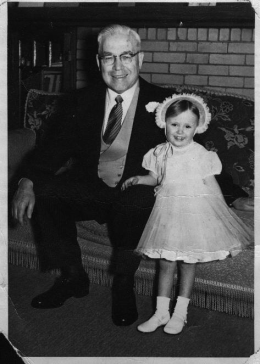
And my Grandpa had just turned 59 when he and I posed for this photo, when I was the flower girl for my Aunt Pat's wedding.
Sunday, November 7, 2010
Countdown to 11/11: 4 days to go!
Top 11 reasons to look forward to turning 59 years old:

Number 4: I could even still be playing professional baseball, if I were Satchel Paige.

Number 4: I could even still be playing professional baseball, if I were Satchel Paige.
Subscribe to:
Posts
(
Atom
)