Laura Erickson's For the Birds

Saturday, May 3, 2014

Lesser Prairie-Chicken Festival

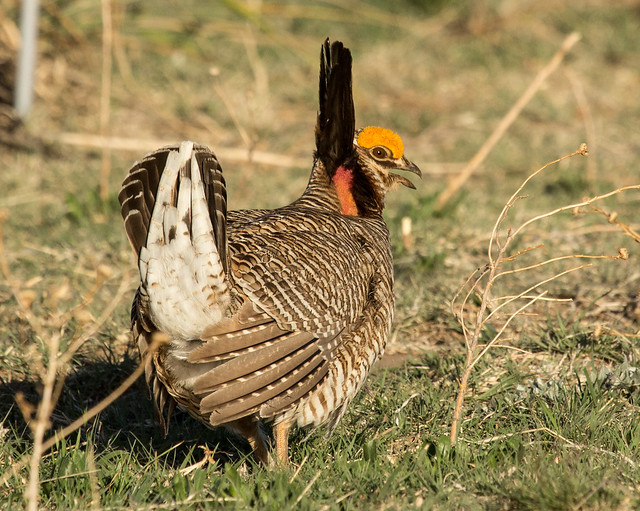
Lesser Prairie-Chicken

Last October, I got an email from John Kennington in Oklahoma, inviting me to speak at this year’s Lesser Prairie-Chicken Festival in Woodward, Oklahoma, which takes place during the last weekend of April. Of all the birding festivals on the continent, this was the one I’ve most badly wanted to attend, so I was elated. As of the festival, I’d been on the planet for exactly 3,260 weekends starting on the Sunday on which I was born, and of all those weekends, this wonderful birding festival ranks in the top ten.
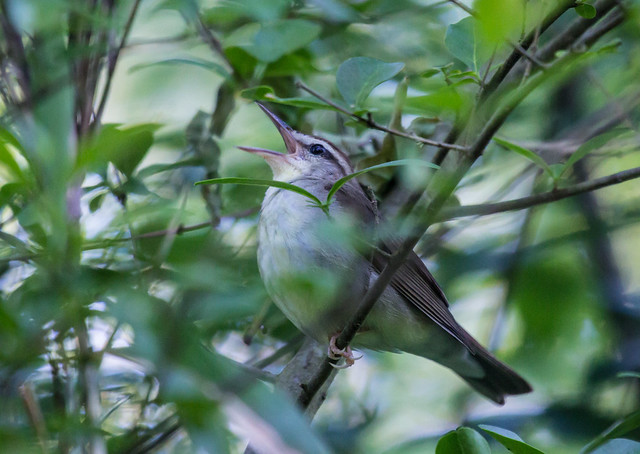
 Swainson's Warbler

Part of what made it so wonderful is that I was in Oklahoma—one of my favorite states of all. Everyone I’ve met in Oklahoma has been warm and friendly, and the birds are utterly splendid. Three of my favorite birds are localized Oklahoma specialties—Swainson’s Warbler in the southeast, Lesser Prairie-Chicken in the west, and the Black-capped Vireo in the middle. 
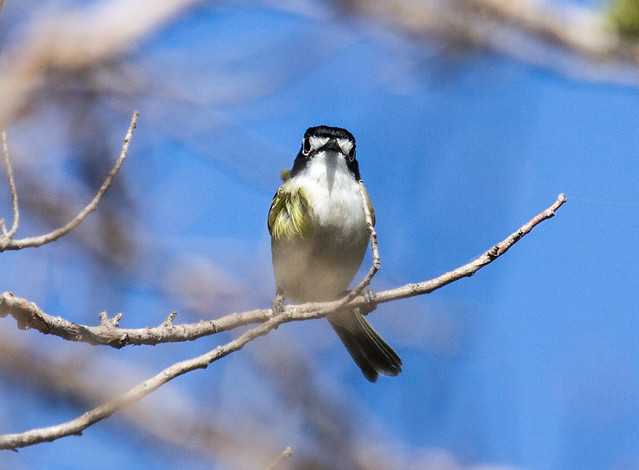
Black-capped Vireo

And one of the most splendid birds in the universe is ubiquitous just about everywhere in the state from spring through fall—the Scissor-tailed Flycatcher. How could I not be in love with Oklahoma?
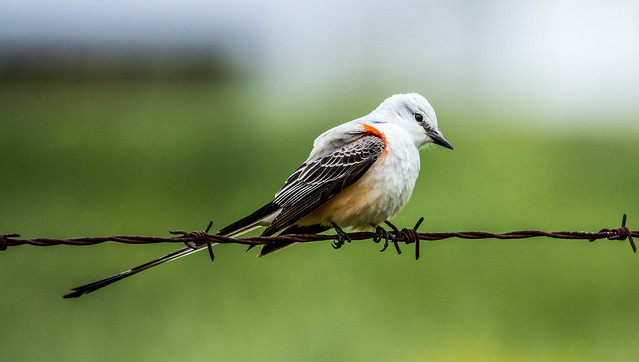
Scissor-tailed Flycatcher

My perfect weekend started at 3:30 am on Saturday, April 26. I’d been staying at the Northwest Inn in Woodward, and we were leaving promptly at 4:30 to go to a prairie-chicken observation blind on the Selman Ranch. This is something I’ve yearned to do ever since I discovered how much Sue Selman, the owner, has done to protect the chickens on her land and to get the word out to other landowners about how wonderful this bird is and how to help it. She's been one of my real heroes. 


She has portable blinds set up that each accommodate 2 or 3 people, and she can set them wherever the view is best while not disturbing the birds. I’ve seen Lesser Prairie-Chickens twice before, but never from such close range. I was absolutely thrilled.
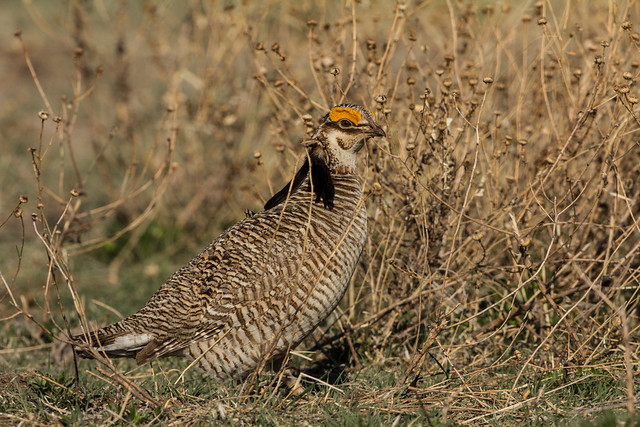
Lesser Prairie-Chicken

Prairie chickens are in steep decline, primarily due to habitat loss, and we lose more quality habitat every day as more people sell or lease their land for energy production or allow cattle to overgraze it or convert it to farm fields. Despite all Sue’s hard work, her property is edged in a few places by wind farms—and prairie chickens and other grassland grouse simply cannot abide vertical structures, including trees, oil jack pumps, and wind turbines, within their view, especially when engaging in breeding or nesting behaviors. Prairie chickens and sage grouse are tasty birds that are fairly easy for hawks and falcons to take; the vulnerable grouse may well associate vertical structures with hawk perches. This is why agricultural and energy interests have lobbied heavily and spent enormous amounts of money to oppose the listing of these birds for protection under the Endangered Species Act. The only way their numbers could possibly be restored to even a tiny fraction of historical numbers would be to restore large swaths of healthy prairie grassland.

And even as their habitat dwindles, leading to inevitable declines, Lesser Prairie-Chickens suffer additional and avoidable mortality. Hunters and falconers can still legally take them in some states even though they’re clearly not “harvesting the surplus population” when there is no surplus population when a species is declining. And more individual prairie chickens die in collisions with fences than any other single cause.

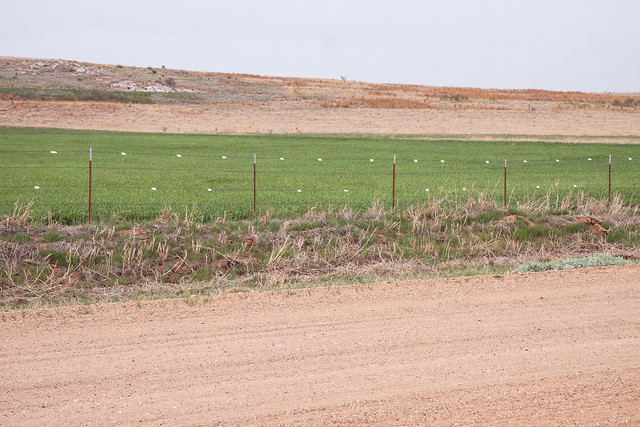
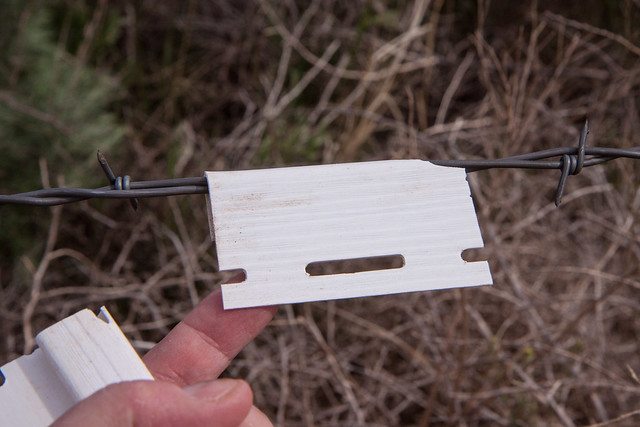
Unnecessary fencing should always be removed to protect grassland species, especially grouse, but when it can’t be removed, a simple and inexpensive, albeit labor intensive, alternative is extremely effective at protecting birds. Marking fences every 2 feet or so with white plastic pieces, about the size of credit cards, reduces kills to virtually nothing.
20140426-IMG_7173

20140426-IMG_7170

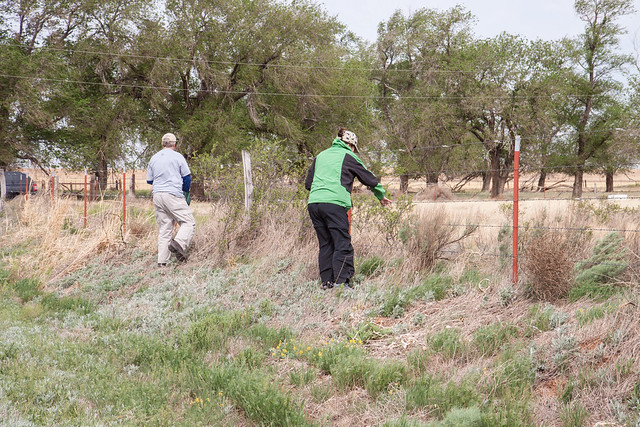
I was thrilled that after a lovely time watching the birds on the Selman Ranch displaying, and then eating a delicious breakfast at the ranch house, we were taken to a stretch of fencing and asked to put a couple of handfuls of those plastic markers on the wires. It was fast and easy, and made a perfect end to the morning, allowing us to do a little thing to help ensure that these gorgeous birds could continue their spectacular courtship long into the future. It was a great morning, with another one to come.
20140426-IMG_7168

One of the special activities offered for photographers participating in the Lesser Prairie-Chicken Festival was a trip to a lek where a few dozen Lesser Prairie-Chickens are still present and display surprisingly close to the blind. I couldn’t imagine getting better looks than I had on the Selman ranch, but what the heck?

In order to see displaying prairie chickens without spooking them, you need to arrive before first light so the birds won’t know you’re there. The blind for this trip was further than the Selman Ranch—all the way in Canadian, Texas, in the Panhandle, and so we had to leave earlier, meaning I had to get up at 3 am. But the thrill of seeing prairie chickens easily overrides sleepiness for me, so on both mornings I woke up by myself 5 minutes before my alarm went off.

The photographer’s blind is large enough to accommodate 5 or even 6 people, but the day I was there, it was just me and one other guy named Harald Miller. He had rented a ginormous Canon 800-mm lens for the day, so he positioned himself in a corner where he could point the lens out either of two windows. I picked a spot right in the center. Within minutes of getting all set up, while it was still quite dark, we started hearing the chickens gathering. Greater Prairie-Chickens make a low, hollow booming sound with their air sacs as well as lots of chattering squawks and other sounds. Lesser Prairie-Chickens don’t make those booming sounds, but their chattering is quite thrilling even before the birds can be made out in the murky darkness.
Lesser Prairie-Chicken

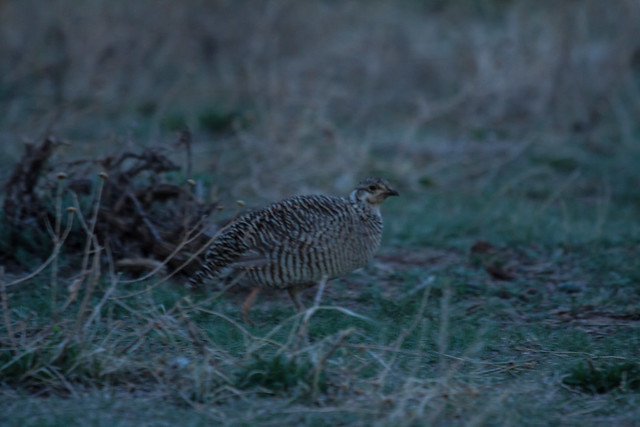
Female prairie chickens come to leks to choose the most vigorous males—the ones most likely to produce genetically superior young. They seem to pay particular attention to the first males to arrive in the growing light—not only are those males likely to be strong and powerful, but the females can choose their favorite, mate with him, and get out of the open lek area before hawks are on the wing. Sure enough, the only female I got a photo of came and left well before sunrise.
Lesser Prairie-Chicken hen

The overcast skies made the light soft and pleasing at dawn.
Lesser Prairie-Chicken

Lesser Prairie-Chicken

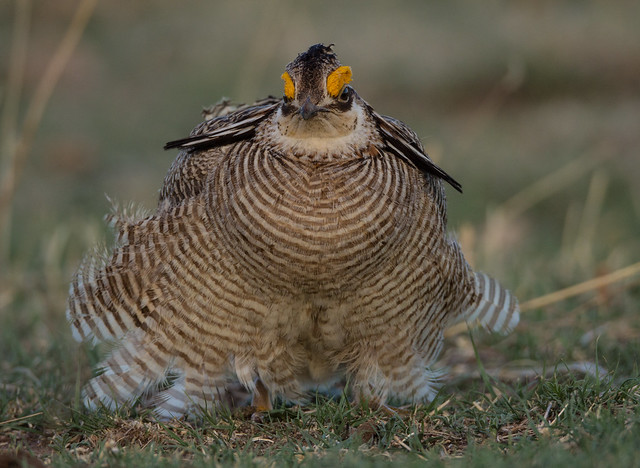
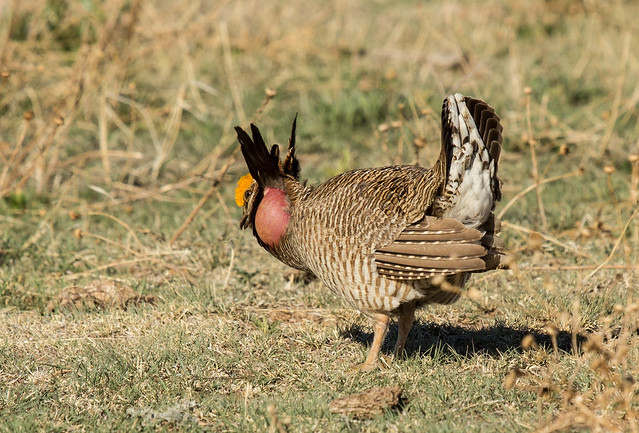
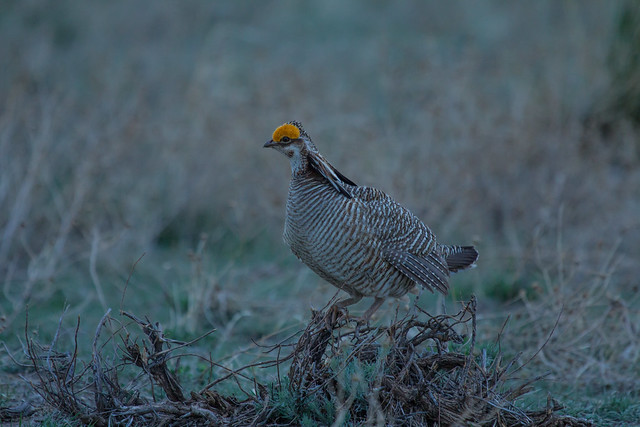
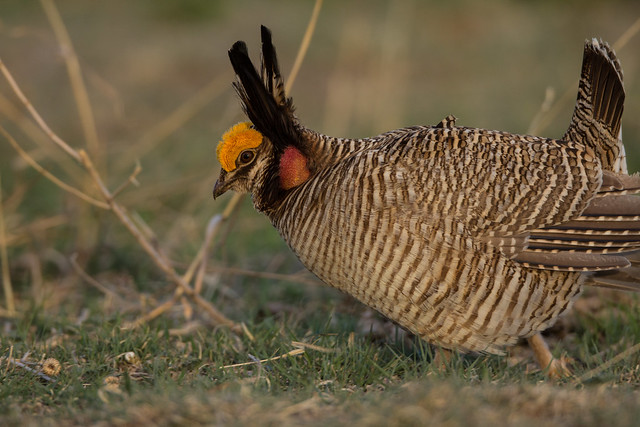
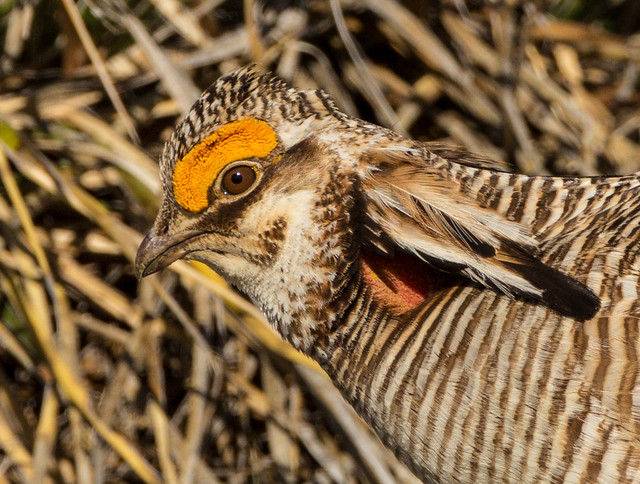
When the sun finally did come out, the prairie chickens looked utterly glorious. I mostly focused on one male who was defending the territory right outside my window. I got to watch him eating, resting, and displaying.
Lesser Prairie-Chicken

Lesser Prairie-Chicken

Lesser Prairie-Chicken

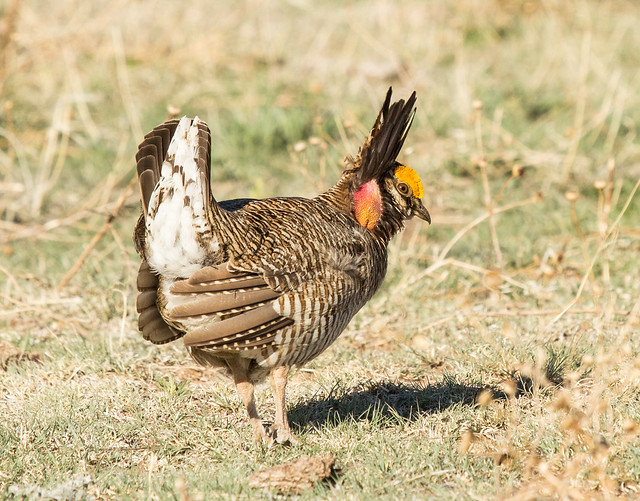
A different cock would periodically walk in from the right. I surmised that he was one of last year’s young by the fact that he was slightly smaller and his pink air sacs were tinged with yellow.
Lesser Prairie-Chicken

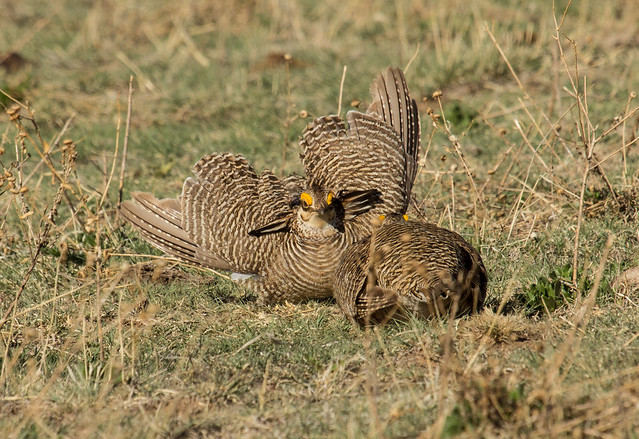
He was fairly easy for my bird to chase off. The bird entering occasionally from the left seemed more an equal. The two faced off at the borders of their defended space frequently. Occasionally they’d come to blows, but they were quite literally playing chicken, and often one bird broke the stare down and just retreated back within his own territory.
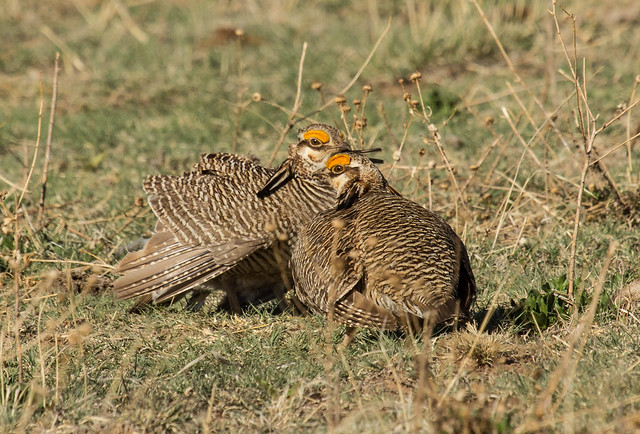
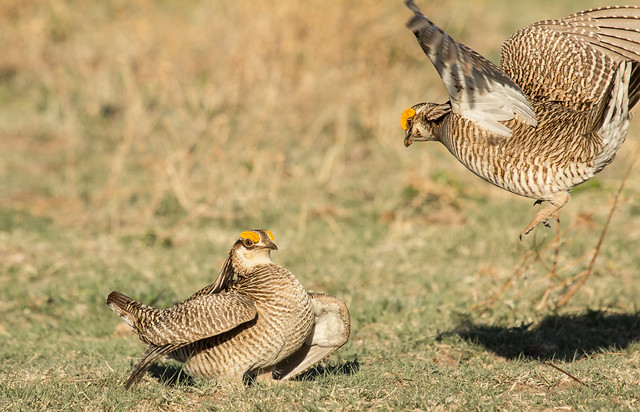
Lesser Prairie-Chicken

Lesser Prairie-Chicken

But sometimes they both jumped up in a flurry of wings and waged a battle that lasted just a few seconds. I had trouble predicting these battles—I couldn’t perceive any slight change that triggered one, so didn’t manage to catch much with my camera. A female turned up at least once that I could barely see from the corner window, but I was rooted to my own window and my one special male, so I didn’t even try to photograph her. Harald Miller had signed up for the photographer’s package for all three days, so he could be sure of getting at least one good morning, and he said this was the best of the three. He moved around in the blind more than I did, and when he was photographing from my other side, he let me hook up my camera to his 800 mm lens—I got some amazing close-ups with it. After an hour or two, the birds started spending time eating and loafing as well as displaying, but when one would spot another, it would instantly get into display mode.
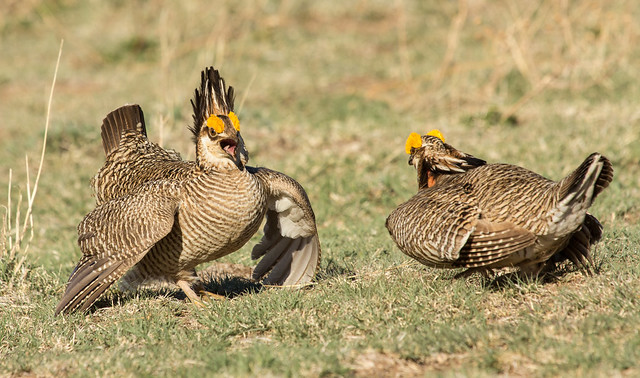
Lesser Prairie-Chicken

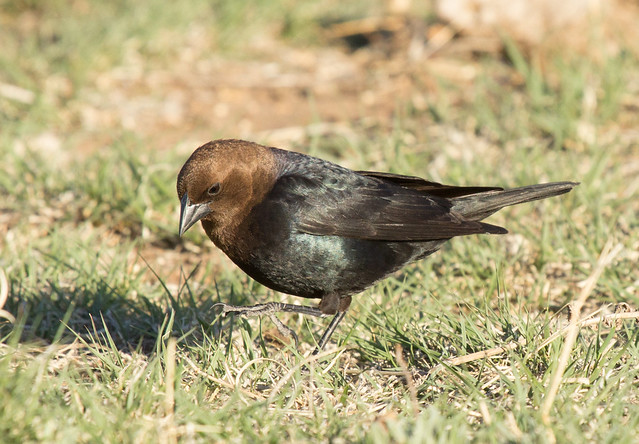
I took over 3,000 photos of the Lesser Prairie-Chickens, and also got a few shots of Horned Larks and a cowbird.
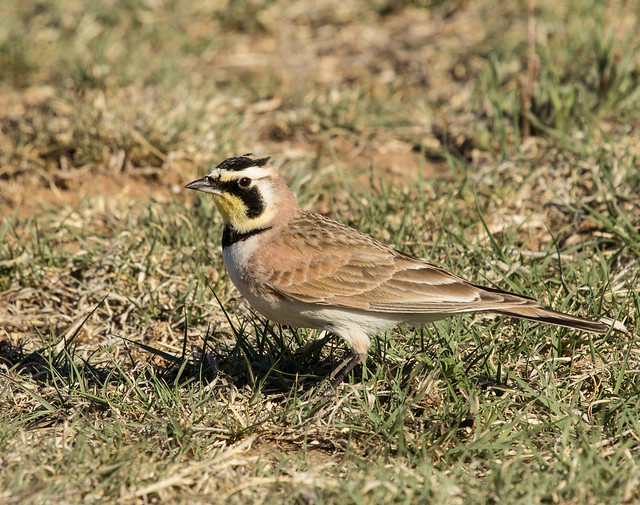
Horned Lark

Brown-headed Cowbird

The prairie chickens spooked just once all morning and were back within two or three minutes. I was spellbound for four hours—not the least bit ready to leave—but finally, some time between 9 and 10, they all suddenly took wing. That was the end of their display period for the day. After we packed up and closed up the blind, we got to see pronghorn antelopes on the way out. Could the day possibly have been better?
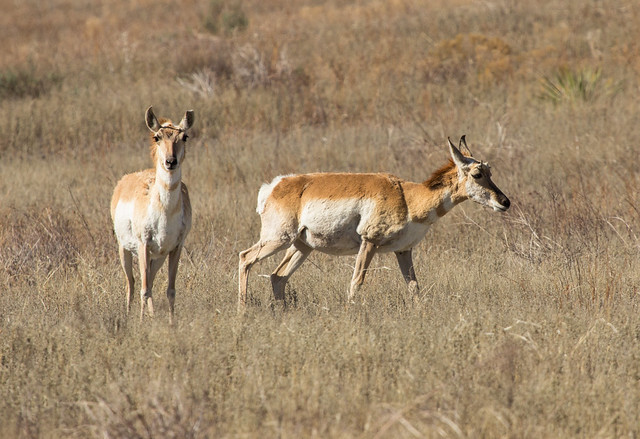
Pronghorn Antelope


I’m getting to enjoy the whole thing all over as I process my photos, which I’ll treasure for the rest of my life. And there were plenty of other cool field trips and great birding spots as well. I had an especially lovely time at Boiling Springs State Park, where a Barred Owl flew out at mid-morning, and I had some of my best looks ever at a few territorial Louisiana Waterthrushes. On one field trip, the participants even found a few Evening Grosbeaks!  That LesserPrairie-Chicken Festival is one of the most splendid experiences I’ve ever had in my 62 years. I can’t wait to return.

Wednesday, April 23, 2014

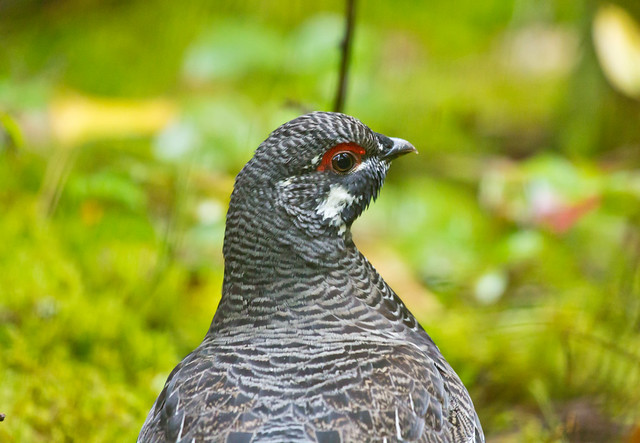
Field Trip to See Displaying Spruce Grouse!

Photo by Ryan Brady
 I’m writing this in Woodward, Oklahoma, where I’m attending the Lesser Prairie-Chicken Festival this last weekend of April. But already I’m looking forward to next Friday, May 2, when I’ll be on a wonderful field trip with my friend Ryan Brady looking for displaying Spruce Grouse in the Clam Lake area in Ashland County. The Spruce Grouse is one of those secretive species that most of us have to make some effort to see at all. I searched for them with my friend Troy Walters near Eagle River last spring for my Conservation Big Year, but we got skunked. Most of the Spruce Grouse I’ve ever seen were along Highway 2 by the Sand River north of Two Harbors, but I didn’t have a chance to do that trip last year—I got the only one I saw on my Big Year way out in the mountains of Vermont. And in all the years of birding I’ve done, I’ve never ever seen one displaying. So I’m thrilled about this opportunity!

 The field trip is part of a fundraiser for Wisconsin’s Bird Protection Fund, the premier way to donate directly to bird conservation projects in Wisconsin, so will be well worth the $62 participation fee. The money funds work on Wisconsin’s budding Kirtland’s Warbler population, Whooping Cranes in the state, providing stopover habitat for migrants, the state’s next Breeding Bird Atlas, and much more. So considering I get to help with all that AND will have an opportunity to see displaying Spruce Grouse—that is really quite a bargain. We’ll be setting out at 6 am May 2, and with Ryan Brady as the leader, even the time we spend without Spruce Grouse in view promises to be fun. Ryan is my ideal kind of birder—an extremely knowledgeable authority on Wisconsin’s birds, committed to education as well as research and conservation, but also darned fun to be around. I’ve co-led trips with him, and he’s great at not just getting on birds but helping everyone else find them as well, and at giving great information about them in a fun way. There are still a few spaces open for this exciting trip. You can get more information and sign up at Wisconsin’s Natural Resources Foundation website, at www.wisconservation.org.

 In addition to the exciting Spruce Grouse field trip on May 2, another northern Wisconsin birding great, Robbye Johnson, is leading a Lake Superior Birding Blitz field trip on Friday, May 23, also to raise money for the Bird Protection Fund. On that trip Robbye will be targeting a whole panoply of resident boreal species such as Black-backed Woodpeckers and Gray Jays, along with a splendid assortment of migrants at the peak of migration. Information about both trips is at wisconservation.org.

I did a really fun Big Day fundraiser with Ryan Brady a few years ago. He’s doing that again this year, again raising money for the Bird Protection Fund as part of the Great Wisconsin Birdathon. Ryan will be teamed up with Nick Anich and Betsy Bartelt on the Lake Superior Signature Team, trying to find as many birds as possible in a 24-hour period, and trying to prove northern Wisconsin’s superiority over the rest of the state in our birdlife. Whether or not you attend either field trip , it’s worth pledging a donation to Ryan’s Birdathon team. Our birds are vulnerable to so many environmental threats right now. The Natural Resource Foundation of Wisconsin’s Bird Protection Fund is doing absolutely top-notch work that conservationists in other states envy. Information on the Great Wisconsin Birdathon can be found at www.wibirdathon.org. Here's a .pdf file about the great field trips being offered this year in Wisconsin.

Spruce Grouse


Tuesday, April 22, 2014

Chickadee with a Deformed Bill

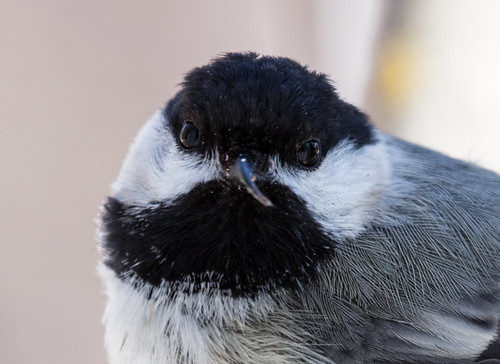
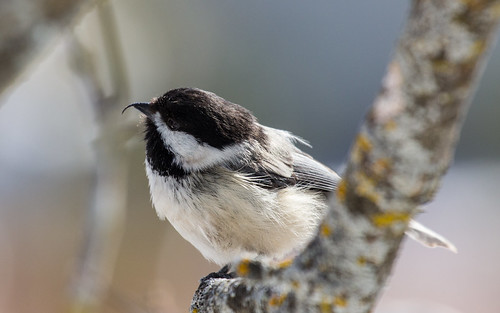
Black-capped Chickadee with deformed bill
This has been the worst winter for birds in my yard since we moved here in 1981. On a great many days, I saw absolutely no birds at all, even when I was paying close attention pretty much all day. We weren’t expecting any northern finches this year anyway—there were excellent cone crops further north, so redpolls, crossbills, siskins, and Pine Grosbeaks didn’t need to wander our way. But I had never imagined a winter without chickadees. One small flock moved about my immediate neighborhood, but they showed up in my yard only sporadically and very infrequently. I started wondering whether we might have lost many of the local birds to West Nile Virus last summer or fall. Our crow and jay numbers were also down this year, and West Nile hits all three species hard. I never found any dead birds in my yard over the fall or winter (though I was gone much of the time, finishing up my Conservation Big Year). Russ was keeping the feeders filled while I was gone, and we were using pretty much the same kinds of seed, peanut butter, and suet as ever.

Since April 7, I’ve been hearing a chickadee singing occasionally, and on April 16, one was flitting outside my window expecting mealworms, so the next day I went out and bought some. Sure enough, it came back on Friday, April 18, and I noticed that it has a deformed bill. The upper mandible is way too long, and bends weirdly to the bird’s left. The lower mandible appears normal to my eyes and in my photos, but a closer look would be necessary to be certain. This is obviously one of the birds I fed regularly two years ago for it to remember that I open the window with mealworms in my hand. So this is especially heartbreaking for me to see.
Black-capped Chickadee with deformed bill
Birders in Alaska started reporting chickadees with deformed bills—some with both mandibles horrifyingly elongated and crossed—in 1999, and since then, have found over 2,000 chickadees with the condition in south central Alaska, along with rapidly increasing numbers of deformed bills in birds of other species, including Northwestern Crows, Downy Woodpeckers, Steller’s Jays, and Black-billed Magpies.  The US Geological Survey has been investigating possible causes, including environmental contaminants, nutritional deficiencies, and disease, but so far have no solid evidence about what is going on at all.

According to the most recent information I can find, they believe the problem is fairly specific to the Pacific Northwest. But in February, Jim Williams, who writes about birds for the Minneapolis Star Tribune, received a report of one visiting a Maple Grove feeder from late December through at least February. As far as I know, mine is the second report in Minnesota. I’m hoping if anyone else sees one in our area, they’ll let me know. Even more important, though, is to report any sightings of deformed chickadees to the US Geological Survey’s researchers studying the problem. Their Report Form is here.

I feel a special obligation to my backyard chickadees—they’ve provided me with so much joy and pleasure throughout most of my life, and my afflicted bird is one of the individuals who has come to know and trust me. So I’m trying to get this bird banded and am hoping I can get the bill trimmed, too. Observations of the survivability of deformed birds without intervention provide valuable scientific data, but I think it’s also valuable to learn how rapid regrowth is. Unfortunately, I had to leave town on April 22, and won’t be back till May 1, but Russ is going to try to feed him every day. That in and of itself will be an interesting experiment to see how quickly it adapts to taking food from a new person—I’ve been the only one who feeds chickadees by hand in my neighborhood for lo these many years.

I’m hoping very much that the two Minnesota cases are isolated aberrations, It’s scary to think something is happening in the environment that is taking a toll on such a splendid and beloved bird, but if this is the start of a serious problem, the more information we can gather, the faster we can figure out what’s happening and do something about it.
Black-capped Chickadee with deformed bill

Wednesday, April 9, 2014

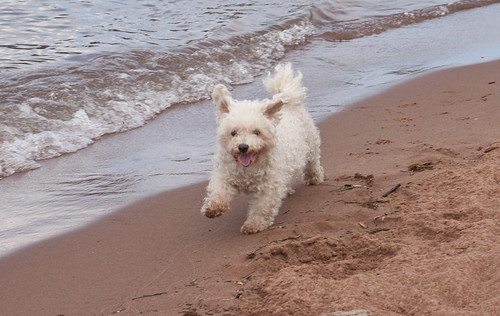
My Little Bird Dog

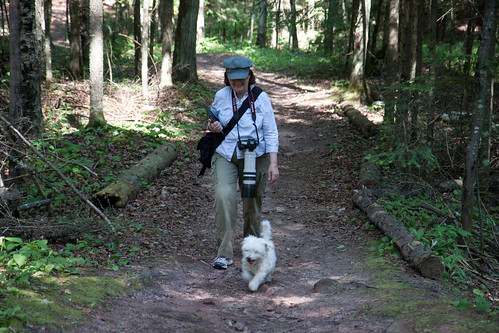
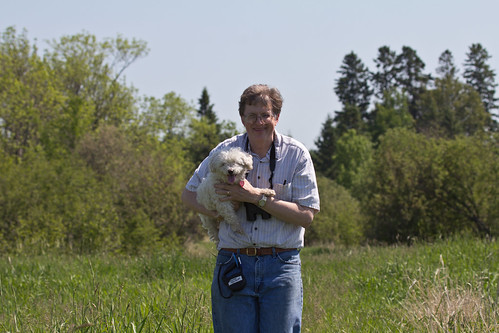
Laura and Photon

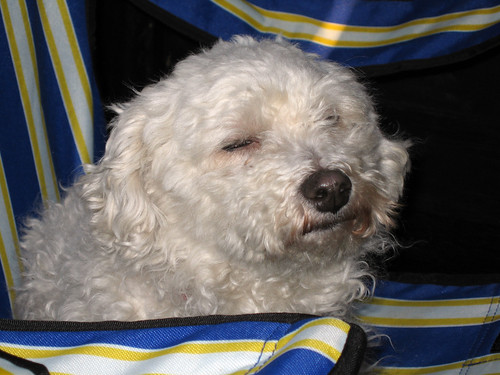
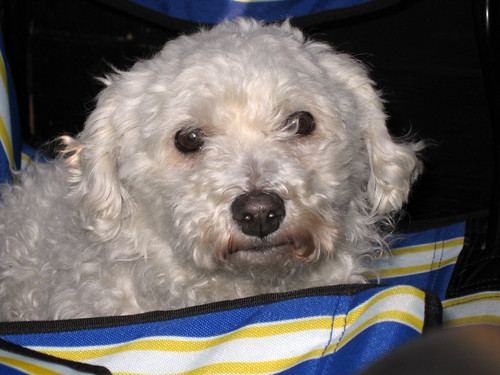
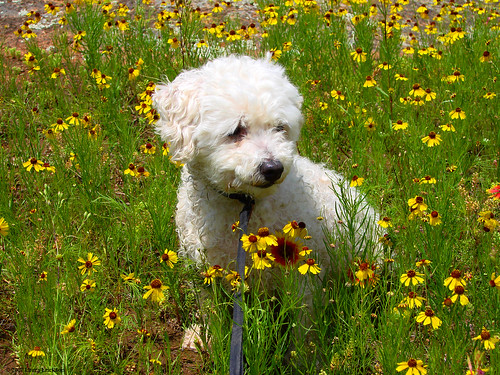
On July 2, 1998, I drove down to southern Minnesota to pick up a brand new puppy—a 12-week old bichon frise. She was a tiny particle of light and energy, so I named her Photon.

I’m not an assertive kind of person, so I need a dog that is even less assertive than I am. Our golden retriever Bunter—my constant companion while my kids were growing up—and then Photon both fit the bill. They both learned the basic commands—come, sit, stay, and down—almost instantly, as if when I told them what to do, they thought, “What a great idea!” rather than submitting to my will. Bunter, being a golden, had an over-developed sense of guilt. I called her my Roman Catholic dog, because anytime anything went wrong or any child cried, she hung her head and seemed to be examining her conscience trying to figure out what mortal sin she’d committed that was making her family suffer. Photon had all Bunter’s agreeableness and good cheer, but none of her guilt. When things went wrong, she just took a nap in a closet until the clouds passed.

While I was housebreaking Photon, we spent a lot of time in the backyard. It took her a while to figure out that there was a point to our being out there, but while sniffing around, she discovered an anthill. Of course she stuck her nose right in, and some of the ants got stuck in her nostrils—some may have even bit her. This was an instant lesson in the importance of keeping her little nose out of things even as it increased her curiosity about the fascinating world at her feet. For the remainder of the summer, most of the times I took her out, she would stand, transfixed, watching that ant hill for 10 or 15 minute stretches. And for the next 16 years, whenever she noticed an insect, frog, salamander, or other tiny critter on the ground, she’d stop dead in her tracks like an exceptionally happy pointer, her tail wagging furiously but otherwise not moving a muscle till I praised her for finding me yet another interesting creature. Every salamander I’ve ever seen in the wild was thanks to my tiny herpetologist. And her quarry was never the worse for the encounters—she never ever touched them, maybe because of that uncomfortable experience with ants up her nose.

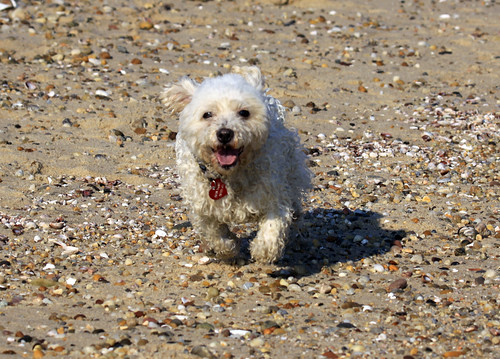
Photon!

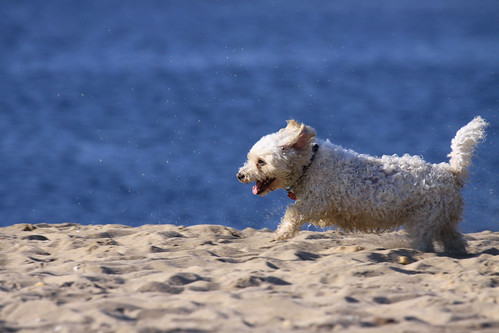
Bichon frises are one of the breeds people think of as foo foo dogs, but Photon never got that memo. The first time I brought her to Lake Superior, on a walk along Brighton Beach, she saw a golden retriever fetching sticks and instantly figured out that the really cool dogs swim. It was a warm summer day, but the next spring, she was out there swimming among ice floes. I kept her on a long retractable leash when there were shorebirds about. I didn’t need to worry about her scaring gulls—they watched her with disdain. A Bald Eagle once circled around a few times looking down on her, but then flew off—Bichons originated in Italy and take their name from French, and I figured our nation’s symbol must prefer all-American food. 

Photon

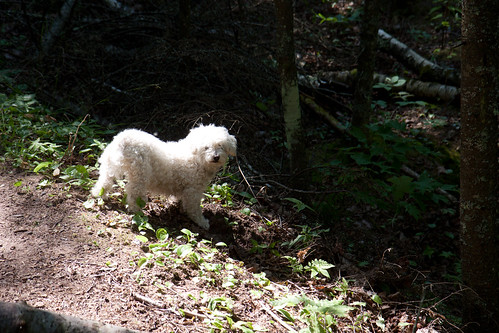
Not many people walk in the woods with little foo foo dogs, so birds have no clue what they are. Species that had always ignored us or disappeared when I walked with my golden retriever Bunter would come down low to scold Photon. I had some of my closest looks ever at Magnolia, Black-throated Green, and Chestnut-sided Warblers when I walked with her. One Winter Wren almost alighted on my hand he was so intent on giving her a piece of his mind. After I figured that out, I stopped walking her on narrow paths during the nesting season—the birds didn’t seem so agitated when we stuck to the middle of gravel roads.


A week or two after I got her, Photon and I went on one of my friend Kathleen Anderson’s women in the outdoors events. We started the day with a 6-mile hike. Jamie Nelson was along with a couple of her sled dogs. Photon was thrilled to be so close to these splendid big dogs, and kept trying to get them to play with her, but she was as invisible to them as the tiny subatomic particle she was named for. Large fallen trees blocked the trail here and there. The two big dogs sailed over them effortlessly. Photon scooted under them or scrambled to climb over. She ran ahead of us and then back again the whole distance while the sled dogs conserved their energy. The hot summer day was too warm for them, but Photon never did seem to notice that she was outshining them. 

At the end of the day, Kathleen had arranged for a dinnertime cruise on the Grandpa Woo. I could hardly leave such a young puppy in the car for three hours, so I took her onboard with me. After we were out on the water, the server said they didn’t allow dogs on the boat, but it was too late to turn back. Photon was perfectly well behaved, even waiting till I had her positioned just right in the women’s bathroom to practice her housebreaking skills.
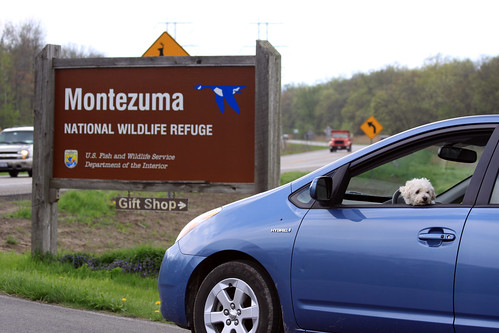
Montezuma National Wildlife Refuge

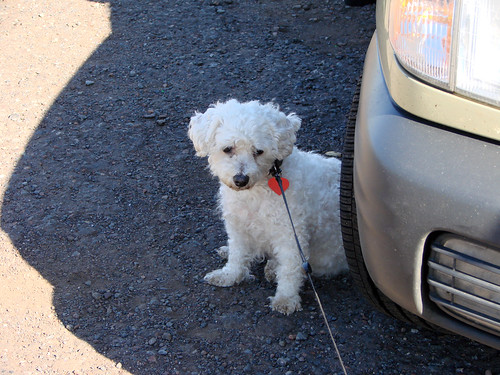
I've never known a dog to be as aware of microclimates as Photon. In the car, the house, or wherever we happened to be, she could always find the coolest or warmest spot. On hot days at Hawk Ridge, she'd find a shady spot by a car. I couldn't leave her in the car when it was hot, obviously, but as long as I left a thick blanket in the car, she was fine in winter--if she got cold, she simply burrowed under the blanket. When I had an evening event in the Twin Cities, she’d come along for the ride, even though all she got to do was ride in the car for three hours, wait in the car for an hour and a half or so, and then ride home again for another three hours. She saw my car as our special place, and never minded being left there. As I walked away, she always curled up on the drivers seat, keeping it warm for me or, if it was warm outside, on the floor in the shade. She’d wake up and start wagging the moment I opened the door on returning.

Photon


On our drives, I made it a point to stop at every rest stop so she could at least enjoy those little walks. When we had time, we’d stop at wildlife refuges and parks we chanced by, but she was always agreeable even when we had to drive long stretches between stops.

Russ and Photon

The moment I put my binoculars around my neck at home, she’d start dancing, knowing we were going on an adventure. Her favorite birding destination was Port Wing, Wisconsin, where she knew all the good spots because we spent so much time there.


All in all, she visited at least 31 different states and Washington D.C. Wherever she went, Photon felt at home in the world. I called her my chickadee dog for her size, her sense of belonging and confidence no matter what the habitat, and her funny manner of eating--she'd take a kibble or bite of food from the dish to eat in a different spot, and then return to the dish to take the next bite. And like a chickadee, she was calm and easygoing, welcome just about everywhere she went.


I had to keep her close in the Wichita Mountains Wildlife Refuge in Oklahoma, where some of the white-tailed deer in the campground attack little dogs—one had recently kicked a puppy so hard it ruptured its spleen—and diamondback rattlesnakes can be anywhere. The only time she came upon a rattlesnake, it was a little one. Photon froze, staring intently and wagging as she always did when she found something cool. I praised her as I scooped her up out of harm’s way.


One night during a storm, two rangers woke us up to evacuate us—tornadoes had been touching down nearby. They took us to the refuge education center in a big old log cabin. In the middle of the main room was a mounted mountain lion rearing up on its hind legs—the moment Photon saw it, she shrank, but I carried her over to it and showed her it wasn’t dangerous. She always trusted me, even when it came to oversized predators.


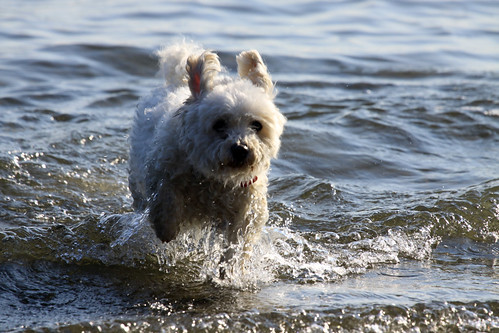
Photon came along when my sister-in-law Jean and I visited relatives on Long Island in 2009. When we brought her to a beach, Photon charged right in as if it were Lake Superior, and took a big drink. The look of shock on her face when she tasted saltwater was hilarious, but I could hardly wound her pride by laughing. The buoyancy of the salt water held her so much higher than Lake Superior that I thought she was walking in shallow water until I stepped in--there was a huge drop off right near shore. 

Photon
Photon


Photon

She swam and ran and had a jolly time for several hours. As soon as we got back to the house, she fell fast asleep.  

Photon the Exhausted

Photon was a late sleeper, but she came with me to western Minnesota when I had reservations in a prairie chicken blind. 

Photon

I told her if she came along she’d have to sit still in a folding chair for at least 4 hours, but that was fine with her. We arrived in the blind at 4 am, while she was still very sleepy, and she didn’t make a peep the whole time the prairie chickens were dancing, even though she’d never heard such fascinating sounds before. The chickens were right outside the blind, occasionally even landing on the roof. The people in the blind next to ours arrived late, left early, and were noisy—they hadn’t turned off the electronic noises on their camera and left their cell phone on, flushing the birds several times. But my birding companion understood the rules.

Photon

When we'd set out on an adventure, I'd always tell her we were going to have "such larks, Pip!" On a single road trip, she and I went to Theodore Roosevelt National Park, Yellowstone National Park, the Bear River National Wildlife Refuge and Arches National Park in Utah, Bosque del Apache National Wildlife Refuge in New Mexico, and various other stops along the way. I never kept a life list for her, but I’m sure I’ve seen at least 450 species with Photon at my side. I brought her along to Arkansas when I spent a month there with my friend Paula Lozano during the big search for an Ivory-billed Woodpecker. Originally I was planning to leave her home because the trip was going to be so long, but the day before I left, when I closed my suitcase, it was way heavier than it should have been. I opened it to find her burrowed into my clothes. How could I not take her along?

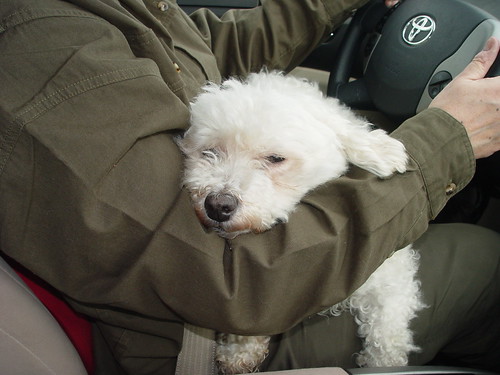
Sometimes she'd sit in my lap as I drove, her head resting in the crook of my arm. I'd sing, "I wanna good luck charm a hangin' on my arm" as she settled in for a long stretch. Usually we were by ourselves, but Paula got a photo on our trip.

I wanna good luck charm hangin' on my arm

One night on our Arkansas trip as we were settling into our sleeping bags in the tent, we heard distant coyotes. Photon whined a little, and suddenly, there they were—at least 6 or 8 coyotes circling, noses poking against the tent here and there, breathing and snuffing in all our scents. Photon was thrilled, yearning as always to play with the big guys. I’m afraid the coyotes’ thoughts were more centered on the culinary opportunities. I finally thought to press the emergency button on my car keys. The moment the lights started flashing and the alarm started up, the coyotes disappeared into the night.

Laura and Photon in Arkansas

On that trip, we visited several national wildlife refuges, and Photon got to show off at every refuge office. She had three adorable tricks. When I’d say, “Roadkill!” she’d flatten herself, back legs splayed backward, head flat down on the floor between her front legs, her tail wagging merrily away. I’d touch her tail saying, “Not happy roadkill! Tragic roadkill,” and her tail would sink slowly to the floor. Once she finished that one, I’d say “Oh, no! Mommy’s got a gun!” and point my finger at her. The moment I said, “Bang,” she’d keel over on her side, tail wagging away. Then, when we were about to leave, I’d tell her to wave bye bye, and she’d raise one paw in the most endearing little wave.

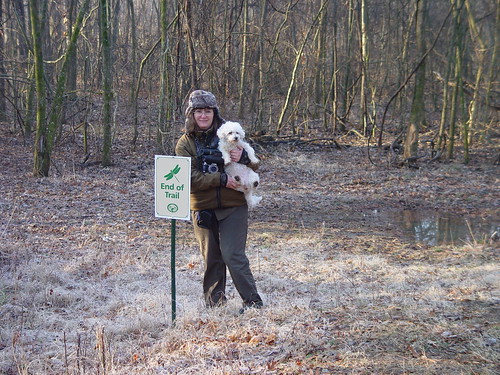
A lot of people mistook Photon for a male. Maybe it was her tricks. Maybe it was her spunk and stamina—she had no trouble on long hikes till she was over 12 years old. Maybe it was the association people made with Star Trek’s photon torpedoes. But she was very much my little girl, whether she was being my sidekick on adventures or my companion at home. Virtually every time I drove between Duluth and Ithaca when I was working at the Cornell Lab, she was there at my side. We had plenty of non-birding adventures, too—I occasionally took her to work with me, and I smuggled her into my son Joey’s dorm room at the University of Wisconsin-Milwaukee, and into Katie’s dorm room at Oberlin College. She was in love with my sister Mary’s greyhound Buster, and adored Mary, too. We stopped by her house a lot while I was commuting back and forth to Ithaca, while Mary was in the final stages of breast cancer. Photon was always well mannered but was especially gentle with Mary.

 Photon

A few weeks ago, Photon had a seizure. It lasted about 45 seconds and she was shaky the rest of the day, but by the next day she was pretty much back to normal. She’d been growing more fragile in the past two years—I couldn’t take her on road trips during my Conservation Big Year because there were just too many long hikes and hot days for a 15-year old dog. While I was on trips, Russ and our son Tom took her for walks in the neighborhood, and she was still all dancy and waggy when I’d come home. She was still eating with gusto and being her happy self most of the time, but an ominous pall fell over our days. She had a tail-waggin’ happy birthday on April 4 when she turned 16. But over the weekend she stopped eating, and Monday was very, very weak. We called our veterinarian who said he’d come to the house at noon.

She slept most of the morning, but about 11 o'clock, she unsteadily made her way to the back door. I let her out and stood on the porch with her. A robin was singing away--the very first robin song I've heard this year--and she sat down on the porch and turned her face to listen to him. A chickadee sang in another direction, and she turned her face toward him, and then tracked a crow cawing as it flew over. Then she faced the robin again, listening intently for a lovely 10 minutes. When he stopped singing, she slowly stood up and walked to the door. When we came in, I turned on a recording I’d made of birds at dawn from one of our Wisconsin birding adventures. She made her way over to a comfortable spot and settled down, nestled against me sleeping until Dr. Hargrove came. It was time, and her spirit rose ever so softly and gently, and slipped away.
Little Dog on the Prairie

Monday, March 31, 2014

PLEASE sign my petition to make sure oiled wildlife is counted

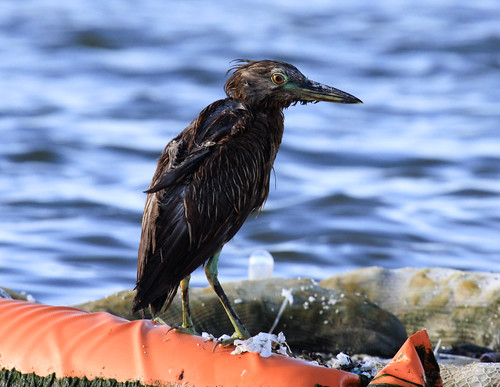
Oiled Black-crowned Night-Heron

I'm petitioning the White House to consider revising the method for counting oiled wildlife. The Consolidated Wildlife Reports issued after the BP spill include ONLY wildlife that was physically retrieved, either dead or still alive to be brought to rehab facilities. This did not give any clear picture of the huge numbers of wildlife that were not collected. The total number provided on the Consolidated Wildlife Report ended up with fewer than 8,000 birds--yet did not include ANY of the nesting birds on Raccoon Island. Of the 10,000 adults on the island, scientists estimated that 50–80 percent had been oiled, destroying the chances of most of the eggs and young. Counting just this one colony would easily have doubled the total, but none were counted on this or other nesting colonies in the Gulf, presumably because collecting these birds for rehab would have "compromised nesting success." Please sign my petition to the White House! You will have to "register for an account," because they will only consider petitions signed by 100,000 unique people, so need to verify that you're a real person who will answer the email they send back to you confirming your email address. It's easy to opt out of any additional emails.

Laura's petition to the White House to keep count of all oiled birds.

Saturday, March 29, 2014

Review: The Sibley Guide to Birds: Second Edition


A good field guide is essential equipment for any birder/birdwatcher. In a lot of ways, it’s like a spouse: it can make your life much lovelier and richer, but once you have a good one, you don’t need another. And the more time you spend together, and the more intimately you get to know it, the more rewarding your relationship will be. Of course, bird taxonomy changes and exotic species get established and heavily used field guides eventually do fall apart, so you may want to occasionally get a new one. And if you want to become truly expert on any group--raptors, shorebirds, gulls, pelagic species, hummingbirds, warblers, etc., you'll want the specialized reference guide to that specific group—no human could possibly be truly authoritative about every single group of birds. But as long as your field guide can help you to accurately identify virtually every bird you encounter in day-to-day birding, there's no good reason to be playing the field.

Yet I myself have over 20 field guides just to North American birds, not counting the electronic versions.  My budget is extremely tight this year, but when the new Sibley Guide to Birds came out, I somehow needed to have it. I have no idea why I have this compulsion, but there you have it. I was not given a free review copy--I paid for mine.

So what do I think of it? I’m not nearly as big a fan of the original Sibley guide as many birders. My friend, the wonderful bird guide Erik Bruhnke, carries his everywhere when he’s guiding bird tours—David Sibley is one of the top bird identification authorities in the country, and he illustrates more plumages for most species than any other guide. My first edition copy is a first printing, and I was disappointed with the colors, which seem washed out. When I saw several of his original paintings for the book at the Leigh Yawkey Woodson Art Museum in Wausau a few years ago, I was blown away by the perfection of the colors, and subsequent printings of the first edition made them closer to those splendid originals.

Sibley, like Roger Tory Peterson, draws patternistic birds, all in similar poses mostly in profile, against a white background. I prefer the National Geographic guide and its predecessor, the Golden Guide, because they show birds in a variety of more life-like poses, with more natural backgrounds giving visual hints about behavior and habitat, but I know others prefer straightforward comparisons of the identifying plumage characteristics. This is a matter of personal preference.

The colors are much more intense in Sibley’s new edition, and for the most part I like them better. I did notice that they seem duller and darker in dim rooms than in bright light, but that's probably a good thing for actual field use. He’s added more than 600 new illustrations, included 111 rare species that weren't in the first edition, and added more written information as well, and many of the pages include less white space and larger drawings. These are all significant improvements. I would have expected gull watchers to be especially pleased—the new Sibley includes 26 color illustrations of the Herring Gull alone, doubling the number of drawings and giving that one species a 2-page spread. I’m not at all an expert on gull identification, so have no way of evaluating those specific pages beyond that. 

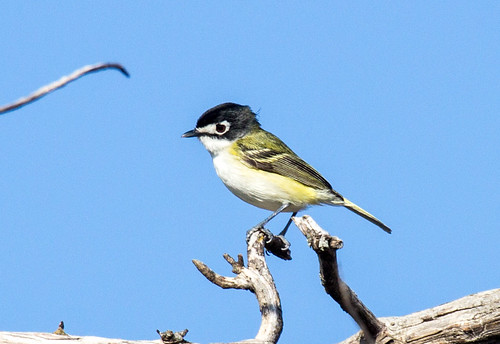
My technique in evaluating a field guide is to look up the species I am most familiar with to see how they look to me. By this measure, the new one seems better than the first edition with regard to many species, but unfortunately, NO field guide, including the new Sibley, shows an important plumage of one of my favorite birds on the planet, the Black-capped Vireo. In this critically endangered species, males do not molt into full adult plumage until their third year. Year-old males sing, hold territories, and breed with any females who can’t compete for a fully adult mate. 

Black-capped Vireo
Year-old ("second year") male Black-capped Vireo
Being able to age birds in the field is useful for many reasons, and so it is disappointing to me that even the guide considered most comprehensive left this important plumage out. And his drawing of a first-winter female isn’t quite accurate, giving her a white rather than buff eye ring and making her breast more yellowish than buff. I’ve only spent about 7 days with Black-capped Vireos in my entire life, so I’m hardly an authority, but I did get Joe Grzybowski’s take on this, too—he’s been studying the species since the 70s. But again, no other field guide gets this rare bird quite right either.

The deal breaker for me about the new Sibley—the thing that would prevent me from buying it as my primary field guide—has nothing to do with the bird portrayals at all, but with the font size, color, and typeface. For some reason, the book’s designers went with a sans serif font for the main text blocks, even though studies show paragraphs are much easier to read in serif fonts. Even worse, the font is gray rather than black, and too narrow or small for me to read without a magnifying glass. My eyes are 62 years old. I showed it to my husband, whose eyes are a few months older than mine, and he just said something to the effect of “holy crap!” and handed it back. But my 28-year-old son didn’t see a problem at all. So I’d recommend that you pick up a copy and see if you can read it before buying it. (Ironically, this very blog suffers the same problem. I don't know how to adjust it via blogger, and have to set my browser settings to enlarge most web pages to read them. Sadly, one cannot do this with an actual book.)

Again, no field guide is perfect. Like spouses, there are flaws in every one. My advice? Pick the one whose flaws are least objectionable to you and stick with it. Then go birding.

(Sibley's electronic version of his field guide is, in my opinion, the very best out there. The Nat Geo one is almost as good--both provide all the information in the field guide, plus vocalizations, but Sibley's makes it easier to look up birds in the first place. His electronic version will be available later this year. I'm sure I'll be buying that too. I have to face it—I'm addicted. Fortunately, I haven't been so fickle where my real spouse is concerned.) 

Wednesday, March 26, 2014

Obama, PLEASE change the policy back to counting ALL documented oiled wildlife

Please sign and share this petition. It's to www.whitehouse.gov, so will not get you on spam lists or plague you with requests for donations. We need 100,000 signatures in just 30 days.

Count ALL documented oiled wildlife rather that just oiled animals that are physically retrieved after a spill.

Monday, March 24, 2014

Oil Spill in Galveston Bay

Thick, tarry bunker fuel is extremely difficult to clean up.
Photo taken March 23, 2014 by NBC Bay Area News
On March 22, 2014, a cargo ship collided with a barge, and at least one tank filled with 4,000 barrels, or 168,000 gallons, of fuel oil spilled into a 53 mile long shipping channel between Galveston Bay and the Gulf of Mexico—a channel bordered on both sides by prime migratory bird resting and nesting habitat. And this wasn’t just any fuel oil—it was bunker fuel—the thick, tarry, extremely toxic sludge left over after gasoline, motor oil, propane, and other products have been refined out of crude oil. Also called marine fuel oil, this is the stuff that powers container ships from China lugging all the cheap merchandise Americans so voraciously consume.

Hard as it is to believe up here in the frozen Northland, spring has already begun in Texas, with migrants crossing the Gulf and many species starting to nest. Bolivar Flats Shorebird Sanctuary, which attracts 50,000 to 70,000 migratory shorebirds to its perfect foraging habitat, lies just to the east of the spill. Richard Gibbons, conservation director for HoustonAudubon, told ABC News that “the timing really couldn't be much worse since we're approaching the peak shorebird migration season," and added that tens of thousands of wintering birds also remain in the area.

Oil floats, so thick rolls of floating plastic or absorbent material called boom ostensibly prevent oil from floating beyond it, as long as the boom stays in place and the water is relatively calm. After the BP spill, this kind of boom was supposed to protect breeding islands, but it never occurred to the powers-that-be to anchor it and, like anything that floats, the boom washed ashore right along with the oil. When I was in Barataria Bay after that spill, we saw their too-late effort to anchor boom after the islands had already been oiled.

Oiled Great Egret

Things apparently haven’t improved since then—this weekend’s fog and rain, along with currents, the tide, and wind, made containment impossible, and oiled birds are already being found.

It hurts to see, over and over, this kind of disaster. This spill doesn’t involve nearly as much oil as the Exxon Valdez or the 2010 BP oil spill, and many people and news outlets only seem to consider record-breaking stories worth paying attention to, despite the many tens of thousands of birds in the oiled area right now and the uniquely dangerous properties of bunker fuel.

What is most infuriating to me is that in 2010, BP managed to set a new precedent in how oiled wildlife is counted--playing a form of Calvinball by changing the rules about which animals can be tallied. After the Exxon Valdez spill, every oil-covered bird, mammal, and other animal seen by responders was counted, whether or not it could be rescued or its carcass salvaged. But in 2010, BP somehow persuaded the government and environmental groups to let them limit the official count to animals that were actually picked up, dead or alive, making the total at least an order of magnitude less than the number of oiled wildlife seen by reputable observers. To skew the numbers even more to their advantage, BP also managed to get the government to limit the birds picked up to those completely incapable of flight. I was on a boat in Barataria Bay along Cat Island when we came upon a severely oiled Black-crowned Night-Heron.

Oiled Heron

Our boat spooked the poor thing, and it fluttered at most a foot or two from the boom into the water and struggled onto the island, but even though we could easily have captured it to bring it to a rehab facility, the boat captain could not permit it. He told us that he would lose his license for retrieving a bird that could still fly, and by BP’s definition, that was flight.

Due to their excessively restrictive rules, only about 9,000 oiled birds were physically collected, and so tallied, after the BP spill. And to skew the count even further, somebody in power decided to prohibit anyone from collecting dead or badly oiled birds from any of the nesting colonies, too. Not one of the 10,000 adult birds nesting at the breeding colony on Raccoon Island is included in the official count, nor any of their young, even though scientists observing that colony determined that between 50 and 80 percent of those birds were oiled. The US Fish and Wildlife Service and even Audubon claimed that entering the colony to help save birds or retrieve dead ones might compromise the ability of any birds in the colony to nest successfully, but didn't seem to notice that this kept thousands of fatally oiled birds off the official tally. They also didn't seem to realize that people had been allowed to photograph and make movies of nesting birds on this island many times, but suddenly were being shooed away. No birds were counted in any other affected breeding colonies, either.

Despite BP being allowed to count oiled birds by such a completely different method to minimize the total, many sources still use their 4-digit total in comparison with the 100,000–250,000 birds oiled after the Exxon Valdez. It’s bad enough that corporations are so badly polluting our world—the least they can do is let us get a clean estimate of their destruction.   


Tuesday, March 18, 2014

Movie Review: A Birder's Guide to Everything


I don’t know if it’s because our culture is so very youth-oriented, but most movies about adolescents set up at least one adult, and often most of them, to be clueless and unsympathetic. It’s as if adult writers see adolescence through a nostalgic glow and adulthood through an unforgiving lens that magnifies every flaw. Adults seem to be the main obstruction blocking youth from realizing their dreams and potential. In most coming-of-age movies, at least one parent figure is portrayed as utterly wrong-headed—the one who in the end finally figures out just how wonderful the poor, misunderstood kid was or, in the case of something like Romeo and Juliet or Dead Poets Society, tragically never does until it’s too late. Some coming-of-age films, such as Stand by Me, are very dark, painting the adult world as inescapably grim--youthful characters who get out of these movies alive are left disillusioned for life. Others, like Breaking Away, are peopled with disillusioned adults, some who damaged their children a lot, but somehow give the main characters, adults and youth, hope that life may still hold for them meaning and even joy.

A quietly lovely new movie by Rob Meyer, A Birder’s Guide to Everything, places much more nuanced and realistic youth and adults in a gentle tale of love and loss. This coming of age story rings utterly true. The movie takes place a year and a half after the mother of the main character, David (Kodi Smit-McPhee), has died. David and his father (James Le Gros) are so locked in their individual grief that neither has much understanding of the other’s pain. Now David’s father is about to marry the woman who had been his wife’s nurse. Who better than she can fully understand how much he's lost or can fully appreciate his grief and what he's suffered? His conscience is clear—they never got together until after his wife had died—but he has no clue that his son doesn’t realize that. And his son has no clue of the dimensions of his father’s grief.

David is absorbed with birds with the monomaniacal focus we geeks always seem to fixate on our passions, but he and his two best friends, who form the Young Birders Society at his high school, are not stereotypical geeks nor archetypes—they’re just three individual boys on the cusp of adulthood, joined by a shared fascination with birds. And the three young actors who play them are superb. They’ve developed all kinds of wonderfully specific geeky rituals that the movie wisely doesn’t explain—at some point they’d decided to follow Robert’s Rules of Order, and even in normal conversation, they switch over to it to resolve disputes. Peter (Michael Chen), the quietly assertive leader of the group, is the chairman of the club, and whenever the boys disagree, he calls for a vote. They speak in Latin whenever they don’t want to be understood by outsiders. The third member is Timmy (Alex Wolff), who is obsessed with sex and clueless about girls. This role could have been played for laughs and mere comic relief—a throwaway character to contrast with David as a sensitive soul—but the movie doesn’t reduce any of the characters to easy clichés—Timmy's vulnerability makes him no less obnoxious, and his obnoxiousness makes him no less sweet and sensitive in his own right. 

The Young Birders Society had had two other members—a girl who quit just before the movie starts, put off by Timmy’s insufferable sexual harassment (he kept calling her a Tufted Titmouse) and a boy who quits at the movie’s start because the girl left—Timmy scolds him that the birding club isn't a dating service. Now suddenly down to three members, the club’s existence is in jeopardy because the school requires officially recognized organizations to have a minimum membership of four.

At the start of the movie, David sees and takes an out-of-focus photo of what looks to him to be an odd duck. He brings the photo to the club to see if they want to help him try to relocate it. They vote against it, but by the next morning, studying his photo and what he remembers of the duck before it took off, David has researched the possibilities and concluded that it seems to be not just a rare species, but a Labrador Duck, a “Lazarus Species”—a bird considered extinct so, if verified, would be "brought back from the dead," so to speak. The three decide to consult an actual expert—Dr. Lawrence Konrad, an ornithologist played by Ben Kingsley.  Konrad is a wonderfully developed character—world-weary author of a book titled Look to the Skies, who was a close associate of David’s mother and famous for his own controversial discovery of another Lazarus species, an Ivory-billed Woodpecker in 2005. The movie makes no bones about the fact that he couldn’t verify that sighting and that many ornithologists don't believe it. Konrad lost a leg in a long-ago accident while searching for a rare bird in the tropics, and lost his drivers license when he mistook a police car chasing him for an albino nighthawk—points he makes when he warns David not to consider him a role model.

Konrad agrees that although the photo is poor, it does support the possibility of a Labrador Duck. He points out on a map where he thinks a sea duck might be likely to be heading at this point in migration, and they pick a large lake in Connecticut as a reasonable place to search. Konrad emphasizes that the boys need a longer camera lens if they hope to get any sighting of it taken seriously. To accomplish this, David “borrows” a long lens from the school, and Ellen (Katie Chang), the girl who gave him the key to where it was stored, comes to his house to get it back. The boys are desperate and end up letting her tag along to photograph the bird. She has never birded before, and so naturally displays a certain bemusement about some bird names and confusion about how the boys know what each species is, but the movie plays this just right, never once working for a cheap laugh. She is sucked into watching the birds with exactly the kind of growing wonder I so often see in non-birders who for one reason or another end up on a birding jaunt.

I was very pleased with Ellen's character. She's just as geeky as the boys, with skills and expertise their little circle desperately needs, and when it becomes necessary, she jumps right in to speak Latin with them—the perfect way of establishing that she genuinely belongs in this insular little group. As a shy, geeky woman myself, one who had to work my own way into insular male birding cliques in my 20s and 30s, I particularly relished Ellen's role and Chang's performance. As a fully realized character, Ellen has a quiet dignity, intelligence, and her own longings and bewildering challenges. There are all kinds of tests nowadays to determine whether a movie shows gender bias, but the characterizations of both males and females (including David's dead mother) are so precise and nuanced that this film transcends the need for tests about stereotyping. The female roles are as robust as the male roles, David's dead mother and Konrad holding equal standing as the most admirable birders, and Ellen working her way into equal standing with the boys in terms of the Young Birders Society in an organic, human way rather than any kind of cliche'd or patronizing way. The movie is too quiet and realistic to pretend Timmy can undergo any kind of sea change in terms of his own sexism, but the movie paints that element of him in a very negative light even as Ellen rolls her eyes and ignores it—something girls and women in male-dominated fields learn to do even as we see clearly what jerks some individual men can be. Timmy does figure out that Ellen is a valuable part of the group and maybe, just maybe, he'll grow to start seeing other girls as human beings rather than sexual challenges to overcome.

Kenn Kaufman served as an ornithological consultant for the film and has a brief cameo—he has no lines, but plays an essential part in a lovely and pivotal moment. I love how the movie so seamlessly integrates appropriate bird songs in the background, and how the characters identify many of them but leave some unnoticed or unidentified. While they're camping, a Great Horned Owl hoots and Peter calls out the identification (and hey--it doesn't portend a death!!), but then a screech owl trills while they're in the middle of talking and no one notices. That made the scene the following morning somehow lovelier for me, when David discovers a beautiful red-morph Eastern Screech-Owl perched on a branch. And it was especially cool for me to see how elegantly a world-class birder like Kenn Kaufman can work magic with little moments in subtle ways that 99 percent of viewers may never notice at all, but ring wonderfully true for those of us in the know. Kingley's Konrad had lost his leg searching for a Pale-headed Brush-Finch in Ecuador. There was not a single sighting of the Pale-headed Brush-Finch between 1969 and 1998, making it a delightfully subtle and apt choice in a movie about a "Lazarus species." Indeed, the paper in the journal Cotinga  [11 (1999): 50–54] about the species' rediscovery in 1998 is titled, "Pale-headed Brush-Finch Atlapetes pallidiceps is not extinct."

Two dead birds figure prominently in the movie, but they’re not forced into a symbolic or precious movie cliché.  I particularly enjoyed the brief flashback scenes when David remembers birding with his mom--the hazy in and out flickerings were lovely and evocative without overdoing it. And the plot was simple, pulling the movie forward without becoming predictable. It was almost to be expected that competitors for the rare sighting would roar into the scene, but even with them (two only somewhat obnoxious birders in the extreme listing category), the movie reached its realistic climax and dénouement in a quietly organic way specific to its wonderfully fleshed-out characters. I was a little surprised that Konrad didn't instantly recognize one bird, but that seemed like the only birding flaw in the entire movie, and a very minor one at that.

As a birder, it’s cosmically satisfying to see a movie that is so spot-on about the vocabulary and feeling of birding. As a mother and a former teacher, it is wonderful to see a coming of age movie about realistic kids and adults. A Birder’s Guide to Everything holds together as a splendid movie for a general audience while honoring all the subtleties that the pickiest of birders could ask for.

The film has been released on iTunes (where I bought my copy), Amazon streaming, and various On Demand movie channels, and will soon be showing in some theaters. I hope Duluth’s Zinema shows it. This is a wiser and far more universal film than The Big Year was, as its second place audience award at the Tribeca Film Festival would attest. I give it two wings up.