Laura Erickson's For the Birds

Saturday, January 13, 2018

Of Shitholes and Shriveled Souls

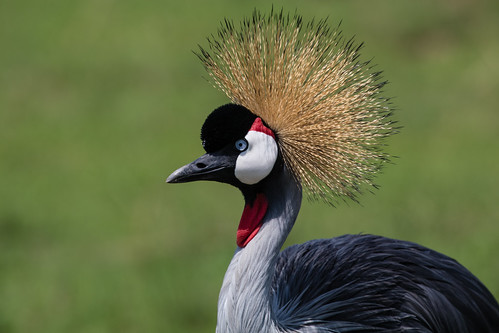
Gray Crowned-Crane

A little more than a year ago, I spent two weeks in the Pearl of Africa—what the President of the United States has proclaimed a “shithole.” Uganda may be poor in terms of economics, which for the past few centuries have been measured in how successfully some countries and their corporations can exploit other countries and natural resources. The Americans in power right now consider economics in terms of short-term gains for themselves and the wealthiest people and corporations in the world, never in terms of long-term sustainability, how clean the air and water are, how robust and sustainable wildlife populations are, or how happy and healthy the poorest people are.

While I was in Uganda, I got to see firsthand that although most of the people in Uganda are tragically poor, they are hardworking and generous spirited, and the country has a wealth of natural resources. We spent part of the time in meetings, and could only briefly sample the wildlife in most of the places we stopped at so we could cover more ground. But wow! The golden crown atop Uganda’s national bird sparkles with a warmth and delicate beauty that mere metallic gold could never achieve. These crowned cranes are often kept in captivity—I saw my first at the International Crane Foundation in Baraboo, Wisconsin—but only in eastern and southern Africa do they live free in the spectacular natural environment they evolved in.
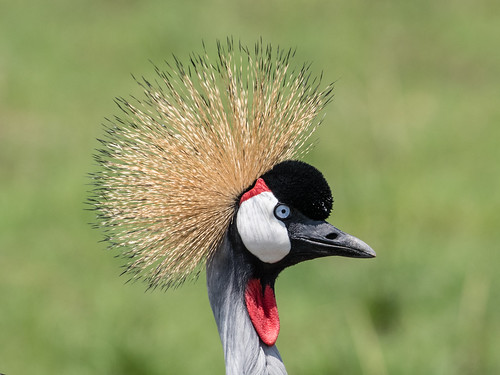
Gray Crowned-Crane

I saw hundreds of new birds I could never have seen wild in the United States nor anywhere else in the world except the place that our President thinks is a shithole—I gloried in a rainbow of bee-eaters and sunbirds,
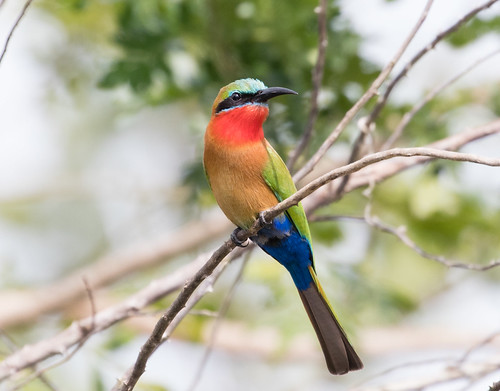
Red-throated Bee-eater

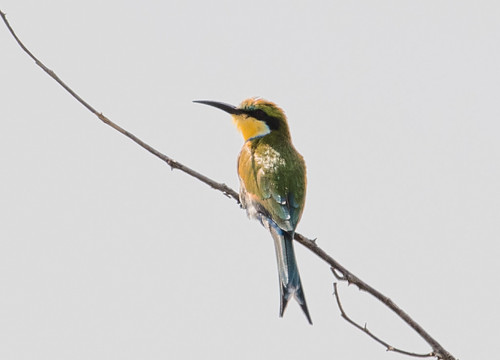
Swallow-tailed Bee-eater

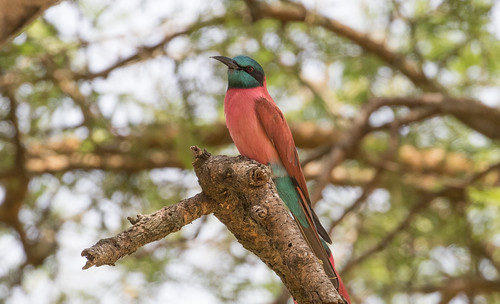
Northern Carmine Bee-eater

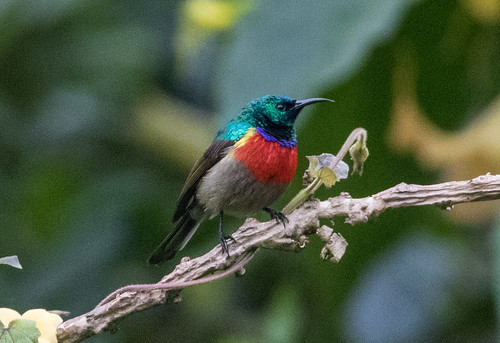
Northern Double-collared Sunbird

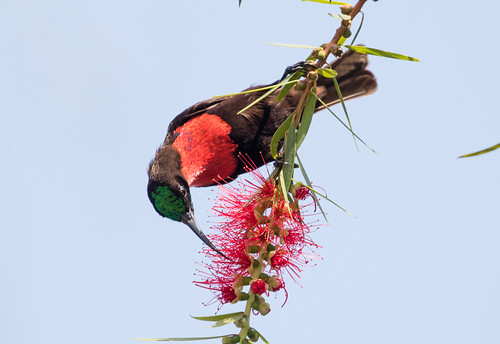
Scarlet-chested Sunbird

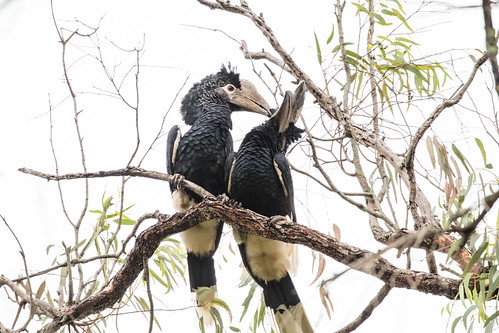
stunning turacos and hornbills,
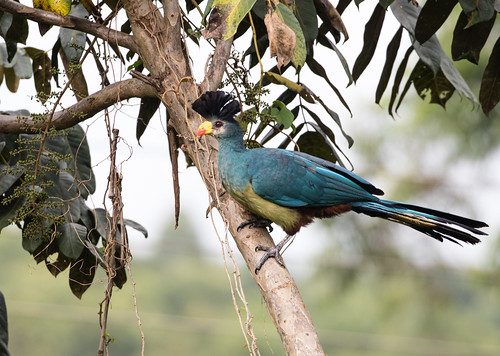
Great Blue Turaco

Black-and-white-casqued Hornbill

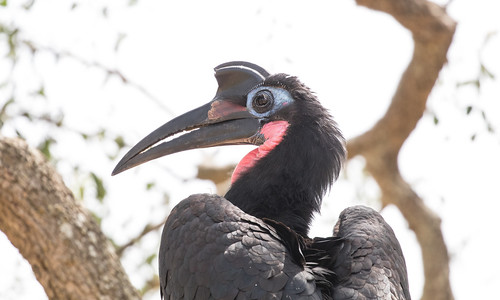
Abyssinian Ground-Hornbill


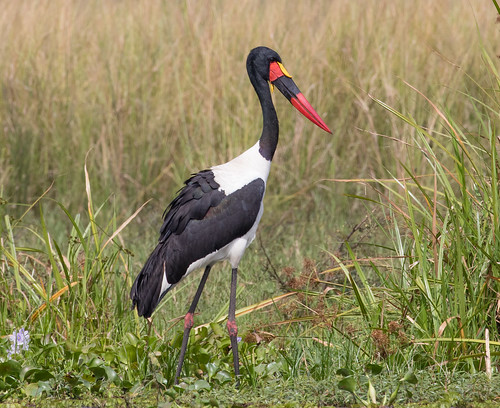
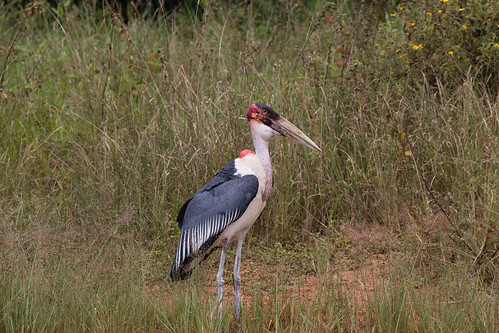
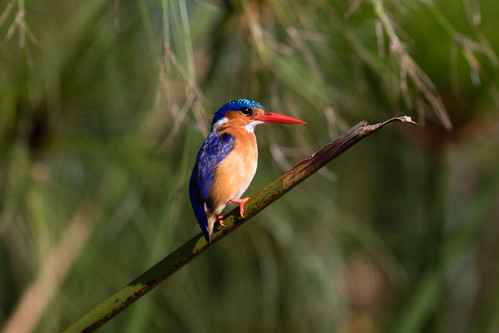
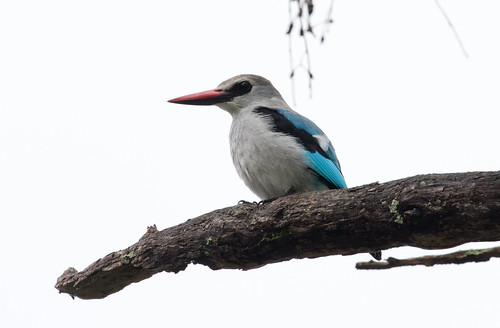
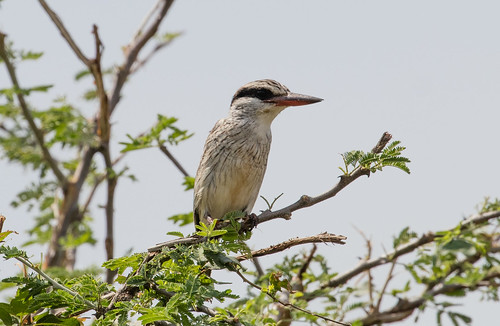
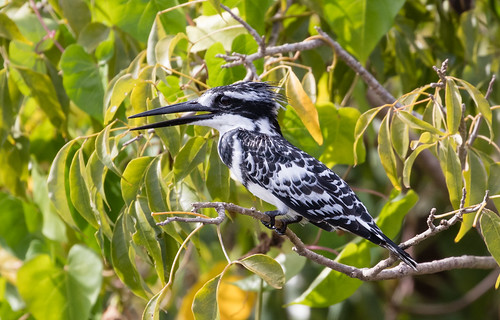
storks and kingfishers,

Saddle-billed Stork

Marabou Stork

Malachite Kingfisher

Woodland Kingfisher

Striped Kingfisher

Pied Kingfisher


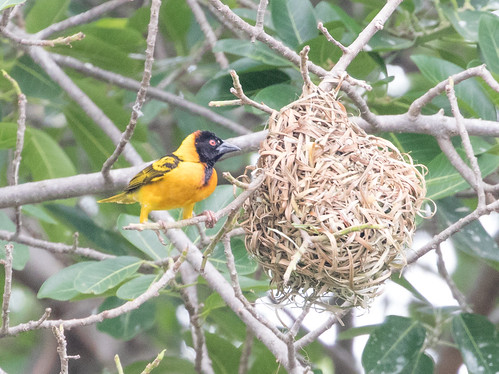
weavers,

Village Weaver


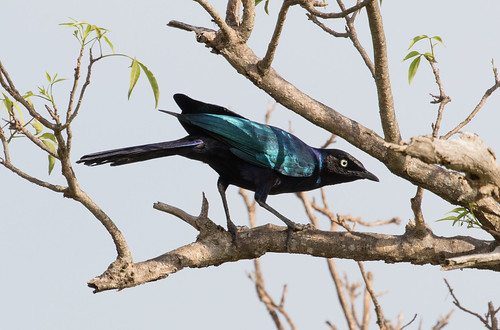
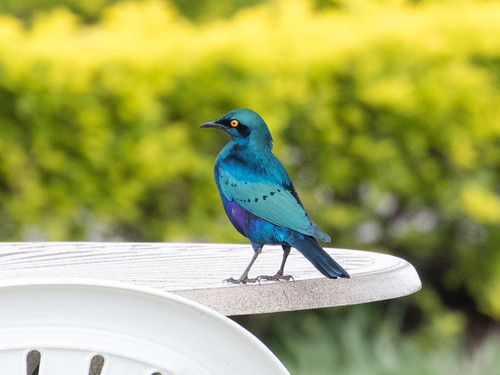
and starlings.

Rueppell's Starling

Greater Blue-eared Starling

We saw well over 400 species of birds. And mammals! I never dreamed that I would ever be able to see giraffes,
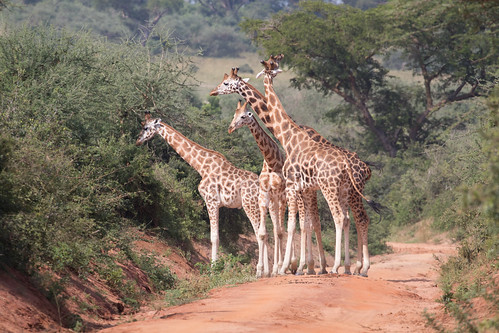
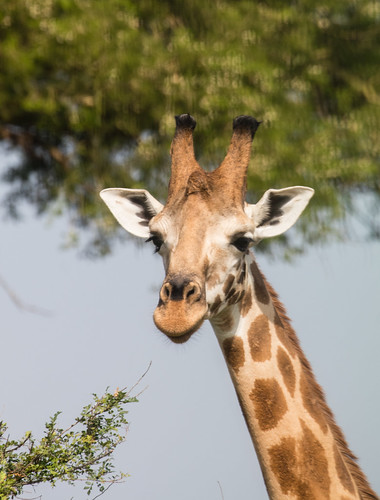
Rothschild Giraffe

Rothschild Giraffe

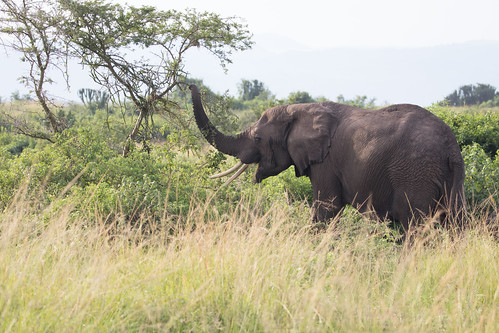
elephants,

African Elephant

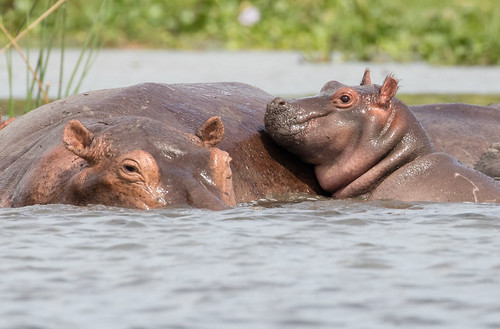
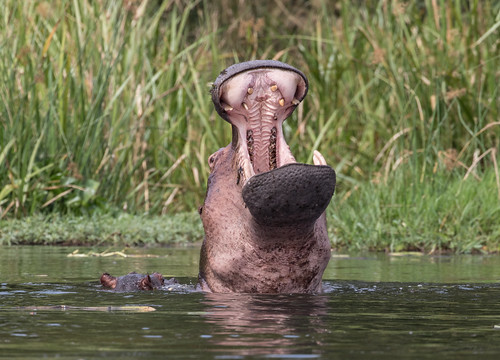
hippos,

Mother and baby hippopotamus

Hippopotamus

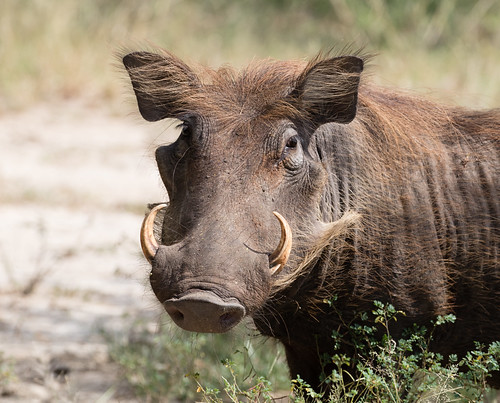
or warthogs in the wild.

Common Warthog

Just the variety of ungulates—hartebeests,
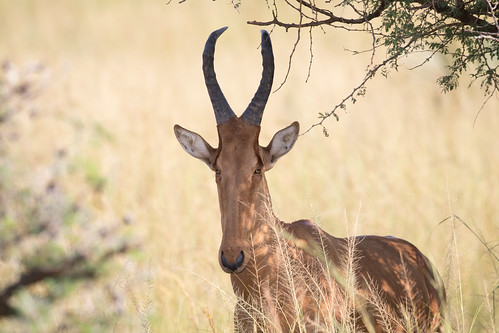
Lelwel Hartbeest

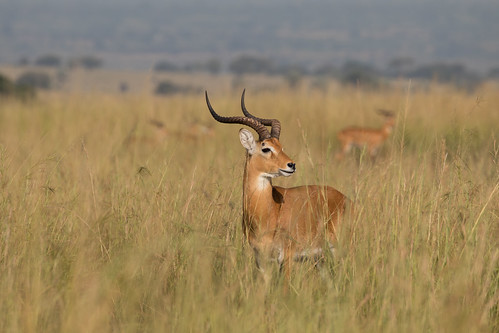
kobs,

Uganda Kob

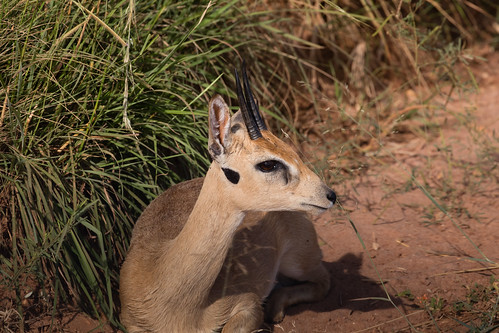
and oribis

Oribi

amazed me. And what was more thrilling: seeing oxpeckers riding on the backs of African buffaloes,

African Buffalo and Yellow-billed Oxpecker, and a Cattle Egret too.

coming upon a glorious adult chimpanzee,
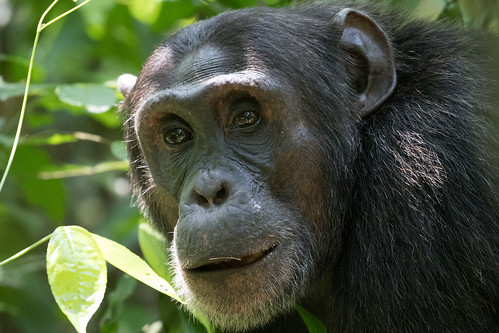
Chimpanzee

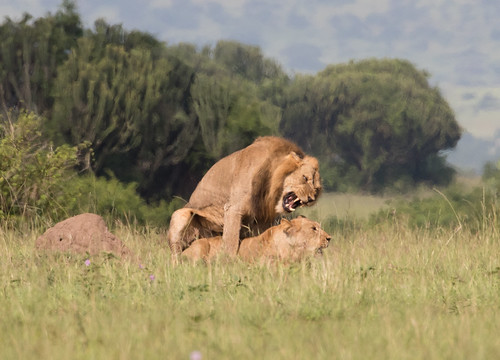
seeing a pair of lions mating,

African Lion

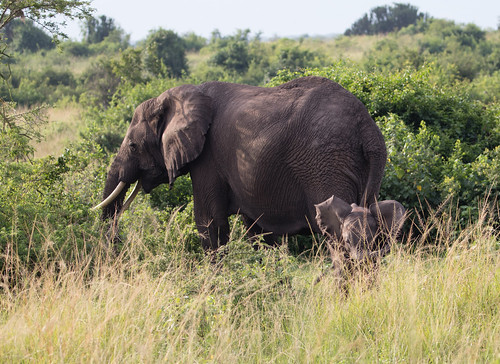
or watching a mother elephant tenderly care for her week-old baby?
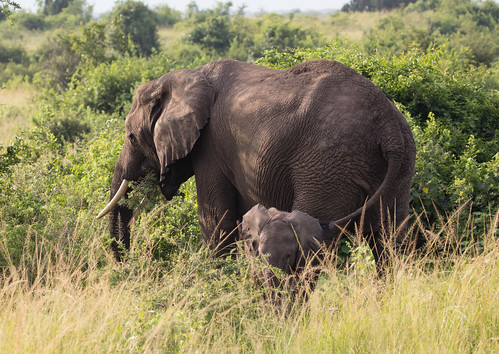
African Elephant

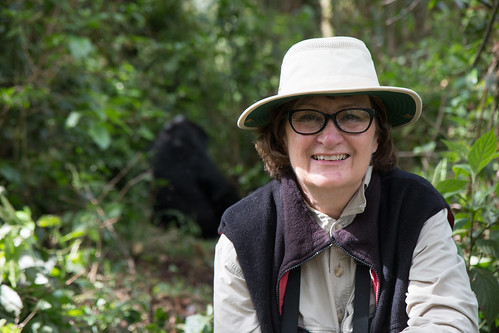
I even spent my 65th birthday at Bwindi National Park’s Impenetrable Forest with a group of Mountain Gorillas!
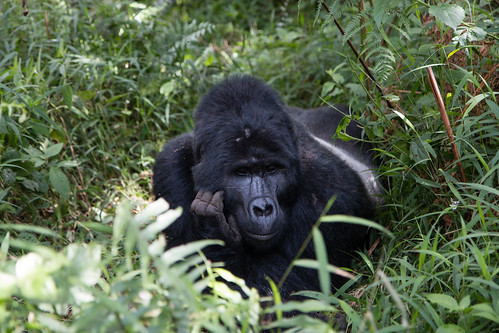
Mountain Gorilla

Me and a Mountain Gorilla

Beyond the amazing wildlife, the best gift of that trip was the time I spent with Ugandan people. The two guides I spent the most time with and got to know the best were two lovely young people, Nanyombi Proscovia and Denis Arineitwe. Their brilliance and generosity, sharing their knowledge with warmth and kindness, marked them as truly rich in ways that a president with a shriveled, impoverished soul could never be.
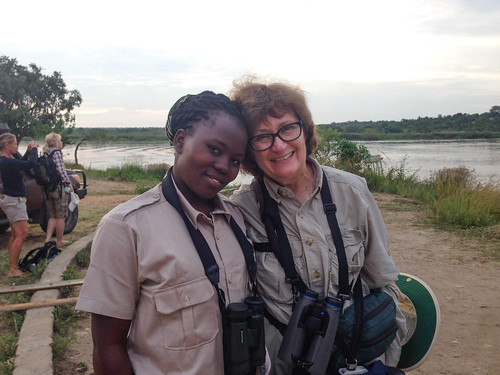
Prossy, our absolutely superb bird guide.

Denis Arineitwe, Crammy Uganda Wanyama (I didn't spend much time with him), and Nanyombi Proscovia.
This amazing trip was a gift, literally as well as figuratively. My career choices normally keep this level of world travel completely beyond my means. I went to Uganda as an invited guest, courtesy of their government, in hopes that those invited on the tour would love the country and let the rest of the world know how splendid it is. A tragedy of the world’s current obsession with exploitation and wealth hoarding is that poor countries depend on ecotourism to justify preserving natural resources.

Laura at the Equator in Uganda

The same president who called Haiti and Africa shitholes keeps talking about making America great again. But what time is he talking about? I went to a conservative Catholic elementary school starting in 1957, at the peak of that mythical post-war era when many Americans think America was supposedly at its greatest. What we were taught throughout my education, and what was reinforced over and over in our Faith and Freedom reading series, was that wealth is measured not by what we have but by how much we freely give to others. In first grade, one story that stuck with me through my entire life was about a little girl named Ann. For Christmas, her only present was a beautiful doll wearing a fancy white dress trimmed with red ribbons.


Her teacher told the children they could bring their new toys to school for a day, and Ann of course brought her doll. One little girl hadn’t received any toys and Ann let her play with the doll. That night, both her father and her mother suggested that she give her doll to the other little girl. Ann said she’d be happy to give her one of her old dolls, but she couldn’t bear to part with her precious new one. But she was unhappy about this, and the next day, she gave the doll to the other little girl. Now Ann felt a joy that owning the doll had not given her. She felt wealthier without her new doll than she had when she had it. Her sacrifice was difficult—kindness and generosity are measured in part by how much we sacrifice to do the kind, generous thing.

As a first grader, I worried a lot about whether I could ever be that generous with my own possessions, but what Ann did was clearly the way we were supposed to be. Materialism was frowned on in a school where most of the teachers were nuns who had taken a vow of poverty and even our lay teachers were paid at barely above the poverty level. We were taught that the value in work had nothing to do with the pay.

We had a few nuns who were on the cruel side, and one of the priests who arrived at my school when I was in sixth grade turned out to be one of the Chicago Archdiocese’s worst sexual predators on boys, but overall, the teachers I got to know well were some of the happiest, most fulfilled adults I ever knew. At that time, one of the greatest American heroes we knew of was Jonas Salk, who developed one of the polio vaccines that saved millions of lives. He used his brilliance in service to this seminal research, not to enrich himself—he gave away the patent for his vaccination to the American people. Nowadays, the mindset with medical research corporations isn’t to save lives—it’s to command the highest prices for drugs, and to encourage people to buy them even when they don't need them. In this way, since the 80s, shareholders and CEOs have been hoarding increasing amounts of America’s financial wealth. They may think they’re rich, but not one of them will ever amass the wealth of Jonas Salk, who understood that wealth is measured in what you can afford to freely give away.

Many of our heroes in the 50s and 60s were government workers, from astronauts and NASA engineers to public health researchers trying to end polio, smallpox, and other horrifying diseases. My husband, one of the most brilliant people I’ve ever known, is a career scientist for the Environmental Protection Agency. He would have amassed far more money over his career had he gone with one of the companies that were recruiting back when he got his Ph.D.—the companies that profit by cutting corners when it comes to cleaning up their environmental messes and try to minimize public awareness of the dangers of the chemicals they produce. Russ and I both believed that job satisfaction comes from making the world better for everyone. He attended a Methodist church and went to a public school, so he wasn’t influenced by anyone who had taken a vow of poverty. But that conservative America of the 50s and 60s—the America of Jonas Salk and astronauts and Rachel Carson and Martin Luther King, Jr,—taught us that real wealth cannot be measured in dollars. We memorized the Declaration of Independence that declared that all men are created equal, and we both said the Pledge of Allegiance to the flag every morning, affirming that America stands for liberty and justice for all. America may not have been living up to those beautiful principles then, but President Kennedy, in creating the Peace Corps, promoting civil rights, and talking about getting us to the moon, taught us how to dream in ways that did not encompass financial riches. Imagine Kennedy referring to any country on this planet as a shithole!

I’m reading Michael Wolff’s book, Fire and Fury, right now. In it, he quotes Donald Trump talking about Sally Yates, a career Justice Department lawyer who temporarily served as Acting Attorney General. Trump asked why she, or anyone, would want to be a permanent government employee. Wolff quoted him: “’They max out at what? Two hundred grand? Tops,’ he said, expressing something like wonder.” How much wonder did he feel as a boy learning about Jonas Salk giving away a patent that could have been worth many millions?

Money may be the measure by which shady New York real estate giants, casino owners with mob connections, and scurvy politicians appraise themselves and their holdings, but it isn't the way good people measure our fellow human beings or the beloved creatures with whom we share this planet. For Donald Trump to call Haiti and Africa—the homelands of so many worthy human beings and wildlife treasures—to call these places "shitholes" took more than his everyday ignorance and meanspiritedness. This filthy word diminished our entire nation. We Americans, each and every one of us, are responsible for the words and actions of our elected leader, this hollow man with his shriveled, impoverished soul.
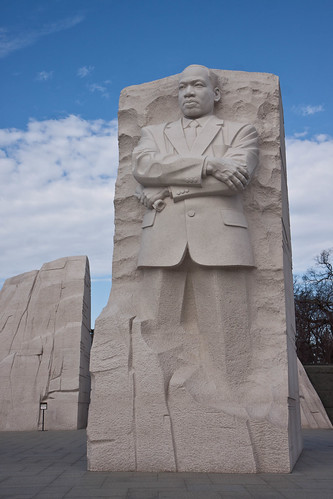
Martin Luther King, Jr. Memorial

African Elephant

Sunday, January 7, 2018

Our far flung correspondents: food and water in winter

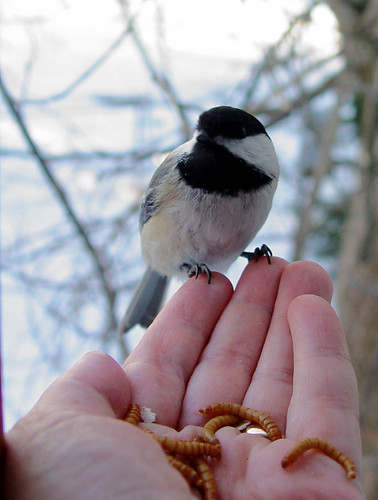
Black-capped Chickadee selecting just the right mealworm

During National Blue Jay Awareness Month, it’s important to consider whether we’re using best practices in providing food and water in our backyards, to make sure our Blue Jays and all the other birds in our avian communities are safe. I’ve had a couple of interesting emails from listeners about backyard practices during this frigid winter. My friend Lyn on Park Point asks:
Are freeze-dried mealworms as nutritious as live mealworms? My chickadees take them, but I want to make sure they are helping during this cold weather. Thanks so much.  
I responded that I can't think of a reason why they wouldn't be. Live mealworms freeze really fast—their frozen bodies are heavier, but the difference is almost certainly just water. I don't know that any nutritious elements would be lost in the freeze-drying process. If any listeners are aware of how freeze-drying could compromise nutritional value, please let us know. Meanwhile, chickadees are virtually always the first to discover mealworms, still alive, frozen, or freeze-dried, but in winters when Blue Jays stick around, they usually figure out how delicious and nutritious they are from watching the chickadees.

Sue from northern Minnesota writes:
I attended a presentation you gave at the Forest History Center in Grand Rapids, MN a few years ago and I remember heated birdbaths coming up.  If memory serves me correctly, I thought you had said you did not recommend them in very cold temps.  I thought you had said something like steam/water vapor may come off of them and even though a bird may only be perched at the birdbath, it may form on their wings and body and when they fly elsewhere it can turn to ice.  Am I remembering correctly?  
If you have any advice on the use of heated birdbaths, especially in these extreme subzero conditions that I could pass along, or if you have a post on this on your site that you could direct me to, I would greatly appreciate it. 
Sincerely, Sue
Sue is right that I don't approve of using heated birdbaths in extreme cold. I did write about it a few times, including in my book 101 Ways to Help Birds, #50, the section about safely providing water. Birds are drawn to water year-round, and when winter temperatures are fairly mild, a birdbath can make their lives easier. But providing water in winter isn’t necessary. Birds are physiologically able to conserve water more efficiently than mammals, and they get it from eating snow or drops from melting icicles.

One of my concerns about heated birdbaths is that wasting energy is ultimately a much more serious problem for bird populations than winter water shortages are. ("Conserve energy" is #14 in 101 Ways to Help Birds.)

During winter, I often set out fresh water in a shallow bowl first thing in the morning on mild days. It may remain unfrozen for several hours. During extreme cold, water vapor steaming up can be dangerous if it condenses on feathers, and during freezing weather, birds should not immerse themselves in water, period. I’ve read of several instances of starlings or Mourning Doves bathing in heated birdbaths in winter and then, after flying off, suddenly dropping like stones when their wet wings or tail feathers froze.

If you do provide water in winter, cover the birdbath with a nonmetallic mesh grille (perhaps constructed of wooden dowels) that allows birds to insert their beaks for drinking but prevents them from immersing their bodies. And if the air temperature is so cold that the water starts steaming, don’t provide it at all until temperatures reach at least the high teens or twenties. It’s just not worth the risk for our backyard birds, during National Blue Jay Awareness Month or any other time.

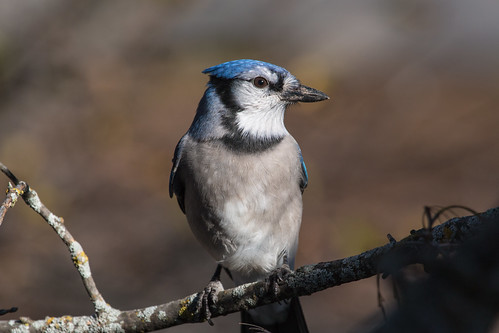
Blue Jay

Thursday, January 4, 2018

The Pathological Moseyer Gets a Desk Treadmill

Canada Goose

I love walking at a moseying speed. When my mother-in-law still lived in Port Wing, Wisconsin, I loved to take long walks along a regular route. I’d begin on her street, Kinney Valley Road, walk to Highway 13, head west to Quarry Point Road, mosey down that road to the end, then backtrack and turn on Quarry Road. I’d stop at the Quarry beach where I’d take a little break, then head on to where it ends in town at Washington Avenue. I’d turn in at Sauna Road to find any interesting shorebirds in the sand spits, then head back to Lake View Road, turn in at Beach Road to check out the harbor area, then back on Lake View to Big Pete Road. After reaching the end, I’d backtrack to Washington Avenue, follow it to Highway 13, stop at Johnson’s Store for a Cherry Garcia ice cream bar or a coke, then walk along the highway to Twin Falls Park and to the sewage ponds, then back to Kinney Valley Road and Russ’s mom’s house. 

The entire walk, with all the little turn-ins, was about 12 miles, and took from early in the morning until mid- or late-afternoon. After 10 or 12 miles, I’d be pretty tired if I hadn’t gone on a good walk recently, but it was a happy exhaustion. And it would hardly tire me out at all if I’d been doing regular exercising beforehand.

Something about the rhythmic movement of walking appeals to me. And something about it helps me to magically shake off my worries, focus on happier or more creative things, and have sudden breakthroughs when I’m puzzled by some important element of a project. 

After my heart attack, when I had to do cardiac rehab, I mostly did the treadmill. I could get an excellent workout by setting it at the steepest grade and walking 2.8 miles per hour. It took me a few weeks to work up to that, especially with the grade, what with how weak the heart attack left me for a while, but eventually it became a very comfortable pace, and I could easily read while going that speed. Once I got into my groove, I didn’t try to go any faster—that was speedy enough. It's not like I was in a race. I did notice people in cardiac rehab looking over at my monitor to see how fast I was going and what my incline was. I felt bad when some poor septuagenarian just barely over his heart attack would be trying to beat the speed and incline I'd built up to over a year. Setting goals for ourselves is very important to fully recover from such a thing, but we need to set those goals based on our own body, not anyone else's.

If I were a bird, I’d not be a plover or sandpiper—their quick little legs move much too fast for me. And no way would I be an ostrich—whenever I see one in a zoo or on TV, it’s standing perfectly still or galloping way faster than I could possibly imagine wanting to do, as if its only speeds are 0 and 70. I think if I were a bird, as far as my walking goes, I’d probably be a good old Canada Goose. I wouldn’t mind flying at goose speed—I’ve been up in an Ultralight once, and it was lovely cruising at such a reasonable speed above the tree line, seeing the world as migrating cranes and geese do. And when geese walk, they’re easygoing moseyers just like me, even if they’d find a quicker way to cover 12 miles. 

Operation Migration!
I got to ride in this Ultralight (not when it was leading cranes) in 2001.

The problem with writing about ostriches and plovers, sandpipers and geese is that I’ve spent so much of my life in recent years sitting down to do it. This is neither healthy nor comfortable, and as someone who has now had both a heart attack and breast cancer, consistent exercise is more important than ever for me. So for Christmas, Russ decided a desk treadmill would be the right gift, and my whole family chipped in for it. I’ve set it up as my main writing desk, with my laptop, extra monitor, keyboard, speakers, phone, and all the little things I keep at hand while working. I thought it would take at least a couple of weeks to adjust to it, but for some reason, probably my being a goose-like moseyer, I adapted right away. 

Pip and my desk treadmill
Pip approved! 
My original plan was to shoot for 5,000 steps a day, but the very first day, December 29, I easily hit 7,700 steps. In the five days since then I’ve done from 10,000 to 23,000 steps every day, adding up to almost 30 miles. Desk treadmills don’t incline, and I’m keeping mine at 1.5 miles per hour—faster than that would make writing difficult, and this isn’t supposed to be cardio—moving fast enough to work up a sweat should be done before or after work, or during breaks. I can read during cardio, but can’t write.

I’m having a great time, my legs didn’t get too sore and are fully recovered from that, and I’m focusing well on my work. We have the treadmill set up so I’m facing my window—the worst thing about that is that my mooching squirrels can more easily catch my eye and act pitiful so I’ll hop off and toss them some peanuts. If I buy mealworms for my chickadees this year, that’ll become even more of a distraction. But even going to the window to feed squirrels and chickadees keeps me moving, so it’s no problem. I’m not focused on going faster or longer—I don’t like competing even with myself. I’m just enjoying the journey as I try to keep from sitting down on the job.

****

My model is the LifeSpan 1200B. Right now I've got a temporary setup. The desktop that came with the treadmill was damaged in transit so I'll be getting a new one next week. Meanwhile, Russ made a makeshift one out of plywood. The real one will be six inches wider on both sides.

And yes, if I started a rock band, I would most assuredly call us the Pathological Moseyers.

Monday, January 1, 2018

Wisdom the Albatross is 67, or even older!

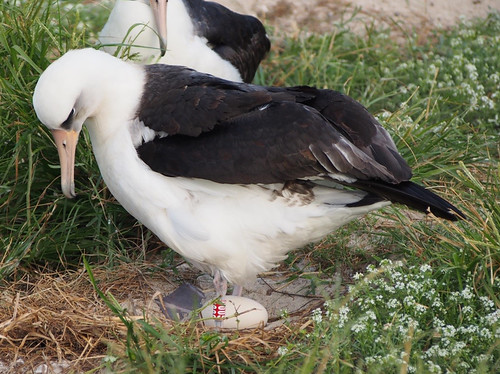
Wisdom's mate Akeakamai incubating their egg 2017
Wisdom (in the back) and her mate at the nest in December 2017.
In 1956, my biggest hero in the known universe, ornithologist Chandler Robbins, put a band on the leg of a Laysan Albatross on Midway Island. She was a nesting adult, so was at least 5 years old. Robbins was engaged in a research project for the US Fish and Wildlife Service and Department of Defense, designed to protect the albatross nesting colony while ensuring that the birds wouldn’t present a hazard to the new jet aircraft soon to be using Midway, so during his brief time there, Robbins needed to band as many birds as possible. Because it was their nesting season, he wanted to make his interactions with each bird as brief as possible anyway. The only details associated with most of the nesting birds’ band numbers were male or female, and “breeding adult,” meaning at least five years old. Obviously, a great many of the breeding adults banded that first season on Midway Island were much older than that.

Chandler Robbins with one of the banded albatrosses in the 1950s.
Over the years, banders returned to Midway Island periodically, and continued banding birds. Now some of the birds they captured already wore those numbered bands. If the band was in excellent condition, they recorded the number as a recapture, and released the bird without further ado. If the band was wearing out, as happened every few years because of the amount of time albatrosses spend flying in corrosive sea spray and swimming in salt water, it was replaced. They logged this as a recapture, too, recording the old number as well as the new one on the new band card. If that bird was recaptured yet again a few years later with a worn band, they’d replace it, again recording both the old and new numbers, but no one had the time to rifle through the banding cards to find the card from when that old band had been put on. In those days before computerization, no one knew when a replacement band was itself a replacement band.  

In 2002, Chandler Robbins returned to Midway Island (he was 84 at the time) to band albatrosses again. He replaced the worn band on one bird, and when he got back to Patuxent, Maryland, looked up when the original band was put on. That banding card indicated that it, too, was a replacement band. So he looked up that band number’s original card, and that one, too was a replacement. He went back through several more band numbers to finally trace the original band. This bird he banded in 2002 was in the very first group of albatrosses banded on Midway. This made the bird over 50 years old.
Starting in 2006, people started watching for this specific bird, now nicknamed Wisdom, every November and December when albatrosses return to Midway Island to nest. Albatross pairs produce just one egg per year, and we normally expect them to nest every other year. Just since 2006, Wisdom has laid 10 eggs, and successfully reared nine chicks to fledge.

Laura and Chandler Robbins in Guatemala, 2007
Chandler Robbins and me in 2007
Chandler Robbins died on the first day of spring in 2016. But this bird he banded—the oldest known wild bird on the planet—was spotted with her mate in late November. On December 13, her mate was seen incubating their egg. Females take the first turn in incubating, but just for a day or two. Then the male takes over for a full three weeks while the female returns to the ocean to feed. Then she takes over, and the parents keep taking turns incubating until the egg hatches two months after being laid. After that long break the female needed for recuperation, they both spend shorter times away from the nest. Within an hour of one bird returning, the other flies off for from several days to a week or more. If a bird doesn’t return—usually due to death—the mate may remain with the egg for as long as 58 days before giving up and returning to the ocean to feed. It’s essentially impossible for a single albatross to keep a chick alive for long.

Once the chick hatches, one parent stays with it when the other flies back to the ocean to feed—only now it’s literally eating for two. Albatrosses don’t carry food to the nest—they eat it all themselves, and feed via regurgitation when they return to land. For the first few days, a nestling is fed nothing but stomach oil—the parents’ bodies store this oil from their own fishy diet. As the chick gets bigger, the oil is supplemented with increasing amounts of partially digested stomach contents. Tragically, plastic is becoming a major part of most adults’ stomach contents, as human garbage covers more and more of the ocean. Many chicks are known to have died of starvation with full stomachs—the entire space filled with plastic. Perhaps Wisdom’s advanced age gives her help recognizing real food—after all, she was raising young before plastics were an issue.

As the chick gets older and requires more food at 2 ½ weeks or so, both parents fly off to get food, leaving the chick on its own much of the time. It may wander out of curiosity, to seek shade, or for whatever other reasons baby albatrosses think up, but it always returns to the nest or nearby when a parent returns to feed it, and always returns to the nest for the night. To keep cool in the heat of the afternoon, chicks rest on their heel bones with their big webbed feet several inches above the ground to help dissipate their body heat.

As with other colonial-nesting birds, albatrosses depend on very specific cues to recognize their own chicks. When chicks are tiny, they are fed ONLY in the nest—if displaced even a small distance, the parents won’t recognize one as its own. By the time a chick is about 10 days old, the parents recognize it and can distinguish it from other chicks, but they still only feed it when it’s in or near the nest.

Keeping track of a pair of individual birds is tricky enough. Wisdom’s chicks are usually banded, but it’s much easier looking for Wisdom at her known nest location year after year than searching for any of her young that, years after fledging, may return to the nesting colony but not at any specific sites. It’s enough to know that Wisdom herself is` alive and well and continuing to raise young at an age far older than healthy human females could.

It’s sad to realize that this bird banded so early in Chandler Robbins’s career outlived him, but thrilling as well. Chan was into conservation for the long haul—he wanted birds, individually and collectively, to go on long after he was no longer with us. Even though conservationists consider the needs of populations first, it’s individuals with whom we make visceral connections. As long as we have Wisdom, we not only can make valuable observations of a bird of known longevity, but we also have a living link to Chandler Robbins.

Because this is National Blue Jay Awareness Month, I’m trying to find a tie-in with Blue Jays for as many topics as I can. In 2016, we learned that the oldest known wild, banded Blue Jay had lived about 26 years and 11 months. Unlike Wisdom, that poor bird was killed in an entanglement with fishing gear. It had been banded in the Newfoundland/Labrador/St. Pierre et Miquelon area in 1989, and that’s where it was found dead in 2016. Living for almost 27 years old is a phenomenal accomplishment for a Blue Jay, at least as far as we know—they're harder to retrap than albatrosses. But we do know that several other Blue Jays have lived well into their teens. Fortunately, they pack a lot of living into the time that they are given.

Blue Jay

National Blue Jay Awareness Month

Blue Jay

Tonight’s full moon is a wonderful way to start out the New Year. Not only is it slightly larger than normal—a “super moon”—but it also happens on the first day of a month of 31 days, meaning we’ll have a second full moon this very month. That second full moon is super-special, in part because the earth’s shadow will pass over it in a full lunar eclipse, and mainly because, as the second full moon during a single calendar month, it’s considered by many people to be a “blue moon.” For the purposes of For the Birds, that makes today the first day of National Blue Jay Awareness Month.

The Black-capped Chickadee may be my favorite bird, but the Blue Jay is in a close second. In many ways, it is nature’s perfect bird, combining brilliant intelligence, stunning plumage, and a perky little crest in a svelte 3-ounce package.

Blue Jays are a true migratory species. Thousands of them migrate in flocks along the Great Lakes and Atlantic coasts every spring and fall, yet much about their migration remains a mystery. Some are present throughout winter in all parts of their range. Young jays may be more likely to migrate than adults, but many adults also migrate. Some individual jays migrate south one year, stay north the next winter, and then migrate south again the next year. No one has worked out why they migrate when they do.

Unlike most migratory songbirds, jays migrate by day. We know that most Neotropical migrant songbirds wake up in the middle of the night during spring and fall, and head north or south seasonally—we learned this for certain by raising them in enclosures with conical floors covered with something that shows their footprints, that can clearly quantify how many times they move in each direction. We’ve also learned that they use star patterns to navigate, recognizing the one star that remains in a fixed position. If raised under a planetarium sky in which the stars all revolve around, say, Betelgeuse, those special enclosures prove that the little birds oriented using Betelgeuse as north instead of Polaris. 

Blue Jays may wake occasionally and notice the moon and the stars, but because they don’t show migratory restlessness at night—they stay rooted to their perch rather than hopping about or taking off in the middle of the night—and because they migrate by day, star patterns and moonlight don’t help them navigate. We have no way of discerning whether they even notice star patterns as Indigo Buntings, White-crowned Sparrows do. Even if they don’t need to learn them for navigation, might they be like humans observing the night sky for fun? We’ve no way of framing that question to devise an experiment to find out, and the Blue Jays aren’t talking.

Blue Jays certainly have no concept of what we call a blue moon—their calendar is far more in tune with cycles of acorn production and weather patterns, so there’d be no such thing as two full moons in a single calendar month for them. I don’t know if they care whether people are aware of them, either. When they yell their heads off, it’s not to draw our attention to them but to warn their friends of danger—and sometimes the danger they’re warning about is us.

Like every other event on our human calendar, National Blue Jay Awareness Month is a human construct created for the benefit of humans, not Blue Jays. But our being aware of these spectacular and charismatic birds can’t hurt them. I like to think that the more we know about nature the more we’ll help it, at least in the long run, though based on how we’ve been reducing our protections of our national treasures, from national wildlife refuges, parks, and monuments to endangered species, I’m starting to realize that human selfishness trumps just about every other value. But maybe we could learn some things about planning for the future, and the value of cooperation and caring for one another, from a species that has been around longer than we have in part because its social systems are based so much more on cooperation and caring for one another than territoriality and competition. The current political scene makes me doubtful about our capacity to learn, but it’s worth a shot, at least once in a blue moon.