Laura Erickson's For the Birds

Wednesday, November 10, 2021

Last Day in My Sixties

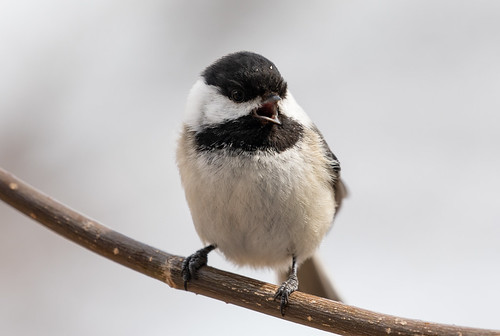
Black-capped Chickadee 

Today is the very last day that I will ever be in my sixties. It sounds terribly strange to be turning 70 (something Paul Simon noted back when he was in his 20s), but not nearly as scary as acknowledging that tomorrow I’ll be entering my eighth decade. Based on my sixties, and every other decade I’ve been through, there are scary times ahead. But based on my sixties, and every other decade I’ve been through, there should also be lovely, exciting times ahead. 

When I started thinking about it, I realized that my sixties have been my most wonderful decade so far. The Cubs won the World Series—something that had never happened since my Grandpa was a little boy.  

I'm having more fun with bird photography than I ever thought possible. I just got a mirrorless camera with a 100-500 mm lens that is lighter weight than my old camera with the 100-400 mm lens, but so far, that slightly reduced weight hasn’t mattered much. Even in my dotage, my ankle, knee, elbow, and shoulder joints are hanging in there, allowing me to lug the camera pretty much everywhere, taking photos and videos of my new baby grandson as well as of birds.  

Discovering milkweed

Speaking of which, even though I had no experience with being a grandmother for almost 69 years, I seem to be adapting well to the novel situation—I’m having SO much fun with the little guy! He can’t be vaccinated so far, so protecting him from Covid has been tricky, but I seem to have lucked into (so far) a best-case scenario. My daughter and son-in-law came to live with us in April 2020, had their baby here, and now have bought a house right here in our city, just 7 minutes away. I’m providing childcare 5 days a week while they work from home now. It’s been wonderfully gratifying getting to introduce Walter to birds, squirrels, and other natural beings.  

Walter

I was in my 20s when I first started birding. That first decade, much of the joy went far beyond seeing so many birds for the very first time—it was a whole new world of discovery. Even the mammals I’d known for a long time were suddenly new—in Chicago and southern Michigan, the backyard squirrels turned out to belong to two different species, Eastern Gray and Eastern Fox squirrels. Discovering the existence of adorable red squirrels the first time Russ and I went to Port Wing, Wisconsin, was truly magical. 
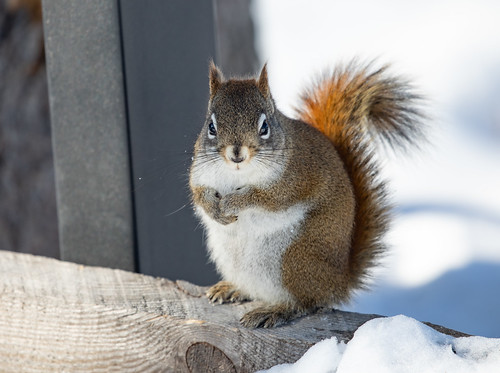
Red Squirrel

In my 30s and 40s, I was still discovering new things, but now at a slower pace except when I stepped into the whole new world of the tropics—it was when I was 49 that I first went to Costa Rica and to Trinidad and Tobago. In my 50s, I went back to Costa Rica twice, and got to go to Guatemala and Mexico as well. I was definitely slowing down a bit—the 14-year-old guide assigned to lead me to a Horned Guan in Guatemala when I was 55 was thrilled about how old I was—he exclaimed that I was even older than his grandmother! We were lugging my spotting scope along but that was hardly the real reason we were so far behind the men in their 20s and 30s who made it up the mountain much faster. Mentally I wasn’t slowing down, at least not that I could notice, but I was losing that hunger—the fire in my belly—to add ever more lifers.  
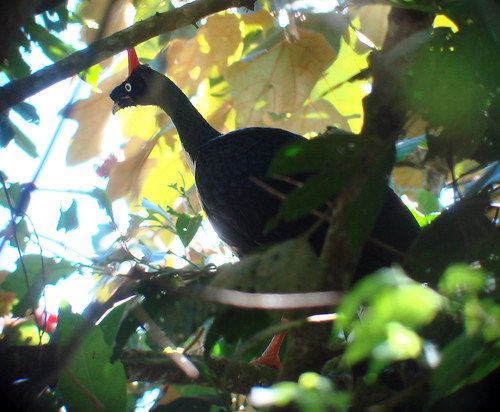
Horned Guan

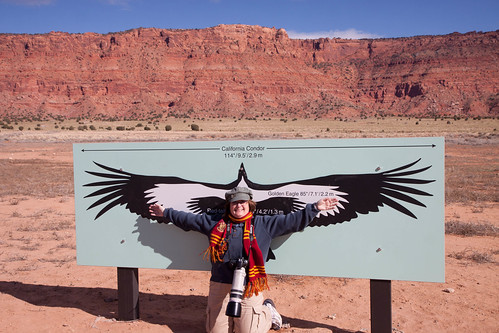
But of course I will always love seeing new birds, and I started out my sixties on 11/11/11 trying to see a truly spectacular and long-yearned-for lifer, a California Condor, in the Grand Canyon. 
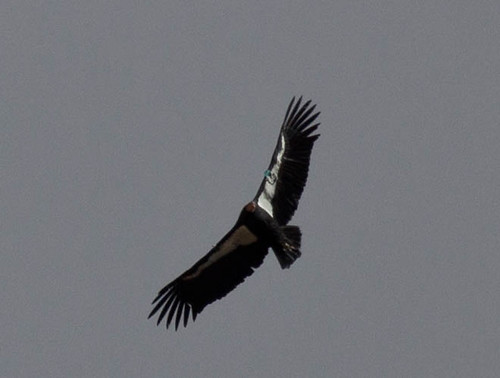
California Condor

California Condor

It was cool enough that I got to go birding, for the first time ever, in Cuba, Peru, Uganda, Panama, Germany, Austria, and Hungary, but the real thrill was seeing a handful of species I’d specifically yearned for for many years—birds such as the Cuban Tody... 
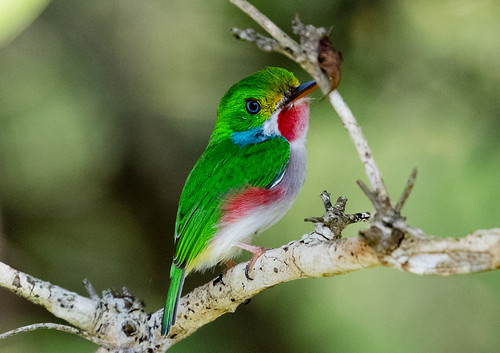
Cuban Tody!!

...Andean Cock-of-the-Rock...

Andean Cock-of the-rock

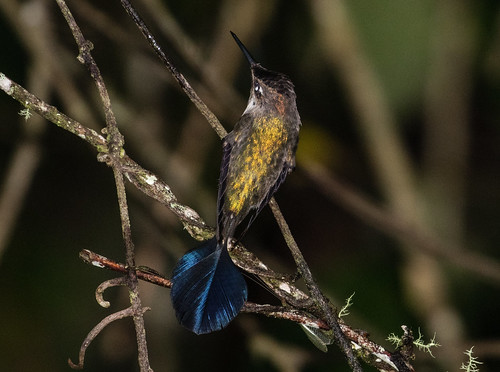
... Marvelous Spatuletail...

Marvelous Spatuletail

...Harpy Eagle... 

Harpy Eagle

...Great Tit...

Great Tit

... and European Robin. 

European Robin

Adding birds to my lifelist wasn’t the point—I was even thrilled to see an uncountable Chukar wandering in my own neighborhood. 
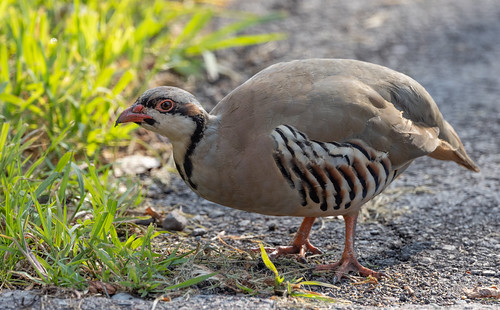
Chukar

It was during my 60s that I did a Lower-48 Big Year—that is, going out to see as many bird species as possible in a single calendar year. And I was invited to speak at a lot of really cool birding events, including at Harvard! (That was for the Brookline Bird Club which meets at Harvard as a matter of course, but still!!) 
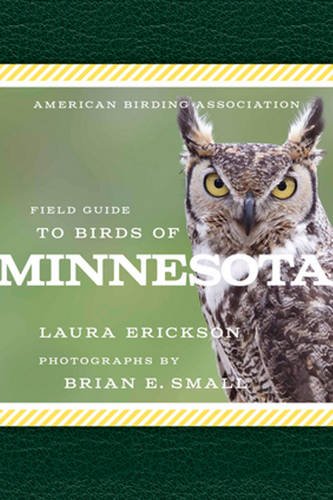
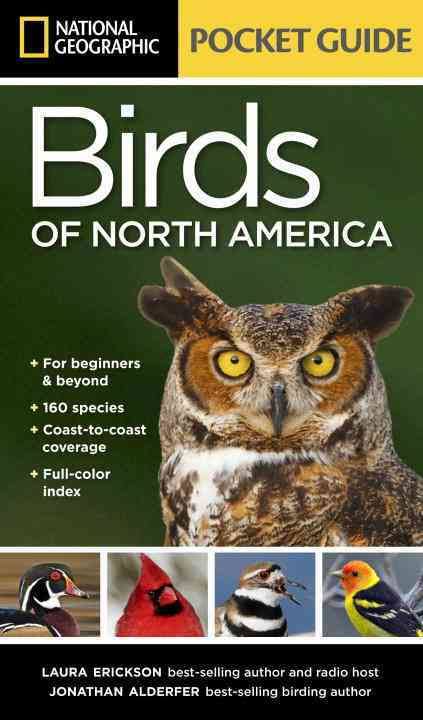
I wrote 6 books during my sixties, including the Field Guide to the Birds of Minnesota for the American Birding Association (now in its second printing!) and one for National Geographic--just a pocket guide to birds but it really impressed my daughter (something not easy to do). 
Now I'm almost done with another book, my first to appear while I'm in my seventies.  

In every decade of my life I’ve lost beloved relatives and friends and pets. I’ve also had some health challenges here and there which seem to be accelerating. But that has made me appreciate what a gift each day really is. I have a great dog, my husband is doing well, and right this moment there’s a cool little Rufous Hummingbird visiting some feeders, including mine, right here on Peabody Street. 
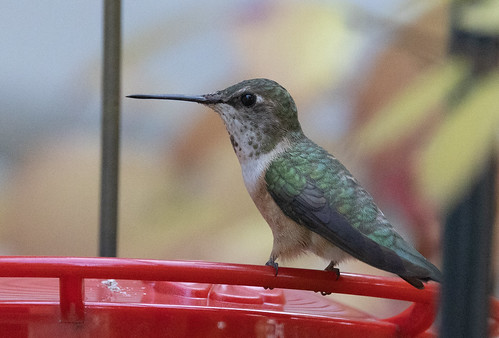
Rufous Hummingbird

And when she’s not in sight, I’m still taking great pleasure in my little chickadees. Seriously. Who could ask for more?  

Black-capped Chickadee

Friday, November 5, 2021

Birds in the News: A Conversation with KUMD's Lisa Johnson

Lisa Johnson — Wednesday Morning, 7 a.m.

On Friday morning, I was interviewed by KUMD's Lisa Johnson about three issues: the Audubon Naturalist Society dropping "Audubon" from its name, the recent news story about two cases of California Condors producing live offspring without a male condor involved, and New Zealand selecting a bat as its Bird of the Year. You can listen to the 16-minute interview, and find some other interviews between Lisa and me, at this KUMD's Environment and Outdoors page. 

Lisa has been one of the very best interviewers I've dealt with in my long career, and I've been interviewed on a lot of local, state, and national radio and television news programs. Lisa always does her homework, so her questions are always intelligent and informed (seriously—very few people in media have her knowledge about nature and environmental issues), and her quick wit is SO fun to engage with!   

KUMD has been bought by WDSE and will no longer be part of the University of Minnesota-Duluth beginning next month. No word yet on whether they will continue to air For the Birds. 

Thursday, November 4, 2021

A Conversation with Rosemary Mosco, Part 5

Three animals have been especially important to militaries around the world: horses, dogs, and pigeons. Rosemary Mosco, author of A Pocket Guide to Pigeon Watching: Getting to Know the World’s Most Misunderstood Bird, talked with me about how pigeons have served in many militaries. 

Yeah! They don’t have to deal with traffic signs, they can just kind of fly straight away. And they can also fly –it’s hard to find exact numbers on how fast they can go, but they can go 60 mph kind of topping out. They’re incredibly fast in terms of a mechanism for getting information from one place to another. You can see why they were so useful in wartime. And a lot of those wartime pigeons would get hit by shrapnel or attacked by a hawk, and they would just keep going. They would make it, and would make repeat missions. It’s really incredible. 

I always found their service ironic, since doves are symbols of anti-militarism while we use hawks, which have never helped any military win any battle or save any lives ever, to symbolize militarism. And even more ironically, doves are useful in wartime only because all they want to do is just go home. 

That’s the thing. When we talk about pigeons racing or pigeon carriers, or whatever, what we need to remember is that they only go one way. You can’t have a pigeon fly somewhere and then attach a note and send it back. You really have to drive it back or shuttle it back, because what they’re really good at is flying home and navigating home. What they would do in wars since time immemorial—Genghis Khan was using pigeons in battles—and especially in World War I and II, we would basically ship a pigeon from the U.K. to the front and then attach a message when required, it would fly back to some guy’s loft in his backyard, at a shoestore or whatever, and then he would take the message off and alert the proper authorities. 

Rosemary told the story of one of the most famous pigeon heroes in the world, Cher Ami. 

Yeah—that part was really tricky to write. Cher Ami was a World War I hero pigeon who was released by this battalion called the Lost Battalion that went behind enemy lines and found themselves trapped in this one particular spot and they were being hit by friendly fire. So they wanted to get the message to the folks who were bombing them, “Hey, we’re friends! Stop hitting us—we’re sustaining heavy casualties.” They released one pigeon and I think they forgot to put the message canister on it, and then they released a second pigeon. Cher Ami was released in the skies and was immediately shot, and they thought, there goes our hope. But Cher Ami made it with wounds to her foot and breast—made it and delivered the message that basically said, “What the heck are you doing? Stop shooting at us,” and saved tons and tons of lives. It’s a really interesting story but it’s tricky because so many of these war stories get retold and retold and facts get added, so it was really hard to find a version of that story that was really correct. In particular, Cher Ami was probably a female, and a lot of places where you read about Cher Ami, she’s described as a he. So I had to reach out to the Smithsonian, which has the stuffed version of Cher Ami, and they’re pretty sure she’s a female, but DNA tests are pending till the end of the pandemic, which I thought was a wild story. 

Rosemary’s book talks about how pigeons find their way to deliver important messages. 

It’s so fascinating. Before I started reading about this, I thought, when I want to get home, I open my GPS. So probably pigeons just GPS in their head. But they really use so many different cues, some of which I feel we haven’t fully understood at this point, which we haven’t even identified. It’s hard to say exactly what a pigeon is doing when it’s trying to find home. We know, for example, that they’re using the sun. They look at the sun all day and they learn where they are in relation to the position of the sun, but sometimes it’s hard to see the sun. Scientists have covered up birds’ eyes, put little fogging lenses or whatever so they can see if the birds can find their way home without seeing the sun, and they definitely can. So we think they can also sense the earth’s magnetic field. There’s some evidence that they’re smelling their way home—that there’s an olfactory connection, too. They also use landmarks, too. So some pigeons are definitely looking around and saying oh, well I live near that particular hill. They also hear sounds that are deeper than the sounds we can hear, the infrasounds. So there’s some evidence that they’re listening and hearing their way home. But it’s honestly so complicated, and different pigeons have their own ways of finding their way home, which is certainly true of humans as well. It’s just such a complicated and fascinating issue.

Complicated and fascinating, yet ever charming, is an apt description of both Rosemary Mosco and her wonderful book, A Pocket Guide to Pigeon Watching: Getting to Know the World’s Most Misunderstood Bird, available just about anywhere books are sold. And remember: there are still five shopping days until Veterans’ Day. 


A Conversation with Rosemary Mosco, Part 4

In A Pocket Guide to Pigeon Watching: Getting to Know the World’s Most Misunderstood Bird, Rosemary Mosco talks a lot about how important pigeons have been to people: for food, carrying messages, producing guano for fertilizer, and racing. As tasty as pigeons apparently are, we’ve never been able to breed them as prolifically as we breed domestic chickens, turkeys, or ducks. Rosemary explained:

A lot of what they do is kind of mediated by these particular quirks that they have. For example, with meat, we definitely used to eat tons and tons and tons of pigeons, but they have to take good care of their babies. You can’t just take their chicks away and raise them like you can with chickens. You have to have the mom pigeon feeding them pigeon milk, which the mom and the dad produce in their throat. They’re caring for their young, so it’s a little bit tougher to raise large quantities of them, so instead, we switched to chickens, and this homing tendency is a little tough to overcome so we switched to Internet. So there are a lot of reasons why they became a little less useful over time for sure.  

Rosemary’s book does a better job of explaining the unique quirks of pigeon biology than most high school and college textbooks do. We talked about just one element of it: 

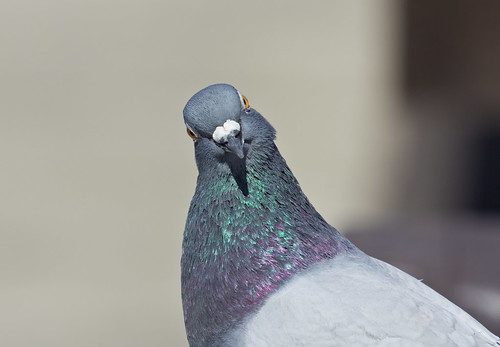
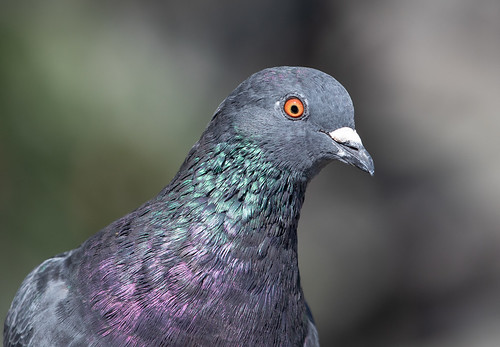
Rock Pigeon

If you look at a pigeon’s circulatory system, you’ll notice that they have this wild mesh of veins that’s all around their neck. It kind of makes sense when you think about a pigeon poofing up its neck. It’s this thing called the collar plexus for short. It’s this region that can help a pigeon swell up and do its poofy neck thing, but also can help it stay cool or stay warm. It can exchange heat through that collar plexus. And it’s just one of those things about a pigeon that is kind of familiar but really alien that they have, like an entire branching circulatory system all around that poofy neck. 

I asked her about B.F. Skinner’s famous work with pigeons.

Pigeons are surprisingly smart, and also surprisingly not smart.  They’re both familiar and alien in terms of their minds, which I think is really interesting. For a long time, people thought that birds were not very smart, partly because if you look at their brains which are kind of small, they don’t look as wrinkled as our brains, and we usually think of wrinkly brains as a smart thing—lots of folds and lots of cells and lots of intelligence. But that’s because their brain anatomy is just totally, totally different. They don’t have a neocortex, but they do have this thing called a mesopallium that has cells that act in almost the same way. 

A lot of birds are really smart. There are parrots that can memorize tons of words, there are ravens that will knock snow off roofs onto passersby and target their hits with precision. And then there are pigeons, which will have their moments of being less intelligent. For example, if you swap a pigeon’s babies with another pigeon’s babies, they won’t notice. They can’t recognize their children. But at the same time, people have trained them to do unbelievably cool things. B.F. Skinner trained them to play ping pong, and we’ve trained them to recognize Indian dance versus martial arts, and we’ve trained them to tell cancerous breast tissue from uncancerous breast tissue looking at medical slides. And they can recognize themselves on video, and there’s so much they can do that’s remarkable, and then you get into their homing abilities which are so incredible. They really are not slouches. They’re just sort of a different type of mind than we have. 

I mentioned how Skinner compared elements of pigeon and human intelligence.

Yeah. He didn’t think that pigeons were especially smart. He wasn’t super complimentary about them. But he did think that they had a lot to tell us about our own minds, which I think is interesting because they do, and then they also just do things that we can’t even fathom at the same time, which I think makes them really interesting. I mean, I couldn’t find my way home across 600 miles without some sort of a GPS or a compass or something.  

One scientist even more enamored of pigeons was Charles Darwin. Rosemary had this to say about him:

Darwin was obsessed with pigeons and he loved them. His history with pigeons was that at one point he kind of wanted to look more closely, with his evolutionary theories, at a creature that he could keep in his backyard, and pigeons were perfect because they were kind of all the rage. There was a big pigeon craze. So he built a pigeon loft. He was a little reluctant about it. He thought it wasn’t as interesting a species. So he started to go to pigeon group meetings and meet a lot of other pigeon keepers, and he just became utterly obsessed. 

I start the book with this quote from him writing to his friend [Charles] Lyell, where he says when you come visit, let me show you my pigeons, which are the greatest gift that anyone can give to someone else. Because he was just so so in love with these creatures. He would breed them, and he was trying to figure out, are all of these fancy pigeon breeds, some of which are just absolutely bizarre looking, are they all descended from the same species. And he was able to determine that yeah, they all come from Columba livia, from the Rock Dove. And so by looking at how humans changed pigeons over time, he could look at how nature might change species over time. So they were really, really instrumental, and if you read his book, there is a lot of pigeon content—so much you might get a little bogged down by all of his descriptions of all his breeds. But he was just absolutely head over heels for pigeons which I think is cool, but in a biologist’s way. He’d talk about, like, oh, they’re so beautiful and I can’t wait to skeletonize them and look at their bone formation. But yeah, he was a big pigeon fan. 

Tomorrow I’ll close out National Pigeon week with Rosemary Mosco’s and my conversation about pigeons used by various militaries to carry important messages. 

Tuesday, November 2, 2021

A Conversation with Rosemary Mosco Part 3

For today’s post, the third during my self-designated National Pigeon Week, celebrating Rosemary Mosco’s wonderful new book, A Pocket Guide to Pigeon Watching: Getting to Know the World’s Most Misunderstood Bird, I asked Rosemary about how pigeons are a major part of human history, going all the way back to the Neanderthals.

Yeah. The Neanderthals were eating tons and tons and tons of pigeons. 

 Explain how you know that. 

I believe they found bones of pigeons that were cut and burned. I think it was about 40,000 years ago that we know they were consuming pigeons. Although it’s hard to say exactly the relationship of humans and Neanderthals and different ancient relatives to pigeons because we're going back to a time before recorded history. Pigeons were domesticated before or around when we developed writing. And we’re missing a lot. We have to piece a lot of it together from things like bones and archeological remains and such. I really want to go back in time and watch that play out. There are so many questions that I have. 

Rosemary noted that domestication took place in the Fertile Crescent. 

When I say pigeons, I mean Rock Doves, because there are a lot of other really cool pigeon species. Like you mentioned the Dodo. But pigeons were native to parts of  Europe and parts of Asia northern Africa. We’re not totally sure because the feral ones have kind of taken over so much territory. So that was the pigeon’s native range, and that was also when agriculture was developing. And pigeons really like to eat grain. So it was sort of a no-brainer that the pigeons were hanging out and eating our grain, and we were like, “Hey, these things are tasty! Let’s put out some more grain.” And that was how the relationship kind of developed. 

I asked about other ways pigeons have been useful to people. 

This is a really interesting thing—pigeons are really really useful. I feel like it’s easy to go, oh, we domesticated the cat to keep our reflexes sharp by batting  glasses off our tables but also eat our mice, and there’s reasons we domesticated the dog or the horse, but pigeons, because we don’t use them for a lot of those purposes anymore it’s hard to remember, although they’re still used for food in a lot of the world. If you go to Egypt, you’ll eat a really fancy dish that’s made of pigeon, and there’s places in France where you’ll get fancy squab. So we were eating them. And like I said, we were using them for poop. Lots of areas in the Middle East where the soil was not necessarily the most fertile, they would put pigeon poop all over the place and they would use them for that. And then we started using them for all sorts of really interesting things like racing them, and for companionship. And there are pigeon shows like a dog show where you show off a fancy breed, and even more just like esoteric uses like in parts of Asia you’ll strap what’s called a pigeon whistle onto a pigeon. And when they fly they’ll make a beautiful sound. And these whistles have to be incredibly light so the pigeons can fly. So there are also art and music. So anything you can think of, really, we’ve put pigeons to that use. 

I asked Rosemary to talk about Reuters. 

Reuter—the original Reuter—was a fellow who made his name on the backs of pigeons essentially. The telegraph was being rolled out at the time and was revolutionizing communication, but you had to put in these cables. So there were definitely places where the lines hadn’t reached yet. Reuter made all his money by identifying this one particular spot where there weren’t lines passing through, where he could fill this gap in news by passing pigeons back and forth. The gap only stayed open for a couple of years, but he really made his name and a whole bunch of money during this period of passing pigeons back and forth. 

In the book, Rosemary called that the start of the “pigeonternet,” a pun I badly wish I’d come up with. Rosemary and I also talked about some fascinating elements of pigeon biology, which you will read tomorrow.  

Monday, November 1, 2021

A Conversation with Rosemary Mosco, Part 2

Yesterday, I aired part of my conversation with Rosemary Mosco, author of the brand new, charming book, A Pocket Guide to Pigeon Watching: Getting to Know the World’s Most Misunderstood Bird, about why she likes pigeons so much, and why she thinks people should watch them. Today, on Day 2 of my own personally designated National Pigeon Awareness Week, Rosemary explains why pigeons are doves.  

So, pigeons and doves belong to a scientific family called Columbidae that has just a whole bunch of different species that generally don’t interbreed a whole lot. We label them pigeons and doves sort of at random, not necessarily two separately related groups, which is why I say that pigeons are doves, absolutely, and if you venerate doves, you have to like your pigeons, too. Whereas breeds are basically varieties that we’ve developed, like bloodlines that we’ve developed in one particular species, so that they can interbreed and they all belong to the species Columba livia, which is the Rock Dove or Rock Pigeon. So it’s sort of like when you think about a dog—it comes in a chihuahua or a great dane, but a dog is technically part of the wolf species and is not the same as a fox or another dog species.

Rosemary made a few other equivalences in the book. I asked her to explain why she says pigeons are dinosaurs. 

Yes! Yes! This is so great to me! So all birds technically are dinosaurs. They evolved from dinosaurs and they’re encompassed by this scientific group of dinosaurs. There were some tiny little dinosaurs but we always think of a T. Rex or something. It’s funny for me to think about that and then think about the fact that we’ve got these tiny little T. Rexes stomping around in our streets. The dinosaurs didn’t really go extinct. It’s just that most of them did, and the birds managed to hang on and then diversified into all these different creatures. I think doves and pigeons showed up around the Jurassic time, so they’ve been around for a while, but they’re definitely dinosaurs. 

So they were probably flying over Tyrannosaurus rex who couldn’t do a thing about it with his teenie tiny arms.

And they’re cooing away and Tyrannosaurus rex is like “Stop!” 

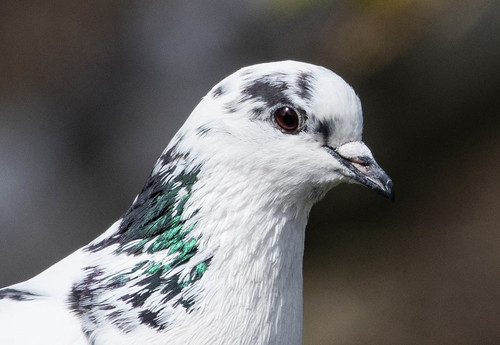
Rock Pigeon 

The other equivalence Rosemary makes is that “pigeons are puppies.” 

Absolutely. The story about pigeon domestication is so much like the story of dog domestication. In both cases, the animal—the dog or the pigeon—was just sort of hanging around human settlements. And then there was this interrelationship that happened where we both benefited by getting kind of closer. In the case of pigeons, we benefited by eating them, we used their poop for fertilizer, and we also noticed the pretty ones and we started breeding fancy breeds. 

That domestication happened a long time ago. We don’t really know where or when. We have kind of a rough idea—we think it was in the Fertile Crescent for pigeons, but there probably wasn’t one moment where a pigeon and a human locked eyes. I like to think it went that way but it’s definitely not how it happened. And then we’ve been living together and moving both dogs and pigeons around the world as people from that particular region have travelled. And then dogs went feral, but when we see a stray dog, we think, “there’s a dog,” but when we see a stray pigeon, we think, “Oh, that’s just a bird that lives in this particular area." In a lot of cases they really don’t. So I think it’s interesting. Pigeons have a lot to tell us about human history and the way we interact with animals for sure. 

And speaking of human history, tomorrow Rosemary Mosco tells us how important pigeons are in the histories of many cultures throughout the world. Her new book, A Pocket Guide to Pigeon Watching: Getting to Know the World’s Most Misunderstood Bird, published by Workman, is available wherever books are sold. You can listen to this conversation on Laura's podcast here.


A Conversation with Rosemary Mosco: Part 1


Today is the first day of National Pigeon Awareness Week. It’s not an official designation except in my world, but it’s timely—pigeons saved the lives of countless American soldiers in WWI and WWII as part of the Army Signal Corps Pigeon Company, and as the only avian species to produce actual veterans, they deserve to be celebrated around Veterans Day. 

Even more important, an extraordinary book about pigeons, written and illustrated by naturalist and science writer Rosemary Mosco, has just been published. Mosco is the creator of the wildly fun and smart Bird and Moon cartoon series, and her unique and whimsical style and engaging sense of humor shine through this new book, A Pocket Guide to Pigeon Watching: Getting to Know the World’s Most Misunderstood Bird.   

Rock Pigeon

Our familiar Rock Pigeon isn’t native to America but was brought here by some of the first European settlers and quickly became firmly established in towns, cities, and farms. The House Sparrow and pigeon were the first two bird species I learned in my Chicago neighborhood as a very small child. I loved watching how pigeons walk, stretching their necks so their eyes and ears can check out a scene before the rest of the body takes the risk and catches up. I loved listening to their powerful wings clapping on takeoff. And I loved how they flew high in the sky, holding their wings in a deep V as they drew my eyes to heaven, where I knew my grandmother was.  

Because I love them, I’ve read a lot about the world’s pigeons and doves. But last summer I rolled my eyes a bit when I opened an email asking me to review A Pocket Guide to Pigeon Watching, at least for the split second before I saw Rosemary Mosco’s name. That intrigued me, so I said I was interested in seeing the book. I expected it to be lighthearted and fun like Mosco’s other work. But I didn’t expect the book to be thorough and meaty as well—the perfect package. Rosemary and I met a couple of years ago when we were both speakers at a birding festival sponsored by Maine Audubon and LL Bean. I sat in on a workshop she did with families, and I was as charmed by her warmth and accessibility as I was wowed by the substance of her presentation.  

Rosemary Mosco
Photo by Adrianne Mathiowetz

I decided to talk to Rosemary about this new book about pigeons. Our conversation took place over the summer, but I’m slowing down in my dotage, so it’s taken till now for me to finally put these programs together.  I asked Rosemary why she thinks people should watch pigeons.   

I think one of the big reasons that people should watch pigeons is that they’re all over the place, which sounds like a no brainer, but there are so many really interesting birds that only cross our paths for brief times of the year or if we go to a certain really unusual location, which I have definitely done. You know people will drive hundreds of miles to see a particular bird. But pigeons are right here. And so you can practice a lot of your observational skills with pigeons, and they reward you because they are so interesting to watch. So I guess that’s reason #2, that they’re really, really interesting. Their behavior is really strange and really really amusing. I mean they kiss, they make that clapping sound, either to warn other pigeons that there’s danger or somebody else will do it as a post-copulatory display for reasons we don’t really understand.  

They’re also safe to watch. I’ve gone looking for creatures in swamps a lot and gotten all sorts of pests. With pigeons, you just walk down the street and get to watch them. These are probably my top reasons for watching pigeons.  

I particularly love Rosemary’s final reason for watching pigeons: “It’s a hard world. Sometimes you just need to look at a soft bird.”  

Right. Sometimes we just need to look at a soft bird. Yeah.   

Sesame Street really knew what it was doing. There’s Bert and Ernie, these two guys who live in a basement apartment on Sesame Street, and Bert loves pigeons. Really unquestioningly loves them. And I feel like Sesame Street was doing that because a lot of kids live in cities, and so were learning an appreciation for the nature around them. I think that was my first exposure to a positive impression of pigeons of which there are not a lot.   

I asked Rosemary what made her fall in love with pigeons in the first place.   

It’s so hard to say because I’ve liked them forever. I think it’s because I grew up in cities and my dad grew up super poor in a tenement on the lower east side of Manhattan and he tells us all sorts of stories from that time. But one thing he told me is that he knew two kinds of birds. There were the little brown ones, which I’m sure you can guess were House Sparrows, and there were the big gray ones, and those were the pigeons. And so even then he was noticing these birds that were in close proximity to him so I think they’ve just always been around and if you just start paying attention to them you can’t help but fall in love with all of their amazing behaviors and patterns.   

This blog post is a transcript of today's podcast, which you can listen to here.  Rosemary Mosco's newly released A Pocket Guide to Pigeon Watching: Getting to Know the World’s Most Misunderstood Bird is simply wonderful: the publisher's blurb is spot on saying it's "part field guide, part history, part ornithology primer, and altogether fun." For tomorrow's blog, Rosemary Mosco will explain why pigeons are doves, why they’re dinosaurs, and why they’re puppies. Yep, according to Rosemary Mosco, pigeons are puppies. 

Rock Pigeon

Friday, October 29, 2021

Halloween Storm Reminiscences

Joey and Katie Stegosaurus

This weekend, we mark the 30th anniversary of the record-smashing blizzard that fell on the Northland on Halloween 1991. Two feet fell in the Twin Cities, over three feet here in Duluth, and 45 inches in our neighboring Superior, Wisconsin—our blizzard was part of the huge system called "The Perfect Storm" on the Atlantic. Here the storm made a huge and lasting impression on everyone, from the adults who had to shovel and drive in horrible winter conditions so early in the season to the littlest school children. Naturally, many Minnesota news stories this week have been filled with reminiscences. 

The snow started on Thursday evening while Russ was taking our kids trick-or-treating. I stayed home to hand out goodies to the intrepid few who showed up at our house, some bundled up so their costumes were entirely hidden. (I always sewed costumes to fit over a heavy coat and snowpants.) With so few kids showing up, I gave out more candy than usual to each—something that other people apparently did, too, because our kids came home with an exceptionally large haul.

The snow continued all night and through the next day, and trading candy and eating it were fine activities to fill the time until Russ and I could finally clear enough snow from the front and back doors to open them so the kids could play in that unbelievable winter wonderland. Schools were closed Friday, but the snow was so very deep that the plows had trouble clearing it all away—as I recall, Monday was also a snow day, and when the kids went back to school on Tuesday, they had to be sent home early because it snowed again. That snowfall was pretty insignificant, but so much snow was already piled up along roads that there was nowhere to push the new stuff. 

Anyone who has ever experienced a blizzard knows that snow depth varies crazily due to wind-blown drifts. The piled-up snow against the front and one side of our house obliterated the windows in Russ’s and my downstairs bedroom. They stayed covered up, our bedroom as dark as night even at noon, for months—it was hard enough clearing away the snow from the porches and driveway. The kids had great snow hills to sled down the whole winter. We kept a path open in the backyard for me to fill the feeders and let our dog Bunter out. 

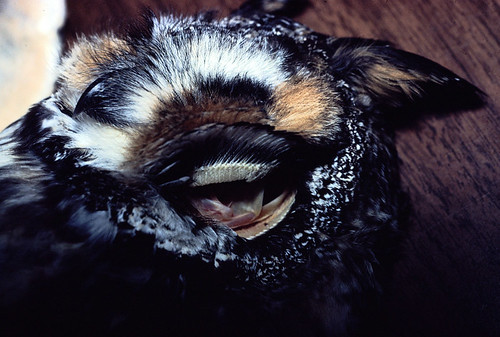
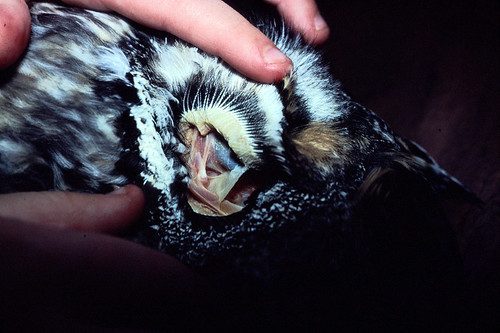
The storm was hard on a lot of people, and also caused bird mortality, particularly for owls. I heard from a few Duluthians who found dead owls while shoveling out. October is the migration season for them, especially saw-whets and Long-eared Owls, both way to small and lightweight to possibly capture rodents buried under three feet of snow. One radio listener brought me a dead Long-eared Owl. The poor thing was beyond caring, so I photographed its ears, hidden beneath its facial disks. I’ve been using those photos in programs ever since, but I still felt cosmically sad for the poor thing.  

Long-eared Owl

Long-eared Owl

That weekend, I got a call from the Lakeside tool house where plows and other city equipment are kept, a few blocks from my house. Someone had been out in the parking lot when a duck literally dropped out of the clear blue sky. I went over and got it—an exhausted female goldeneye whose wings had iced over in flight. The poor thing had to spend a few days in our bathtub. She was fine after pigging out on minnows, dog food, and over $20 worth of brine shrimp, but she'd need a running start to get aloft again, and it was about a week before we could get to any part of the lakeshore to release her—even after the roads were plowed out, who was going to shovel a path to a beach? We had only one bathroom, so I had to scoop the little duck into a box whenever anyone needed the tub. My in-laws managed to drive here from Port Wing before we could let her go, and oops—I forgot to mention she was in the bathtub until after my mother-in-law let out an unexpected scream. 

Most early snowfalls melt before winter settles in, but in 1991, the ground stayed snow-covered from that last day in October all the way into spring. That was back when my bird feeders were always full, and I remember that winter as rather idyllic, with fine backyard birding for me and great sledding and snow fort fun for the kids. But my most vivid memory is still that poor duck in the bathtub and how happy she looked when she swam away at last.

Common Goldeneye

Thursday, October 28, 2021

Pandemic Birding after almost two years

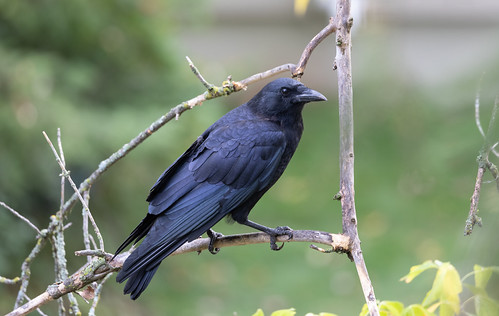
American Crow

Last year when the Covid-19 pandemic was starting to change life as we know it, the national media focused a lot on how so many people were suddenly paying attention to nature, often for the first time in their lives. I started hearing from a lot of people who were starting to watch birds. With the sudden drop in traffic noise right at the time of year when birds are singing most, it was small wonder so many people were paying attention to birds.

I love to travel and certainly missed going to cool places to see birds that I just can’t see on Peabody Street, but I’ve still thoroughly enjoyed the birding I’ve done since 2020 began. I picked up several new species for my yard list, but even cooler, I got some lovely recordings and photos of some of my favorite birds—something I hadn’t focused on in my own backyard before.

_J4A4630.jpg

I’m thinking about how much the pandemic actually enriched my own birding because on October 27, Ethan Freedman wrote an article in Slate magazine titled, “The Pandemic Was the Perfect Time to Bird. Except for Me,” beginning, “While my hobby went mainstream, I couldn’t find joy in it anymore.”

Freedman, a graduate student, lives in D.C. and wrote, “Without the promise of a toucan or a biblical torrent of shorebirds, what was the rush to go see some sparrows I’d seen a thousand times before?” He talked about his early magical days of birding:

I’d spot a bird, yellow on its front, black around the eyes, small, jumpy, and flip through the pages to find a match: common yellowthroat! I’d look at the bird, whose name I now knew, and marvel that it had always been right in front of me—common yellowthroats live in grasslands and forests across North America—and I’d never known it.

But after a while, seeing a common yellowthroat started to feel a little mundane. They are, as the name implies, quite common! I craved that initial feeling of a new species, that shock of wonder—it’s infectious. So, as I started to run out of new species to see around my neighborhood, my birding became less leisurely backyard pastime and more thrill-seeking adventure sport.

Freedman made one nasty ageist comment about birding being “an activity that is typically associated with aging boomers.” It’s possible that my own personal status as an aging boomer contributed to my contentedness with backyard birding, but I think two more important things were at play. First, even though I was stuck in the same place, I was doing new and exciting things by focusing on building up my recordings and photographs of those common birds. 

My home office window.

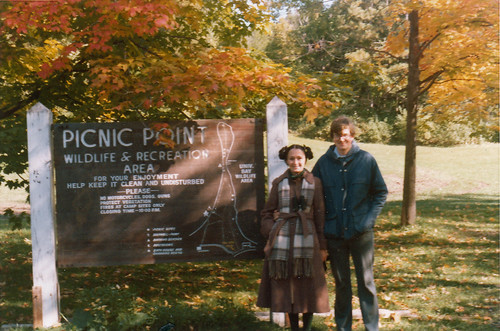
And second, as much as I love both traveling and getting lifers, I also like doing, seeing, and hearing the same things over and over. For example, when I buy Ben and Jerry’s ice cream, I always get Cherry Garcia. There may be other flavors that taste as good, but why experiment when I know for a fact that Cherry Garcia is perfect? When I’m tired or sick, I always turn to tried and true novels I’ve read before or the same romantic comedies I’ve seen many times rather than try anything new. Even when I travel, I love returning to the same spots over and over. This is the way I’ve always been—it has nothing to do with my advancing age. When I was in my acquisitive twenties, I went afield birding every weekend. But I spent every weekday morning every spring birding at a single spot walking distance from my apartment in Madison, Wisconsin—Picnic Point. Knowing this one lovely park so intimately improved my birding skills and gave me much more understanding of the shape of avian seasonal movements. Young birders now use the word "patch" to describe the places they love to bird over and over again, and when talking about taking actions against climate change, act as if they were the ones who discovered the concept. 

Laura and Russ at my favorite place

So I feel sad that Ethan Freedman lost his passion for birding while he was stuck home during the pandemic. I suspect that as more and more activities open up again, a lot of people who got excited about backyard birds during the pandemic will find themselves losing interest as they return to normal life. That’s okay—we all have different tastes and passions, which is exactly why Ben and Jerry’s makes so many different flavors.  

But I hope that Freedman and new birders who go back to their old interests never lose their awareness of the importance of conservation and the clean air and water that birds, and all the rest of us, need. I also hope that everyone who returns to traveling for birding is strict with themselves about their carbon footprint, taking measures to offset their travel, whether it's local commuting or long-distance adventuring, with other ways to reduce their personal impact on climate change. We may all be very different people, but we're still all in this together. 

Sunday, October 3, 2021

Sharing a Sense of Wonder with Walter

Grandma showing Walter a chickadee 

In 1957, the year before Rachel Carson started writing Silent Spring, her niece died, and Carson adopted her 5-year-old grandnephew Roger. She’d already had many lovely experiences with him along the Maine coast; she’d written an article for the July 1956 issue of Women’s Home Companion magazine about them, titled “Help Your Child to Wonder.” (You can read the magazine article here.) She planned this to be the start of a book to inspire parents to help their children experience the “lasting pleasures of contact with the natural world…available to anyone who will place himself under the influence of earth, sea, and sky and their amazing life.” Her book, The Sense of Wonder, which was mostly this magazine essay filled in with photos, was published posthumously.

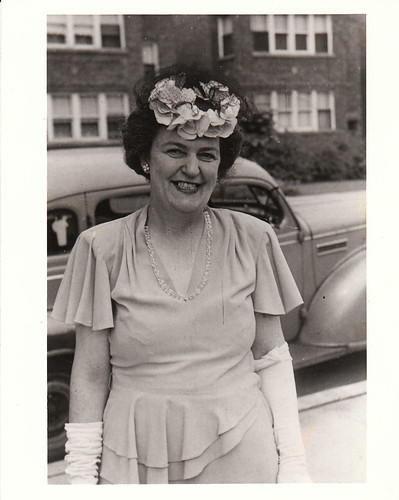
Older adults are very important in a child’s life, and almost certainly contribute to the values children develop, perhaps most notably around nature. I know many birders who got their start by looking at wild birds with a grandparent. My own very earliest memories are of my grandmother , who died when I was just a couple months older than my 13-month-old grandson Walter is now, so I was just a toddler. But I vividly remember her smiling at me. One day back in the early 90s, a relative I didn’t know who lived on the East Coast, out of the blue, mailed me a photo of her. The moment I saw it, before I even read the letter, I started crying, so clearly remembering her eyes and smile. I’d never seen that photo before.  

My Grandmother

Indeed, at that time I’d never seen any photo of my grandmother at all except one wedding picture taken decades before I knew her, but her face was apparently firmly embedded in my memory.

Even though I never went birding with her, she’s also tied in with my earliest memories of birds. She was named Laura, and everyone told me how much she loved birds. She had pet canaries that I loved dearly, and after she died, my Grandpa always kept canaries in her memory. He told me a lot of stories about birds, from Passenger Pigeons to the canaries that died saving miners’ lives, and gave me my first bird book, Bird Stamps: A Little Golden Activity Book. I’m sure all this reinforced my deep love for birds. 

Little Golden Activity Book: Bird Stamps

My own little grandson is not quite talking yet, though Russ insists that two times on Friday, when Walter was looking out the window toward the bird feeder, he said something that sounded for all the world like “chickadee.” That would of course gratify me no end—my daughter Katie’s second word was “boo jay.” Walter saw Blue Jays quite a bit in the window feeder in my office while he was living with us, but they moved to another neighborhood of Duluth now, and Blue Jays don’t come to the hanging feeder out the living room window there. But Walter has seen chickadees just about every day of his life since he came home from the hospital and I held him up to the window. And ever since he was three or four months old, he’s been waving his arms and smiling whenever they show up. One of our games is to spend 10 or 15 minutes watching my laptop’s screensaver randomly showing pictures from a folder of my favorite photos. He gets most excited when a picture of him, his mom or dad, his Grandpa, his dog Muxy, or my dog Pip appears, but he seems fascinated, focusing on all the pictures as I tell him the names of the birds from around the world, and gets very excited when a chickadee or Blue Jay pops up. When a photo of a squirrel or rabbit appears, he wrinkles his nose and makes an adorable sniffing sound. 

Walter’s first toy, and still one of his most treasured, is a Beanie Baby from the 90s that we call Dr. Blue Jay. Dr. Blue Jay takes naps with Walter, rides in his wagon with him, and watches birds out the window with him. When Walter is sad, it doesn’t take much more than Dr. Blue Jay flying in to cheer him right up. 

Chickadee at the feeder and Dr. Blue Jay in his hand.

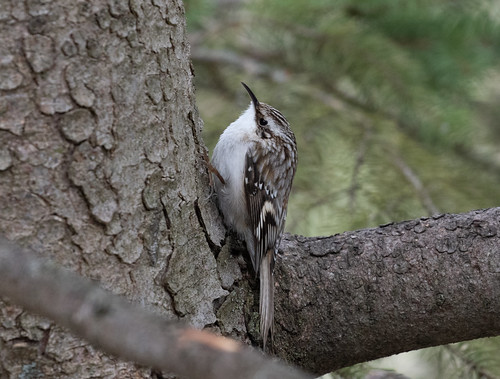
Walter’s yard has lots of birds, but only chickadees and once in a while a goldfinch approach the hanging window feeder, so now that I’m babysitting at his house rather than ours, I can’t show him many real birds close up. But last week, when we were feeling the textures of different kinds of tree trunks in his yard, a Brown Creeper appeared barely 4 feet away, hitching its way up a maple. The movement caught both our eyes at the same time, and as I was telling Walter it was a Brown Creeper, he started making delighted squeals and waving his arms. I’d have thought that would scare away the tiny bird, but the creeper stayed just as close. When it reached a thick limb above us, it flew not to another tree but to the base of the same one, so we got a repeat view. I was transfixed as much by the look of delight on Walter’s face as by the magical little bird. 

Brown Creeper

I’ll be 70 next month. I’ve already lived 13 years longer than Rachel Carson, and 8 years longer than my grandmother, so although I plan to stick around this lovely planet as long as possible, and got my Pfizer booster shot last week as a wee bit of insurance, I have no illusions about the finite nature of my life. I’m so grateful that I’ve been allowed to stick around this long, and to be having such wondrous experiences with Walter. I want him to develop his own passions in life based on who he is, not who I am, and sure hope I can enjoy his whole childhood and even some of his adulthood. But my dearest hope of all is that throughout his life, he’ll keep a place in his heart for birds and all of nature, a place warmed by memories of his Grandma.