Laura Erickson's For the Birds

Friday, September 12, 2014

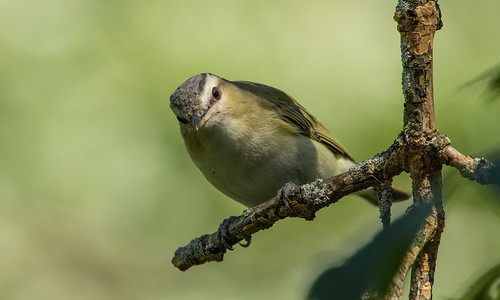
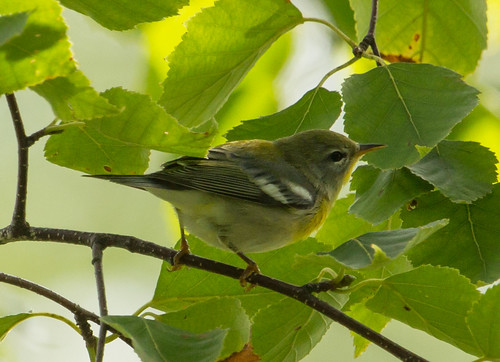
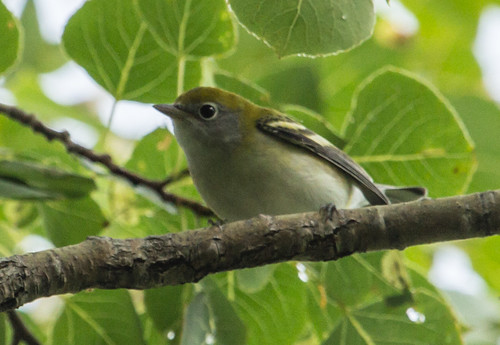
Struggling with Warblers?

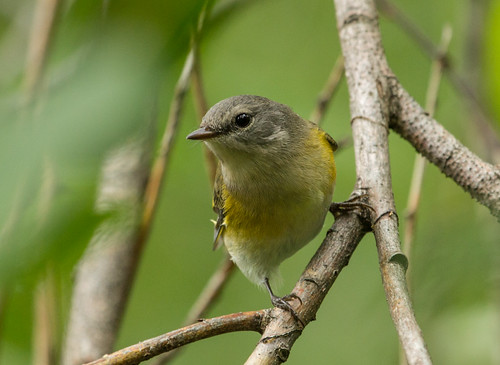
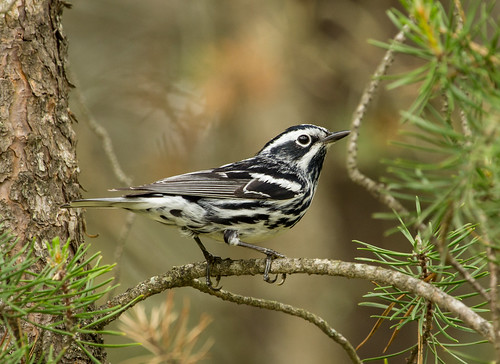
Black-and-white Warbler

When I was a college elementary education major, one of the most valuable things I learned was to never tell kids how easy learning something would be, even if it was something extremely easy for me. When teachers set up an expectation that a new skill or subject is simple, kids who have trouble with it will feel stupid, and kids who do master it won’t feel like they’ve accomplished anything special. I learned that self-esteem comes not from getting pats on the back but from worthwhile accomplishments and mastery of worthwhile subjects. As a teacher, that was the one simple rule I tried never to forget.

Roger Tory Peterson must have been thinking along those lines when he coined the term “confusing fall warblers.” Most of the warblers we see in spring are adult males, who catch our attention with their colors and songs. In fall, warblers don’t sing, and young of the year and adult females together vastly outnumber adult males. And adult males of some species have molted into duller feathers for winter. Knowing that identifying warblers in fall was not as straightforward as in spring made it feel like a fun challenge. Unfortunately, some people think identifying warblers in any season is a scary ordeal.

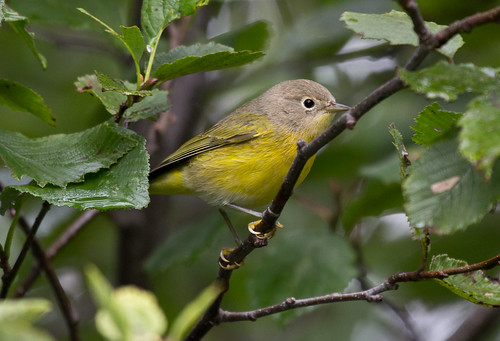
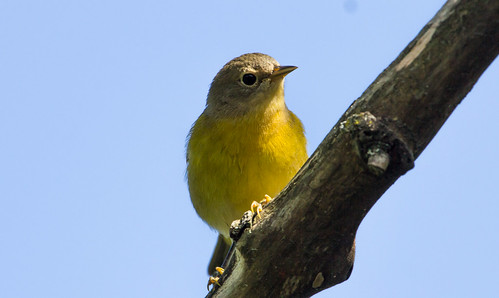
Nashville Warbler

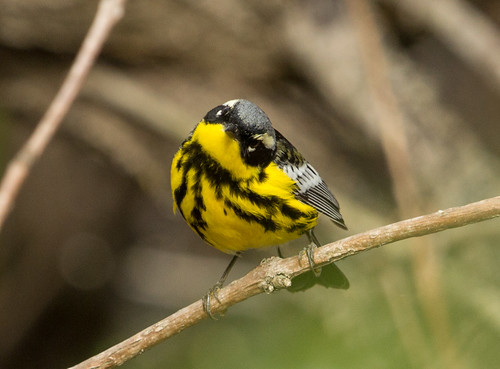
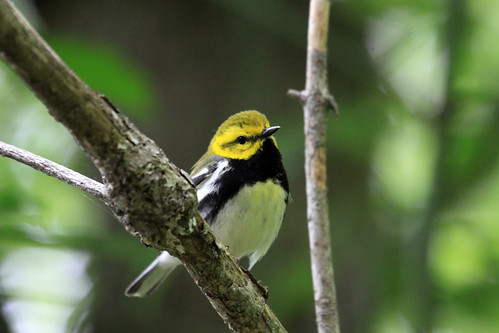
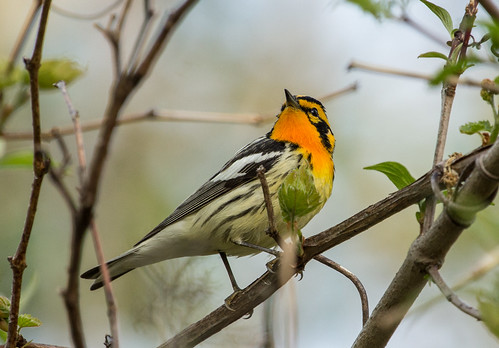
I started birding in the spring of 1975, and after being out virtually every day, ended the season with 5 warblers on my lifelist—Black-and-white, Nashville, Magnolia, Black-throated Green, and Blackburnian. It was tricky amassing even this little list—I’d see a warbler in a tree, try to notice the basic color pattern and whether it had an eye line, eye ring, wing bars, and other distinctive marks, and then search through the warbler pages hoping to find one with those characteristics. Most of the time when I found a bird in the book that might have been it, I’d look up and the bird would be gone. One time I saw a warbler with bright yellow beneath and black streaks down the breast forming what looked like a necklace. I was sure it didn’t have wing bars and so according to my field guide it had to be a Canada Warbler, but when I looked up in the same branch to confirm my ID, I saw that it had huge wing bars forming a white patch. I searched my book again, and now it was a Magnolia Warbler. This time I managed to go back and forth between the bird and field guide several times to confirm. In retrospect, I’m sure the bird I originally saw really was a Canada, but with my limited experience, I wasn’t quick enough to take everything in, and didn’t know enough about how migrating warblers associate in mixed flocks to even imagine I’d actually seen two different species.

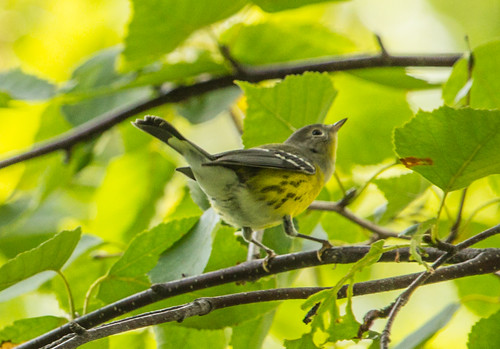
Magnoila Warbler

I spent every free minute that summer birding, and by the end of July had added another four warblers: the Ovenbird, Common Yellowthroat, Yellow Warbler, and American Redstart. Now I was excited about the challenges of those “confusing fall warblers.” I managed to tease out the identities of another four species that fall: Yellow-rumped, Tennessee, Palm, and Wilson’s, ending my first year with 13 warbler species. The following spring I was quicker and more skilled at teasing out identifications, and more than doubled my warbler list to 29 species.

Black-throated Green Warbler


When I wasn’t out birding, I was inside poring over the pages of my field guides, over and over. I mastered warblers a little quicker than many beginners not because I had better eyes or the best books, but because I spent so many hours at it. In his book, Outliers, Malcolm Gladwell says to truly succeed in any endeavor, one must spend 10,000 hours on it. I put in at least 40 or 50 hours a week birding or studying my field guides that first spring, and by the time we were living in Madison, Wisconsin, I was putting in even more time, year-round.

Some people who are smarter or more visually or aurally adept than I have probably mastered birds more quickly, but when it comes right down to it, the way you truly learn birds so identifying them becomes second nature is by putting in the time and work. The delightful thing about birding is that the work involved is so very pleasurable. I may have only identified five species of warblers my first spring, but every one of them made me happy, and the flood of warblers that got away before I could figure them out didn’t frustrate me—they filled me with anticipation of a lovely time in the future when I would recognize them all. This is the 40th year I’ve spent watching warblers, and every moment spent looking at them has been a joy.

Blackburnian Warbler

Thursday, September 11, 2014

Early Cold Front vs. Hummingbirds

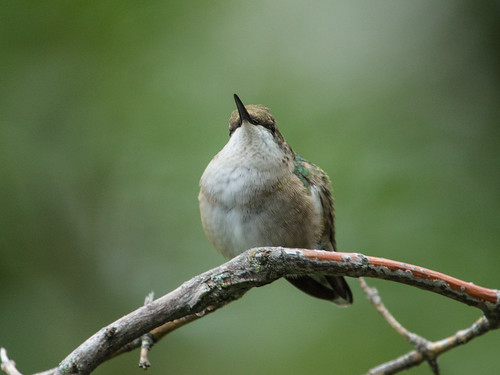
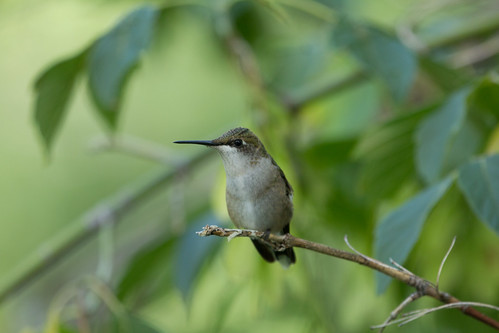
Ruby-throated Hummingbird
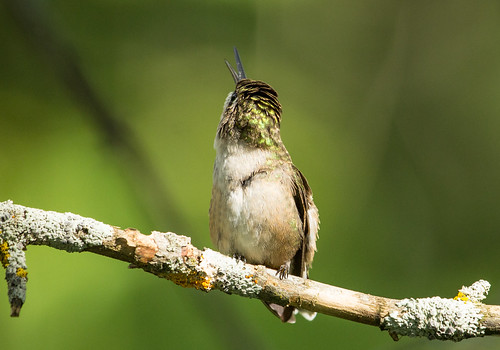
This hummingbird is taking a rest after filling up at my feeder. S/he is all fluffed up,
so appears very fat. "Lofting" the feathers like this thickens the insulation, keeping the
little bird warmer. The temperature was 46 degrees F. when I took the photo on Sept. 10.

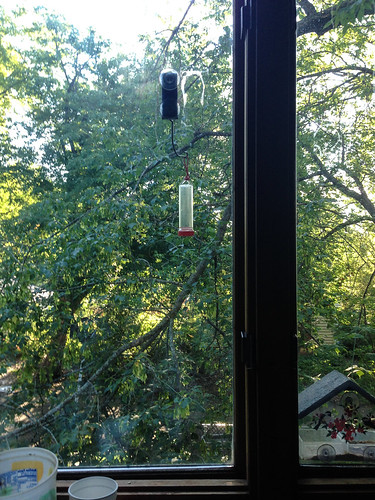
A cold weather system, with gale-force winds, this season’s first frost warnings, and temperature highs in the 40s, was predicted to blow into Duluth in the evening on September 9. I’d had several hummingbirds using and fighting over my feeders for the previous week, and they seemed especially voracious on the 9th, perhaps noticing the dropping barometric pressure. An ant had somehow worked its way into my office window feeder and drowned on the 8th, and when I noticed it in the feeder at midmorning on the 9th, I opened the window and brought the feeder in to change the water. When I came back, one hummer was hovering in the open window. It didn’t fly away as I walked directly toward it and lifted the feeder—once I got the feeder within three or four inches of it, it simply maintained that distance, hovering backwards and sideways as I hung the feeder back up. The little guy was already drinking before I even let go of the feeder, much less closed the window.

I thought most of my hummers would leave on the 9th, but at 6:30 am on the 10th, while it was still quite dark, a hummingbird started feeding at one of my feeders. In order to have found it in the dark, I’m assuming this one spent the night in my yard. All day I had hummingbirds—often two or three at the same time, sometimes engaging in brief chases.

People used to ask me all the time about a “rule” they’d learned, and heard repeated on old TV nature programs, that we should bring in our hummingbird feeders by Labor Day or hummingbirds would linger too late into the fall and end up dying. This year, Labor Day happened to fall on September 1—the earliest date it can fall on. And this year, spring was considerably later than normal, delaying the breeding season for many birds, so if hummingbirds really did schedule their lives around federal holidays, they’d have had an exceptionally short window of time in which to complete all the essential tasks of raising young. Even with the brief breeding season, virtually all adult males and even most adult females had hightailed it out of here by the end of August, including both the adults passing through from further north and those that bred here. But on Labor day this year, at least a few breeding females were almost certainly still recovering from the grueling responsibilities of raising young, and a great many of the young that hatched out this year were still putting on weight and perfecting the life skills they needed before lighting out for the territory.

With so many hummingbirds about and such cold weather headed our way, a lot of people are asking me about whether they should bring in their hummingbird feeders now. But the answer is a simple and emphatic NO. Ruby-throated Hummingbirds have a powerful migratory instinct. They leave, one by one, as soon as their bodies are in migratory readiness.

Keep your feeders clean and the sugar water fresh. During cold, wet conditions, make the mixture a little stronger—about a third of a cup of sugar per cup of water. That may help any birds that had bad luck during the breeding season make it through these early cold spells. When temperatures rise again, at least some insects will become active again, and unless there’s a killing frost, flowers will still have some nectar. One by one, as soon as the birds have enough body fat, they’ll leave. Except for outliers that look completely different from others, it’s impossible to know which of our birds are sticking around for a few days to gain weight and which are grabbing a quick meal as they pass through, but hummingbird scientists and my own experience guarantee that the birds capable of migration will, indeed, head out as soon as their fat reserves allow. The trick will be to get enough food to build up those reserves. In a cold autumn, our feeders can make the difference between life and death for some of these irreplaceable birds.


Wednesday, September 10, 2014

Audubon's Climate Change Report

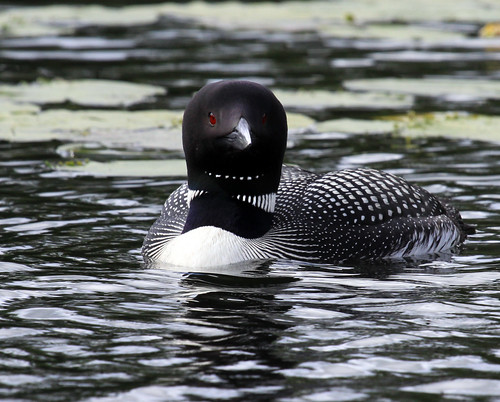
Common Loon

I’ve been looking forward to September 9 for months—it was the day the 2014 State of the Birds report was due to come out. This is the fifth edition of this annual report, put together by a large group of non-profits, such as the Cornell Lab of Ornithology, the American Bird Conservancy, Audubon, and Ducks Unlimited, working with government agencies such as the U.S. Fish and Wildlife Service, the U.S. Forest Service, the National Park Service, and  Environment Canada. I got to help with the first issue, released in 2009 when I was serving as the science editor at the Cornell Lab of Ornithology, and know how careful the group is at reaching its conclusions. 

The report this time has some disturbing findings. Their “Watch List” of vulnerable species in the United States and Canada, each meeting their criteria of a combination of high rate of population decline, small population size, small geographic range, and significant future threats to sustainable populations, includes 230 species.

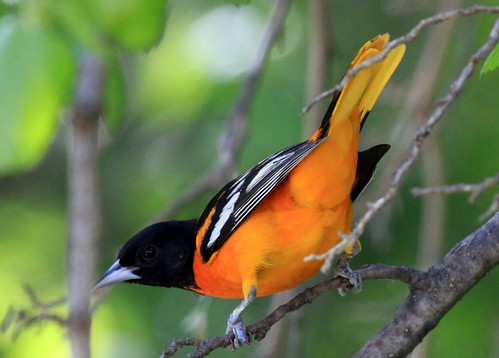
Baltimore Oriole

First thing in the morning on September 9, my email box became inundated with questions from people about the predicted loss, by the end of this century, of nesting loons in Minnesota and Baltimore Orioles in Maryland, and naturally I assumed they were referring to the State of the Birds report. But it turns out Audubon chose the same day to release a completely separate Climate Report

Audubon put together a comprehensive study, using current models of how the changing climate is and will continue to change habitat, to see how climate change could affect the ranges of 588 North American bird species. Their models indicate that 314 species will lose more than 50 percent of their current range by 2080. Of them, 126 species are projected to lose more than 50 percent of their current range by 2050 if the changes due to global warming continue at their current pace.

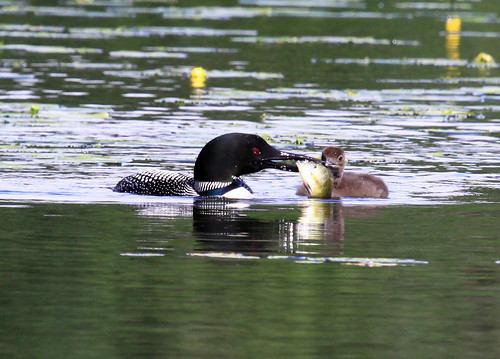
Common Loon

To get the attention of the media, Audubon used two extremely popular state birds—the Baltimore Oriole and the loon—as their poster children for the report. And almost all the people writing me were asking about our beloved loon. Current projections by Audubon for the Common Loon indicate that by 2080, the breeding range will retract as water temperatures rise. Loons require extremely clear water for catching fish, and the algae growth associated with warmer temperatures will little by little force breeding loons out of Minnesota and Wisconsin. Unfortunately, loons already breed at the farthest northern reaches of the continent, so as they lose ground in the southern part of their range, they can’t expand to the north. By 2080, they’re expected to have only 44 percent of their breeding range remaining.

Audubon used Christmas Bird Count data to indicate winter ranges of birds, making the situation for loons sound even direr, because Audubon predictions indicate that loons will lose 80 percent of their winter range. But really, loons are often still migrating during much of the Christmas Bird Count period—the vast majority of our loons winter on salt water in the Atlantic or the Gulf of Mexico. Of course, that situation is also worrisome, because of major changes in fish populations as ocean water temperatures rise.

The Audubon projections for Baltimore Orioles do, indeed, show the breeding range moving north and out of Maryland, but nevertheless, Baltimore Orioles are projected to enjoy an overall range increase, as cottonwoods retract from a small area but expand into what is now boreal forest. Through 2080, Audubon projects that Baltimore Orioles will enjoy a 76 percent increase in suitable breeding range.

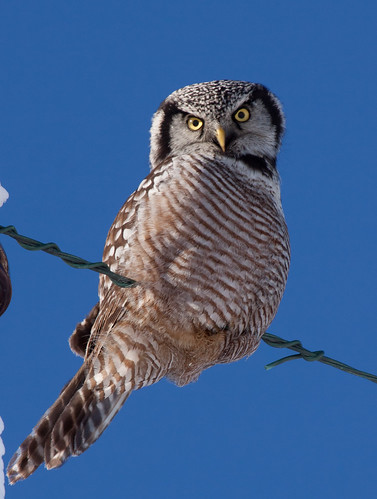
That increase will come at the expense of birds depending on what is now boreal forest. Our beloved Northern Hawk Owl—a wonderfully confiding and charismatic visitor in winter and occasional breeder in the bog country just north of Duluth—is among the 30 species threatened with the loss of more than 90 percent of their current range by 2050.


What can we do to help? Conserving energy will not only reduce the carbon gases we send into the atmosphere but reduce a whole suite of other dangers to birds caused by extracting, transporting, and burning fossil fuels. It’s simply the right thing to do.

Northern Hawk Owl

Tuesday, September 9, 2014

Predation and Hummingbirds

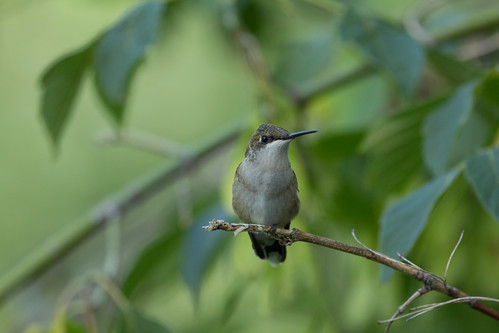
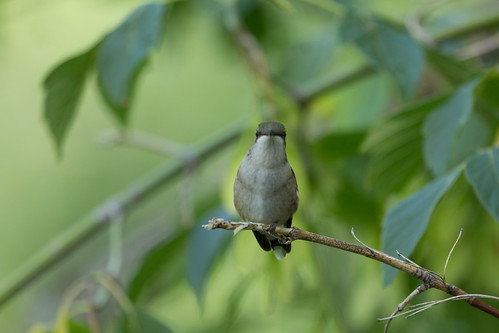
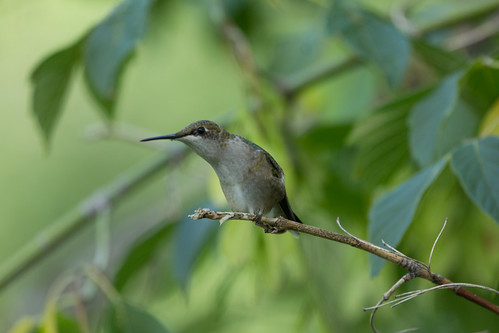
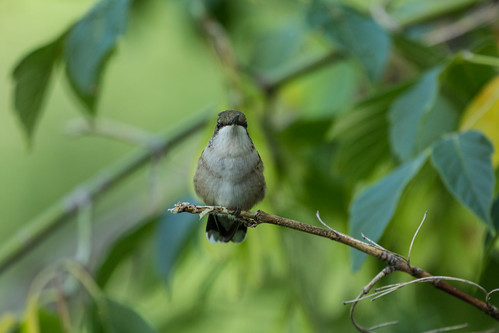
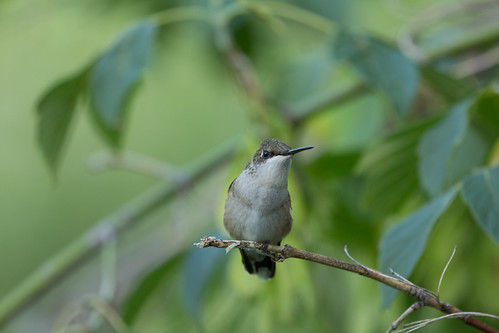
Resting Ruby-throated Hummingbird
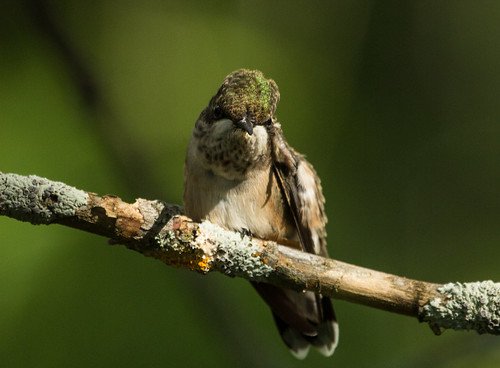
All the photos shown in this blog entry were taken within 4 seconds when the bird was "resting" but
looking every which way

I’ve been a member of several professional ornithological societies since the 1970s, and love reading the scientific papers in their journals. Of course, some studies are stronger than others. When my children were babies, I often read journal articles aloud to them while I was nursing them or rocking them to sleep, and remember chuckling about the conclusions of one particular paper from 1985 claiming that hummingbirds do not have natural predators. The paper summarized the authors’ literature search in which they could find only 13 documented cases ever of hummingbird adults being taken by predators, and concluded that “hummingbirds in North America do not have ‘natural predators’ in the usual sense.”

Most of the studies I read in journals correspond to and provide insights into my own observations, but not this one! I could see hummers right outside my own window taking breaks after a stomach-filling drink. They never tucked in their head and just snoozed, but were ever vigilant, looking every which way every moment. In some extreme temperature situations, hummingbirds do go into a deep sleep called "torpor," but that's only when the physiological costs of maintaining their body temperature are too high under the current weather conditions, and presumably they find as safe a place as possible to retreat to for those times when they can't be watching for danger. 

Now that I take photos, I often set my focus on a sitting hummer and click away as fast as my camera’s burst function allows. Whether a hummer is resting or preening, in any single burst of pictures I’ll get images of it looking every which way. Of course, just like chickadees, warblers, and other sensible birds, hummingbirds have to get used to me at the window before they will allow me to photograph them. They fly off at any unexpected sound or movement from any direction. Hummingbirds are extraordinarily pugnacious, and chase off competitors, so some of this vigilance is almost certainly to help them discover rivals for their food resources, but their flying off at any unexpected sound or movement is indicative of wariness, too. And like my backyard chickadees, they have the intelligence to figure out through experience and observation which sights and sounds indicate a competitor, which might pose a danger, and which animals and people are probably innocuous. Even though some individual hummingbirds come to ignore my presence, just like my chickadees, these ostensibly less-wary hummingbirds fly off the instant I do anything unexpected.
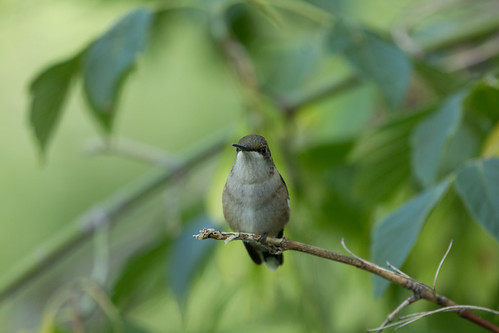
Resting Ruby-throated Hummingbird

I don't normally take issue with scientific papers, especially those written almost three decades ago. But this particular paper, written by Miller and Gass (of Yale and the University of British Columbia), and titled “Survivorship in Hummingbirds: Is Predation Important?” has been quoted extensively in the literature since its 1985 publication in The Auk, despite some papers since then taking issue with the conclusions. Even the Ruby-throated Hummingbird entry in The Birds of North America Online (BNA), published and kept up to date by the American Ornithologists’ Union and the Cornell Lab of Ornithology, refers to it even as it cites several cases of predation not mentioned in it. 

I started looking specifically at this paper after reading a chapter about hummingbirds in a best-selling book published just this year, The Thing with Feathers: The Surprising Lives of Birds and What They Reveal about Being Human. Noah Strycker, the author, quotes extensively and unquestioningly from the original paper, so I tracked it down to see whether I was misremembering, and maybe it was better than my vague lingering impression. But no, in fact it was even worse.

The authors really did claim to have done a thorough search of the literature and really did claim to have been able to find only 13 cases ever of predators attacking hummingbirds in North America as of 1985. But just using my home references and a quick search of the Internet, I found several reports of predation on hummingbirds published before 1985 that they didn’t include. And even worse, in the case of at least one paper, they seem to have read no further than the title.

Resting Ruby-throated Hummingbird

Miller and Gass cite a 1976 paper in The Condor by Sally Spofford titled “Roadrunner Catches Hummingbird in Flight,” in which she discusses a case she witnessed of a Greater Roadrunner grabbing a Black-chinned Hummingbird in mid-air at her Arizona feeder. That accounts for the single case of roadrunner predation cited in Miller and Gass, but Spofford also wrote, in the same brief paper, that on another occasion, she had seen a roadrunner pounding a black-chinned hummer to death on the ground, though she didn’t know whether that one had captured it in mid-air or not, and wrote that she’d found the tail feathers of a Blue-throated Hummingbird female that had been ripped out by a roadrunner—in that case, the little bird got away and she had seen it without its tail feathers afterwards. Of their 13 cases of predation, Miller and Gass cite only one case ever of roadrunner predation on hummers. Their omission of two cases in the very paper they cite makes their total off by 15 percent—a serious error that should have been picked up in the peer review process and corrected before publication.

But it also begs the question why the authors believed that a literature search could possibly include every case of predation on hummingbirds in the first place. Back in 1982 when Russ and I birded in Arizona, I remember people saying that roadrunners were known to snap up hummingbirds, and every account I’ve ever read about roadrunners, including those published before 1985, mentioned that they feed on small birds. It was common knowledge. Sally Spofford’s paper made it into a major journal simply because she had observed a roadrunner flying off her roof to take a hummingbird while both birds were in flight, rather than snapping at it while the roadrunner was perched or on the ground. That technique of roadrunner predation hadn’t been known before. Now, of course, thanks to email and the Internet, along with citizen science projects, we’ve got a lot more easy access to sightings of predation, at least for backyard birds, than was possible for Miller and Gass. The Birds of North America Online's entry for the Greater Roadrunner states “Frequently ambush hummingbirds at feeders.” I’ve read accounts from many people in the Southwest who’ve had to take in their hummingbird feeders because roadrunners were snapping up their hummers.

Resting Ruby-throated Hummingbird

Cases of predation on hummingbirds by insects and frogs were completely dismissed by Miller and Gass as “unusual or even bizarre,” although of the 13 cases they cite in their own paper, 6—almost half—are by insects and frogs. Ruby-throated Hummingbirds often feed on jewelweed at the edge of ponds and streams, so it isn’t surprising that sometimes a frog grabs one. In one of his Hilton Pond reports from 2007, Bill Hilton, Jr., wrote about watching a frog leap at but miss a hummingbird.

With regard to insects, again, it was easy for me to find cases in the literature from well before 1985. In his Audubon Society Encyclopedia of the Birds of North America, published 5 years before the paper, John K. Terres found three cases in the literature of Ruby-throated Hummingbirds being taken by praying mantises—one more than Miller and Gass found. Nowadays cases of praying mantises killing hummingbirds are well known. My quick google search of “praying mantis and hummingbird” found gruesome photos of at least 10 different cases of these predatory insects feeding on hummingbirds on just the first screen of results! That information was obviously not available to Miller and Gass, but should be known by anyone writing about hummingbird predation in 2014. 

Miller and Gass didn't mention a 1934 case cited in Bent’s Life Histories of a Ruby-throated Hummingbird on the ground in the clutches of a large dragonfly. Duluth’s own Pershing Hofslund had a paper published in The Loon in 1977 titled “Dragonfly attacks and kills a Ruby-throated Hummingbird,” about another incident of that. Those cases should have been mentioned in the 1985 paper—again, I'm surprised that this wasn't picked up in peer review. And again, nowadays it’s easy to find more cases. Bill Hilton, Jr., shows photos of one couple that came upon a hummer pinned down by a robber fly, already missing a round patch of feathers on its skull by the time they rescued it. (Robber flies often eat just the head contents of large prey.)

Miller and Gass don’t mention predation by fish—something I once witnessed personally, and something cited in Bent’s Life Histories from a 1922 report by Lockwood. They also don’t mention what The Birds of North America Online emphasizes as the most common predator of hummingbirds near human activity, the domestic cat.
Resting Ruby-throated Hummingbird

The Thing with Feathers emphasizes that hummingbirds are immune from even bird-hunting raptors, too. “Because bite-sized hummers are so quick and light, they don’t have to worry much about hawks and other attackers.” It is indeed hard for hawks to grab a hummingbird, and the payoff is indeed less than grabbing, say, a chickadee or warbler, but then again, the payoff for catching those little songbirds is less than grabbing a Blue Jay. That hardly means a Merlin or American Kestrel will pass up a chance to snatch one of those little birds—raptors grab for anything they can. Dragonflies are just about as quick and even lighter than hummingbirds, yet are a major food source for kestrels migrating through Duluth. Frank Nicoletti published a paper in 1996 in The Loon showing how the migration of both American Kestrels and even the bigger, tougher Merlins correlates with green darner dragonfly movements at Hawk Ridge. So imagining that either species would pass on a “bite-sized hummer” is ridiculous. Miller and Gass do cite one known case of a Ruby-throated Hummingbird in the stomach contents of a Merlin—a case also reported in Arthur Cleveland Bent’s Life Histories of North American Birds. But Bent also reports a Rufous Hummingbird taken by a Merlin—yet another published incident not mentioned in Miller and Gass's paper. The Birds of North America Online cited known predation on Ruby-throated Hummingbirds by Mississippi Kite, Sharp-shinned Hawk, American Kestrel, Merlin, and Loggerhead Shrike. Bill Hilton, Jr., a hummingbird bander and recognized authority on them, also lists herons, egrets, gulls, large flycatchers, jays, tanagers, grackles, and orioles to the list of known avian predators on hummingbirds in one of his Hilton Pond reports from 2007. 

Living under Hawk Ridge as I do, and having counted raptors at the Ridge and from the Lakewood Pumping Station, I’ve personally witnessed Sharp-shinned Hawks, Merlins, and American Kestrels chasing hummers several times over the years, though they zipped behind vegetation before I could see how any of the chases ended. I’ve also never seen how a chase ended when a sharpie or Merlin was chasing a warbler. I’ve occasionally seen these raptors feeding on birds, but unless I’m very close or their meal is something big like a robin or jay, it’s usually hard to identify the tiny morsels. I suspect any self-respecting Merlin could rip apart and swallow a hummingbird as they do dragonflies, on the wing. People counting migrating birds seldom have the leisure to track birds for any length of time, and it's rare to see any predation events at any time, so my never having seen dead hummers in the talons of raptors hardly indicates that it never happens.

Some researchers have accepted Miller and Gass even while noting that hummingbirds show a lot of predator avoidance behaviors. Steven L. Lima wrote in his paper, "Energy, predators and the behavior of feeding hummingbirds" published in July 1991 in Evolutionary Ecology:
When Anna's hummingbirds (Calypte anna) are faced with an obstructed view of their surroundings, they engage in behaviour suggestive of anti-predatory vigilance. In doing so, they voluntarily reduce their rate of energy intake. These birds also forgo better feeding opportunities that occur close to the ground, where observations suggest they are wary of opportunistic predators such as roadrunners (Geococcys californianus). While energy-based concepts will remain useful in the study of hummingbird feeding behaviour, the lack of predation on these birds should not be equated with an insensitivity to the risk of predation.
The conclusions of Miller and Gass's paper were also specifically addressed in a paper by Zenzal and others published in 2013 in the Southeastern Naturalist, “Observations of Predation and Anti-predator Behavior of Ruby-throated Hummingbirds during Migratory Stopover.” The new paper pretty much concludes exactly what I do regarding predation during migration—that it is, indeed, one of the hazards facing migratory hummingbirds when passing over or spending time in migratory stopovers. These authors cite both cases of known predation and observations of the wariness of hummingbirds in their study areas.

As far as I can tell from observations at home, predation is also a factor for nesting hummingbirds. Merlins nest in my neighborhood, and the summering adult hummingbirds I’ve observed in my yard are just as vigilant as those passing through during migration. Merlins are exceptionally vocal, and anytime I’ve ever heard one call, any hummers at my feeder have instantly zipped away.

Resting Ruby-throated Hummingbird

Miller and Gass write that “the exponential increase in field research on hummingbirds in the last decade and the lack of a corresponding increase in reports of predation” supports their case that predation on hummers is exceptionally rare. But scientists should realize that for a paper to be published in a journal, it must show something new, as Spofford's observation of the roadrunner grabbing a hummingbird on the wing did. Also, although studies of hummingbirds have, indeed, increased, studies involving killing raptors to examine their stomach contents have not only decreased—they've virtually ended. Miller and Gass's argument reminds me of the patently ridiculous argument I had to deal with back in the 1980s when an ornithologist claimed birds were no longer being killed at communications towers, because he’d done an exhaustive search of The Auk, and no papers had been published about it in a couple of decades. He was clearly looking only at the titles of papers. It became well established by the 1960s that migrating birds were being killed at towers in large numbers at night, especially in foggy conditions, so by the 80s, that was not a publishable new finding. Yet even in the 80s, The Auk was publishing papers in which dead birds picked up under communications towers constituted a significant portion of data sets used to assess the timing of migration, how much body fat migrants carry, and other issues only tangentially related to tower kills. 

It would be prohibitively difficult with the technology from 1985, or even today, to do a systematic study of predation on hummingbirds, just like it would be prohibitively difficult to do a systematic study of predation on, say, Bay-breasted Warblers or Golden-crowned Kinglets, but that hardly means it makes sense to assume that predation on those species could possibly be negligible. Like loons and a few other relatively long-lived species, hummingbirds produce only 2 eggs per clutch. And like other species with low reproduction rates, they have developed strategies for minimizing losses to predation. A hummingbird’s size and speed do, indeed, help it avoid being taken by predators, but its intelligence and wariness are even more critical. A single error at a flower near where a frog is sunning, flying a bit too close to the water where a large-mouth bass happens to be near the surface, staying at a feeder a second too long as a Merlin wings by, not noticing a roadrunner lurking in a flower bed—any momentary error can be the last for any bird, including hummingbirds.

I love seeing writers referring to the scientific literature in books and magazine articles for general readers, and know that any conclusions I make from my own personal experiences can be colored by my expectations, so I try to be careful and fair when discounting any study. But really, it doesn’t make sense to base a whole chapter of a major book on a study from almost 30 years ago that has since been refuted in the literature—especially regarding birds that give us so many opportunities for personal observation and about which so much information is easily available on the Internet. There are many interesting things in the book The Thing with Feathers, but the chapter on hummingbirds is making me read the rest of it with a very large grain of salt.
Resting Ruby-throated Hummingbird

Friday, September 5, 2014

Mark Twain's Autobiography: Hunting Pigeons and Turkeys


I’ve been reading Mark Twain’s autobiography—I got the hardbound book a few years ago, and have now been listening to it as a “books on tape.” Frustratingly, whoever put together the index was not anticipating that ornithologists would be interested in reading Twain’s observations of birds. When I hear on the CDs something about a bird, I can’t find the entry in the book, but fortunately, thanks to the Mark Twain Project, I can easily track it down on line. 

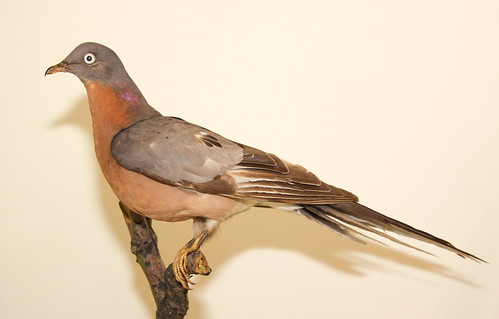
With the recent 100th anniversary of the extinction of the Passenger Pigeon, I found Twain’s childhood memories of them fascinating. He wrote, 

I remember the pigeon seasons, when the birds would come in millions, and cover the trees, and by their weight break down the branches. They were clubbed to death with sticks; guns were not necessary, and were not used.
Passenger Pigeon
Passenger Pigeon

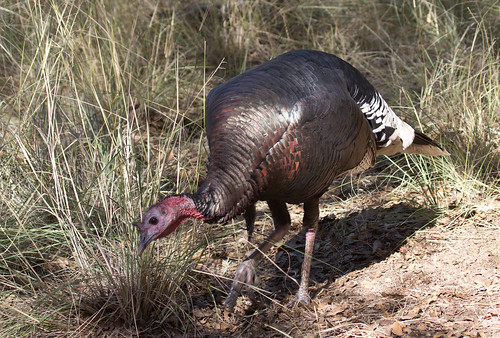
Twain also wrote a hilarious account of hunting for turkeys. I’ve had to abridge it for the radio, but here's the entire story. I’ve only edited out parentheses and page numbers from the Mark Twain Project pages.

In the first faint gray of the dawn the stately wild turkeys would be stalking around in great flocks, and ready to be sociable and answer invitations to come and converse with other excursionists of their kind. The hunter concealed himself and imitated the turkey-call by sucking the air through the leg-bone of a turkey which had previously answered a call like that and lived only just long enough to regret it. There is nothing that furnishes a perfect turkey-call except that bone. Another of Nature’s treacheries, you see; she is full of them; half the time she doesn’t know which she likes best—to betray her child or protect it. In the case of the turkey she is badly mixed: she gives it a bone to be used in getting it into trouble, and she also furnishes it with a trick for getting itself out of the trouble again. When a mamma-turkey answers an invitation and finds she has made a mistake in accepting it, she does as the mamma-partridge does—remembers a previous engagement and goes limping and scrambling away, pretending to be very lame; and at the same time she is saying to her not-visible children, “Lie low, keep still, don’t expose yourselves; I shall be back as soon as I have beguiled this shabby swindler out of the county.” 
When a person is ignorant and confiding, this immoral device can have tiresome results. I followed an ostensibly lame turkey over a considerable part of the United States one morning, because I believed in her and could not think she would deceive a mere boy, and one who was trusting her and considering her honest. I had the single-barrelled shot-gun, but my idea was to catch her alive. I often got within rushing distance of her, and then made my rush; but always, just as I made my final plunge and put my hand down where her back had been, it wasn’t there; it was only two or three inches from there and I brushed the tail feathers as I landed on my stomach—a very close call, but still not quite close enough; that is, not close enough for success, but just close enough to convince me that I could do it next time. She always waited for me, a little piece away, and let on to be resting and greatly fatigued; which was a lie, but I believed it, for I still thought her honest long after I ought to have begun to doubt her, long after I ought to have been suspecting that this was no way for a high-minded bird to be acting. I followed, and followed and followed, making my periodical rushes, and getting up and brushing the dust off, and resuming the voyage with patient confidence; indeed with a confidence which grew, for I could see by the change of climate and vegetation that we were getting up into the high latitudes, and as she always looked a little tireder and a little more discouraged after each rush, I judged that I was safe to win, in the end, the competition being purely a matter of staying power and the advantage lying with me from the start because she was lame. 
Along in the afternoon I began to feel fatigued myself. Neither of us had had any rest since we first started on the excursion, which was upwards of ten hours before, though latterly we had paused a while after rushes, I letting on to be thinking about something, and she letting on to be thinking about something else; but neither of us sincere, and both of us waiting for the other to call game but in no real hurry about it, for indeed those little evanescent snatches of rest were very grateful to the feelings of us both, it would naturally be so, skirmishing along like that ever since dawn and not a bite in the meantime; at least for me, though sometimes as she lay on her side fanning herself with a wing and praying for strength to get out of this difficulty a grasshopper happened along whose time had come, and that was well for her, and fortunate, but I had nothing—nothing the whole day. 
More than once, after I was very tired, I gave up taking her alive, and was going to shoot her, but I never did it, although it was my right, for I did not believe I could hit her; and besides, she always stopped and posed, when I raised the gun, and this made me suspicious that she knew about me and my marksmanship, and so I did not care to expose myself to remarks. 
I did not get her, at all. When she got tired of the game at last, she rose from almost under my hand and flew aloft with the rush and whir of a shell and lit on the highest limb of a great tree and sat down and crossed her legs and smiled down at me, and seemed gratified to see me so astonished. 
I was ashamed, and also lost; and it was while wandering the woods hunting for myself that I found a deserted log cabin and had one of the best meals there that in my life-days I have eaten. The weed-grown garden was full of ripe tomatoes, and I ate them ravenously though I had never liked them before. Not more than two or three times since have I tasted anything that was so delicious as those tomatoes. I surfeited myself with them, and did not taste another one until I was in middle life. I can eat them now, but I do not like the look of them. I suppose we have all experienced a surfeit at one time or another. Once, in stress of circumstances, I ate part of a barrel of sardines, there being nothing else at hand, but since then I have always been able to get along without sardines.


Wild Turkey
Wild turkey

Thursday, September 4, 2014

Merlin Tag Team

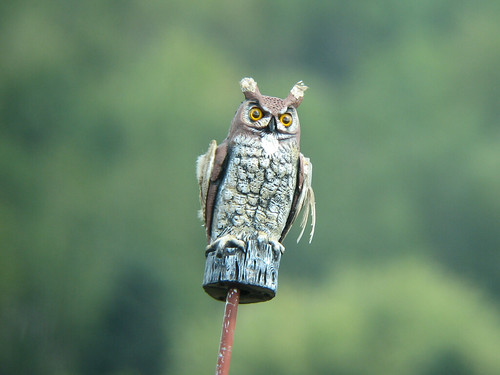
Owl decoy
An old Hawk Ridge owl decoy from 2005

When new visitors come up to Hawk Ridge in Duluth, they’re often mystified by the two owl decoys set on poles near the counter’s platform. Our researchers affix a few actual bird feathers to them, making them look more realistic than most fake owls.

Owls are natural enemies of hawks and falcons. I've heard people explain that owls eat hawk eggs, but that's simply not true. Owls can't carry smooth, slippery eggs in their talons--they'd drop or puncture them. And if they tried to swallow an egg right there in the nest, their sharp mandibles would puncture it, leaking the goopy contents onto their face. No, when owls attack nesting hawks, they're aiming for the chicks or the parent. The Cornell Lab of Ornithology's nest cam once caught video of a Great Horned Owl attacking an incubating female Great Blue Heron. The owl certainly could not have carried her off, but could tear chunks of meat off in place, to eat herself or to carry to her own young. Great Horned Owls were the primary cause of mortality for young but full-sized Peregrine Falcons during the reintroduction programs in Minnesota. Most hawks are fairly helpless in the dark, but that doesn’t mean the hawks can’t do anything to defend themselves—if they spot a Great Horned Owl during the day, they do their best to chase it off, lowering the chances that the owl will observe their roosting place.

Merlin
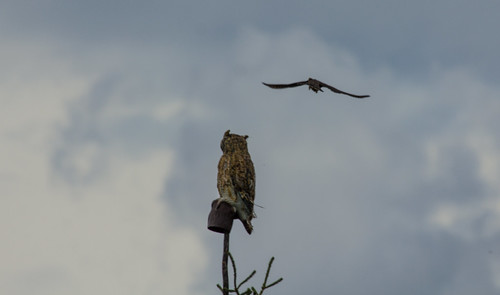
Here comes the Merlin!


The hawks and falcons passing along Hawk Ridge are migrating through, and most Great Horned Owls are rather sedentary, so hawks moving through an area don’t really have to worry about owls they pass over. Indeed, almost all the raptors flying along the Ridge ignore the decoys, but every now and then a hawk, usually a Sharp-shin or Merlin, dive-bombs one of them, giving our visitors a thrilling look. For some reason, Merlins very often repeat the attack more than a few times. They’re not stupid—they figure out soon enough that it’s a fake, but I like to think they get even angrier when they realize the decoy tricked them.

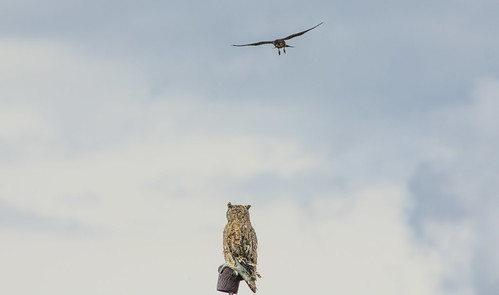
Merlin
Makes another pass.
When my friend Lisa and I were up at Hawk Ridge on September 2, we watched a slow but steady stream of migrating raptors and occasional flocks of waxwings. Suddenly, two Merlins appeared, flying right past the owl decoys, and suddenly both of them wheeled around and started attacking. Merlins are wonderfully powerful little falcons—not much bigger in outward appearance than kestrels—the American Kestrel averages 10 inches long with a 22 inch wingspan, while the Merlin is about the same length with a 23 ½ inch wingspan—yet the kestrel averages only about 4 ounces while the Merlin averages almost double—about 7 ounces. 

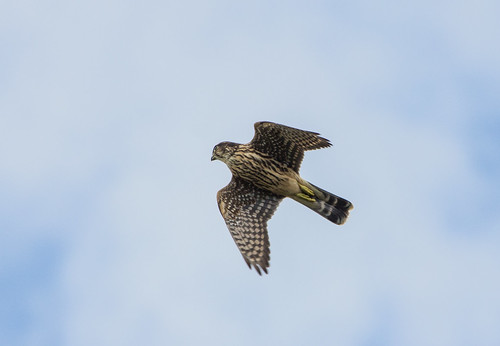
That added weight is all muscle—Pete Dunne often describes the difference between a Merlin and a kestrel as the difference between a Harley Davidson and a scooter. And these powerhouses are speedy, too, so it was tricky tracking them with my camera. I got a few photos by focusing on the owl and waiting till I saw a Merlin fly in. I was glad to get any photos at all, even though none of them turned out very well. After several passes at both decoys, the Merlins moved on, but something must have stuck in their craw because all of a sudden they were back, in full attack mode. The whole encounter lasted more than 5 minutes. I hate hearing Merlins calling in my own yard—I'm scared they're targeting my chickadees. But there's no tragedy in store for anyone when Merlins are dive-bombing a fake owl, so watching that is pure pleasure.

Merlin
Merlin making a final pass

Wednesday, September 3, 2014

Hawk Ridge Visit

Lisa and friends

On September 2, I spent a couple of hours up at Hawk Ridge with my friend Lisa. I didn’t get up there this August, which was sad—I was especially frustrated to not be up there on August 26, when Frank Nicoletti caught and banded the very first Prairie Falcon at the Ridge. How thrilling that must have been!

I used to be the August counter and the occasional emergency auxiliary backup counter during other months at Hawk Ridge, back in the 80s and early 90s. Our protocol at the time was to focus entirely on raptors, so though we made cursory notes about songbirds and other birds passing through, we didn’t make a point of counting them, and our skills at the time weren’t refined enough to distinguish among most warbler species or even to differentiate most warblers from vireos or flycatchers as they flew overhead—they were all small passerines unless we caught sight of distinctive field marks or heard distinctive calls as individuals flew past. We did keep a count of non-raptors up at the Lakewood Pumping Station—we called that Dawn Dickey Duty—but again, although our team was about as skilled as any for that time, our skills were nowhere near as great as those of counters at many spots nowadays, and right now, Hawk Ridge may have the best counter anywhere. Karl Bardon manages to keep track of not just every raptor but every other bird, along with dragonflies. 

The numbers get overwhelming, but on just the day I was there, Karl Bardon and Steve Kolbe counted 2,104 warblers, including 639 Nashvilles, 245 Tennessees, 263 Redstarts, and 928 that couldn’t be identified. He also counted 84 Canada Geese, a loon, 49 nighthawks, an Olive-sided Flycatcher and pewee, 3 kingbirds, a Philadelphia and a Blue-headed Vireo, 18 Red-eyed Vireos, 17 Blue Jays, 4 ravens, 2 Tree and 3 Barn Swallows, 6 Red-breasted Nuthatches, 7 Swainson’s Thrushes and 26 unidentifiable thrushes, 19 Chipping Sparrows, 30 Rose-breasted Grosbeaks, 43 Red-winged Blackbirds, 10 grackles, 31 Purple Finches, 1 House Finch, 14 Pine Siskins, and a goldfinch. He also tallied an appropriately solitary Solitary Sandpiper. The songbird migration was by far the heaviest first thing in the morning, long before we arrived in mid-afternoon.

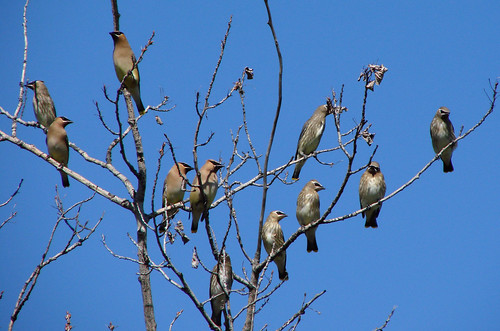
Cedar Waxwing
Cedar Waxwings--photo taken September 16, 2007

Karl and Steve counted 552 Cedar Waxwings the day we were there. The movement of Cedar Waxwings in August and September every year is one of my favorite migration spectacles. In 1975, my first year of birding, Russ and I spent the week around Labor Day at his parents’ place in Port Wing, and everywhere waxwings were perched in trees, calling and sallying out to snap up insects. And it was the same every year, so that waxwings became entwined in my very concept of August and September.

Fun as it is to watch waxwings move about in flocks, counting them adds challenge to the joy. The groups of birds—both large and small—seem to swirl about as the birds shift positions within the flock. Fortunately, they’re moseyers who never seem to be in a hurry, so a flock is usually in view long enough to get an accurate count, and even when we have just a quick look or are dealing with a huge flock, we can usually get a reasonable estimate. My hearing is not as good as it once was, but I can still pick up their wavering, high-pitched calls, like tiny mice snoring, and it’s impossible to hear or see them without smiling.

I saw a few dozen waxwings on my pleasant afternoon at Hawk Ridge, along with two Osprey, several Bald Eagles, a couple of Sharp-shinned and Broad-winged Hawks, three or four kestrels, and two Merlins. A chickadee wearing a leg band posed for some nice photos, along with a few White-throated Sparrows. Dragonflies were flying—I got one nice photo of a white-faced meadowhawk. All in all, I could have done a lot worse than spend a September afternoon at Hawk Ridge.

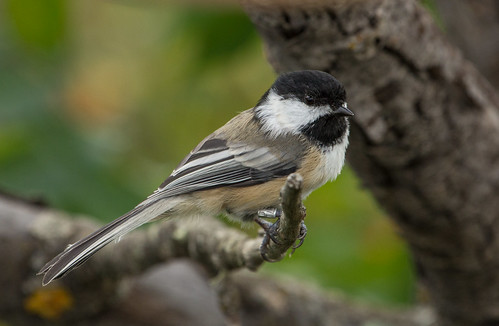
Banded Black-capped Chickadee
Black-capped Chickadee

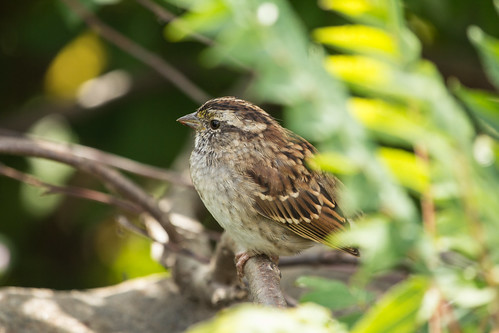
White-throated Sparrow


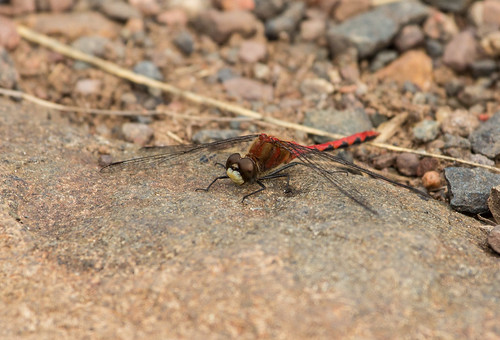
White-faced Meadowhawk
See Hawk Ridge's day-to-day count summaries at Hawk Count.

Tuesday, September 2, 2014

Migration Watching from My Window

View from my office window
View from my desk
I’ve been spending more time at my desk than I like lately, and it is especially frustrating with fall migration kicking in in a serious way. Fortunately, the box elder right next to the window by my computer is a most inviting tree, and so I get plenty of looks at wonderful birds even when I’m stuck indoors.

View from my office window
View from the open window

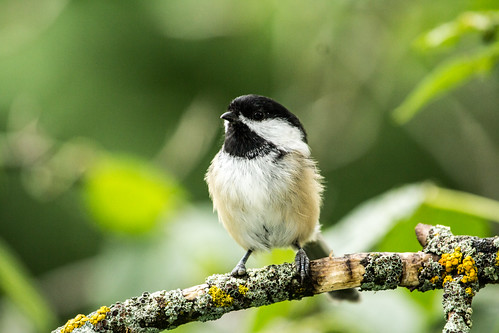
On September 1, for example, while other people were out celebrating Labor Day and I was indoors feeling sorry for myself, my little chickadee with the damaged foot, missing all its front toes, turned up. This is the same bird that had the deformed bill, with the upper mandible way longer than it should have been. Now it’s using the foot fairly gracefully. It got through this summer’s molt perfectly, so it’s in beautiful plumage right now, too. I was delighted to be able to photograph it right out my window, and it posed for some very nice pictures.

Black-capped Chickadee
My little chickadee with the missing toes

During migration, one of the bonuses of seeing chickadees is finding the birds that move about with them. Right through my window, I spotted Black-and-white, Nashville, and Magnolia Warblers, American Redstart, and Red-eyed Vireos.

Nashville Warbler
Nashville Warbler

Red-eyed Vireo
Red-eyed Vireo

And with so many birds right there, I knew there’d be more in other trees, so I headed out to the backyard to add Northern Parula, Tennesee, and Chestnut-sided Warblers, along with a Least Flycatcher and House Wren, and more Magnolia Warblers, redstarts and vireos.

Northern Parula
Northern Parula

Chestnut-sided Warbler

Magnolia Warbler
Magnolia Warbler

American Redstart
American Redstart

These are all migrants who don’t know their way around the neighborhood, but they were all hatched in Canada or further north in Minnesota, and know full well that chickadees know all the best places to find food or hide out from predators, and chickadees welcome any little birds that tag along with their sociable little flocks. It’s always a good idea to keep an eye out whenever chickadees are around, especially during migration. Even if you can’t step outside, you never know what’s going to show up out the window.

Black-capped Chickadee
My little chickadee

I haven’t seen an adult male Ruby-throated Hummingbird in a little over a week now—the only ones remaining are adult females and, mostly, young of the year. A couple of them stopped at my window feeder while I was working away. I’ve been losing some of my hearing, but I always seem to be able to pick up the humming sound their wings make—I’ve even heard it when the windows were closed, but on September 1 they were wide open.

Ruby-throated Hummingbird
My cooperative Ruby-throated Hummingbird (immature male)

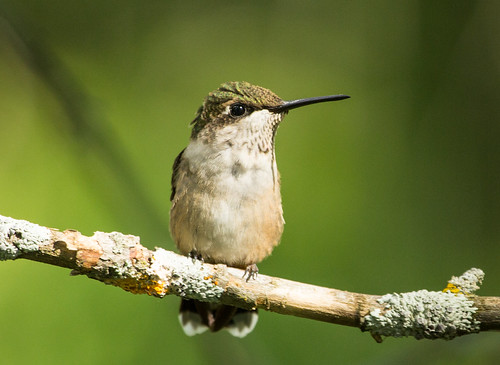
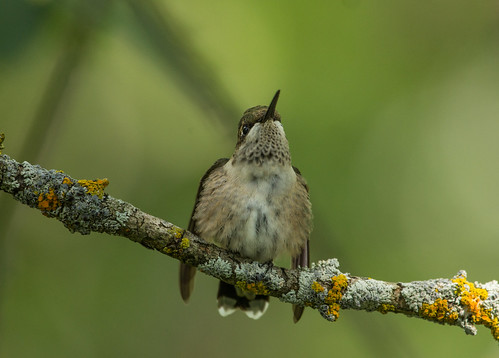
One immature male drank his fill and then perched in the box elder for a few minutes. I like to hold the button down on my camera to shoot a lot of photos at once—with hummers, you can get a lot of completely different shots of the same bird on the same perch, because even when they’re resting they’re looking every which way and preening and yawning and stretching.

Ruby-throated Hummingbird


Ruby-throated Hummingbird


Ruby-throated Hummingbird


My camera shoots several photos per second in the highest resolution setting, the only limitation being how fast the photos can be written to the memory card. I have a very high-speed card, but when the bird stays there being photogenic for more than 7 or 8 shots, the camera shutter stops for a few seconds. I got 54 shots of the bird all in the same spot, and just about all of them are focused, interesting, and different, but I also missed some really good shots during the camera’s down time. That used to fill me with frustration, but now I usually take it right in stride. That hummingbird moved on after its meal and rest stop, but another hummingbird will pass through, and another. I love being outside to see as many birds as I can during migration, but when I can’t, I can at least count on my trusty box elder to draw in a bunch of really cool birds.

eBird list for the day:

Rock Pigeon (Feral Pigeon) (Columba livia (Feral Pigeon))  2
Ruby-throated Hummingbird (Archilochus colubris)  2
Hairy Woodpecker (Picoides villosus)  1
Northern Flicker (Yellow-shafted) (Colaptes auratus auratus/luteus)  2
Pileated Woodpecker (Dryocopus pileatus)  1
Least Flycatcher (Empidonax minimus)  1
Great Crested Flycatcher (Myiarchus crinitus)  1
Red-eyed Vireo (Vireo olivaceus)  3
Blue Jay (Cyanocitta cristata)  7
American Crow (Corvus brachyrhynchos)  1
Black-capped Chickadee (Poecile atricapillus)  8
Red-breasted Nuthatch (Sitta canadensis)  2
White-breasted Nuthatch (Sitta carolinensis)  1
House Wren (Troglodytes aedon)  2
American Robin (Turdus migratorius)  2
Black-and-white Warbler (Mniotilta varia)  2
Tennessee Warbler (Oreothlypis peregrina)  1
Nashville Warbler (Oreothlypis ruficapilla)  3
American Redstart (Setophaga ruticilla)  8
Northern Parula (Setophaga americana)  1
Magnolia Warbler (Setophaga magnolia)  3
Chestnut-sided Warbler (Setophaga pensylvanica)  2
Chipping Sparrow (Spizella passerina)  3
White-throated Sparrow (Zonotrichia albicollis)  1
Northern Cardinal (Cardinalis cardinalis)  1
American Goldfinch (Spinus tristis)  3

Monday, September 1, 2014

Centenary of the Death of the Last Passenger Pigeon of Them All


On September 1, 1980, which happened to fall on a Labor Day just like this year, my brother called me up first thing in the morning—our dad had just collapsed and died of a heart attack. It was a shock—he was a 50-year-old Chicago firefighter, and he died at the fire hall immediately after a fire. My first child wasn’t born until the next year. I can see a bit of my dad in the mirror, and in my kids, yet to this day I feel viscerally how crushing the permanence of death is.

Christmas 1951

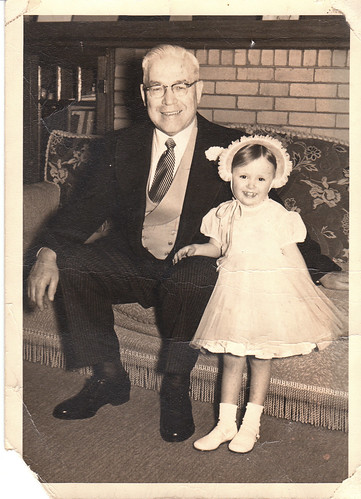
September 1 is the anniversary of another death, too—that of Martha, the very last Passenger Pigeon on earth. Martha died 37 years before I was born, but the profound sense of loss I feel for her came about long before I became a birder. I was sitting on my Grandpa’s lap—my father’s father—as he told me about how the skies used to be filled with beautiful pigeons until people killed every one of them. He’d never seen one, either. The year before he was born in 1896, the last recorded nest of a Passenger Pigeon was collected in Minneapolis, and he was only 4 when the last authenticated sighting of a wild Passenger Pigeon, in 1900 in Pike County, Ohio, was made by a boy with a BB gun. Despite large rewards for a living specimen, no more were ever again confirmed, dead or alive. So my Grandpa had no more memories of the species than I did, but he told me the stories his father and grandpa had told him, about the billions that once moved en masse through the country. My Grandpa read a newspaper story about Martha’s death when he was a teenager in 1914.

Grandpa and me

The concept of extinction was a difficult one for a preschooler to fathom, but my Grandpa’s profoundly sad look as he told me about this beautiful bird made me grieve, too. I saw at least one specimen of the long-lost species at Chicago’s Field Museum when I was taking college ornithology, and paid a lot more attention when I was teaching in Madison, Wisconsin. Several times I brought my middle-school students on field trips to the university zoology museum. The curator, Dr. Frank Iwen, always pulled Passenger Pigeons from the drawers for the kids to see. The birds were so beautiful, and his descriptions of the huge flocks and how people massacred them so vivid and gut-wrenching, that all the visceral feelings of sadness stirred by my Grandpa came flooding back, every time.

Frank then showed the kids specimens of declining species, and told us how critical it was for us to protect them so we wouldn’t one day be telling our children about reading in the paper about the death of the last Atlantic Puffin or Whooping Crane.

Passenger Pigeon

Today, two full generations after the Endangered Species Act was passed, a great many people have still not accepted this law of the land and are still trying to gut it rather than find legal ways to increase their personal wealth without compromising the wildlife that belongs to every one of us. The Supreme Court ruled in 1978 that "the plain intent of Congress in enacting" the Act "was to halt and reverse the trend toward species extinction, whatever the cost." Yet powerful moneyed interests would let dangerously declining species such as Lesser Prairie-Chickens and Greater Sage-Grouse go the way of the Passenger Pigeon, and people with no first-hand experience of these spectacular birds and no stories told by loving parents or grandparents have no visceral sense of what is at stake.

My feelings of loss with regard to the Passenger Pigeon are so deep because of my Grandpa’s stories, as his were because of the stories he heard by his own father and grandfather. There can be no more than one or two people still alive on earth who saw Martha alive in the zoo, and no human remains who saw with his or her own eyes flocks of Passenger Pigeons. As our society pulls ever further from the natural world, vulnerable species become little more than abstractions. When they vanish, who will be left to mourn them and tell stories about them?

So on September 1 each year, I remember my father, and my Grandpa, and a bird that was once the most abundant bird on the planet but was killed off so long ago that none of us ever got to see one. On this hundred-year anniversary of the death of Martha, the last of her kind, I’m recommitting myself to fighting for the right to existence of the birds that remain, by trying to get more people out there seeing and connecting with real birds on this real planet, in the hopes that we will all be able to share living, breathing birds—the natural heritage of every American—with our children and grandchildren, not telling them stories of beautiful species that we sat back and allowed to vanish forever.