Laura Erickson's For the Birds

Friday, October 17, 2014

Audubon Chapter of Minneapolis on the Vikings Stadium Glass

Vikings Poster

Jerry Bahls, the president of the Audubon Chapter of Minneapolis, is trying to get the word out about four myths about the Vikings Stadium glass issue. He writes:

1) “The fritted glass will be less than perfectly transparent and provide ‘murky’ light and ruin the design.” (This is repeatedly stated as the reason they cannot use bird-safe glass.)

Many buildings use fritted glass, including the Dallas Cowboys new AT&T stadium, and there have been no problems about the visibility. The Javits Center in NYC is an especially good example because of its transparency. It’s difficult to claim that any Vikings fans or other citizens would be concerned at all about this, or that it justifies killing migratory birds.  Here is link to Javits Center that has photos. http://www.bdcnetwork.com/first-look-jacob-k-javits-convention-center-renovation-and-expansion-slideshow

2) “Changing the glass will be too expensive.” (The MSFA and Vikings say cost is not the issue, but cost is a valid concern for taxpayers.)

It will add 1/10 of 1% to the budget – think a couple of hundred dollars on a typical house – and will save energy. The Vikings have plunked down tens of millions on extra amenities, and there are construction contingency funds with way more than what would be needed.

3) “MSFA is still in good faith negotiations with Audubon MN to find alternative solutions to mitigate the bird collisions, other than changing the glass.”

Audubon Minnesota has stated continually for over a year that the current glass is unacceptable and must be changed. Apparently the MSFA has recently agreed to some “lights out” policies that would reduce bird deaths at night, which is welcome, but this is totally separate from the choice of glass.  Here is link that shows dramatic decrease in bird fatalities.
http://sustainability.thomsonreuters.com/2014/09/16/executive-perspective-birds-glass-sports-stadiums/

 4) “The decision has been made and it is too late to change the glass choice.”

The team was made aware of their oversight over a year ago and, just because they stalled making the change and may have incurred some extra costs doesn’t mean birds have to die. It’s the same Minnesota company (they made the glass for the Javits Center) that would make the bird-safe fritted glass, and there is no reason it cannot be manufactured in time.  Here is link to get more info, including who manufactured Javits Glass.  http://www.nycaudubon.org/images/pdf/Fall_2013_Urban_Audubon.pdf


 Audubon Chapter of Minneapolis,

 Jerry Bahls

President

Tuesday, October 14, 2014

Fox Sparrows

(Script of For the Birds program that originally aired on October 25, 2010)

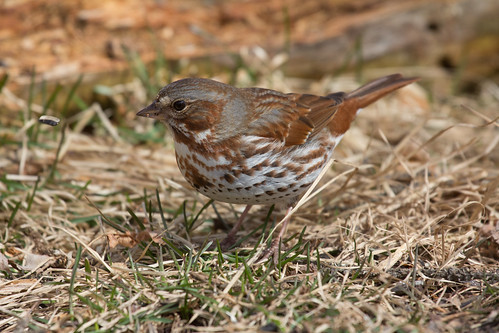
Fox Sparrow

Of all the autumn sparrows that visit our feeding stations, the one who catches our eye simply by its vigorous activity is the Fox Sparrow. Fox Sparrows throw their whole bodies into scratching the ground, their feet kicking up leaf litter and soil or snow as they expose seeds and occasional grubs. Much of the year, Fox Sparrows are omnivorous, eating a mixture of fruits, seeds, insects, and occasionally buds of plants; in spring and early summer they gravitate toward high-protein insects.

Fox Sparrow

These oversized sparrows are hardy as well as vigorous. They breed in northern reaches of the east, and high in the mountains where their range dips south in the West. The bulk of their eastern population winters south of Minnesota and Wisconsin, but individual stragglers can be seen in the North Woods throughout even severe winters. They survive the coldest nights by pigging out and putting on extra body fat before sunset. Their shivering overnight causes them to lose appreciable amounts of weight as they sleep.

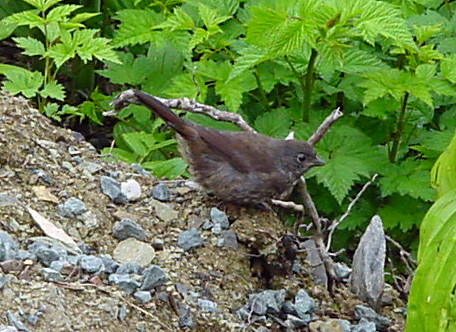
John James Audubon was the first European to find their nesting grounds, on his expedition to Labrador. The birds up there were part of the same eastern population that winters in the East, with a lot of foxy red in their plumage. Eastern Fox Sparrows are even easy to identify even as they fly away from us thanks to their bright rusty tail. But Audubon had no idea that there are three other color forms, far less rusty. Indeed, the Fox Sparrow is one of the most geographically variable of all songbirds. Fox Sparrows from Alaska are very dark, appearing to be an entirely different species from the eastern population that migrates through Minnesota and Wisconsin. My husband and I saw some when we were walking trails near the Mendenhall Glacier in Juneau, Alaska in 2001. Fox Sparrows are rather shy, but if you’re quiet and slow, you can often creep up on them without alarming them, so I managed to get a few photos with my inexpensive point-and-shoot camera, which had only a 2x zoom. I was thrilled to see this bird, but left feeling very lucky that the Fox Sparrows on our side of the continent are so much more colorful.

Fox Sparrow
Fox Sparrow on the Mendenhall Glacier

I stayed in Port Wing, Wisconsin, quite a bit this fall, and spent a lot of time watching my mother-in-law’s sparrows. As many as ten Fox Sparrows were present many days in mid-October. Some of them were aggressive toward the other sparrows, making loud chuck calls and darting toward them. The other sparrows don’t seem to take umbrage at this, nor to take it as a serious threat. They merely step aside and go back to feeding.

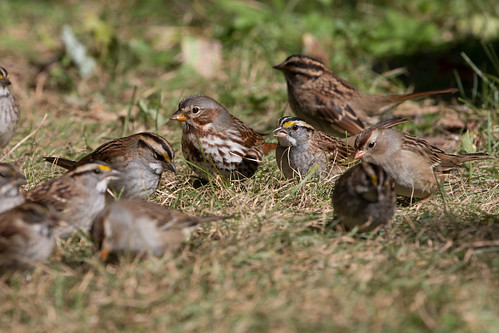
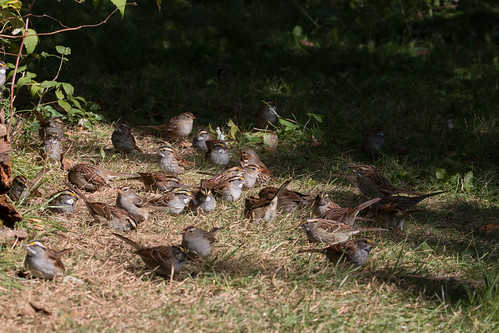
During the peak of sparrow migration, 50 or 60 sparrows gathered at her feeding station, all intent on building up their fat to continue their migration. White-throated Sparrows make up the core population in September, with Dark-eyed Juncoes taking over in October. A few White-crowned and Harris’s Sparrows as well as Fox Sparrows can join them. I doubt if these birds migrate together or associate beyond the feeding station, but they probably do recognize the assortment of sounds by birds enjoying good dining, and join in.

Fox, White-throated, and White-crowned Sparrows
(Taken in autumn 2014 in my own yard)

Sparrow numbers are dwindling now, but one or two Fox Sparrows may linger through the Christmas Bird Count. One year three Fox Sparrows remained in my yard through the end of February. I felt lucky. The birds got a head start on migration that spring, so perhaps they felt lucky, too. Ornithologists haven’t teased out a lot of basic information about Fox Sparrows yet—how the birds feel about luck may never be known.

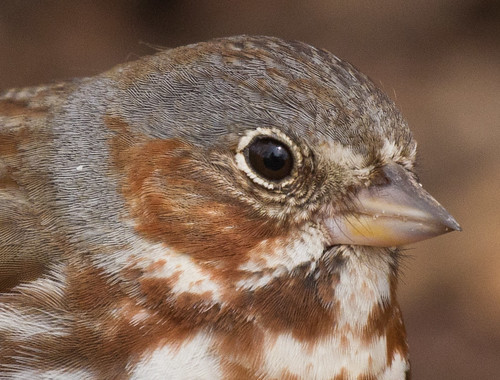
Fox Sparrow detail

Tuesday, October 7, 2014

Auto Collisions and Birds

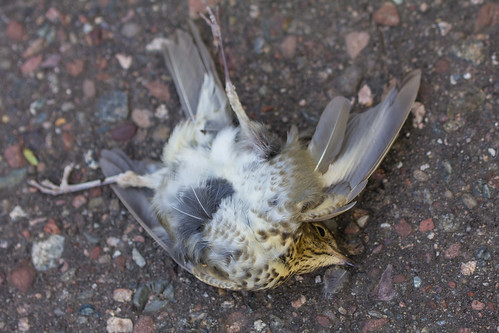
Swainson's Thrush
Swainson's Thrush killed on Touve Road in Port Wing on October 6, 2014.

In my book, 101 Ways to Help Birds, one of the more important suggestions is #60, “Drive at the slowest speed that is safe, courteous, and convenient.” This saves birds in many ways. The slower our speed, the more quickly and safely we can react to wildlife in the road, avoiding many collisions. In 2010, I started a blog, "Who Pays for Our Driving Habits? Birds Pay," that includes information and heartbreaking photos.

My daughter and her partner Michael took a bicycle trip from San Diego to the Florida coast in 2008, and stopped to document every single vertebrate animal they saw dead along the way. They put their findings on Michael's webpage, Roadkill Across America. On the data page, they note that they recorded 1,338 dead vertebrates over 2,846 miles, or 0.47 animals per mile, and explain how they conclude that if their route was fairly typical, well over 500,000 vertebrates may be killed every day on U.S. roads. 

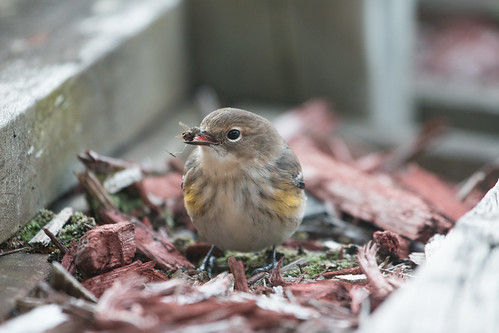
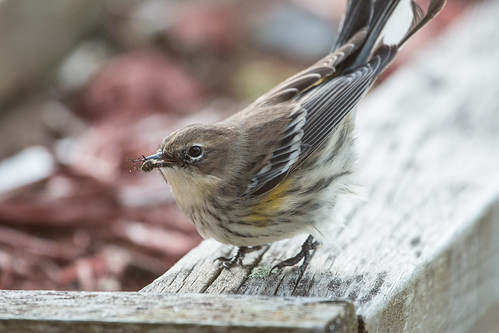
Anyone driving anywhere in Duluth during this season’s heartbreaking migration fall-out, when cars have been massacring warblers everywhere, knows the huge toll autos make under these unique circumstances. I almost hit a Yellow-rumped Warbler on Big Pete Road in Port Wing yesterday, when I was going only 5 miles per hour. The poor little guy had managed to catch a huge insect larva—at least 3 inches long—and was struggling to subdue it right there where he found it, in the road. Food is such a critical resource right now—an item like that larva could mean the difference between life and death—that the warbler could not risk letting it go. Fortunately, I could see what was happening and stopped and waited. Within 30 seconds or so, the warbler had downed a nutritious and filling meal and we both went on with our day.

Most of the time we humans have other things on our minds. If I hadn’t known what was happening, this could have ended differently.

Driving more slowly not only prevents collisions--it also helps birds in less obvious ways. Roadkill subsidizes crows and other scavengers. I saw dozens of dead birds along Highway 13 on the drive, along with at least a dozen crows and two ravens patrolling the highway for fresh morsels and two crows on the side of the road ripping apart dead warblers. I love crows—they’re intelligent, devoted to their families and neighbors, and overall about as humanlike as a bird could be. Henry Ward Beecher reportedly wrote of them, “If men had wings and bore black feathers, few of them would be clever enough to be crows.” But it’s possible to have too much of a good thing. By providing such abundant free meals along our highways, we maintain the crow population at levels that aren’t good for other birds. During spring and summer, crows raid the nests of other species to feed fresh eggs and nestlings to their own chicks. The more crows there are, the more dangerous this becomes for small songbird populations.

Feeding on roadkill can also lead to collision deaths of some scavengers, especially Bald Eagles, which are awkward when taking off, especially when frightened by a loud car or truck.


By driving more slowly, our gas efficiency rises, too, which helps birds. The less gas we use, the less we contribute to the many ways extracting, transporting, and refining oil kills birds. All in all, driving at the slowest speed that is safe, courteous, and convenient is not just good for birds—it's good for everyone.

Good mileage day
My gas mileage after one trip home from Rhinelander, Wisconsin, when there was very little traffic and I could mostly go 50 mph. 

One Special Warbler

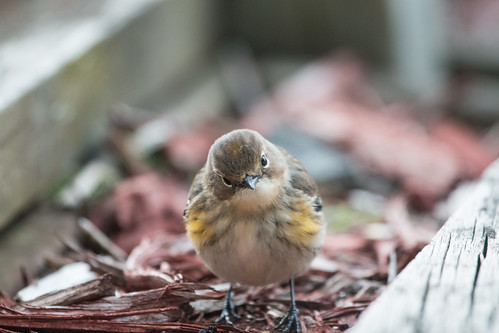
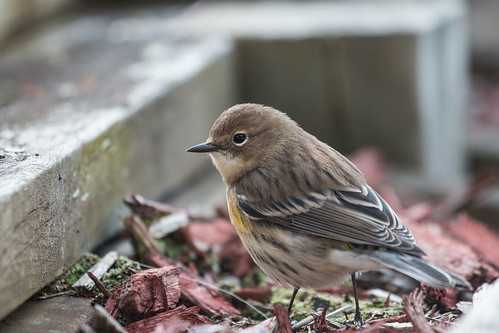
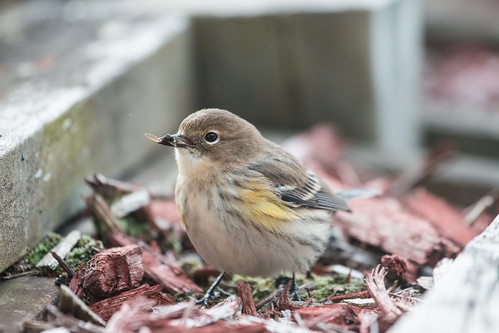
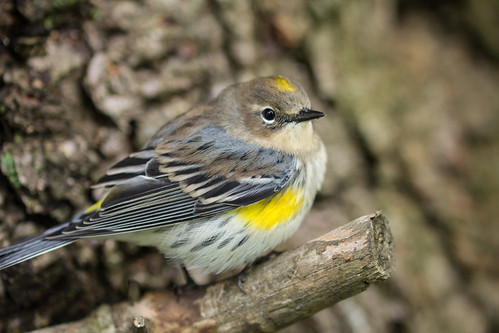
Yellow-rumped Warbler
All these photos were taken through the glass window.

During any migration fall-out, it’s easy to get overwhelmed by the sheer numbers of birds. I described a huge songbird migration from when I was counting at the Lakewood Pumping Station in my 1994 book, For the Birds:

October 1, 1988, was the closest I’ve ever come to wishing I’d never see another robin or warbler… Our five-hour total … was 95,948 migrants, including 62,707 robins, 29,330 warblers, and a smattering of longspurs, siskins, crows, ravens, geese, eagles, etc. If Kim [Eckert] could have stayed [for the entire time], we would easily have topped 100,000. When I got home, still in a daze, I walked smack into a bag of sunflower seeds. Sweeping them into a dustpan, I reached 738 before I realized I was still counting.

This past week, Karl Bardon and Steve Kolbe, the official counters at Hawk Ridge, counted in just three days 43,543 robins, 7,811 Rusty Blackbirds, 405 flickers, and over 4,000 warblers. 

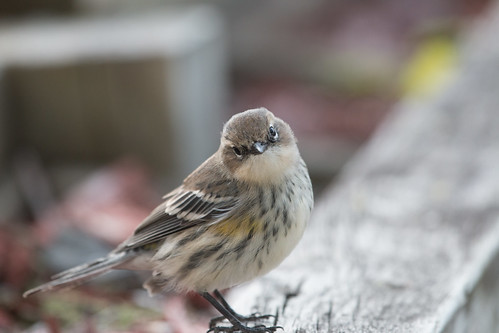
Whenever we are dealing with huge masses of birds, or even of people, we start thinking in terms of masses or hordes, and it’s easy to forget that even the hugest crowds are made up of individuals. But on Monday, one special Yellow-rumped Warbler reminded me of just how unique and individual each bird is.

Yellow-rumped Warbler


On October 6, I brought my mother-in-law to Port Wing, Wisconsin, for her biweekly card club at the house of one of her friends. I spent most of my time on a birding walk. The game took longer than usual, so when I got back to the house, I spent a half hour at the window watching at least six Yellow-rumped Warblers trying to find food on the deck. 

Several of them kept flying up to the windows—not colliding, but picking at insects in the framing and occasionally trying to get some of the cluster flies that had erupted on that sunny day. Most of the houses along Lake Superior get these cluster fly outbreaks during sunny fall days. I’m not sure where the flies come from or why the outbreaks are always indoors—these are not the same species as the iridescent houseflies or bottle flies drawn to garbage. The flies always gather at windows, and the warblers could see the movement, but unfortunately it was mostly on the wrong side of the glass. They’d make a swipe or two, and sometimes managed to grab one that was working its way outside from the bottom of the window, but then they’d spot a bug somewhere else—on the grill, the deck flooring, or in flight—and take off after that one.

Usually I’m a live-and-let-live kind of person, and so when cluster flies gathered at my mother-in-law’s house, I’d open the window and screen and send them off. But those hungry warblers made me lose all compassion for the poor flies—suddenly they were nothing more than food, and I found myself swatting at them. I’d scoop up a dozen or so and put them in a flower box on the deck. Some of the flies were merely stunned, and when they took off, one or another warbler would notice the movement and snap them up in midair. But one little warbler took notice of the fact that the flies were taking off from the flower box whenever I went over there. Within a few minutes, it was flying into the box and gorging on flies the moment I went back indoors.

Yellow-rumped Warbler


Yellow-rumped Warbler


Yellow-rumped Warbler


These little yellow-rumps started off in the Canadian and northern Minnesota wilderness, and are headed to the southern states and some all the way to Central America. Between their summering and wintering grounds, they pass through a lot of unfamiliar habitats. Every single one of them will have to fly over Interstate 80. They take off in the dark and fly all night, and at the end of an exhausting flight can find themselves in all manner of unexpected places, from big cities to Iowa cornfields. And wherever they find themselves, these strangers in a strange land, they must figure out how to deal with the unfamiliar or they'll die.

Many people think of birds as avian automatons, following instincts rather than reasoning, but as that adaptable little yellow-rump showed me, these birds are more intelligent than one would think. I felt sad leaving—if I’d had my druthers, I’d have spent the rest of the day swatting flies and bringing them outside. Other warblers would have made the connection to me, or followed the example of the smart little one, and soon at least six yellow-rumps would have had enough protein to rev them up for the night’s migration. But instead, all I could do is wish them, especially one endearing and unique little bird, a safe journey.

Yellow-rumped Warbler
Safe journey, little fella! (Well, this is probably a female.)

Fall-Out!

Fox, White-throated, and White-crowned Sparrows
White-throated Sparrows, one Fox Sparrow, and several White-crowned Sparrows cover the ground in my own backyard, where I scatter white millet for them. Not one sparrow has hit my windows this year.

Right now, the western end of Lake Superior is in the midst of a massive migration fall-out. Everyone seems to be noticing—I’ve been getting lots of calls about it, and it made Sam Cook’s October 5th blog. And on October 7, Sam wrote a front page article in the Duluth News-Tribune about the dark side of this fall-out—the huge number of birds being killed in collisions with windows, cars, and even bicycles. I was so concerned that on October 2, I started a webpage, birdcollisions.blogspot.com, where people can report birds killed at windows in Duluth and Superior.

This is hardly the first time we’ve had a huge fall-out here, and whenever we do, there is a lot of mortality. On the September 25 entry of my 1994 book, For the Birds: An Uncommon Guide, I mention one of these migration events:
On frosty mornings when the soil is warmer than the air, yellowrumps and Palm Warblers gather on lawns and roadsides, picking up insects and being picked up by cats in huge numbers. When they’re grounded under these conditions, they’re also killed by cars. On September 25, 1991, in the “Great Highway 61 Warbler Massacre,” thousands of inexperienced pedestrians were killed as they followed the lakeshore and were attracted to the sun-warmed pavement. Warblers are fairly good at evading most falcons, but they’re simply not equipped to deal with the Ford variety.
That same fall of '91, my son Tommy was a kindergartener. He and I picked up dozens of warbler carcasses on our walks to school. In a single morning, we found 17 dead Palm and Yellow-rumped Warblers on a two-block stretch, all of which had been killed by a single neighborhood cat—that’s what gave me my first big push to start fighting for a cat leash law in Duluth.

Duluth is at the epicenter of a major migration flyway, but we don’t get these huge events very often. What caused this year’s fallout? There seemed to be two different weather factors at play. 

First, this year we had a very cold, late spring, which probably delayed nesting for a lot of birds, keeping them north longer than what would be ideal. Lots of people noticed how late hummingbirds remained—I’ve often had a straggler or two in late September and even October, but never before had I had daily hummingbirds through September 20—the vast bulk of them are usually gone by the first week of September.  It’s not our wonderful backyard habitat or feeders holding them longer than normal—hummingbirds and other nectar- and insect-eating birds tend to migrate when their most important foods are especially abundant, to fuel their flights. Rather than enticing them to stay, abundant food actually encourages them to bulk up and leave. The late hummers included adult females who needed to recover from their last, late nesting, and the result of all those late nestings—lots of young hummers. The huge number of late warblers were almost certainly the result of late nesting, too.


That explains the late timing of migration and why so many birds are on the ground—by this late, the bulk of caterpillars in trees are gone, leaving insectivores to search for their food elsewhere. 

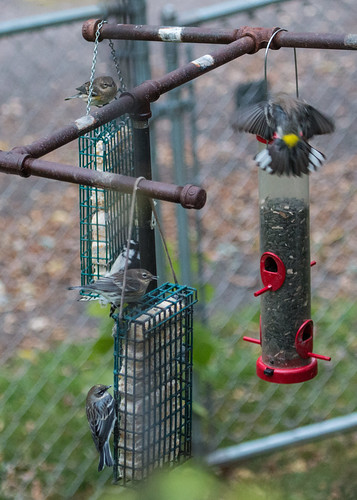
Yellow-rumped Warblers at my suet and peanut butter feeders.
I've had as many as 12 Yellow-rumped Warblers in my suet and peanut butter feeders at the same time this week. This is not a typical visitor at bird feeders, but they're desperate.

The ground temperature can be quite a bit warmer than the air temperature, especially during high-wind days. But in many years with late nestings, birds still manage to slip by in much smaller numbers—at least as far as we notice. What's different this time? 

The massive numbers of migrants around here are almost certainly the result of so many days of westerly winds—exactly the conditions for pushing maximum numbers of migrating birds from northern Canada to somewhere along Lake Superior—from there, the birds follow the shoreline, at least during their daily movements as they feed, rest, and mosey in the right direction.

Sadly, when temperatures are cooler and it's windy, birds require more calories just to maintain their body temperature, not even counting all the added calories they need to build up their fat reserves for long nocturnal flights. They’re so focused on food right now that they can’t afford to pay attention to unfamiliar hazards like cars and bikes. And so, despite the thrilling birding conditions, it’s a mess out there.

Friday, October 3, 2014

First reported window collision: MY house.

Yellow-rumped Warbler

We're having a huge migration today, and at mid-morning, this poor Yellow-rumped Warbler hit my window. He flew off within 5 minutes, but I can only hope he survives--about 50 percent end up dying from complications from head injuries.

I'm hoping people will start sending photos or at least reports of window collisions in Duluth. We need to make people aware of this horrible problem, especially for getting some kind of protective netting over the obscenely huge windows at the airport and some downtown buildings, but also to make regular homeowners aware of the problem. I've made several of my windows bird-safe, but obviously not all of them. Please email me with reports of ALL window collisions--if you know the species, and how it turned out, let me know, but also the date and time, where it happened (whether you send me your address or not, I will only post neighborhoods of private residences), and what kind of window. I want to get all the reports up on my new Bird Collisions website. For now, I'm restricting reports to those in Duluth.

Thursday, October 2, 2014

Duluth International Airport's Hazardous Windows

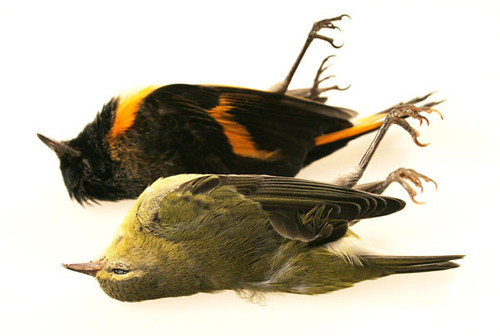
American Redstart and Tennessee Warbler

I went down to the Twin Cities this past weekend to join the protest against the proposed Vikings stadium windows. The clear glass is guaranteed to kill birds—at least hundreds and more likely thousands every year. 

Ironically, as I was traipsing 150 miles away to talk about one glass project, birds were dying in collisions with glass right here at home, at the newly constructed Duluth Airport. On Wednesday, I got an email from Penny Schwarze, who wrote,

I…wondered if you knew that the new Duluth airport terminal also has problem windows. I arrived there on a flight about ten days ago and was very upset to see the bodies of many birds (about twenty, I'd guess) on the ground below the windows. As you said, seeing corpses completely ruins any aesthetic experience one might hope to have. 
I assume others have noticed this problem, but I don't know if anything is being done about it. So that's why I'm getting in touch with you. Do you have any information about this? If not, what do you think a good next step would be?
Penny added,

The date and time were Sunday, Sept. 21, around 2:30 p.m - a sunny day. They were small birds - yellow/light brown, as I recall (I'm not a birder). Although I'm not an emotional person, I tear up thinking about it...

Those birds were almost certainly mostly warblers, though other migrating songbirds were probably also involved. These Neotropical migrants travel by night, and lighted structures jutting into their airspace disorient them, often luring them to their deaths. I’m embarrassed to admit that the airport construction has been completely off my radar, even though I should have registered that the design was going to be a bird killer from the start. I’d contacted County Commissioner Steve O’Neill regarding what we could do about glass in the design of the huge new Maurice’s building in downtown Duluth, but that was just before he got sick—since his devastating illness and death, and my own general busyness, I’ve not been paying attention to either project.

But what CAN we do? At this late date, the only way we can protect birds with the airport already constructed would be to cut the lighting visible from the outside at night, when migrating birds are passing through, and add netting to reduce the impact on birds that do hit by night or by day, when thousands of tiny birds are passing through in low vegetation and hit glass that is reflecting plants and sky. The trick is that the airport will never do this simply because it’s the right thing to do. And the US Fish and Wildlife Service has a long track record of not getting involved in these issues. In 2011, a wind facility in West Virginia killed over 500 birds in a single night because of gross negligence in leaving outside lights on at a substation against clearly stated rules. This was the third time a major kill had happened at that facility, and yet, for the third time, they weren’t fined a penny.

People are so tired of being constantly angry about so very many issues swirling through our lives. Ebola, engaging in an all-new war in the Middle East, climate change, uncertainties about jobs being outsourced—with so much anger and fear about so much, people feel powerless to change anything at all. Yet ironically, it’s that very sense of powerlessness that makes us powerless. In the 70s, individuals working together forced Congress and President Nixon to enact the Clean Air Act, Clean Water Act, and Endangered Species Act, and end the war in Vietnam. Now we don’t work together, and too many organizations, including those that do some good, seize on every problem more to solicit contributions than to actually work on solving that problem.

I’m just one little voice, unconnected formally to any organization, and without a Ph.D. or other formal credentials. On the one hand, that makes me an easy target when corporations and government regulators disagree with me. On the other hand, I am not following anyone’s agenda—my only goal for most of my adult life has been to speak for the birds, as honestly and fairly as I can. And I guess that’s really all I can do here.


I don’t have many opportunities to get over to the airport, or downtown Duluth, but I’m asking that anyone who comes across dead birds in Duluth take photos—if it’s our high-tech world causing birds so many problems, we might as well use the high tech we keep right in our pockets to document the destruction. 

Send the photos to me at chickadee@lauraerickson.com, with the date and place you took them, and I’ll post every one at www.birdcollisions.blogspot.com. I’ll limit this site for now to Duluth bird collisions. Documenting the kill in an absolutely accurate albeit dramatic way is the only way we’re ever going to get the people who make these decisions to pay attention.

Wednesday, October 1, 2014

Three Decades on Peabody Street

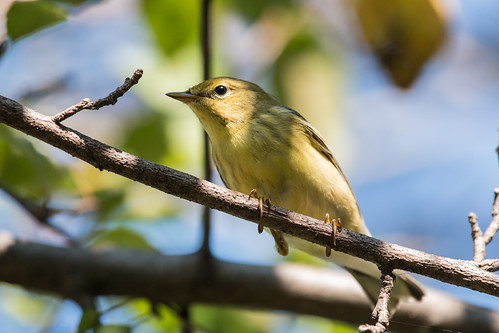
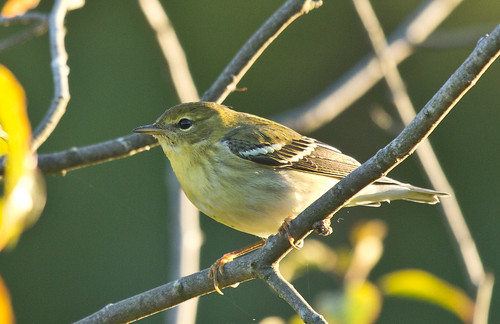
Blackpoll Warbler

The autumn of 2014 has been characterized by one of the best migrations in years, as far as the number of birds showing up in my backyard, especially warblers and sparrows. The warblers never once appeared at my feeders, at least not while I was looking, but I saw quite a few, especially in August and the first half of September, out my upstairs home office windows—some even gave me wonderful photo ops. As of September 30, there were still plenty of Palm and Yellow-rumped Warblers hanging out, and that week, I was still getting some nice photos of Blackpoll Warblers and American Redstarts, even as I was mostly aiming my camera at the hundreds of sparrows crowding into my lawn where I scatter seed by my back spruce trees and raspberry bushes.
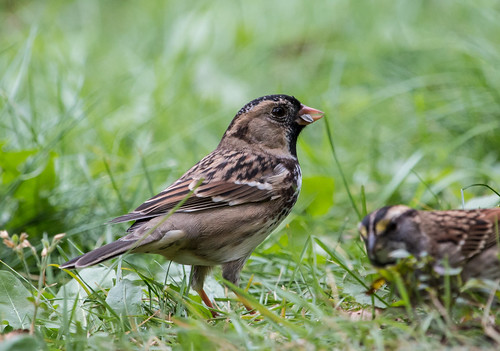
Harris's Sparrow

I’m on a corner lot, but the road along the side was never finished. My house, which started out as a tiny bungalow in the early 1900s, was the first one built on this stretch of Peabody Street, when the road was just a horse path. As the neighborhood grew and the road widened, other houses were set further back. That gives us a tinier front lawn and a bigger backyard than anyone else on the block. A boy born sometime before 1916 planted a small stand of spruce trees in the back of the yard. Those trees and the other grand old trees in the yard were what caught my eye when I walked by in early 1981, looking for an affordable house for sale, and over the years, those trees have anchored my heart here as deeply as the house itself. We started out with raspberries along our side fence. Those suddenly died out, but the very next year, a whole new patch sprouted up in back, planted by birds. So we never feel too upset when they eat raspberries—sharing our territory is part of what nature is all about.

Boreal Owl
I took this photo in Two Harbors--it's the only one on this blog post that wasn't taken right in my yard. I don't have any decent photos of owls from here, but I've seen Eastern Screech-Owl (the rarest one for here, seen and heard in a fall when Frank Nicoletti banded two in Duluth), Great Horned, Barred, Great Gray, Long-eared, Boreal, and Northern Saw-whet Owls. Not a bad list for a regular old neighborhood!

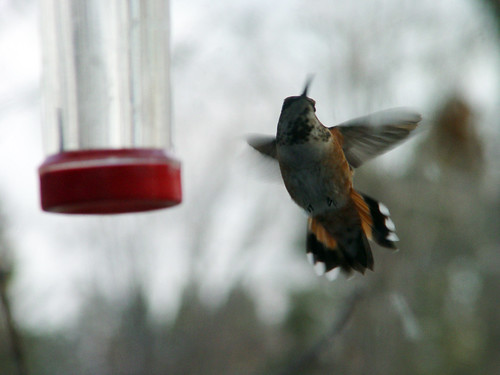
The trees and other plants in my yard are the feature that draws so many cool birds here. Peabody Street runs along the prime migration path through Duluth between Hawk Ridge and Lake Superior. Although this is just a regular, settled, working class neighborhood, over the years I’ve seen an astonishing 7 species of owls for my yard list, along with a couple of Townsend’s Solitaires, one Varied Thrush, and a Rufous Hummingbird that stuck around for 2 ½ weeks late in November 2004.

Viola the Rufous Hummingbird

A blizzard while the hummer was still visiting made me so worried that I left my window wide open so she could come in and warm up a bit. Thanks to the already-opened window, when a Pileated Woodpecker suddenly flew into the box elder right next there, I had perfect photo ops. This was before I was using a good camera, but the bird was so close that it didn’t matter.
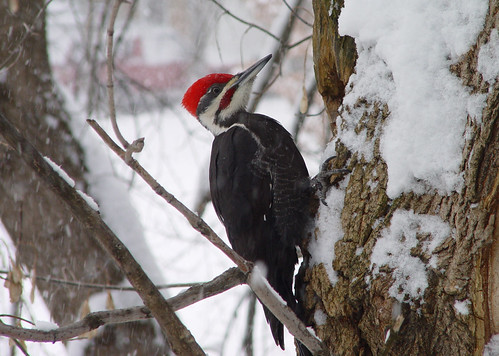
Pileated Woodpecker

Great as my yard is, I've never had a lifer here. The closest three times I came were in our first year here. I followed Kim Eckert's directions to find my lifer Boreal Chickadee a bit north of Two Harbors in the summer, when if I'd been patient, I'd have seen the lifer in my own yard that winter. In early winter, Kim called to tell me about Bohemian Waxwings a few blocks away in my neighborhood, which I instantly charged out to see. A few days later, they were in my own mountain ash trees. But the worst case was when Kim called to tell me about some Harris's Sparrows out on Park Point my first October here. I drove out and easily found them, and drove home to find one right under my own bird feeder.
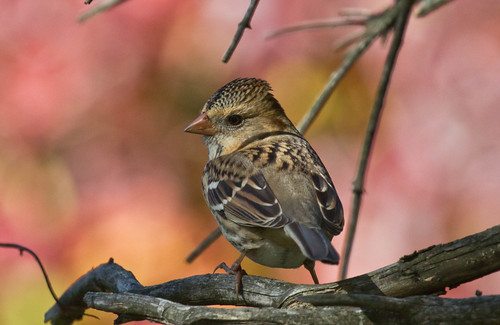
Harris's Sparrow

Even though they weren't lifers here, I've treasured seeing all three of those species in my yard over the years. Bohemian Waxwings used to be here every winter—they're not so reliable anymore. But every spring and fall at least a few Harris's Sparrows show up. And three or four times since 1981, one or more Boreal Chickadees have spent much of the winter visiting my peanut butter feeders.

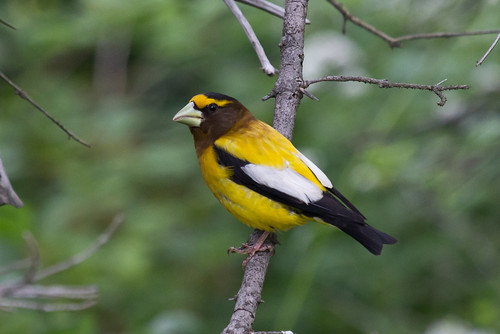
Evening Grosbeak

One of my favorite yard birds of all has been the Evening Grosbeak. Throughout the 80s and into the 90s, when they were still abundant, I always seemed to have more than most people in town, thanks to my box elders. I'd gone over a decade without seeing more than an occasional single straggler when Russ had surgery in 2011. Our first morning after he came home, out of the clear blue sky, a flock of 16 showed up and remained in our yard for weeks. I haven't seen one here since, but those birds were an astonishingly welcome gift at such a bleak time.

Evening Grosbeak in box elder tree

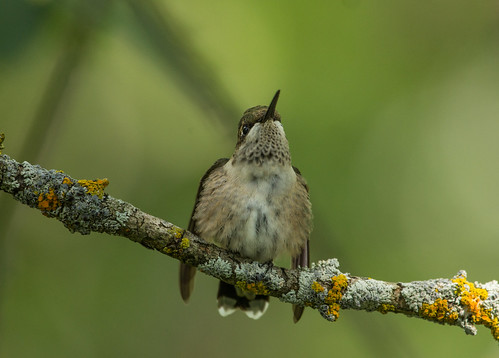
My box elder has given me wonderful photo ops for other kinds of birds, too. Many of the hummingbirds that dine at my window feeder then head straight to the tiny twigs right near the window, allowing me to watch them preen, stretch, and rest. The various fungi and lichens on the branches add color and texture to my photos even as they signal a warning that the tree isn’t going to last forever.

Ruby-throated Hummingbird

But I try not to fret about it—when we moved here, my mother-in-law cautioned us that we should cut down that very tree immediately because it looked so old and precarious. That was 33 years ago. Now the tree and I are both a bit past our prime. I’ve lost 2 of the spruce trees in back, our birch tree is losing ground, and the elm tree that sprouted in 1983 and got big had to be cut down a few years ago because of Dutch elm disease. Several of the branches on the cherry trees Russ planted are dead now, too.

We’re developing plans to plant more trees next year, but little by little the yard is changing. My goal, as always, is to adapt to those changes while keeping the yard a safe haven for the flood of birds passing through. I try to be generous spirited, but really, everything I do to help those birds directly improves my quality of life, too. Home is where the heart is, but in my case, that’s in large part because home is where my birds are.

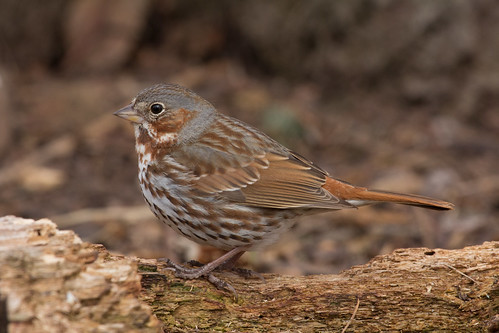
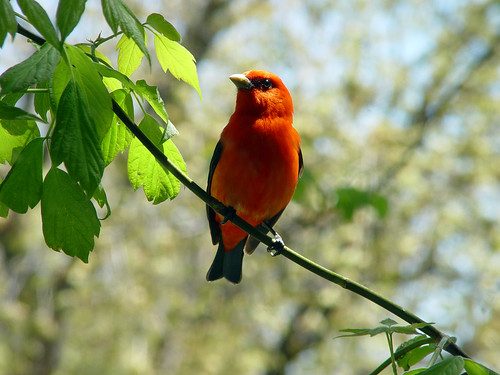
Scarlet Tanager


Friday, September 26, 2014

Bird-Killing Glass on the Vikings Stadium? Just Say No.

Vikings Poster
(These are the remarks I'll make at the protest on September 27 about the bird-killing design for the proposed Vikings stadium.)

For many years, I was a wildlife rehabilitator, licensed by the US Fish and Wildlife Service and the Minnesota DNR to help injured songbirds. A disturbing number of the birds I received in spring and fall were suffering from head and spinal trauma from hitting windows. As I held birds that weighed barely a third of an ounce—you could mail three warblers with a single postage stamp—I could feel how heartbreakingly fragile they are, and also how despite their tiny size they embody some of the most thrilling elements of football: athleticism, endurance, and the physical and mental strength to overcome overwhelming odds.

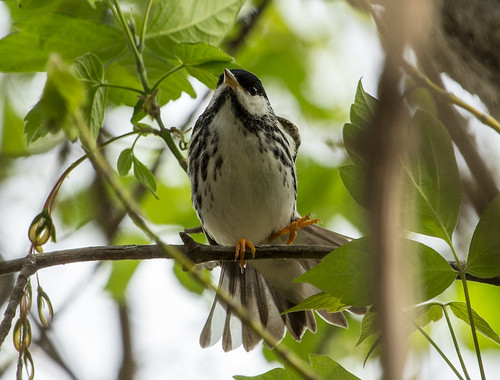
Blackpoll Warbler

I’d look at a tiny Blackpoll Warbler in my hand and think about how every single Blackpoll Warbler ever seen in Minnesota during fall had come down here from its birthplace in the far reaches of Canada and Alaska—many had already traveled well over a thousand miles, and assuming that this one didn’t get killed, it would make its way to the Atlantic coast and then strike out over the ocean, averaging over 1800 miles on a non-stop flight to South America. Yes—non-stop, beating those tiny wings millions of times over treacherous waters without rest or food or the encouragement of fans or a coach, all the way to South America.

These birds are tiny but sturdy—those who aren’t gobbled by predators or killed in tragic collisions can lead surprisingly long lives. One of those Blackpoll Warblers banded as an adult in Alaska was retrapped, alive, when he was over 8 years old—his tiny little body had lasted more than twice as long as a typical NFL player’s career, and he was still going strong.

These little birds have pluck and guts, but no protective gear. They lead lives independent of us people—never asking for a dime, virtually never even visiting a feeding station or a birdbath. All they ask is that we let them go their way. That is not too much to ask, is it?
We didn’t used to appreciate the dangers of glass to birds. One of my friends, ornithologist Daniel Klem of Muhlenberg College in Pennsylvania, started researching the issue at the start of his career in the 1970s, and everything he has learned about bird-window collisions has made it abundantly clear that this is a most significant peril for migrating birds. For decades his was the only voice out there talking about the dangers of glass, but in the past decade more and more ornithologists have done the research and affirmed just how treacherous glass is. We can’t do very much at all about all the glass in existing structures, which is known to kill on the order of a billion birds a year. But now that we know better, why are we even considering sticking 200,000 square feet of shiny new glass right smack in the heart of a critical migration path?

The Twin Cities has a long history of being a safe haven for birds, with our Minnesota Valley National Wildlife Refuge and our world-class bird rescue facilities—the Raptor Center and the Wildlife Rehabilitation Center. People look to us to solve bird problems, not to create them.

I can’t imagine that any of the Vikings players or their thousands of fans want the new stadium to kill birds. I’m sure none of the Minnesota taxpayers footing half the bill for the stadium want it to kill birds. If this is an issue of money, the cost of using bird-safe glass is insignificant compared to the cost of the stadium itself.  I don’t understand how it can be an issue of esthetics. There are plenty of places to see the Twin Cities skyline. When people go into the stadium, shouldn’t the point to see the Vikings? How exactly do the thuds of crashing birds and the sight of dead and dying creatures littering the ground around the stadium fit into any reasonable person’s sense of aesthetics?

This issue is as clear as bird-killing glass. Just say no.

Blackpoll Warbler

Thursday, September 25, 2014

Peabody Street Bobwhite

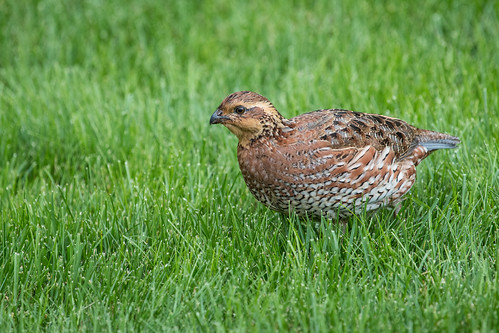
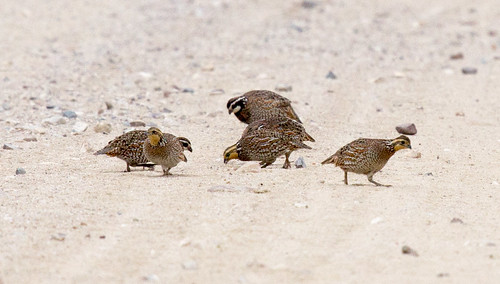
Northern Bobwhite

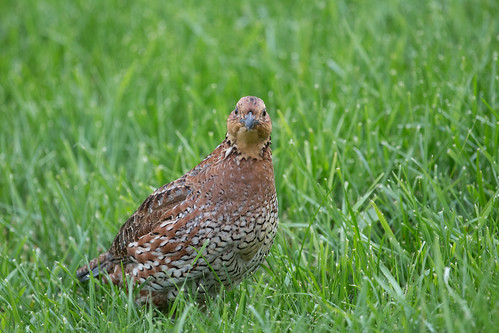
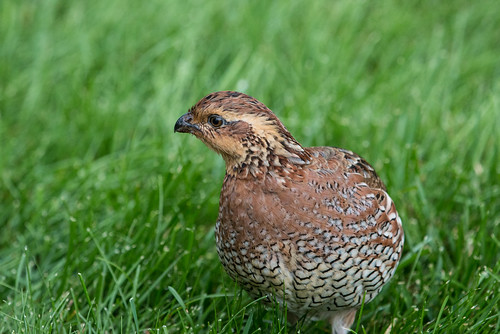
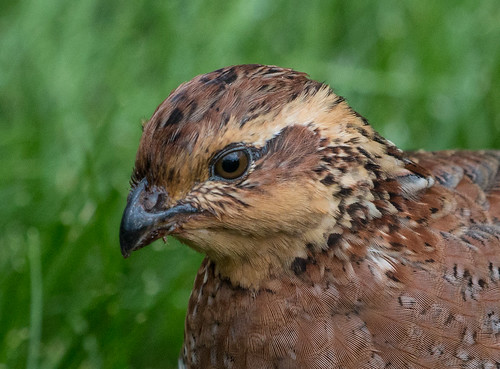
On September 24, I got a phone call from a neighbor down the block saying that she had a funny looking bird—she thought it looked like a tiny quail—in her yard. I charged right over, and sure enough, a female bobwhite was walking around her lawn, eating grass seeds and being pretty calm around us.

The Minnesota Breeding Bird Atlas shows only three tiny blocks where Northern Bobwhite are probably or definitely breeding, all in the extreme southeastern part of the state near the Mississippi River and Wisconsin border.

Minnesota Breeding Bird Atlas map for Northern Bobwhite

Between genuinely wild birds and constant releases of pen-raised birds, they were abundant enough that hunters harvested 13,000 in 1927. Ring-necked Pheasants were introduced to Minnesota in 1905, and hunting seasons on pheasants first opened in 1924. As that species reached its peak population during the 40s and 50s, the mass of hunters lost interest in the tinier, less hardy quail, and the DNR stopped augmenting the population in 1952; quail hunting in Minnesota ended in 1958. An organization called Minnesota Quail Forever works hard to keep track of them and raise awareness of this lovely species’ plight. According to their website, it’s estimated that no more than 1,000 bobwhites live in Minnesota today, all in Houston, Fillmore, and Winona Counties.

I saw Northern Bobwhite quite a few times in 1975 during my first year of birding, when I took a field ornithology class at the Kellogg Biological Station near Kalamazoo, Michigan, and on and off since then, but in the places where I used to see them most, in some refuges and parks in Florida, they are few and far between now. I took one of Kim Eckert’s Minnesota Birding Week trips to Texas for my Conservation Big Year, and we saw a couple of good sized groups.

Northern Bobwhite

Throughout the United States, bobwhites are doing poorly. They’re one of the most rapidly declining but formerly common species, showing precipitous declines throughout their range.
Breeding Bird Survey trend map showing in red where Northern Bobwhite are declining most rapidly.

Breeding Bird Survey trend for Northern Bobwhites in United States


If bobwhites are in so much trouble, what the heck was one doing on Peabody Street, so very far from where they ever lived? Bobwhites are raised in captivity as food for zoo animals and captive raptors, and for training retrievers and in field trials. The Duluth Retriever Club had a big Labor Day Weekend Field Trial, on Lester River Road not too far from my neighborhood—I think the poor little thing broke free, but now unless someone takes her in, she’s pretty much doomed. A few years ago, bobwhites apparently staged their version of the Great Escape from one of these events, and suddenly they were being found in lots of neighborhoods. This female is the only one I’ve heard of this year.

Northern Bobwhite

I watched her wandering through the well-manicured lawn for twenty minutes or so, and I took photo after photo. The light wasn’t great, but she was close enough to give me not just a lot of cool shots but the best photos of female bobwhite I’d ever taken. Unfortunately, she wasn't close enough to actually catch her.

Northern Bobwhite

These plucky little birds appeal to something deep within me, so I’m filled with joy whether I’m seeing wild ones on their natural range or one intrepid escape artist hundreds of miles north of where any bobwhite should be. It’s hard for me to reconcile bobwhite being a game species, but anyone who lives right under Hawk Ridge has to be a little understanding about predation of all kinds. I’ll keep my fingers crossed that this little girl finds a helping hand somewhere.

Northern Bobwhite