Laura Erickson's For the Birds

Monday, August 1, 2022

Alaska, Part 10: A Fantastic Boat Trip into Kenai Fjords National Park

The glacer!

At the end of a delicious and satisfying meal, what is tastier than dessert? The more filling and satisfying the meal, the smaller the dessert can be and still be perfect. Two weeks in Alaska was pretty darn satisfying, so I’d have been perfectly content with a sweet but light final day of birding, but somehow our last full day turned out to be the sweetest, richest, best dessert possible. 

Our group was signed up for an all-day boat trip into Kenai Fjords National Park and the Alaska Maritimes National Wildlife Refuge on June 22. We took the 9-hour trip aboard the Orca Song that goes all the way through the narrow Northwestern Fjord to the Northwestern Glacier (starred on the map). 

On the boat trip, I added the only lifer I could have reasonably expected to see after our Nome adventure, met my goal of getting halfway decent photos of both species of Western puffins, and had the most splendid experiences with whales and orcas I’d ever imagined.

Orca

This day and the day we went up the Kougarok Road out of Nome to see the Bristle-thighed Curlew were the two days of the entire tour when we had to prepare for worst-case scenarios. Our hike up the dome for the curlew is usually long and arduous, involving negotiating a mile or more of trudging through tundra tussocks once we reach the top of the muddy dome, so we had to wear sturdy boots with ankle support and be physically prepared for what I was calling a “death march.” And on this boat trip, we’d be facing the coldest conditions of the entire two weeks, with no protection from wind and potentially a lot of wave action. Our leaders would be staying at the bow for the entire day, and strongly advised us to stay up there with them unless we needed to warm up or go inside the cabin to eat or drink. We were warned to take something for seasickness if that could be a problem, and also that waves usually wash onto the deck, making it slippery as well as unsteady. Much of my focus while preparing for this trip was on selecting appropriate clothing for this one day. 

But oddly enough, just like that curlew “death march,” the anticipation of rugged conditions on this boat trip far exceeded the actual event. When we left the port in Seward, the sky was clear, there was no wind, and the water was shockingly still. Improbably, it stayed like that the entire day! I know that professional guides tend to make every experience sound like one of the best the guide has ever experienced—I’ve seen this often enough to use my own judgment about how rare or exciting anything on a guided tour is—but such cooperative conditions every inch of the way really were unusual. 

Kenai Fjords

As with the Denali National Park bus tour, almost every participant except those in our group was there for glaciers, spectacular scenery, and mammals, not birds. Our guides made sure that the captain and naturalist knew which birds we wanted to see, and they brought us to a few wonderful seabird nesting cliffs and pointed out good birds wherever possible, so we had superb birding in addition to getting to see all those glaciers, spectacular scenery, and mammals, which were thrilling even for a monomaniacal birder like me. 

_G7A1827.jpg

In order to be sure that all of us would get places on the bow, we arrived at the harbor nice and early to be at the head of the boarding line. The wait was pleasant, and once we got going, we were barely out an hour before we came upon humpback whales “bubble-net feeding.” 

Humpback Whale bubble feeding

Humpback whales don’t eat during the half of the year that they’re breeding and giving birth in warm tropical and subtropical waters—they live off their fat reserves. That means that while they’re in their cold feeding waters the other half of the year, they must make up for lost time. Humpbacks are one of the few whales that engage in surface-feeding behaviors, and are especially famous for this bubble-net feeding. One whale exhales out its blowhole at a gathering of prey. Then other whales join in, blowing bubbles as they circle the prey, forming a circular “bubble net” which can be 10 to 100 feet in diameter. Then one whale makes a feeding sound and all the whales simultaneously swim up with their mouths open. 

Humpback Whale bubble feeding

Their mouths may be huge, but their throat is tiny—just grapefruit size—and humpback whales have baleen, not teeth, so they cannot rip large fish into manageable bits. So they focus on krill and small schooling fish such as herring and juvenile salmon. They have long throat grooves from the top of their chin all the way down to the navel, allowing the mouth to expand to take in as many trapped fish as possible along with up to 15,000 gallons of sea water, which will stream out through the baleen as the fish go down the hatch. Bubble-net feeding works—humpback whales manage to take in from 2 to 2 ½ tons of food every day. It was thrilling to witness this for the first time in my life. 

Humpback Whale bubble feeding

As compelling as the whales are, a lot of birders on boat trips get sick of watching them instead of birds. Fortunately, our group seemed happy to stay put watching these wondrous mammals performing this fascinating behavior, and even if they weren’t happy whale-watching, dozens of Glaucous-winged Gulls were swimming nearby and flying just above the whales, hoping to capitalize on so much prey at the surface. Lots of other seabirds, such as Pigeon Guillemots... 

Pigeon Guillemot

...Common Murres...

Common Murres

...and both puffins were milling about. 

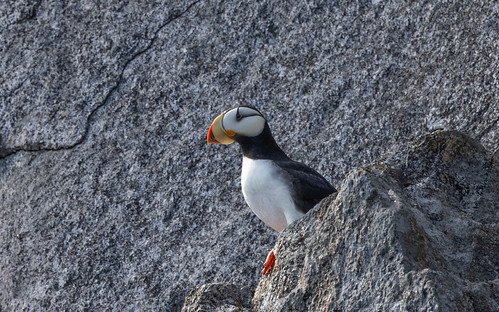
Horned and Tufted Puffins

Vessels are prohibited from approaching close to whales, and also from staying within whale-watching distance beyond a strict time limit, so eventually we moved on. We spent part of the time gliding past the steep cliffs rising above the narrow paths of water that define fjords. Those cliffs are about as inaccessible to mammalian predators as can be, which is exactly why so many seabirds nest on them. I was thrilled to get to photographs of nesting Glaucous-winged Gulls and Black-legged Kittiwakes…

Glaucous-winged Gulls and Black-legged Kittiwakes

…and Common and Thick-billed Murres.

Common and Thick-billed Murres

We saw plenty of Pelagic Cormorants. 

Pelagic Cormorant

I even got a glimpse, and a poor photo, of a Red-faced Cormorant on the nest with murres and kittiwakes. 

Nesting Black-legged Kittiwakes, Red-faced Cormorant, and Common Murres

We missed Kittliz’s Murrelet, a seabird I’d have loved to see though it wouldn’t have been a lifer. But I got fine looks and even photos at the one seabird I most desperately wanted to see and photograph—my lifer Parakeet Auklet. 

Parakeet Auklet

Parakeet Auklet

I’d been hoping against hope to get halfway decent photos of Tufted and Horned Puffins. This trip exceeded my hopes, giving me nice photos of both species in the water…

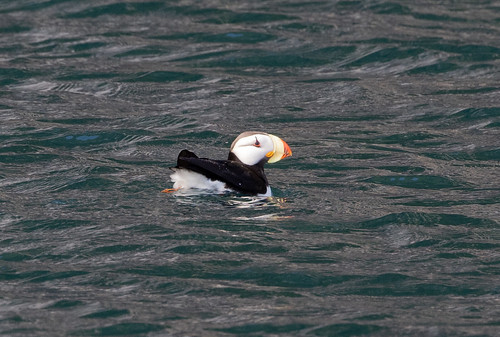
Tufted Puffin and Glaucous-winged Gull

Horned Puffin

…and on the nesting cliffs. 

Tufted Puffin

Horned Puffin

The splendid birding was matched, and perhaps even surpassed, by gorgeous scenery, thrillingly noisy calving glaciers, and mammals. Harbor seals swam in the water and rested on chunks of ice.

Harbor Seal

Steller’s sea lions lounged about on rocky shores. 

Steller's Sea Lion

Sea otters are too shy to pose for tourists but I did grab a couple of grainy distant photos. 

Sea Otter

We also saw mountain goats on one rocky cliff. 

Mountain Goat

Right after we’d watched a huge glacier calving event, one of the crew members pulled a big chunk of that glacier ice out of the water, which they used to prepare delicious margaritas. 

Glacial ice!

The margarita made with the glacial ice

Naturally I had one, which may have contributed an extra glow of appreciation when a pod of orcas showed up and gave me some of my favorite photos of the entire Alaskan adventure. 

Orca

Orca

That night at our celebratory dinner, I had a lovely blueberry mojito. This was the only day of the entire tour that I had even one drink, and that second one perhaps is why I was too tired to sit around the restaurant waiting for dessert, so Russ and I headed back to the hotel before the rest of the group. They all got great looks at six northern river otters playing on the dock right outside the window. I’m not sure the most delicious cocktail in the world was worth the price of missing that, but I wasn’t bummed out when I heard—nothing short of missing a high-resolution video of a family of Ivory-billed Woodpeckers could have cast even a tiny shadow over my memories of a perfect day. 

Blueberry mojito

Saturday, July 30, 2022

Alaska, Part 9: Birding Our Way to Seward

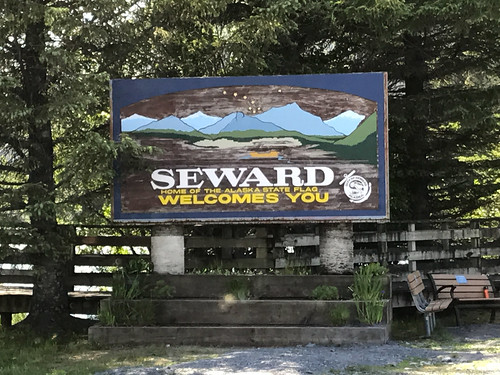
Seward! 

In 2001, when Russ and I went on a week-long cruise on a tiny, Native-American-owned ship in Alaska’s Inside Passage, we started in Juneau and made it as far north as Glacier Bay. We visited the Glacier Bay National Park Visitor Center and then continued north and west to get close to calving glaciers. On the cruise and the one day Russ and I spent birding in Juneau, I saw 77 species of which 16 were lifers.  
Seward, the furthest south we got on this trip (except on a boat trip to the Kenai Fjords National Park), is almost 500 miles west-northwest of Glacier Bay. I saw only one lifer on the Kenai Peninsula, but enjoyed some of the most thrilling birding of my entire life. 
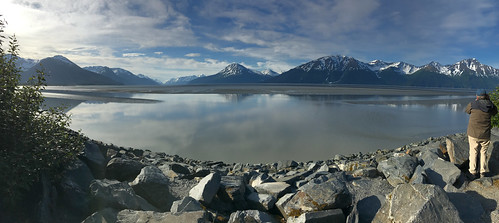
Panorama shot along the drive between Anchorage and Seward

On June 21, we drove from Anchorage down to Seward. Geographical names in Alaska can be confusing: Nome is on the Seward Peninsula while Seward is on the Kenai Peninsula. But the name of the Seward Highway is straightforward even if the 125-mile road from Anchorage to Seward is not. 

It goes southeast along the northern coast of the Turnagain Arm of the Cook Inlet of the Gulf of Alaska to the end, then works its way through the Kenai Mountains and down to Seward. We’d already driven on the first stretch, along the Potter Marsh and the start of the Turnagain Arm, during the time we birded around Anchorage. As happened first time around, we did see Dall’s sheep up on the cliffs of the Chugach Mountains above the road, and did not see beluga whales in the Turnagain Arm of Cook's Inlet. 

This whole area along the coast out of Anchorage and onto the Kenai Peninsula brought us finally in range of some of the Pacific Northwest birds I’ve seen before along the coast from Oregon, Washington, and British Columbia. 

Great blueberry fritters, or the greatest blueberry fritters?

Outside Seward, Erik always has to get a photo of him with a great fritter and a (Northwestern) American Crow
Erik Bruhnke and Barry Zimmer get up close and personal with a "Northwestern" American Crow who was very interested in Erik's fritter.

Our first stop of the day, for blueberry fritters at the Alpine Bakery in Girdwood, before we reached the juncture of the highway into the Kenai, gave us the trip’s only looks at the bird formerly known as the Northwestern Crow. 

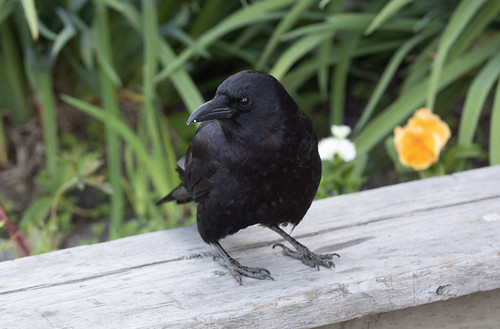
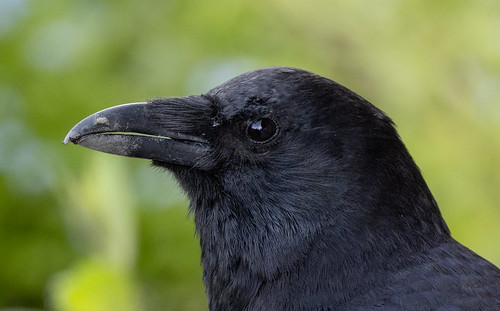
"Northwestern" American Crow

This Pacific Northwest specialty is a bit daintier, with a slightly lower, hoarser voice, than our familiar American Crow. Over time as glaciers receded, American Crows worked their way into the Pacific Northwest, mixing with the Northwestern Crows already there. It’s easy for me to distinguish a Duluth crow from the two Northwestern Crows I watched and listened to as they approached us for treats at the Alpine Bakery, but those differences apparently matter way, way more to birders than they do to the birds themselves. Wherever the ranges overlap, between coastal Washington and British Columbia, the birds hybridize so freely that virtually all the birds in that overlap area have genes of both forms. That's why two years ago, taxonomists lumped Northwestern Crows with American Crows. 

"Northwestern" American Crow

I’ve heard some people who spend a lot of time in Alaska ridiculing this decision because of the obvious differences between the coastal Alaskan crows and crows over most of the continental United States, as if taxonomists are stupid. I can understand their frustration because so far, the crows in most of Alaska have not met up with the ones we used to consider pure American crows, but the differences we mere humans focus on clearly don’t matter to the birds themselves. Now just about all the crows from Washington to British Columbia have genes of both types, and that hybrid zone is expanding. That means, by definition, that the two forms are subspecies, not separate species. 

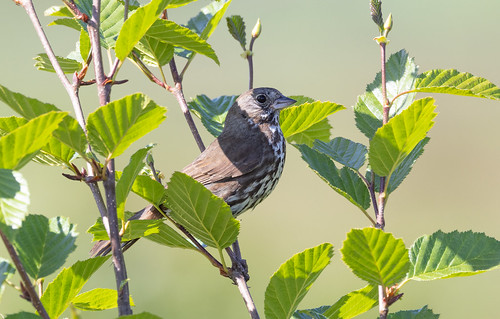
A similar situation exists with the Song and Fox Sparrows we saw in the Seward area, but people have understood that for a long time. Those birds are obviously different from Song and Fox Sparrows in other places yet are recognized not as separate species but as subspecies of our regular old Song and Fox Sparrows.

Song Sparrow (Long-billed Northwest form)
"Long-billed" Song Sparrow
"Sooty" Fox Sparrow
"Sooty" Fox Sparrow

In the same area around Girdwood, we saw White-winged Crossbills and a gorgeous Townsend’s Warbler—a handsome western species that was one of my Big Year highlights when birding in California in 2013. 

Townsend's Warbler

Townsend's Warbler

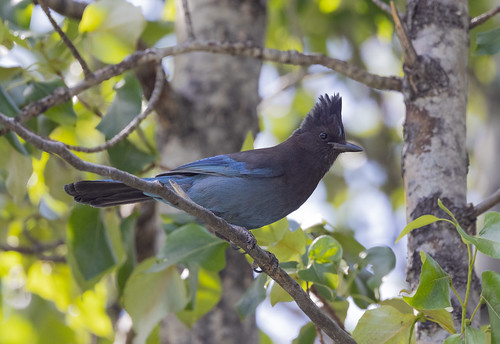
In the Seward area, Steller’s Jays...

Steller's Jay

Steller's Jay

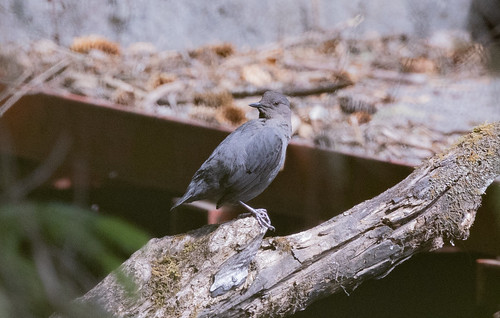
... another American Dipper...

American Dipper

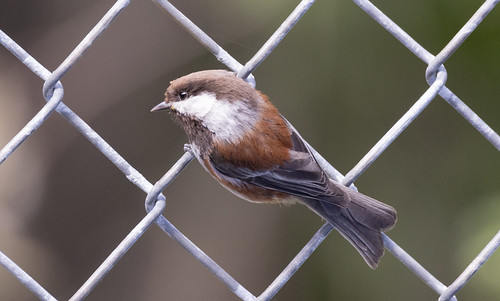
... the most cooperative Chestnut-backed Chickadees I've ever seen...

Chestnut-backed Chickadee

Chestnut-backed Chickadee

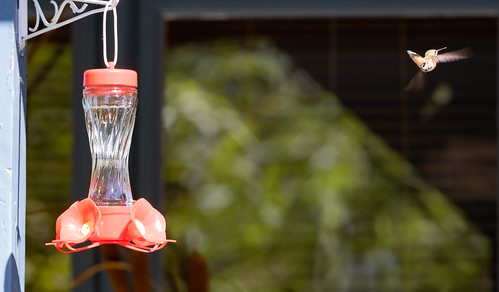
...and the least cooperative Rufous Hummingbird I've ever seen...

Rufous Hummingbird

... were some of the exciting birds that were every bit as wonderful as I’d anticipated. None of them were lifers, but they sure were sights for sore eyes. And the single most thrilling and memorable day of the entire trip—the day we took a boat trip into Kenai Fjords National Park—was yet to come. 

Monday, July 25, 2022

Alaska, Part 8: Denali!

Denali!

A long, long time ago—at least 11,000 years ago—many people were already living in the shadows of the highest mountain in North America. The Athabaskan people called it Denali, which means “the high one,” and that’s the name Native Alaskans, most other people who grew up in in Alaska, and mountaineers called it throughout historical time, before and after a presumptuous prospector named William Dickey, who came up to Alaska in 1896 from Seattle and stayed there only a year, took it on himself to rename the mountain. President William McKinley had never been to Alaska in his life and had even less connection to the territory than Dickey, but McKinley supported the longstanding gold standard at a time when his chief rival, William Jennings Bryan, was supporting a new silver standard. It’s understandable that a literal gold digger would try to suck up to the most politically powerful man in the country, but harder to understand how he had any say in changing the name of a mountain that already had a perfectly good name. 

But politics does weird things. A United States Geological Survey report in 1900 refers to "the giant mountain variously known to Americans as Mount Allen, Mount McKinley, or Bulshaia [a corruption of the Russian name for it before they sold Alaska to the United States].” The author apparently had no clue about the actual longstanding name of the mountain, and throughout the rest of the report called it Mount McKinley. McKinley was a popular president, and his assassination in 1901 made many people hungry for a permanent memorial to him, though it seems odd they’d settle on a mountain he had never seen, 4,000 miles from his native Ohio. A 1911 USGS report, The Mount McKinley Region, Alaska, kept that inappropriate and unofficial name alive, and Congress made it official in 1917. 

Even more peculiarly, in 1965, Lyndon Johnson declared the north and south peaks of the mountain the “Churchill Peaks,” again to honor someone who had never visited Alaska. 

In 1975, the Alaska Legislature asked the federal government to officially restore the mountain’s name as Denali. But Ohio’s congressional delegation managed to block this year after year until 2015, when the Obama administration announced that the name would be changed to Denali in all federal documents. All the Republican members of Ohio’s congressional delegation complained. During his 2016 presidential campaign, Donald Trump promised Ohioans that he’d change the name back to McKinley, but after the election, Alaska’s two Republican senators, Lisa Murkowski and Dan Sullivan, asked him not to. 

That which we call a rose by any other name would smell as sweet, and all the nomenclatural bickering in the world cannot chip away at Denali’s stature as both the highest and tallest mountain in North America. Denali is not higher than Mount Everest, whose summit is 29,032 feet above sea level—Denali’s is only 20,310 feet—but it is taller than Everest measured from top to bottom—Everest rises from the Tibetan Plateau, between 13,800 and 17,100 feet above sea level; Denali from a plain just 980 to 2,950 feet above sea level. Denali is not even the tallest mountain in the United States—it’s dwarfed by Hawaii’s Mauna Kea, which may only reach 13,803 feet above sea level but rises out of the ocean floor, 19,700 feet below sea level. 

By any measure, Denali is ginormous, but our Alaska birding group didn’t see it at all when we drove from Anchorage to Denali National Park on June 18, nor while we were doing our wildlife tour of the park on June 19. The mountain was right there, of course, but enveloped, as it usually is, in clouds, many of its own making. 

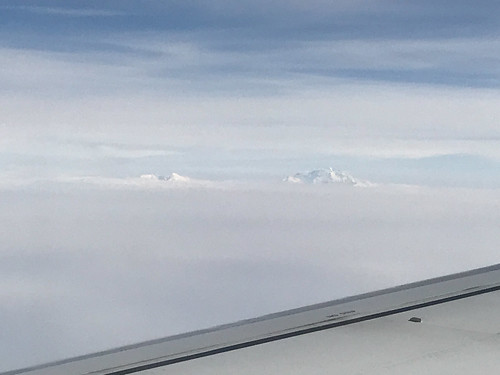
Oddly enough, Russ and I actually did see Denali’s peak on June 12 when we weren’t expecting it at all, from the airplane when we were flying from Anchorage to Nome. The mountaintop was sticking out above the dense cloud cover when I happened to look out the window and alerted Russ. 

Denali above the clouds from the plane between Anchorage and Nome

Our whole birding group lucked out on June 20 when we drove back to Anchorage from Denali. The clouds started breaking up in the morning, and we could see at least part of Denali’s snow-covered peak from a couple of birding spots. 

Denali!

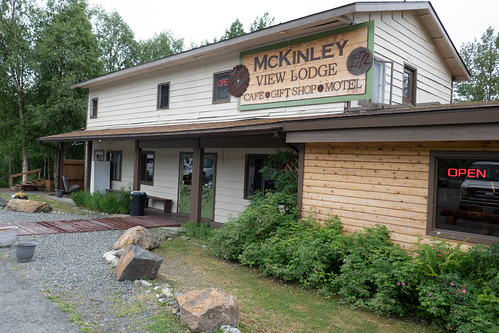
Traveling up from Anchorage on June 18 and back down again on the 20th, we made a lunch stop at Mary’s McKinley View Lodge, a wonderful restaurant which not only serves delicious lunches but also has the most scrumptious brownies I’ve ever eaten.

Mary's McKinley View Lodge

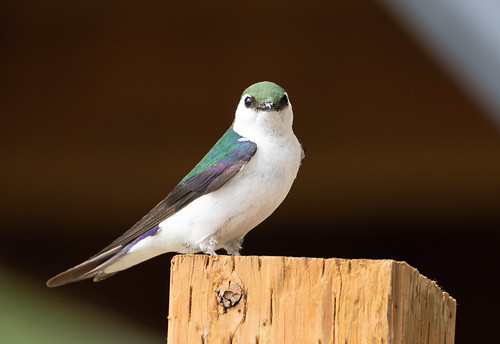
Going up to Denali, I didn’t at all mind not being able to see the mountain from the cafe—I was too busy in the parking lot photographing Violet-green Swallows. 

Violet-green Swallow

Violet-green Swallow

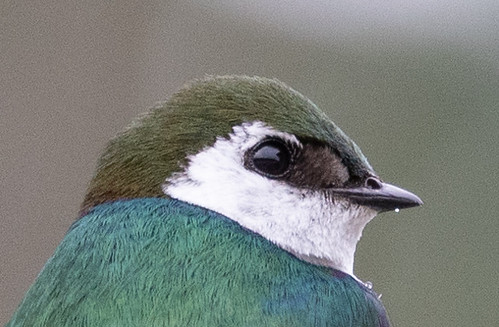
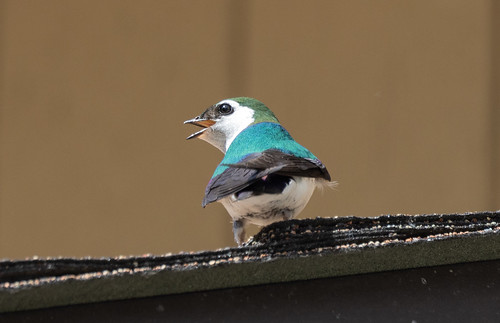
This splendid swallow belongs to the same genus as our familiar Tree Swallow but is daintier and even quicker on the wing. I got to spend a lot of time with Violet-green Swallows when Russ and I took our kids to Yellowstone back in 1995, but that was before I was photographing birds. I saw them in Colorado during my 2013 Big Year but wasn’t close to where they were nesting so couldn’t get a single photo—they dart about much too quickly for me to photograph in flight. But there were several Violet-green Swallow nests at Mary’s McKinley View Lodge, and a few of the birds perched cooperatively in full view of my camera.

Violet-green Swallow

Violet-green Swallow

Coming back, the swallows were busier with nesting. I did get a few more photos of them, but this time spent more time pointing my camera at Denali. 

Violet-green Swallow

Denali!

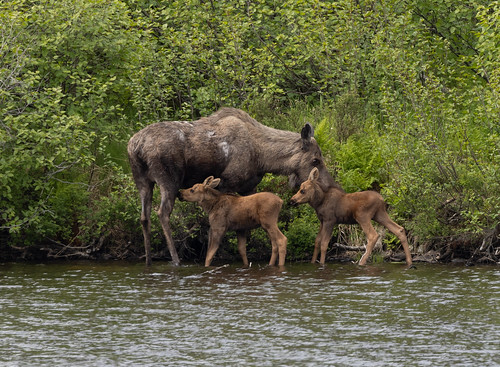
The mountain itself is certainly spectacular, but so is the wildlife of the area. On the drive up on June 18, we got to watch a mother moose with twin calves at Trapper Creek along the George Parks Highway. We were far enough away, on the opposite side, that I didn’t expect her to take umbrage at us, but she kept looking our way while leading her babies away. The photos I took of her were my favorite moose pictures of the trip. 

Moose and twin calves

Moose and twin calves

Moose and twin calves

The next day, we took the Denali National Park Tundra Wilderness Tour—a 5 ½ hour narrated bus tour through the park. Our guide was knowledgeable about birds, but other than our group, most of the people on the full bus were not focused on birds, and so we spent most of our time looking at mammals. There were moose of course...

Bull moose

and some distant Dall’s sheep...

Dall's sheep

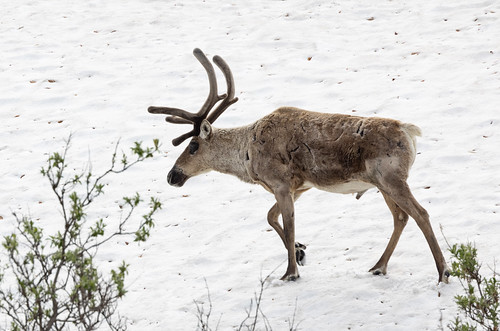
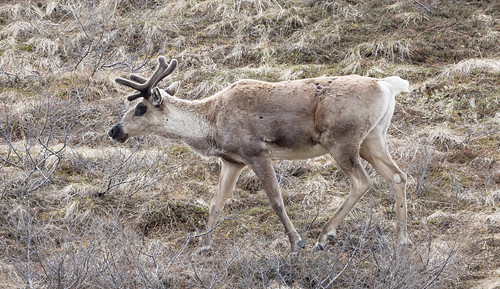
but I was most taken with my very first looks at wild alive caribou, or reindeer. Some of them even provided decent photo ops. 

Caribou

Caribou

Caribou

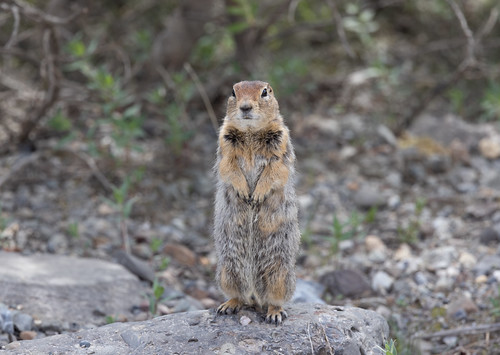
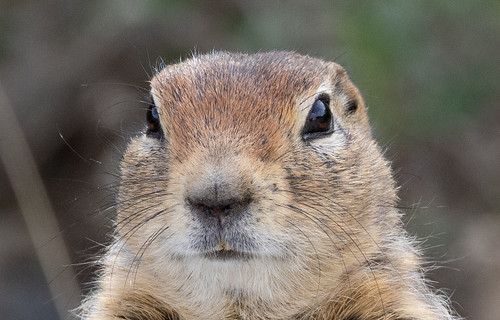
This bus was larger than the vans our group was traveling in, and we mostly had to stay in it when we stopped to look at animals, but the bus had the huge advantage of windows that open, so my photos from the bus were much better than the ones I took from our vans. The other mammal I got to photograph that day, through the wide open window, was an extremely cooperative Arctic ground squirrel. 

Arctic ground squirrel

Arctic ground squirrel

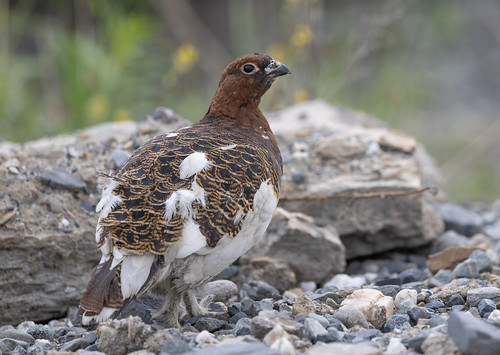
We also got decent looks at a Golden Eagle and several Northern Harriers. Our final photo-op of the bus tour was of a stunning male Willow Ptarmigan dust-bathing in the gravel road. 

Willow Ptarmigan

He moseyed to the side of the road as we watched, and my window was perfect for getting my best photos ever of Alaska’s state bird. 

Willow Ptarmigan

Willow Ptarmigan

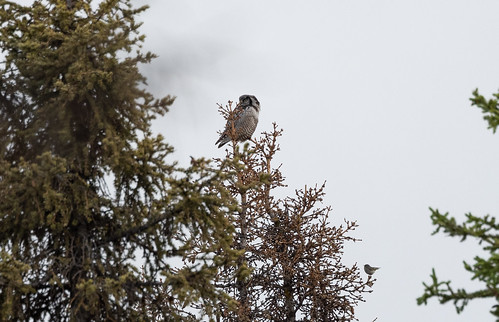
Some of us took a short after-dinner optional trip on the Denali Road that same day in hopes of seeing a Northern Hawk Owl. Sure enough, we got great looks and nice if distant photos of one being harassed by a pair of Varied Thrushes and a feisty little Ruby-crowned Kinglet. 

Varied Thrush divebombing Northern Hawk Owl

Ruby-crowned Kinglet (below, right) swearing at a Northern Hawk Owl

Northern Hawk Owl

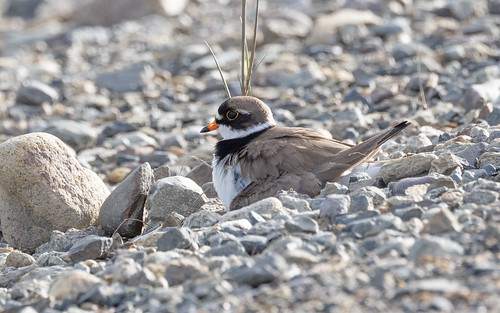
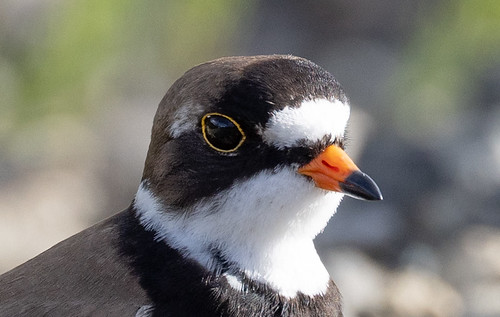
My favorite photos of the evening were of a much more abundant species, a pair of Semipalmated Plovers nesting right on the gravel road. 

Semipalmated Plover

Semipalmated Plover

Semipalmated Plover

We returned to the same spot the next morning, June 20, for those same birds before heading back to Anchorage. On that drive, we also saw one last Arctic Warbler. 

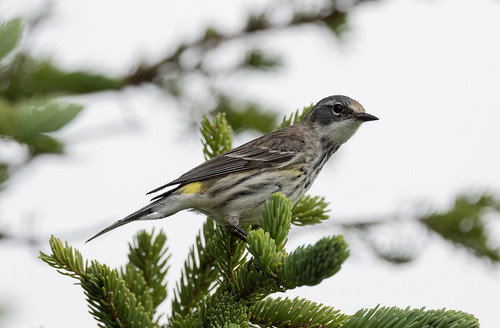
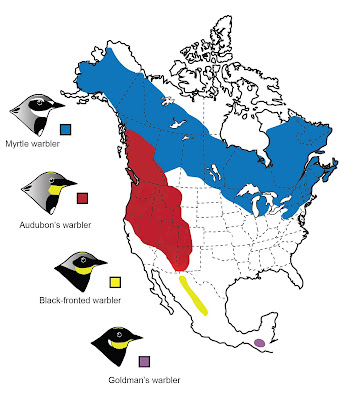
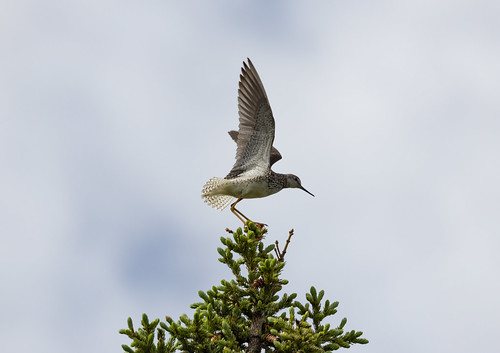
I didn’t add any lifers on the entire Denali part of our trip. Indeed, a lot of the birds were species I get to see regularly in the Sax-Zim Bog or even in Duluth, such as Lesser Yellowlegs, Northern Hawk Owl, Common Raven, Canada Jay, Boreal Chickadee, and Yellow-rumped and Blackpoll Warblers. Interestingly, the subspecies of Yellow-rumps we were seeing was the Myrtle Warbler, the one we see here in the East, whose breeding range stretches from the Northeast all the way across the continent to the Northwest. 

Yellow-rumped Warbler

Yellow-rumped Warbler

The Western subspecies, Audubon’s Warbler, is found in the West, but not as far north as Alaska. 

I didn’t at all mind the lack of lifers around Denali; as much as I like to keep my life list up to date and add to it, the greatest pleasure of birding for me is, simply, seeing birds and other cool wildlife. And by any measure, a lot of the birds we saw were thrilling, no matter how many times I may have already seen them. 

Lesser Yellowlegs through van window
Lesser Yellowlegs

Common Raven
Common Raven

Boreal Chickadee
Boreal Chickadee
White-crowned Sparrow carrying food for young
White-crowned Sparrow

Blackpoll Warbler
Blackpoll Warbler

Of all our national parks, Denali has experienced the highest, scariest temperature increases due to climate change. Some of the direr predictions claimed that the mean annual temperature at the Eielson Visitor Center, at mile 66 on the Denali Highway, would rise to 29.8ºF by 2040, but it’s risen much faster, the mean annual temperature averaging 32.4ºF in 2015–2019. 

The Tundra Wilderness Tour used to be a full-day trip covering the entire 92 miles of the Park Road. Long stretches of the road are built on what were once stable rock glaciers. But those glaciers are crumbling as the ice within them melts. Last July and August, road crews had to spread up to 100 truckloads of gravel per week to fill in the slumping road, until adding gravel was no longer tenable. On August 24, 2021, they closed the road for the rest of the season. The road has continued to crumble until it's now completely impassable, so this season it never opened beyond mile 45. The Eielson Visitor Center is closed until further notice. 

Our species is supposed to be the smartest one on earth, but what good is intelligence when so many people refuse to listen to scientists? I am bewildered and furious that to this day the United States is treating climate change as a partisan issue rather than the urgent problem it is. 

Alaska is a unique and priceless national treasure, with species found nowhere else in the country and in some cases on the continent. Some of these are incredibly charismatic animals that people especially love, such as puffins, polar bears, and reindeer. Americans of all political stripes worked together to pass the Endangered Species Act in 1973. Where is that universal political will when we need it more urgently than ever? 

Moose and twin calves
She's looking at us as if she knows her babies' survival depends on us.