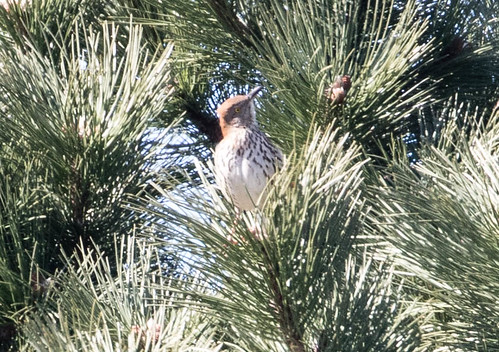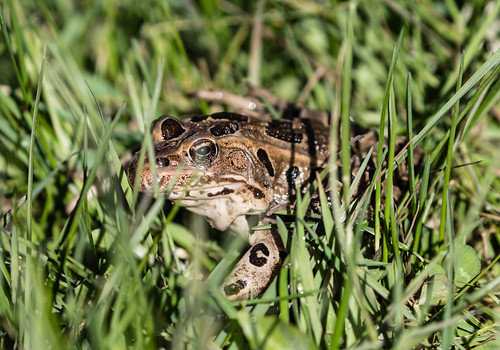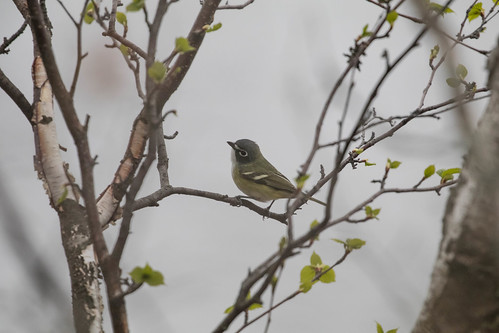
Laura Erickson's For the Birds

Tuesday, May 16, 2017

Concentrated fun

Blue-headed Vireo


This morning started exactly the way the forecast said it would, with thick fog. So despite the fact that the forecast was also calling for rain around 8 am, I set out for my Tuesday Warbler Walk at the Western Waterfront Trail with high hopes.

Ever since Russ's and my first spring in Duluth in 1981, I’ve noticed that there are two kinds of days up here. Russ likes the MMMMMMMMs: the Magnificent Minnesota Mornings. Unfortunately, on those days Migration seems Mediocre. The days I love are the DDDDDDDs: the Dull, Dark, Dreary, Drizzly, Depressing, Damp Duluth Days that birders Delight in. In mid- to late-May, these weather patterns always seem to coincide with the best days, when a wonderful variety of warblers, vireos, thrushes, and flycatchers abound, with eye-popping hummingbirds, tanagers, Rose-breasted Grosbeaks, and orioles to provide bursts of color even through the fog. Today was definitely one of those DDDDDDDs.

With the wind, we didn’t hear many songs except the House Wrens who were pretty much singing non-stop from the parking lot (one close, one barely at the edge of my hearing range (thanks to Jeff for hearing that one!) when we arrived.

When we started walking, we almost immediately came upon a Veery giving its veer call—it flew out very briefly, and some of us got good looks. The dull, dim lighting didn’t help with tricky warblers—one backlit Orange-crowned Warbler didn’t want to show its undertail coverts and while we were puzzling over that, a Yellow Warbler suddenly took its place, making some of us doubt our own eyes until we cleared up that we were looking at two different birds.

The forecast kept our participant list down—there were only 11 of us—and the wind and cold seemed to keep the birds down, too. The dim light made photography tricky, and the only bird I even tried to get photos of was not cooperative, but I did manage a couple of terribly grainy, dull pictures of our Blue-headed Vireo. That’s usually the first vireo to turn up during migration, and sure enough, it was my first vireo of the year.  
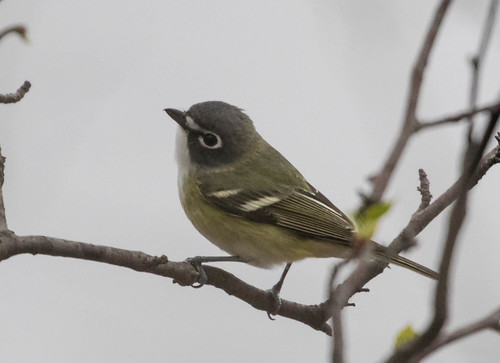
Blue-headed Vireo

We saw a few warblers at the very start, but didn’t come onto our best little flock until right as the rain started—and it quickly showed that it meant business. Still, our six warbler species make this morning's warbler total the best we’ve done so far. The rain started right on schedule, so our walk lasted barely an hour. Our species list was only 28, but of them, 6 were new for our walks. We’d have had a good 20 additional species—maybe more—had the rain not sent us packing.

But the rain and fog, which lasted through the day, maintained the quality of the birding, even though temps in the 40s were a little lower than is pleasant in mid-May. When I got home to  my own yard, I had as many as 6 orioles at a time, a Brown Thrasher, and my first Least Flycatchers, Red-eyed Vireos, and Harris’s Sparrow of the year. Even my local birds were fun to watch—my pair of Red-bellied Woodpeckers and Pileateds have been spending time in the yard, and even in the dull light, I got a pretty nice closeup of the Pileated.
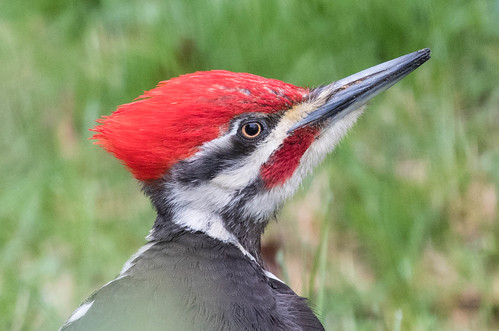
Pileated Woodpecker

Meanwhile, John Richardson and several other local birders had great birds on Park Point today, including Whimbrels and both a Marbled and a Hudsonian Godwit. We’re going to be seeing more of the DDDDDDDs in coming days. May is a great month to be alive, and as far as birding goes, the worse the weather, the better.

28 species

Canada Goose (Branta canadensis)  12
Spotted Sandpiper (Actitis macularius)  1
Ring-billed Gull (Larus delawarensis)  3
Rock Pigeon (Feral Pigeon) (Columba livia (Feral Pigeon))  2
Downy Woodpecker (Picoides pubescens)  1
Hairy Woodpecker (Picoides villosus)  2
Merlin (Falco columbarius)  1
Blue-headed Vireo (Vireo solitarius)  1
Blue Jay (Cyanocitta cristata)  1
American Crow (Corvus brachyrhynchos)  2
Black-capped Chickadee (Poecile atricapillus)  4
House Wren (Troglodytes aedon)  2
Veery (Catharus fuscescens)  1
American Robin (Turdus migratorius)  4
Black-and-white Warbler (Mniotilta varia)  1
Orange-crowned Warbler (Oreothlypis celata)  1
Common Yellowthroat (Geothlypis trichas)  1
Yellow Warbler (Setophaga petechia)  2
Palm Warbler (Setophaga palmarum)  1
Wilson's Warbler (Cardellina pusilla)  1
White-throated Sparrow (Zonotrichia albicollis)  2
Song Sparrow (Melospiza melodia)  4
Swamp Sparrow (Melospiza georgiana)  1
Rose-breasted Grosbeak (Pheucticus ludovicianus)  1
Red-winged Blackbird (Agelaius phoeniceus)  16
Common Grackle (Quiscalus quiscula)  2
Brown-headed Cowbird (Molothrus ater)  2
American Goldfinch (Spinus tristis)  6
Monday, May 15, 2017

Unexpected delight!

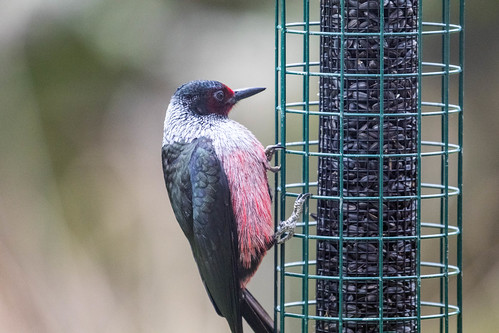
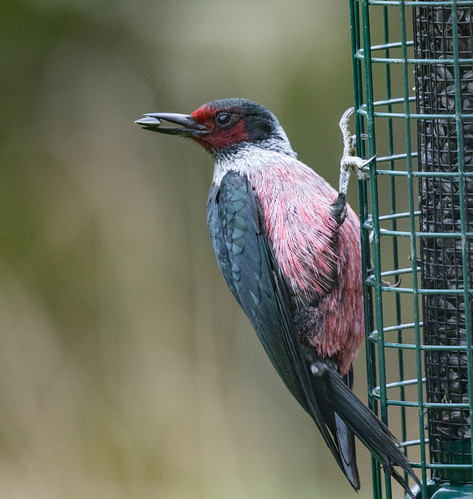
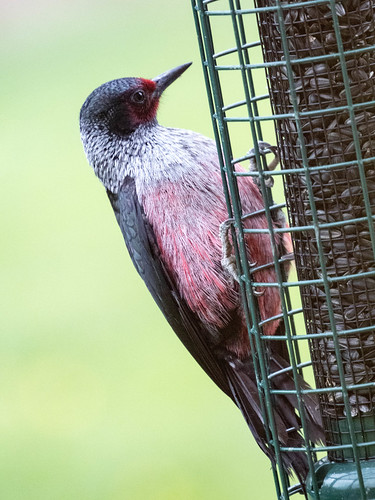
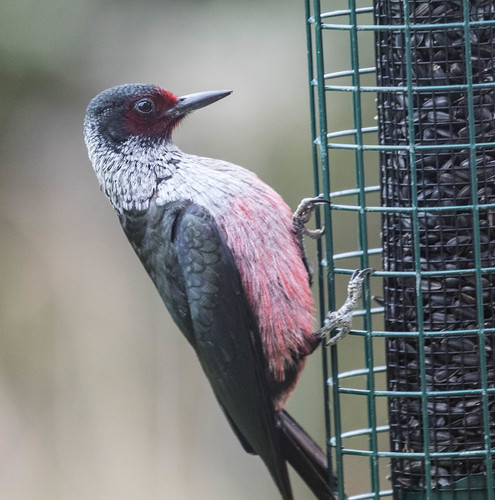
Lewis's Woodpecker

On Monday, I was working on the computer, not very productively because I kept getting distracted by the bird activity in my yard, when out of the blue I got an email from Leann Hess in Port Wing, Wisconsin. Leann was at the center of the effort to get Port Wing designated an official Bird City in Wisconsin, so it was altogether fitting that she was rewarded yesterday with a really cool bird at her feeder—the first ever Lewis's Woodpecker to be reported in Bayfield County! The moment I read her email I sent a message to Wisconsin birding guru Ryan Brady, grabbed Pip the birding dog, and hopped in the car.

I don't chase birds that often, but Lewis's Woodpecker is uniquely beautiful—our only green and pink woodpecker. It's also uniquely historical—the only bird named for Meriwether Lewis. I've seen the species before in Nevada, California, and Colorado, but to see one in Wisconsin, in my favorite town in Wisconsin to boot, was uniquely special.

It had been thundering and raining most of the morning, but the rain stopped on my drive. I made it to Port Wing just a few minutes before Ryan Brady and Nick Anich got there. The Lewis’s Woodpecker was on a telephone pole pretty far off but easy to see. And after a few minutes it flew right in to a feeder just a few feet from the window.  I took lots of photos through the glass, which Leann and Mary keep pristine.

Lewis's Woodpecker

I've never had such superb looks before, and never got to see so much of the pink belly. Meriwether Lewis was also taken with that feature. He wrote, "The belly and breast is a curious mixture of white and blood red which has much the appearance of having been artificially painted or stained of that colour. The red reather predominates.” Some of my photos show the red and white individual feathers blending into pink.

It's easy to romanticize such a gorgeous bird, but not quite so easy to romanticize Lewis and Clark. I looked up Lewis's Woodpecker on the Discovering Lewis and Clark webpage and National Geographic’s Lewis’s Woodpecker page to learn that Lewis first observed the species on July 20, 1805, north of Helena in what is now Lewis and Clark County, Montana. And on May 17, 1806, he wrote, "The Black woodpecker which I have frequently mentioned and which is found in most parts of the roky Mountains as well as the Western and S. W. Mountains, I had never an opportunity of examining untill a few days since when we killed and preserved several of them."

Lewis realized this bird was "new to science." He brought the specimens home and gave one to Charles Willson Peale for the Peale Museum, where Alexander Wilson made a drawing from it and assigned it a scientific name, Picus torquatus.


Lewis noted that the woodpecker resembled the Red-headed Woodpecker in behavior and flight. In 1831, William Swainson, the British ornithologist, apparently picked up on some similar points and reclassified it, putting it in Melanerpes, the same genus as both the Red-headed and Red-bellied Woodpeckers, and made lewis the specific epithet in honor of the man who collected the specimen he was writing about.


Lewis's Woodpecker

I stuck around Leann and Mary's place for almost two hours, which was at least an hour and a half longer than the total time in my life I’ve spent with Lewis’s Woodpeckers before this, and the woodpecker stayed in view the entire time. It would fly to the feeder and pick up a single sunflower seed, then carry it off to the telephone pole to store it. 

During a spell of rain, the woodpecker perched, exposed, on the pole but didn't fly in. I finally left around 4:45, thinking if we get a brighter, non-rainy day while the bird is still there, I just might go back. Even if I don’t, my time with this Lewis’s Woodpecker was good enough to last a lifetime. 
Lewis's Woodpecker


Sunday, May 14, 2017

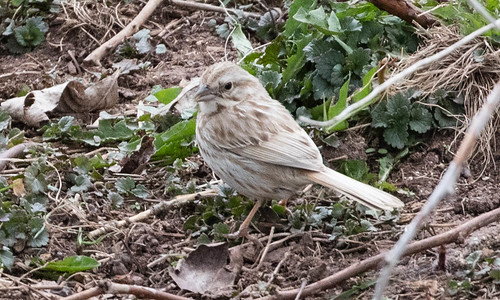
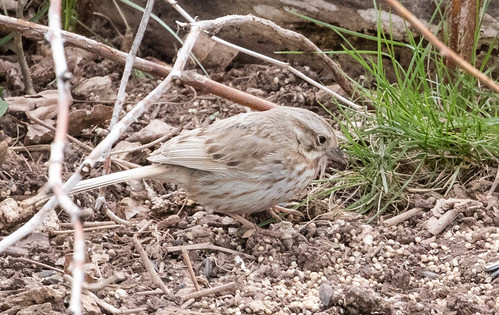
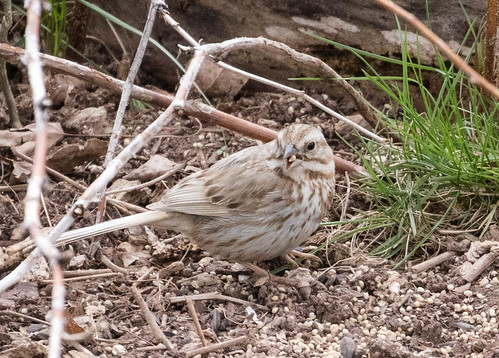
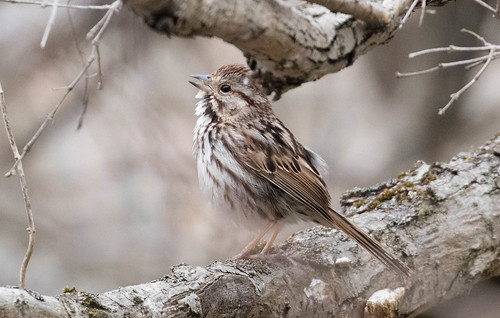
Unusually pale Song Sparrow

Song Sparrow Leucistic (dilute)

Spring is proceeding nice and deliberately this year. The first orioles and hummingbirds have shown up in my neighborhood, but not in big numbers yet. A good assortment of warblers have been arriving, but the vast majority are still Yellow-rumps. The lack of rain lately has dried up the ball field at Park Point, so shorebirds have been few and far between, but I’ve lucked into leading Duluth Audubon’s spring warbler walks at Park Point on two days when Blue Jay migration has been exceptional, with big flocks of jays twinkling past against the blue sky.

I haven’t had many Fox or White-throated Sparrows this year, and not a single White-crowned or Harris’s Sparrow yet. Last week Chipping Sparrows finally supplanted the lingering American Tree Sparrows. I’ve also had a couple of Swamp Sparrows and one Clay-colored Sparrow, even though Peabody Street is the wrong habitat for both. During migration, it really is true that just about anything can show up just about anywhere.
The sparrow I’ve had in the biggest numbers from day to day this spring has been the Song Sparrow. For a while, I’d have as many as four in my sparrow feeding area at the same time, and I’ve been hearing three males singing from different directions a lot. I’ve always had at least one pair nesting nearby, but this year’s three is the best ever.

Song Sparrow Leucistic (dilute)

Last week I had one particular Song Sparrow in my yard that I’d not seen before all spring, and so far I haven’t seen it since. I’d recognize it, because this one is uniquely colored, its plumage extremely pale but not pure white. In ornithology class in the ‘70s, I learned to describe this plumage condition as leucistic; when I started talking to hawk watchers in the ‘80s, I learned it was more properly described as dilute. Meanwhile, in ornithology in the 70s, I learned that birds with patches or almost entirely all-white plumage were partial albinos. Now some scientists say the only proper term for any pale or white bird is also leucistic unless you have solid proof that it produces no melanin at all. They claim the only proper use of the word albino must refer to the genetic condition, and that no genetic condition can be called "partial." That makes leucistic a catchall term for any bird with any low amount of melanin.

I’m not an authority on many ornithological issues—I just try to translate what scientists have agreed on—but in this case, they haven’t really settled on proper terminology even as some have become extremely prescriptive. In my opinion, the words people use, especially words that had a longstanding history of usage since long before anyone had a clue about genetic underpinnings, shouldn’t be retroactively redefined. New information should lead to a more precise but new word, not appropriation of a word that was already perfectly useful with a well-known meaning.

David Sibley was dealing with these same nomenclature rules when he wrote a 2011 entry in his blog. He wrote:

The term leucistic has a confused history. In the introductions of the Sibley Guides I said the term leucistic is synonymous with dilute plumage. That usage was fairly common among birders at the time, and I was unaware that it contradicted several scholarly publications … which define leucistic as the total lack of melanin from some or all feathers (what I called partial albino in the guides). It does make sense to distinguish birds that are unable to deposit melanin (my partial albino, their leucistic) from birds that are able to deposit melanin but only in low concentrations (my leucistic, their dilute). Below I’ve used the term leucistic (not partial albino) for birds which cannot deposit melanin, which helps to distinguish these birds from the narrowly-defined true albino, and allows use of the term “partial albino” as a general category for any bird showing any form of reduced melanin. These terms should be corrected in the introduction of the Sibley Guides.  

Unfortunately for me, David Sibley’s use of “partial albino” as the catchall for pale OR patchy-white birds seems just as confusing as “leucistic” is. So I’m giving up on both terms altogether. From now on, I’m calling the condition my Song Sparrow has “unusually pale plumage.” I’ll call what I originally learned as partial albinism “patchy white plumage.” And oddly enough, even though both terms sound less scientific, they’ll have a more obvious and precise meaning than “leucistic" or "partial albino" as they're currently used. Regardless, a rose is a rose is a rose, and any bird with unusual plumage still looks as sweet.

Song Sparrow Leucistic (dilute)

Saturday, May 13, 2017

101 Ways to Help Birds


Of the baker’s dozen books I’ve written in the past quarter century, I think the most important is my 101 Ways to Help Birds, which was published by Stackpole in 2006. It took over two years to write it—I started it right after the Midwest Birding Symposium in September 2003, after spending the weekend energized and inspired by a host of prominent conservationists I’d been meeting with, such as Alicia Craig, Kenn Kaufman, Don and Lillian Stokes, Ron Windingstad, and Ric Zarwell. On the drive home, I was suddenly struck by the fact that I didn’t know of any book that thoroughly covered the broad span of threats birds face from every direction, and what we individually can do to help.

My daughter Katie and I came up with my working title, Resounding Spring: 101 Ways to Help Birds and Prevent a Real Silent Spring, and I dedicated the book to Rachel Carson, “who understood that the future of humans and birds is inextricably intertwined. We’re all in this together.”


I organized the ways we can help birds into five broad categories: Helping Birds at Home, Enhancing the Natural Habitat of Your Backyard, Supplementing Backyard Habitat, Helping Birds Away from Home, and Helping Birds on a Larger Scale. And I did my best to explain why each “way” was important, from Number 1, “Wake up with bird-friendly coffee,” to Number 101, “Think about the many ways that birds have enriched your life, and share them with others.


I included all kinds of issues that even today few bird conservationists are focused on, such as Number 2, “Eat lower on the food chain, and especially eat less beef,” Number 8, “Build or choose a home with the least impact on the natural world,” Number 10, “Buy lumber or furniture with a Sustainable Forestry Initiative or Forest Stewardship Council logo, or buy used,” and Number 27, “Cut hay and alfalfa as late in the breeding season as possible.”


As I researched how these issues—from conserving water and energy to removing unnecessary fencing—affect bird populations, I felt increasingly depressed and hopeless. It didn’t help that the book was rejected by a few major publishers that have long specialized in titles important for birders, including Houghton Mifflin, the original publisher of Silent Spring. I didn’t get any negative feedback about the content or my approach—indeed, the bird book acquisitions editor at one major publisher wrote me a personal letter about how much he loved the book and how much he wanted them to publish it, but he said the publishers decided there was no market for books about bird conservation. And every publisher said the implied reference to Rachel Carson in my title would have to go: as we were approaching the 2007 centennial of her birth, a groundswell of negative publicity against her and for a return to the widespread use of DDT made publishers nervous.

Ironically, Rodale, the publisher of Al Gore’s book about climate change, rejected the book out-of-hand not because it was about conservation but because it didn’t go far enough, at least with regard to pesticides. I thoroughly explain how dangerous insecticides, herbicides, fungicides, and rodenticides are for birds and why it’s best to avoid them entirely, but I tried to be flexible to reach as many people as possible, noting that if someone were absolutely committed to a pristine lawn, it would be better to spot spray dandelions than to hire a lawn care company to apply herbicides over every square inch of lawn, even where no dandelions could be found.

If Rodale thought I was not preachy enough, a couple of prominent conservationists thought I was too preachy and negative. All I could do was follow my own lights and make my work as good as I could. It would be lovely if other conservationists would write better books that cover these issues—I’d welcome seeing my stuff replaced by better work. I also wish conservation books sold as well as field guides, and that we had as broad a selection of them.

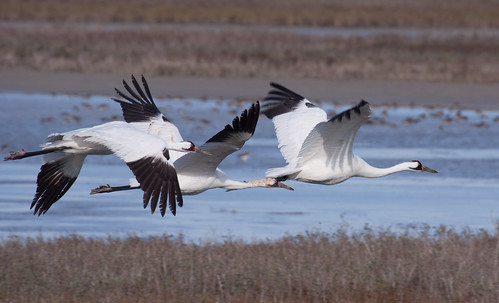
Whooping Crane

I’d have loved to have this book put out by a major publisher with a budget to produce it as I originally envisioned it, filled with colorful photos and other useful illustrations. A picture is worth a thousand words, especially in a how-to book—it was frustrating to be limited to written explanations. And beautiful pictures of birds can provide visceral evidence of what is at stake. As it turned out, the 284-page book has fewer than 50 black-and-white line drawings—not many people nowadays would consider buying such a text-heavy bird book. But Stackpole did a great job of editing and keeping my message intact, and based on what the other publishers said, Stackpole took a huge financial risk to publish the book at all, for which I’m very grateful.


101 Ways to Help Birds is still in print and easily purchased online. A handful of bookstores, especially associated with national wildlife refuge associations and other conservation organizations, make a point of keeping it in stock. I usually have copies of this and my other books along when I do presentations, but I’m not very likely to tell people about that—I’m a horrible salesperson.


But I wrote the book to help birds, and want the information “out there” however I can do it. All 101 ways are listed on my webpage (and this blog) at the top under “Ways to Help.” Last week I transcribed the entire entry about making windows safe for birds to my webpage in conjunction with my blog post I wrote about windows. Then Environment for the Americas, which sponsors International Migratory Bird Day, linked to it on facebook. That made me realize that I should do that for all 101 ways, so now I’m transcribing the rest of the book’s text there, too.

The “ways” are listed in separate boxes. Any of those boxes that have a photo background can be clicked now to see the entire text from the book and also photos. Unfortunately, I can’t find any digital copies of the book, so I’m typing out the entire text entry by entry, which is time-consuming. But I’m noticing that even though the book is over 10 years old now, most of the information is still accurate. After I’ve finished adding all the entries, I’ll start adding updated information and resources. If you know of any sources you’d like me to include, please let me know.


Thursday, May 11, 2017

Cooperative Scoters on What I Call "National Warbler Day"

White-winged Scoter

Park Point was hopping this morning, especially with birders! At most, our group had about 35 people, but there were still an order of magnitude more Blue Jays flying through. I didn't get any flock flight shots today, but Linda Nervick got one with her cell phone showing them twinkling in the blue sky.


A few of them came in for landings.

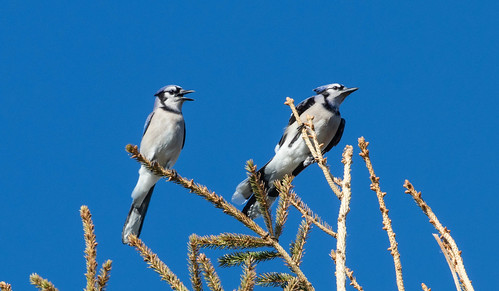
Blue Jay

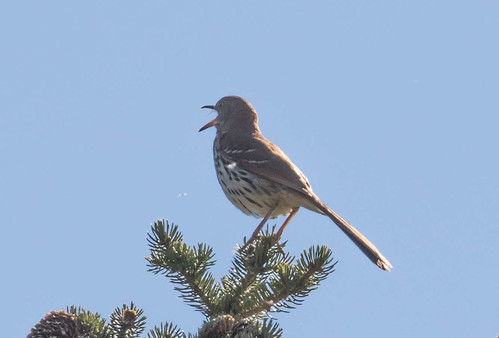
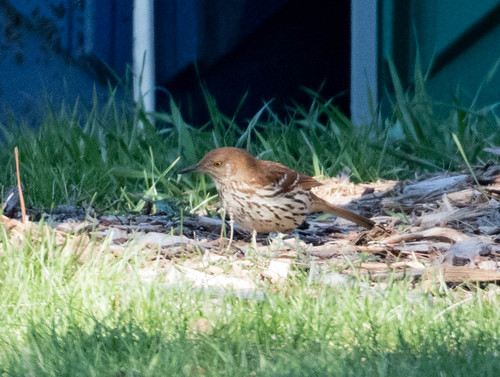
We had a few flickers, but none of the flights we had last week. A couple of Brown Thrashers were even more conspicuous than the flickers today, though they seem to prefer keeping us in the sun, so my shots were mostly backlit.

Brown Thrasher

This one was rummaging through the leaves outside the porta-potties.

Brown Thrasher

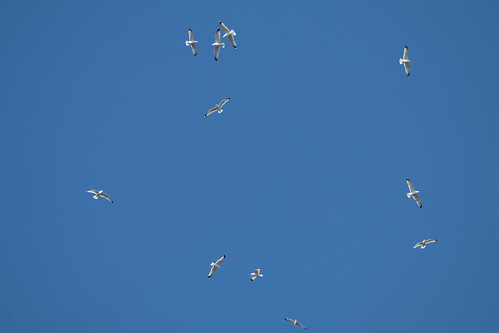
By mid-morning, Ring-billed Gulls were loafing, circling on thermals. Broad-winged Hawks joined them occasionally, but I didn't get a photo while the Broad-wings were among them.

Ring-billed Gull

Today is the anniversary of the first day I identified warblers, in 1975. Today we had three of the four species I saw that day: Black-and-white, Nashville, and Black-throated Green. We also had the usual big numbers of Yellow-rumped and Palms.

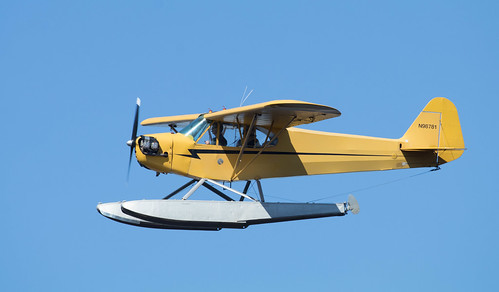
Our brightest "bird" of the day was this Lesser Northern Gashawk:

Seaplane

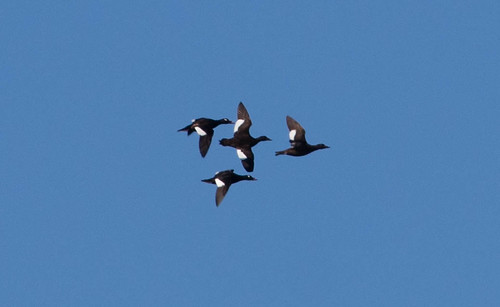
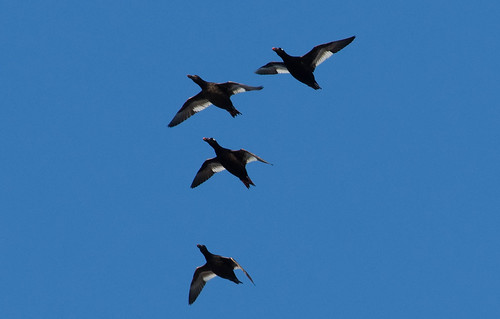
My favorite bird of the day was White-winged Scoter. We saw a lovely flock of four that flew past right before John Richardson joined us. Fortunately, the birds obligingly returned overhead so he could enjoy them, too. This was a lifer for Pip the Birding Dog—her life list is up to 263 now!

White-winged Scoter

With all the people along this time, we finally got a couple of photos of Pip the Birding Dog (my usually not-too-badly-behaved little sidekick). Sandy Roggenkamp sent this one:


Linda Nervick got a few group shots, including this one. Pip was rushing to get ahead because she and I are usually the ones in front. 


Our total of 43 species was surprisingly low considering where we are in migration. I may have missed checking off some birds that we saw, but I didn't see any goldfinches or either nuthatch! And we had only a few White-throated Sparrows where I'd expected at least a few other migrants, such as White-crowned or Harris's. Between the resident pair of Merlins and all the Sharp-shinned Hawks flying through, I guess resident birds were laying low and migrants were high-tailing it out of there as quickly as they could. All in all, it was a splendid morning!

43 species (Yes, the species have outnumbered the people every time!)

Canada Goose (Branta canadensis)  6
Mallard (Anas platyrhynchos)  6
Lesser Scaup (Aythya affinis)  10
White-winged Scoter (Melanitta fusca)  4    
Common Merganser (Mergus merganser)  2
Red-breasted Merganser (Mergus serrator)  18
Common Loon (Gavia immer)  3
Horned Grebe (Podiceps auritus)  10
Double-crested Cormorant (Phalacrocorax auritus)  8
Sharp-shinned Hawk (Accipiter striatus)  25
Bald Eagle (Haliaeetus leucocephalus)  1
Broad-winged Hawk (Buteo platypterus)  12
Spotted Sandpiper (Actitis macularius)  1
Bonaparte's Gull (Chroicocephalus philadelphia)  X
Ring-billed Gull (Larus delawarensis)  X
Rock Pigeon (Feral Pigeon) (Columba livia (Feral Pigeon))  4
Mourning Dove (Zenaida macroura)  2
Red-bellied Woodpecker (Melanerpes carolinus)  1
Northern Flicker (Colaptes auratus)  8
American Kestrel (Falco sparverius)  1
Merlin (Falco columbarius)  2
Blue Jay (Cyanocitta cristata)  800
American Crow (Corvus brachyrhynchos)  10
Tree Swallow (Tachycineta bicolor)  8
Black-capped Chickadee (Poecile atricapillus)  2
Brown Creeper (Certhia americana)  2
Ruby-crowned Kinglet (Regulus calendula)  15
American Robin (Turdus migratorius)  3
Brown Thrasher (Toxostoma rufum)  2
European Starling (Sturnus vulgaris)  4
Black-and-white Warbler (Mniotilta varia)  2
Nashville Warbler (Oreothlypis ruficapilla)  3
Palm Warbler (Setophaga palmarum)  6
Yellow-rumped Warbler (Setophaga coronata)  30
Black-throated Green Warbler (Setophaga virens)  3
Chipping Sparrow (Spizella passerina)  8
Clay-colored Sparrow (Spizella pallida)  1
White-throated Sparrow (Zonotrichia albicollis)  3
Song Sparrow (Melospiza melodia)  6
Red-winged Blackbird (Agelaius phoeniceus)  15
Common Grackle (Quiscalus quiscula)  20
Brown-headed Cowbird (Molothrus ater)  30
Pine Siskin (Spinus pinus)  2


Tuesday, May 9, 2017

Doubling the number of warbler species!

Yellow-rumped Warbler

This morning it was still cold enough that I kept my gloves on for our whole spring warbler walk. The trees are still pretty bare and most of our shorebird and songbird migrants are still south of here, but ducks and grebes have pretty much moved on and it was too cloudy for hawk migration, so we didn't quite reach the 40 species mark today that we did last week. We did add a few new birds: a House Wren singing away and a catbird skulking about, plus we had great looks at a few Nashville and Black-and-white Warblers (but no photos), and heard one Pine Warbler singing in the pine trees. So it was a lovely morning, even if we're all impatient for south winds to push more migrants our way.  

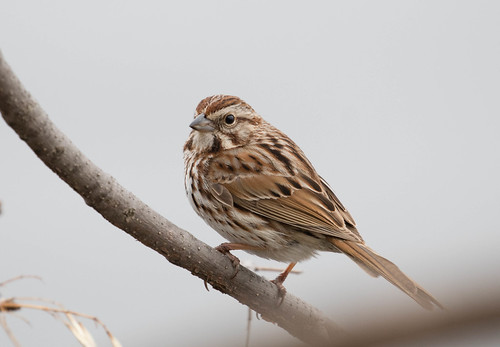
Song Sparrow

Song Sparrow

It feels weird to be this far into May with so few sparrows about. In my own yard, I had tree sparrows and juncos still on Monday, and I still have only a handful of White-throated Sparrows—no White-crowns, Harris’s, or Lincoln’s have shown up yet. But even though I'm sad that we haven't had many sparrows yet, I've been delighted, in my own yard and at the Western Waterfront Trail, to see and hear so many Song Sparrows this year. Today they weren't singing so much—we're guessing they must be busy with nesting behaviors now.  But a couple of them gave me some nice photo-ops.

Downy Woodpecker

Downy and Hairy Woodpeckers have been pretty quiet—they’re probably busy with nesting, too—but we did spot a couple. White-breasted Nuthatches had been easy to find, with at least three different males singing on territories along our walk through last week, but they also seem to be busy with nesting now. We did spot one individual to bulk up our species list.

Yellow-rumped Warbler

Yellow-rumped Warbler

Even as we got those few new warblers, the vast majority that we saw today, and the only ones that let me photograph them, were Yellow-rumps. I love them for their ubiquitousness, their dry chip (and how they often respond to my lame imitations!), their delicately pretty little ditty, and especially for their beauty: both the soft elegance of the females, and the striking brilliance of the males.  

Plenty of Ruby-crowned Kinglets were flitting about and some were singing. They were all too active for photos, but everyone got good if quick looks at them. I'll miss them when they move on as more warblers move in, but that's part of the magic of spring migration. And meanwhile, despite the cool temperatures this morning, lots of tiny bugs were swarming about and the kinglets and yellow-rumps put on a great show fly-catching. In another week or so, real flycatchers will be taking over that gig.

We lucked into another John Richardson sighting, running into this great birding guide about two-thirds of the way through our walk. We shared our information and saw some birds together. When he got ahead of us, he spotted a Northern Waterthrush—he was keeping on it until we caught up until some dog walkers scared it away and we missed it. He got ahead of us again, and found 11 Lesser Yellowlegs. This time the first of us to arrive saw them at a distance, and the stragglers got even better looks from closer range after we'd moseyed on. Yellowlegs were new for our Western Waterfront Trail walks this year.

Snapping Turtle

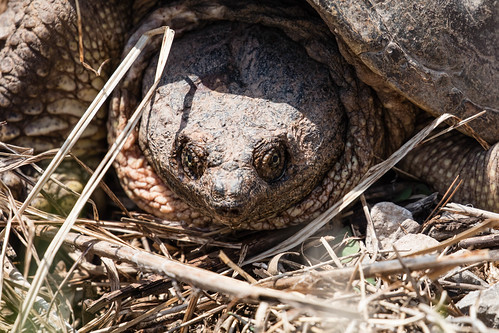
On Friday, my dog Pip and I saw several painted turtles and a huge snapping turtle at the Western Waterfront Trail. We didn't see any turtles today, but on the mammal scene we had gray and red squirrels and a most cooperative little chipmunk.

Eastern Chipmunk

In coming days the first hummingbirds, orioles, Rose-breasted Grosbeaks, and other cool birds will be turning up. I’m glad I started our warbler walks right at the start of April. We’ve had lots of time to enjoy the early migration, and each time we spot something new for the year, which has happened on every one of our walks, we’ve had time to savor it. When things progress more quickly in the coming weeks, the birding pace will pick up. With luck, we’ll have some frenzied days where the birds are coming hot and heavy, but I still enjoy these more easy-going days.

39 species

Canada Goose (Branta canadensis)  12
Mallard (Anas platyrhynchos)  3
Lesser Yellowlegs (Tringa flavipes)  11
Ring-billed Gull (Larus delawarensis)  8
Rock Pigeon (Feral Pigeon) (Columba livia (Feral Pigeon))  10
Mourning Dove (Zenaida macroura)  1
Red-bellied Woodpecker (Melanerpes carolinus)  1
Downy Woodpecker (Picoides pubescens)  2
Hairy Woodpecker (Picoides villosus)  3
Northern Flicker (Colaptes auratus)  2
Merlin (Falco columbarius)  1
Eastern Phoebe (Sayornis phoebe)  1
Blue Jay (Cyanocitta cristata)  2
American Crow (Corvus brachyrhynchos)  4
Common Raven (Corvus corax)  1
Tree Swallow (Tachycineta bicolor)  12
Black-capped Chickadee (Poecile atricapillus)  12
Red-breasted Nuthatch (Sitta canadensis)  1
White-breasted Nuthatch (Sitta carolinensis)  1
House Wren (Troglodytes aedon)  1
Ruby-crowned Kinglet (Regulus calendula)  15
American Robin (Turdus migratorius)  5
Gray Catbird (Dumetella carolinensis)  1
Brown Thrasher (Toxostoma rufum)  2
Cedar Waxwing (Bombycilla cedrorum)  30
Black-and-white Warbler (Mniotilta varia)  3
Nashville Warbler (Oreothlypis ruficapilla)  3
Palm Warbler (Setophaga palmarum)  5
Pine Warbler (Setophaga pinus)  1
Yellow-rumped Warbler (Setophaga coronata)  30
White-throated Sparrow (Zonotrichia albicollis)  6
Song Sparrow (Melospiza melodia)  8
Swamp Sparrow (Melospiza georgiana)  3
Northern Cardinal (Cardinalis cardinalis)  1
Red-winged Blackbird (Agelaius phoeniceus)  35
Common Grackle (Quiscalus quiscula)  10
Brown-headed Cowbird (Molothrus ater)  10
Purple Finch (Haemorhous purpureus)  2
American Goldfinch (Spinus tristis)  10

Monday, May 8, 2017

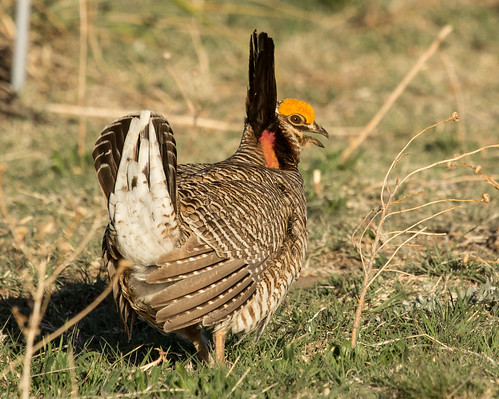
Helping Lesser Prairie-Chickens and the People Saving Them

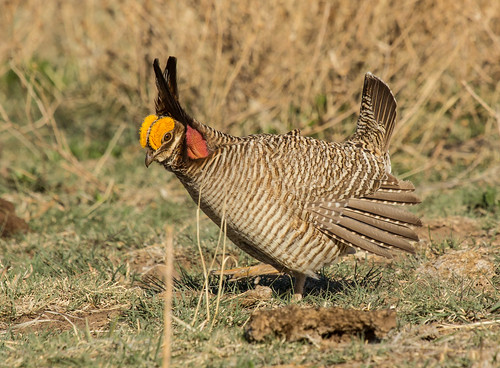
Lesser Prairie-Chicken

In 2013, when I did my Conservation Big Year, one of the birds I was most focused on seeing was the Lesser Prairie-Chicken. I saw and heard my first ones way back in April 1996 when my sister-in-law Jeanie and I took a road trip out West. One of my destinations was Lamar, Colorado, where it was fairly easy to drive to a prairie-chicken lek. Well, easy except for the ridiculously early hour we needed to be there in order to see the chickens by the dawn’s early light.

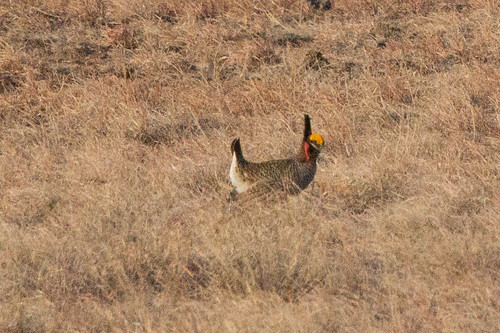
In 2013, I went on one of Kim Eckert’s superb birding trips—the one to Colorado, in which we searched out Lesser Prairie-Chicken, both Greater and Gunnison Sage-Grouse, and White-tailed Ptarmigans. That’s when I managed to get a fairly respectable recording of the prairie chickens. I also got photos, but we were at a distance, and in the low light, my pictures were nothing to brag about.

Lesser Prairie-Chicken

In 2014, I was thrilled to be invited to be the keynote speaker at Oklahoma’s wonderful Lek Treks & More Lesser Prairie-Chicken Festival in Woodward, Oklahoma. (I wrote about it on my blog.) Several of the events for that festival take place at the Selman Ranch, which is managed specifically for quality habitat and prairie chicken conservation. Sue Selman, a genuine wildlife hero whose name should be known far and wide, has worked tirelessly to protect these birds against all manner of onslaughts.


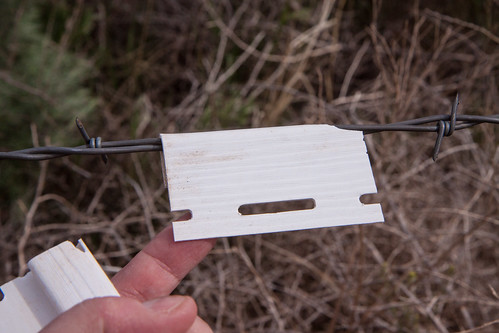
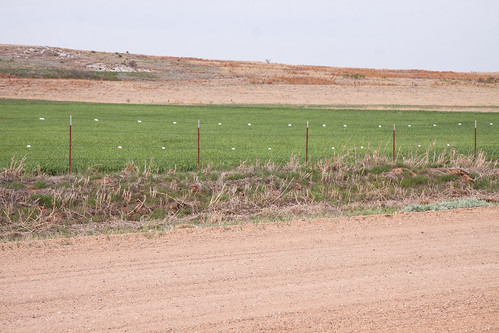
After viewing prairie-chickens on her land, Sue set us to work for a half hour or so. She explained that fences are a major cause of death for prairie chickens, which collide with them, perhaps thinking wires are as yielding as prairie grass. So unnecessary fencing should always be removed to protect grassland species, especially grouse, but when it can’t be removed, a simple and inexpensive, albeit labor intensive, alternative is extremely effective at protecting them. Marking fences every 2 feet or so with white plastic pieces, about the size of credit cards, reduces kills to virtually nothing. I was proud to get to help with that simple task.

20140426-IMG_7168

20140426-IMG_7170

20140426-IMG_7173

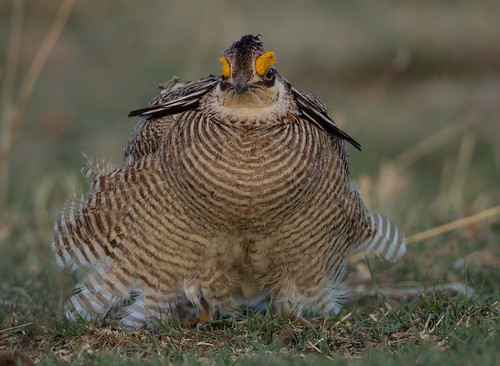
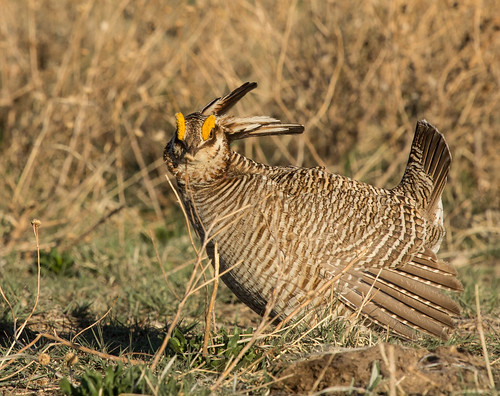
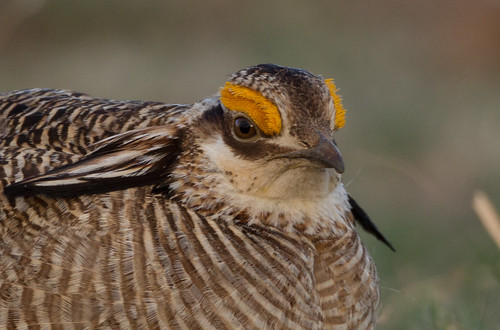
At that festival, I also got to spend time in a fantastic photography blind set right in a major lek. I got some amazing photos!

Lesser Prairie-Chicken

Lesser Prairie-Chicken

Lesser Prairie-Chicken

Dick Wilberforce, a splendid photographer, has worked for over 50 years to preserve and promote the future of Lesser Prairie Chickens. He constructed the very blind I was in when I took those photos. This blind has been used for over 15 years to give birders and photographers from around the globe the opportunity to see these critically endangered birds up close and personal.

But on March 6, 2017, a wildfire destroyed this entire lek as well as a huge swath of quality habitat. The devastating drought and wildfires that have been centered right in the small range of Lesser Prairie-Chickens constitute a huge conservation problem, but also one of human dimensions. Dick is a retired veteran living on a very limited income—he was making such a huge contribution to conservation and more personally to those of us who enjoy splendid photos of Lesser Prairie-Chickens by providing this blind and sharing revenue with the Texas landowner, giving the landowner a vested interest in protecting the habitat. Sue Selman created a Go Fund Me page to help this wonderful conservationist and good man.

 Those of us with very limited resources have to be careful about budgeting, and limit our contributions to organizations that do the most good. But sometimes we overlook smaller, more human causes that are actually a major part of the Big Picture. I’ve been covering all my own expenses to produce this blog and my radio program/podcast for decades. If you’ve found my work at all valuable, I’d deeply appreciate it if you’d donate what you can, even a couple of dollars, to this important campaign. One human being to another.

Lesser Prairie-Chicken

Sunday, May 7, 2017

Standing on the Shoulders of a Giant

Daniel Klem
Daniel Klem, a genuine giant in ornithology and bird conservation. Photo from in April 2004.

One of my favorite quotes is from Isaac Newton, from 1676, “If I have seen further, it is by standing on the shoulders of giants." The idea behind the quote goes back even further, at least to the 12th Century, credited to one Bernard of Chartres. It shouldn't be surprising that a scientist would generously give credit to the many scientists who discovered all the underpinnings for his own discoveries—that’s exactly how science is supposed to work.

Unfortunately, attribution of credit where credit is due doesn’t always come naturally to our species. We humans really do love to be first to discover new things. An up-and-coming graduate student or assistant professor has to compete to get grants and tenure—taking a bit of credit for great ideas that were actually inspired or outright taken from others is a terrible, if terribly human, thing to do. And institutions and organizations that depend on grants and supporter donations have a vested interest to blow their own horns.

This issue came home to me this week when I was thinking about what we know and don't know about bird-killing glass, and when we learned it. When we moved into our house on Peabody Street in 1981, we immediately discovered that our dining room window—the one that looked out on our best bird feeders—was a bird killer. We tried moving feeders around and putting various things on the window, but although the number of kills went down, every season the window killed at least some birds.

When I started producing "For the Birds" in 1986, I mentioned those bird kills at our window and some strategies I’d used to reduce it. I also started researching the problem in more depth. There were several papers mentioning that the studies were based on carcasses retrieved at windows, but just about every paper I could find that focused on bird-window collisions as a conservation problem to be solved was written by someone named Daniel Klem from Muhlenberg College, who started researching the issue in the 1970s. A couple of his articles in 1990 in the Journal of Field Ornithology titled “Bird injuries, cause of death, and recuperation from collisions with windows” and “Collisions between birds and windows: mortality and prevention” had a few suggestions for solving the problem based on studies he and his students conducted at Muhlenberg College. One suggestion was to set feeders directly on or within a foot of the glass; Russ and my kids immediately set to work making me a lovely tray feeder affixed to our dining room window frame as a Mother's Day gift. Sure enough, the deaths at our worst window ended.

Virtually every scientific paper I could find about bird-window collisions had the name Daniel Klem attached to it. He’d written a 14-page in-depth article in 1989 for The Wilson Bulletin simply titled “Bird-window collisions.” In 1991, his paper, “Glass and bird kills: an overview and suggested planning and design methods of preventing a fatal hazard” was included in the proceedings from a National Symposium on Urban Wildlife titled “Wildlife Conservation in Metropolitan Environments.” In 2004, Dr. Klem was primary author of a paper, “Effects of window angling, feeder placement, and scavengers on avian mortality at plate glass,” published in The Wilson Bulletin. In 2009, he was lead author on two papers, “Architectural and landscape risk factors associated with bird-glass collisions in an urban environment” and “Preventing bird-window collisions,” both published in the newly-renamed Wilson Journal of Ornithology.

These are just a few of the titles of papers he authored on the subject. When he submitted a paper to The Auk, the journal of the American Ornithologists' Union (now the American Ornithological Society), it was rejected because so many of his citations were for his own papers—not because he's an egomaniac or because no one else could replicate his research but because no one else was even trying to. [Since original publication of this post, I've also learned that his papers on the subject were rejected by The Auk because major scientists said it was too minor an issue to be worthy of inclusion!]

When I was researching my book 101 Ways to Help Birds in 2004 and 2005 and called ornithologists from several research and conservation institutions, I was told that window kills affected trivial numbers of individual birds compared to habitat loss on breeding and wintering ranges, which destroy whole populations. (Some of these people were still claiming the same about domestic cat predation on birds!) Habitat loss is truly a fundamental issue, of course, but hardly the only bird-related conservation issue.

Around the time Klem presented at the 2009 International Partners in Flight Conference a paper, “Avian Mortality at Windows: The Second Largest Human Source of Bird Mortality on Earth,” the national press coverage inspired a critical mass of scientists to start paying attention: for several years Klem had been making data-based estimates of the annual kill of birds at windows, claiming the number to be in the hundreds of millions to a billion birds a year in the US alone. After the national press ran with the figure, many scientists pooh-poohed or tried to disprove those high numbers until independent studies confirmed Klem’s estimates—at that point, some scientists seemed to be saying their own studies were the first to show window kills were a significant problem!

By then, Dr. Klem was working with some architects and glass manufacturers to conduct studies to see how the type of glass and window placement could reduce collisions. His painstaking work kept building up the foundation of what we know about window collisions even as scientists at well-known research and conservation organizations and institutions (including some I usually support) were finally starting to conduct their own studies to the field. That is how scientists are supposed to work—running with ideas they get from one another. If it took three decades before other scientists started jumping en masse into this important line of research, it finally happened thanks to Dr. Klem. But now some of these institutions and organizations were implying that they were the first to recognize and research this horrible problem.

It was disconcerting last week to get invited to a webinar about bird collisions and ways we can minimize them. The description said the presenter had "discovered" in 2009 that there was "virtually no science or basis for most recommendations.” We obviously have long needed more studies affirming Daniel Klem's discoveries and collaborating with him on strategies for dealing with the problem. Instead, what we're getting are researchers new to the topic cavalierly dismissing the mountain of foundational research he's spent his career building! I am most seriously displeased.

The goal of science is always to learn ever more. But in our scramble to see farther than others, it's a good idea to acknowledge those giants we're trampling over.

(The entire text of the window-collision entry of my 2006 book 101 Ways to Help Birds is reproduced here. Most of the photos of window treatments were taken as I researched my book, years before conservation organizations were paying attention to the issue. My information about this issue was based on Daniel Klem's research. I wonder if literature searches have gone out of vogue?)

Thursday, May 4, 2017

The Sky Opened Up! With BIRDS!

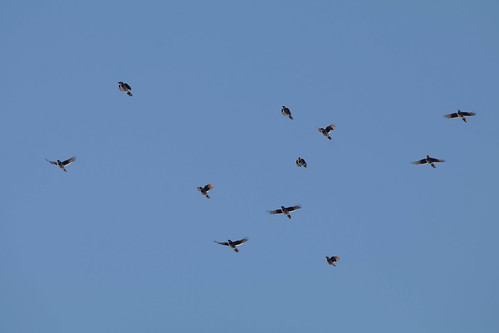
Hokey Smokes! What a delightful morning! We had our biggest turnout of birders (22 at max) and our biggest turnout of birds, both in terms of the number of species and of individuals. Flocks of Blue Jays poured through.

Blue Jay

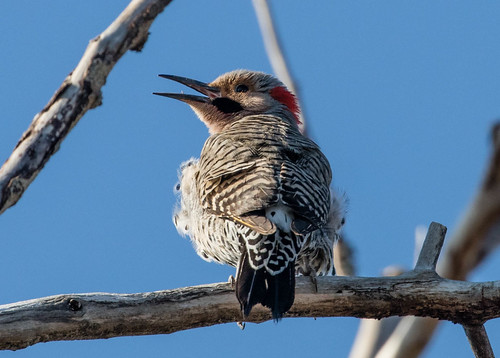
Flickers were everywhere.

Northern Flicker

Northern Flicker

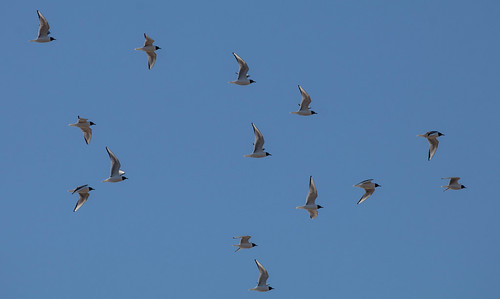
I've never witnessed such a huge number of Bonaparte's Gulls on the move before!

Bonaparte's Gull

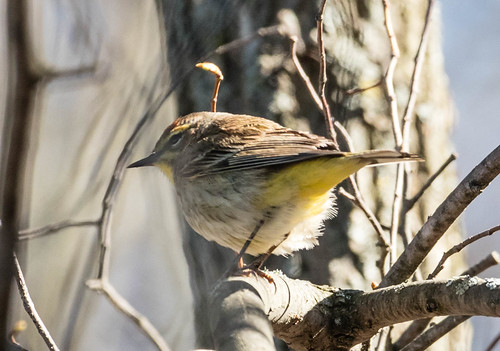
We had at least 30 Brown Creepers, and I had to confirm that because the number was considered high for eBird. None cooperated for photos! Neither did any Yellow-rumps or kinglets, but we did have one semi-cooperative Palm Warbler.

Palm Warbler

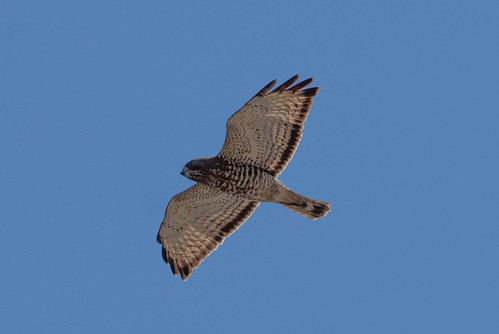
Sharp-shinned and Broad-winged Hawks streamed through.

Broad-winged Hawk

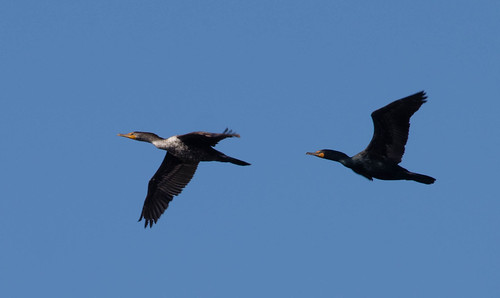
A few cormorants streamed by.

Double-crested Cormorant

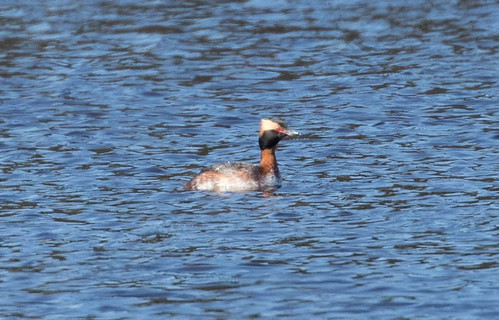
There were lots of Horned Grebes far out, and some a bit closer to us.

Horned Grebe

We also had a John Richardson sighting. He's a great birder and a wonderful human being—a guide I strongly recommend, who made sure we knew about the Northern Mockingbird that has been hanging around near the airport. It's possible we actually saw 2—our first bird seemed to be moving toward the airport, and then when we moved further north up the point, we had one closer to the main parking lot. I counted it as one because I couldn't be certain, and with a rare bird it's better to err on the side of caution.

Northern Mockingbird

And because one good Mimid deserves another, we had one or two Brown Thrashers as well!

Brown Thrasher 

We of course searched for the Smew and Avocet seen yesterday, and the Willets that were seen this morning, but no luck. With so much on the move, including voracious raptors, it's not surprising that they weren't lingering.

Our most cooperative critter of the day was a frog. I'm thinking it's a Northern Leopard Frog, but if someone tried to tell me it was something else, I'd probably believe you.

Northern Leopard Frog

48 species (+2 other taxa)

Canada Goose (Branta canadensis)  6
Blue-winged Teal (Anas discors)  4
Redhead (Aythya americana)  6
Greater/Lesser Scaup (Aythya marila/affinis)  50
Bufflehead (Bucephala albeola)  4
Common Merganser (Mergus merganser)  6
Red-breasted Merganser (Mergus serrator)  2
Common Loon (Gavia immer)  1
Pied-billed Grebe (Podilymbus podiceps)  2
Horned Grebe (Podiceps auritus)  50
Double-crested Cormorant (Phalacrocorax auritus)  20
Sharp-shinned Hawk (Accipiter striatus)  30
Bald Eagle (Haliaeetus leucocephalus)  2
Broad-winged Hawk (Buteo platypterus)  10
Killdeer (Charadrius vociferus)  1
Spotted Sandpiper (Actitis macularius)  1
Bonaparte's Gull (Chroicocephalus philadelphia)  1200     Huge flocks calling and flying overhead and along both the bay and the lake
Ring-billed Gull (Larus delawarensis)  40
Rock Pigeon (Feral Pigeon) (Columba livia (Feral Pigeon))  6
Belted Kingfisher (Megaceryle alcyon)  1
Downy Woodpecker (Picoides pubescens)  1
Northern Flicker (Colaptes auratus)  50     Many flying over and calling from trees everywhere
Merlin (Falco columbarius)  1
Eastern Phoebe (Sayornis phoebe)  1
Blue Jay (Cyanocitta cristata)  800     Big flocks flying over entire time we were present. This is a minimum number
American Crow (Corvus brachyrhynchos)  15
Common Raven (Corvus corax)  1
Tree Swallow (Tachycineta bicolor)  15
Black-capped Chickadee (Poecile atricapillus)  6
Red-breasted Nuthatch (Sitta canadensis)  2
Brown Creeper (Certhia americana)  30     Probably an under-count--they were all over today, by the recreation building, the dunes, and on the bay side in the trees.
Golden-crowned Kinglet (Regulus satrapa)  10
Ruby-crowned Kinglet (Regulus calendula)  35
American Robin (Turdus migratorius)  3
Brown Thrasher (Toxostoma rufum)  2
Northern Mockingbird (Mimus polyglottos)  1     John Richardson saw first and told us where it was hanging out, and sure enough!
European Starling (Sturnus vulgaris)  8
Palm Warbler (Setophaga palmarum)  2
Yellow-rumped Warbler (Setophaga coronata)  10
American Tree Sparrow (Spizelloides arborea)  1
Chipping Sparrow (Spizella passerina)  2
Dark-eyed Junco (Junco hyemalis)  4
White-throated Sparrow (Zonotrichia albicollis)  8
Song Sparrow (Melospiza melodia)  20
Swamp Sparrow (Melospiza georgiana)  6
Red-winged Blackbird (Agelaius phoeniceus)  8
Eastern Meadowlark (Sturnella magna)  1     On ball field. We heard it give the chatter call note a few times, and saw the yellow throat with creamy, not yellow, malars.
Rusty/Brewer's Blackbird (Euphagus carolinus/cyanocephalus)  6 flying over
Common Grackle (Quiscalus quiscula)  10
Brown-headed Cowbird (Molothrus ater)  25

After the main bird walk, a few people hung on to check out the birds at the Yacht Club, behind where the old Bayside Market used to be. We added 6 more species!

Surf Scoter (Melanitta perspicillata)  6     Flock flew rapidly overhead away. All were very dark, including belly. I studied them as they moved along, having trouble getting a clear look at the wings, but when they finally banked, they didn't have the large white patches in wings of White-winged Scoters. They did have white on nape--some very intensely white-- and some with female's face patch.
Hooded Merganser (Lophodytes cucullatus)  2
Herring Gull (Larus argentatus)  2
Mourning Dove (Zenaida macroura)  2
Northern Cardinal (Cardinalis cardinalis)  1
American Goldfinch (Spinus tristis)  1