Sunday, May 25, 2008
Indiana Jones and the Willow Ptarmigan
Saturday, May 24, 2008
Spring Dawn at Ellis Hollow
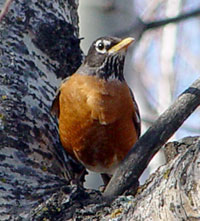
On May 14, while I was packing up to leave for Chicago and Duluth, I made a recording of the dawn chorus from my balcony. It's 52 minutes long, starting out very softly and slowly building. It is 30.2 MB, so don't download unless you have a fast connection or a LOT of time. It sounds best when you turn the bass down low.
I'm going to eventually make a list of all the species you can hear on this, but if you notice something I'm likely to miss, post a comment.
Name that Peregrine Chick!
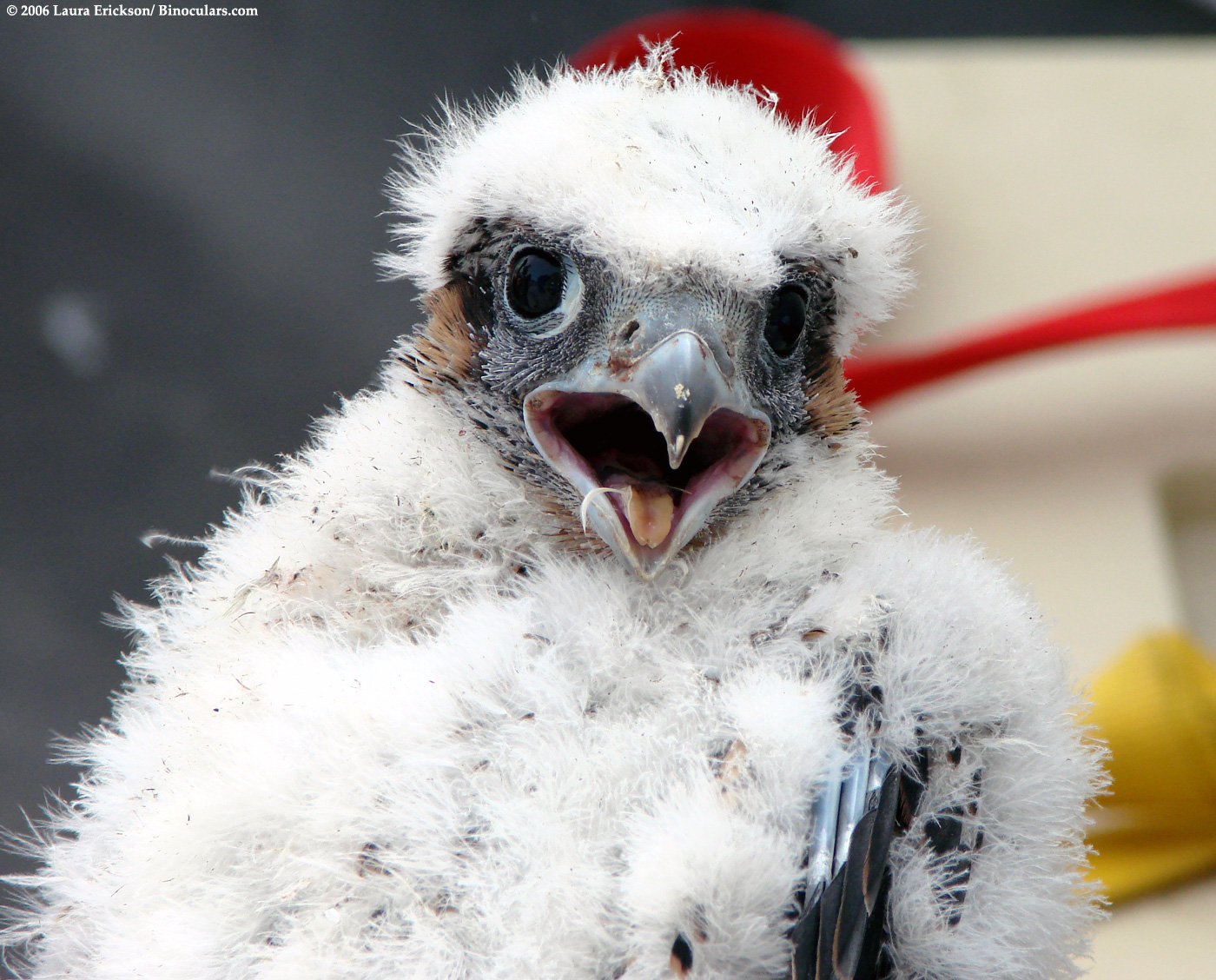
Here's a fun, and worthwhile, contest, as described by Debbie Waters, the Education Director at Hawk Ridge Bird Observatory:
There was a great article in the local news section of Thursday's Duluth News Tribune about our Name the Peregrine Falcon Chick auction.There's still time left to bid! The auction ends at 6:50 Saturday evening. To bid, go to www.ebay.com and search under "name peregrine falcon".
This is the PERFECT gift for the bird lover that has everything (else)!
We've had a lot of lookers on the Ebay page, but so far just one bid.
Thank you to that bidder! You are helping to support one of our most popular public programs--one that we offer as a free public service in our community. "Free" means that we need funding from outside sources in order to provide this valuable programming.
What does the winner get?
1. The naming right for one of the peregrine chicks/eyasses. This name will be recorded along with the band numbers in the Midwest Peregrine Society database.2. A professional photo of 'your' eyas taken at the banding. Because they aren't traditionally 'cute' at that age, we will also attempt to get a professional 'suitable for framing' photo of your chick after it develops its beautiful juvenile plumage. We can't guarantee that the bird will provide us with that opportunity, but we'll do our best!
3. A day with the Peregrine Watch Naturalists watching the family and touring some of the other Peregrine Falcon nest sites in the area.
4. Email updates concerning the development, activities and well-being of 'your' eyas during the summer of 2008.
5. Notification if your bird is relocated or seen at another location as an adult.
6. A one-year membership to Hawk Ridge Bird Observatory and all the perks that come with HRBO membership.
This is an exciting opportunity that we may not be able to offer again in the future, so we hope you will take advantage of what might be a “once in a lifetime” chance!
Wednesday, May 21, 2008
All's well that ends well
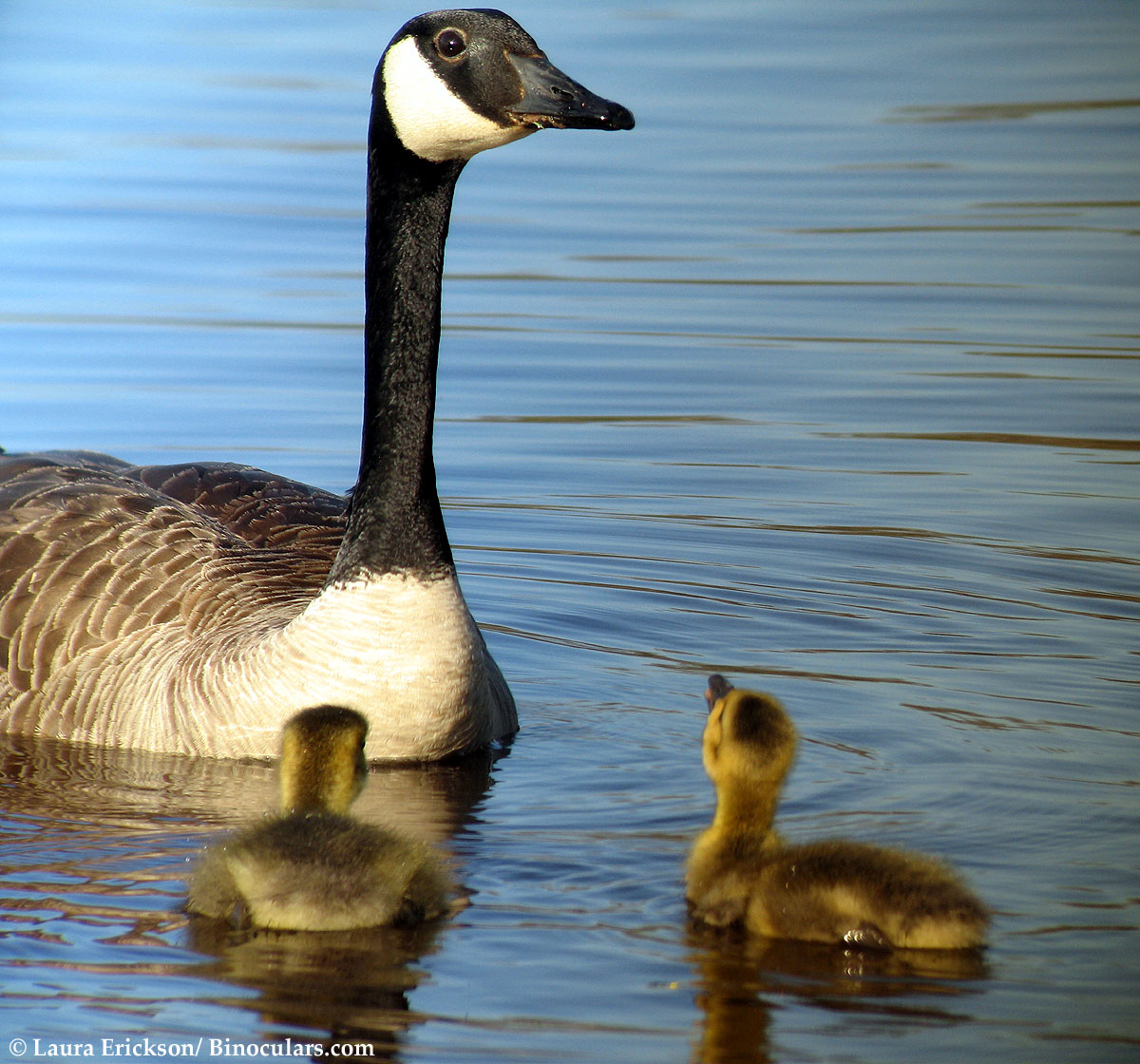 Children, no bickering. When you hurt your brother or sister, stop doing it, apologize, and, if necessary, make amends. And move on. No holding grudges or getting in some snide last word. THE END.
Tuesday, May 20, 2008
Cancer is evil
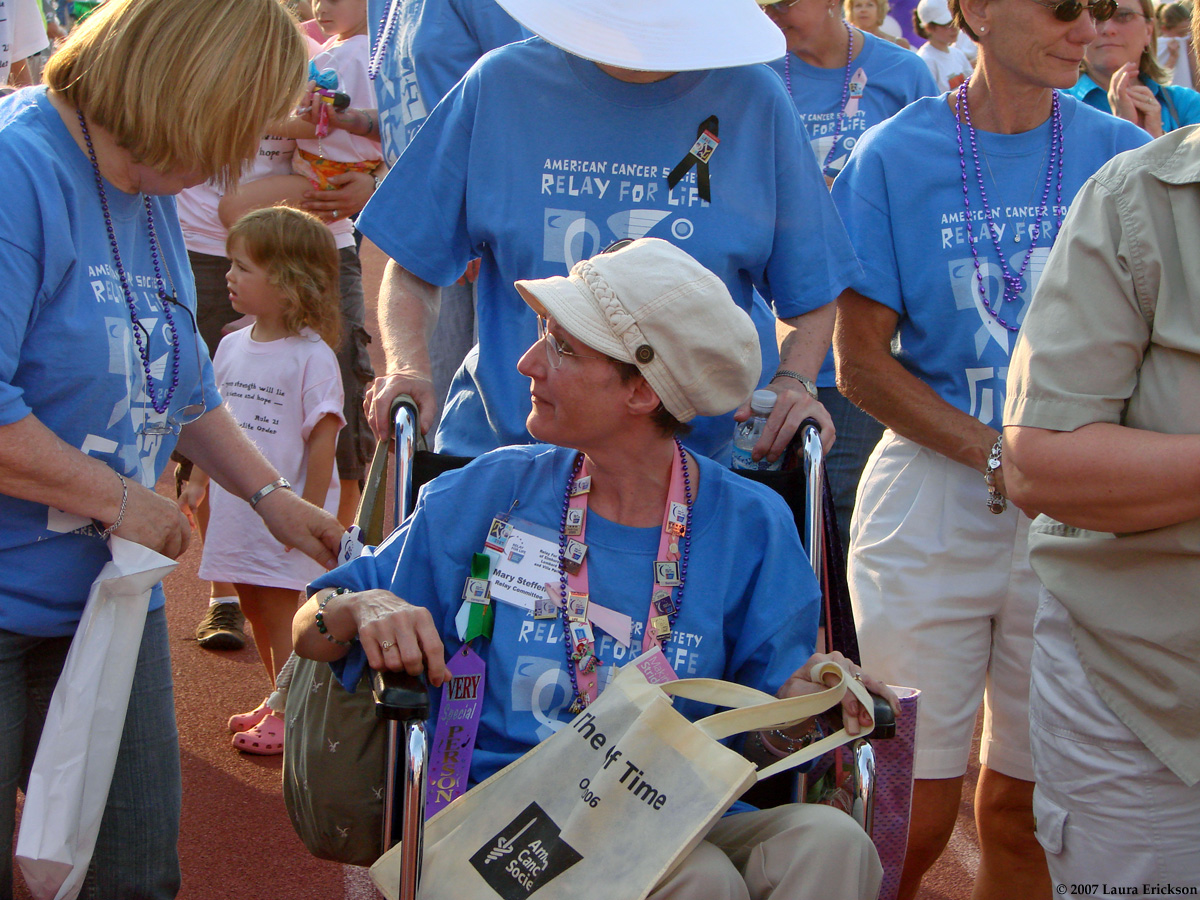
I've been very distracted for the last few weeks--my sister's had another setback with her cancer. It's an evil disease. She was in the hospital when I went through Chicago last Wednesday--they set up her portacatheter to administer pain meds instead of chemo now. Why oh why don't oncologists realize that those pain med patches just don't work after a person loses every ounce of body fat and much of their muscle? The oncologists don't do anything about it until they switch the patient to palliative care. Now at least she's out of pain. But why don't oncologists work with palliative care specialists so they can make pain manageable even as they're still trying to stop the cancer? It's not until they take them off chemo and other cancer treatments that they send them off to palliative care and pain relief. Does this really need to be an either/or situation?
I'll be visiting Mary tomorrow on my way back to Ithaca. The photo was taken last year at Elmhurst's Relay for Life. Mary's been very active in fundraising for the Cancer Society for many years now.
Fantastic birding festival
 Oh, man--what a great festival I was at this weekend. The Chequamegon Bay Birding and Nature Festival in Ashland, Wisconsin, was filled with wonderful programs and wonderful birds. Migration's been stymied by the slow spring--a great many trees haven't even started leafing out yet. But people got grand looks at a lot of wonderful birds, including this poor Black-and-white Warbler that bonked into a window. He flew off, I hope safely, before I could get a look at the band numbers. What a cosmically handsome bird.
When I left Sunday afternoon, the species tally was closing in on 170--Ryan Brady is going to send me an update ASAP. Among the really rare species were Boreal Chickadee and Black-billed Magpie.
I stayed at the Inn at Timber Cove--a lovely bed & breakfast in Ashland. I was in a lovely cottage, where I'd love to have stayed a week or more. I highly recommend it. I'll post more photos of the festival and my splendid accommodations ASAP.
Monday, May 12, 2008
Cuckoo for cuckoos
 This weekend I was one of the leaders on Cornell's Spring Field Ornithology class trip to New Jersey. I took this photo yesterday at Belleplain State Forest. Lots more photos to post. It would have been fun to be on one of the digiscoping or digital photography teams at the World Series of Birding. But the wonderful Birdchick was there--and her team won FIRST PLACE!!!
The Sapsuckers tied for second place in the overall Big Day, covering the state--they tallied 222 species! Some day I'm going to find myself a splendid spot and see how many species of birds I can photograph, just for the fun of it.
I had plenty of fun myself, with the class. Yesterday happened to be the 33rd anniversary of the day I saw my first warblers. That day I saw a Nashville and a Magnolia, which I missed yesterday. Both times I had Black-and-white and Black-throated Green. And yesterday I had a bunch more, including Prothonotary, Hooded, Kentucky, and Yellow-throated--what cool birds to mark such an anniversary with! The trick with leading a class is I didn't have much chance for photography. But I'll post more photos later.
Friday, May 9, 2008
Chickadee pipe dreams: for Lynne
The Rest of the Story about Chickadee Eggs: for Carolyn
 Chickadees are rather the Norwegian Bachelor Farmers of the bird world. They are very sociable--ya, sure, you betcha!--but they aren't comfortable getting TOO close to other chickadees. They maintain a rather large personal space, which is why they never sit side-by-side at your feeder. If one chickadee does approach another too closely, the dominant one between them will make a little gargle call which effectively shoos the other bird away like a discreet "ahem!"
The trick is, at least once a year a pair of chickadees must draw very close together indeed, or we'll never have baby chickadees. So chickadees sing, which revs them up hormonally so they can overcome their inhibitions and reserve to finally do what birds and bees and educated fleas do. During the song period, female chickadees get so revved up that they become like teenaged girls at a rock concert who throw their panties on stage--if a particular male chickadee is exceptionally tuneful, many or most of the chickadee families in his neighborhood will have at least a few babies who share his genes. Fortunately, father chickadees never demand paternity tests before raising their babies--they spend weeks feeding all the babies in their brood regardless of parentage.
It takes almost 2 weeks for chickadee eggs to hatch after the brood is complete. The young remain in the nest for another two full weeks, and remain with the parents for another month or so. By the time the young are on their own, there isn't enough time remaining in summer to raise another brood. But many things kill chickadees, so to maintain their numbers, broods contain an average of 6-8 eggs, and some have as many as 13!
If you think this is extreme, the even tinier Golden-crowned Kinglet's average brood normally contains 8 or 9 eggs. In both cases, the eggs are so tiny that they can be brooded in one layer. I love how the eggs are arranged in that chickadee nest!
Thursday, May 8, 2008
Chickadee nest!


Today I got to follow Caren Cooper about on her NestWatch route in Sapsucker Woods. It was exciting--we had two chickadee nests and one mouse nest. Both the chickadee nests (one with 9 eggs, one with 8) were in artificial snags made of PVC pipe. The mouse was in a wooden nest box.